 Visit Tokyo Guide
Hakone or Nikko: Which Day Trip to Take from Tokyo
Hakone or Nikko is the choice almost every Tokyo itinerary runs into once guided tours in tokyo are booked, and the two are not the same kind of outing. Hakone is a transport loop around a volcanic caldera, sold as one pass covering eight operators, and its pleasure is the ride. Nikko is a UNESCO shrine complex with a 97-metre waterfall an hour above it, and its pleasure is standing still. This page settles the choice on the four questions that decide it: how long the journey out takes, what the passes cost against the tickets they replace, what each day holds once you arrive, and which forecast ruins which. Every figure is the operator's or the shrine's own, as recorded on the Hakone day-trip page and the Nikko day-trip page. Dollars are converted at the site rate of 1,000 yen to $6.48.
Quick answer The verdict, the two pass prices, and the forecast that decides it
Take Nikko if you want to look at something, and Hakone if you want to travel through something. Nikko is the cheaper day: $19.44 (¥3,000) for the two-day shrine-area pass plus $10.37 (¥1,600) at the Toshogu gate, against $46.00 (¥7,100) for the shortest Hakone pass sold, which covers eight transport networks and no admission at all because the loop has no gate. Hakone is the easier day to run, at about 80 minutes each way against roughly 1 hour 50; Nikko is the harder one to run late.
Key takeaways
- Hakone sells transport, Nikko sells transport and admission separately. The Hakone loop is one pass and no ticket booths; at Nikko no rail pass covers a yen of shrine entry, so budget the gate as well as the fare.
- Odakyu runs Hakone out of Shinjuku, Tobu runs Nikko out of Asakusa, and neither is reachable by bullet train, which is the commonest planning mistake on both day trips.
- Wind and volcanic gas close the Hakone ropeway and a replacement bus takes over; autumn traffic on the Irohazaka switchbacks is what breaks a Nikko day. Neither operator publishes a failure rate, so the weather section treats both as normal rather than exceptional.
- If you would rather someone else held the timetable, the guided Nikko day with the waterfall is listed at $78.48 and the two-day Hakone transport pass at $46.10, roughly the operator's own counter price.
What Each Day Actually Is
Before any arithmetic, the shape of the two days, because they are almost opposites and most disappointment comes from expecting the wrong one.
Hakone is a town of about 11,000 people spread across 92.8 square kilometres of a volcanic caldera, and virtually nothing in it is walkable from anything else. What makes it a day trip is that eight transport operators are strung into a ring: a mountain railway that reverses three times up the gradient, a funicular, a ropeway over the sulphur vents at Owakudani, a boat across Lake Ashi and a bus back down. You spend the day boarding and alighting. That is the attraction, not the friction, and if six vehicles in nine hours sounds like a chore rather than a pleasure, Hakone is the wrong choice and no pass will fix it.
Nikko is the opposite. Two hours out on the Tobu line from Asakusa puts you at the foot of a cedar hillside carrying Rinno-ji, Futarasan and Toshogu, inscribed together on the UNESCO World Heritage List in 1999 as 103 structures in their setting. Toshogu was completed in 1617 as the burial place of Tokugawa Ieyasu and is the most extravagantly carved thing in Japan. You walk between them, which takes about two hours if you look up at the carving rather than past it, and then you decide whether to go a thousand metres higher for Kegon Falls and Lake Chuzenji.
The second half nobody budgets for
Both days have an upstairs, and both cost extra time rather than extra money. At Hakone it is the crater stop at Owakudani, a leg of the ropeway rather than a detour. At Nikko it is the Irohazaka, a pair of one-way switchback roads climbing to the lake, with roughly an hour of bus each way and a separate bus pass to cover it.
Hakone's upper half is on the route; Nikko's turns an eight-hour day into an eleven-hour one. A traveller with a mid-morning start gets all of Hakone and half of Nikko.
Hakone and Nikko, Line by Line
Seven dimensions summarised from the sections below. Fares and admissions are the operators' and the shrine's own published figures, from Odakyu's Hakone Freepass page, the Odakyu Hakone ropeway fare table, Tobu Railway's two pass pages and Nikko Toshogu's admission page, all read in Q3 2026 and recorded on this site's two day-trip pages.
| Dimension | Hakone | Nikko | Verdict |
|---|---|---|---|
| Journey out | About 80 minutes, Shinjuku to Hakone-Yumoto | About 1 hour 50, Asakusa to Tobu-Nikko | Hakone, by about half an hour each way |
| Cheapest sensible day | $46.00 (¥7,100) pass, no admissions to add | $19.44 (¥3,000) pass plus $10.37 (¥1,600) at the gate | Nikko, by about $16 a head |
| What you look at | A caldera, a lake, steam vents, a sculpture park | A gilded 1617 mausoleum, two more shrines, a 97-metre fall | Nikko, and it is not close |
| What you do | Ride six vehicles round a circle | Walk a cedar hillside, then decide about the mountain | Hakone, if the moving is the point |
| Time it takes | About 9 hours, 11 with the sculpture park | About 8 hours for the shrines, 11 with the waterfall | Draw, until you add the upper half |
| What ruins it | Wind and volcanic gas on the ropeway | Autumn traffic on the Irohazaka switchbacks | Hakone: the fix is a bus, not a cancelled day |
Three lines to Nikko, two to Hakone, two honest draws, which is why the sections below matter more than the total.
The Journey Out, and What the Seat Costs
Two private railways, two Tokyo terminals, and the same structure on both: an ordinary train that costs nothing extra and a reserved limited express that does. Times are the operators' own, from Odakyu's Romancecar pages and Tobu's access page.
Odakyu's Romancecar runs Shinjuku to Hakone-Yumoto in about 80 minutes with every seat reserved, so a supplement of ¥1,200, $7.78, sits on top of your ticket or your pass, with fifty yen off for an e-ticket bought in the operator's app. The Express and Rapid Express services cover the same ground in about two hours with standing space and few seats, and cost nothing extra. Seats go on sale at 10:00 one month before the date and can be refunded until the train leaves for a ¥100 fee.
Tobu's shape is the same and its numbers are worse. A direct limited express covers Asakusa to Tobu-Nikko in about 1 hour 50, every seat reserved, on sale from 9:00 on the first of the previous month. There is also a through limited express from Shinjuku or Ikebukuro over JR tracks in about two hours, and Tobu states flatly that this route is not covered by the Nikko passes, which is the most expensive assumption a pass holder can make on either trip.
| Leg | Hakone | Nikko | What it changes |
|---|---|---|---|
| Tokyo terminal | Shinjuku, on Odakyu | Asakusa, on Tobu | Where you sleep decides the easier morning |
| Fast train, time | About 80 minutes | About 1 hour 50 | Roughly an hour of your day, round trip |
| Seat supplement | ¥1,200, about $7.78 (¥1,150 as an e-ticket) | Charged separately; Tobu prints no English route table | At Hakone you can price it, at Nikko you cannot |
| Bullet train | None serves the valley; a fast arrival joins at Odawara | None serves the city | Neither is a shinkansen day, whatever the search results say |
The half hour is not the whole difference
On paper Hakone wins the journey by about thirty minutes each way. In practice it wins by more, because the Hakone train delivers you to the start of the attraction and the Nikko train delivers you to the bottom of it. At Hakone-Yumoto the loop begins on the next platform; at Tobu-Nikko you still have a walk or a bus to the shrine gate, and an hour of switchbacks after that if the waterfall is in the plan.
The compensation is that Nikko compresses cleanly to eight hours. Hakone does not: skip the ropeway and you have paid for a pass to ride a train up a hill.
The Pass Arithmetic, Side by Side
This is where the two days stop resembling each other. Every price below is the operator's own, from Odakyu's Hakone Freepass page, the Odakyu Hakone ropeway fare table and Tobu's two NIKKO PASS pages, converted at 1,000 yen to $6.48.
Hakone sells one product and it is not a day ticket. The shortest Freepass is two days, ¥7,100 from Shinjuku or ¥6,000 from Odawara, and Odakyu is precise that the day of purchase counts as day one whatever time you buy. A day tripper therefore buys two days and throws one away. In exchange the pass covers the round trip from Shinjuku plus all eight local networks and discounts at about 70 facilities, and nothing on the mountain charges admission on top.
Nikko sells two rail passes and no admission, and Tobu says so on both pass pages: shrine and temple entry, Tobu World Square and Edo Wonderland are not included. A Nikko day therefore has a floor of the pass plus ¥1,600 at the Toshogu gate, or ¥2,400 with the Treasure Museum.
| Pass | Adult | Approx. USD | Valid | What it reaches |
|---|---|---|---|---|
| Hakone Freepass, 2 days from Shinjuku | ¥7,100 | $46.00 | 2 days | Round trip from Shinjuku plus all eight loop networks |
| Hakone Freepass, 2 days from Odawara | ¥6,000 | $38.90 | 2 days | The loop networks only, no Odakyu Line ticket |
| NIKKO PASS World Heritage Area | ¥3,000 | $19.44 | 2 days | Round trip on ordinary trains plus the shrine-district buses |
| NIKKO PASS All Area | ¥8,000 | $51.80 | 4 days | The above plus every Nikko bus line, Kegon, Chuzenji and the lake cruise |
| Chuzenji Onsen Bus Free Pass | ¥2,300 | $14.90 | 2 days | Akechidaira, Kegon Falls and Chuzenji Onsen by bus only |
Where each pass earns its money
At Hakone the test is one leg. The ropeway alone is a flat ¥2,000 one way and ¥3,000 return whatever section you ride, which is a third of the ¥6,000 Odawara pass before you have taken the boat, the mountain railway or a bus. Do the circle and the Shinjuku pass is comfortably ahead; visit one museum and go home and it is dead money. Nobody can print the exact break-even, because four of the eight Hakone operators publish no English single fares, and any page that gives you a precise crossover number is guessing.
At Nikko the test is altitude. For a same-day return that stops at the shrines, the ¥3,000 World Heritage pass is the answer and the ¥8,000 All Area version is not. For a same-day return that also wants Kegon Falls, that pass plus the ¥2,300 Chuzenji bus pass comes to ¥5,300, about $34.30, still comfortably under the All Area price. The bigger pass only overtakes once the lake cruise or a second day is genuinely in play, and Tobu does not do that comparison for you.
The number that surprises people
Odakyu publishes its own worked total for a Hakone day trip: ¥9,500, about $61.60, being the Shinjuku Freepass plus a Romancecar seat in each direction. Set that against a shrines-only Nikko day at ¥4,600, about $29.80, and the gap is roughly thirty-two dollars a head before either of you has bought lunch.
The gap closes fast if you go up the Nikko mountain. Pass, bus pass, shrine ticket and the ¥600 waterfall elevator come to ¥7,500, about $48.60, within a few dollars of the Hakone total, and that day is eleven hours rather than eight. Cheap Nikko and full Nikko are different days at different prices, which is exactly the distinction the search results flatten.
What Each Day Actually Holds
Opening hours are the operators' and the shrine's own, and both days are built backwards from a closing time rather than forwards from breakfast.
A Hakone day is governed by the last ropeway boarding: 17:00 from February to November and 16:15 in December and January, with the boat and the buses thinning out behind it. Our routing is about nine hours door to door from Shinjuku for the ropeway and the lake, and about eleven if you break the loop at Chokoku-no-Mori for the Hakone Open-Air Museum. That museum stands roughly 120 sculptures on 70,000 square metres of hillside, opens 09:00 to 17:00 and states that it does so 365 days a year, and charges ¥2,000 at the gate or ¥1,800 online, about $11.66.
A Nikko day is governed by Toshogu's reception, which closes 30 minutes before the shrine: 17:00 from April to October, 16:00 from November to March. The ticketed route runs from the front gate through the Yomeimon, the prayer hall, the east corridor under the sleeping-cat carving, up to the Okumiya where Ieyasu is buried and into the Honjido for the crying dragon. Two hours covers it at a pace that lets you look up, and an English audio guide covering 29 buildings is rented inside the gate for ¥500, about $3.24.
The upper half of Nikko, priced
Kegon Falls drops 97 metres in a single fall that drains Lake Chuzenji over the lip of the escarpment, and the free platform at the top is genuinely free. The view people come for is from the bottom, reached by an elevator that has been dropping 100 metres through the rock since 1930, one minute down, thirty people a car. It charges ¥600 return for adults and ¥400 for elementary pupils, about $3.89 and $2.59, with no reservation system, and runs 08:00 to 17:00 from 1 March to 30 November and 09:00 to 16:30 through the winter.
One caveat before you plan around a viewpoint: the Akechidaira Ropeway to the lookout over the switchbacks is suspended from 16 January 2026 until 31 August 2027 for construction, and Tobu warns the period may be extended.
The Weather That Ruins Each
Both days have a single failure mode and they are entirely different failures. One is a suspension with a replacement bus; the other is a traffic jam with no alternative road.
Hakone sits inside an active volcanic field and the ropeway crosses the vents that make it worth seeing. When gas concentrations rise at Owakudani, or the wind exceeds the gondolas' limit, the affected section is suspended and a replacement bus carries passengers around it. The line as a whole rarely closes; the crater stop is what disappears, and the operator's live status page was carrying exactly such a notice when our Hakone page read it.
So never build the day around standing at Owakudani, and treat the vents as the bonus a still day hands you. The lake boat is the softer spot: the operator's FAQ has an entry on when the cruise is suspended, which tells you it happens, but publishes no wind threshold, and the bus round the lake is covered by the same pass.
Autumn is the Nikko problem
Nikko's foliage is the best known in the Kanto region and the only way up to it is the Irohazaka, a pair of one-way switchbacks with no alternative route. Roughly through November the traffic slows to a crawl and the bus queues at Tobu-Nikko lengthen with it. No operator publishes a delay statistic for that road, so we flag it as a reading of the geometry rather than a counted figure, and the conclusion is not softened by that: do not plan a same-day return that depends on the mountain leg in November.
The shrine district in the same month is the opposite. It absorbs crowds well, it is walkable from the station, and cedar shade in autumn is the best version of it. So the autumn compromise is shrines yes, mountain no, unless you are staying the night. If your trip lands in the foliage weeks and you want one mountain day that will not be spent on a bus, Hakone is the safer booking.
Which One, for the Trip You Are Having
If you have one free day and you want the best single thing to look at
Nikko. Toshogu has no equivalent on the Hakone loop, and a shrines-only day costs about $29.80 all in. Start with the Nikko page and the World Heritage pass.
If you would rather move through a landscape than stand in front of a building
Hakone. Six vehicles, a caldera, a lake and a live vent, on one pass covering eight operators.
If you are watching the budget
Nikko, and only the shrines. The pass and the gate together are less than half Odakyu's own worked total for a Hakone day.
If you are travelling in November
Hakone, or Nikko's shrines with the mountain deliberately dropped. The Irohazaka in foliage season is a bus queue with a view.
If your base is Asakusa, Ueno or the eastern arc
Nikko. Tobu's limited expresses leave from Asakusa, and the pass starts there too.
If you want somebody else to hold the timetable
The guided Nikko day with Kegon Falls at $78.48, or the private Hakone day with pickup if a group is splitting one price.
Booking Either Day
Four cards, two per destination, at opposite ends of the same decision: a transport pass you use yourself, and a guided day where somebody else reads the timetable. Prices and ratings are the platform's own figures for those listings.
 from $46.10
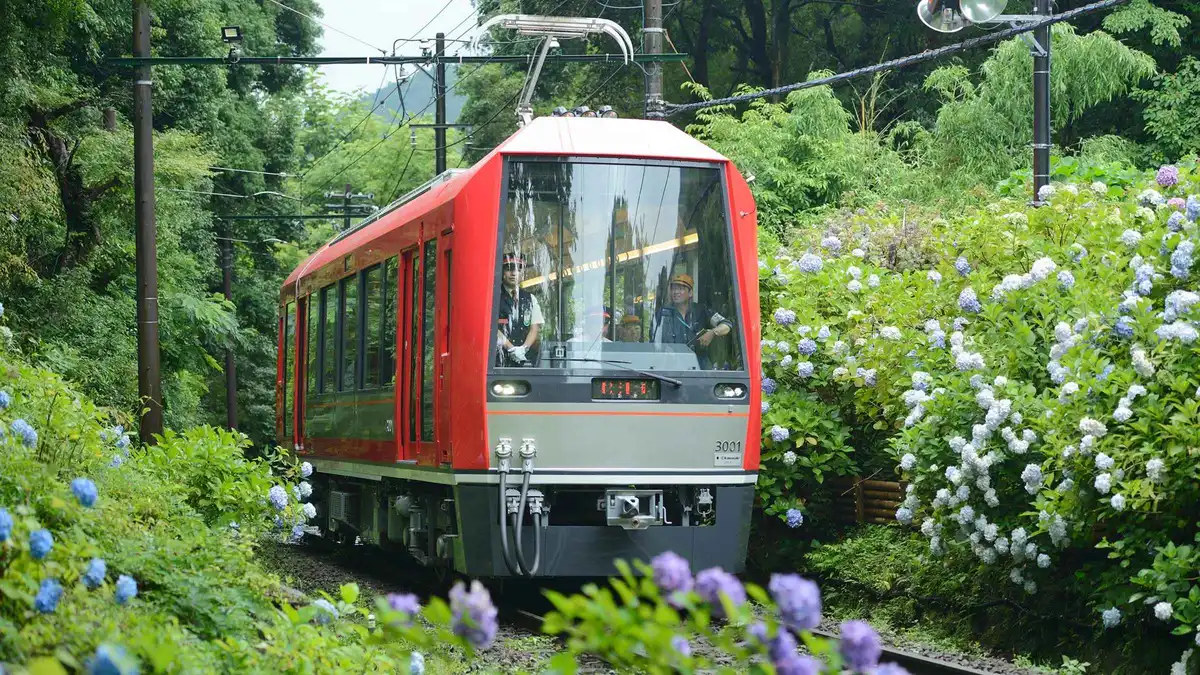
Hakone: Train Pass with Unlimited Rides & Activity Discounts
A self-guided 2 or 3 day transit pass covering the round trip from Shinjuku plus unlimited rides on Hakone's trains, cable car, ropeway and sightseeing cruise, with discounts at 70-plus local attractions.
Check Availability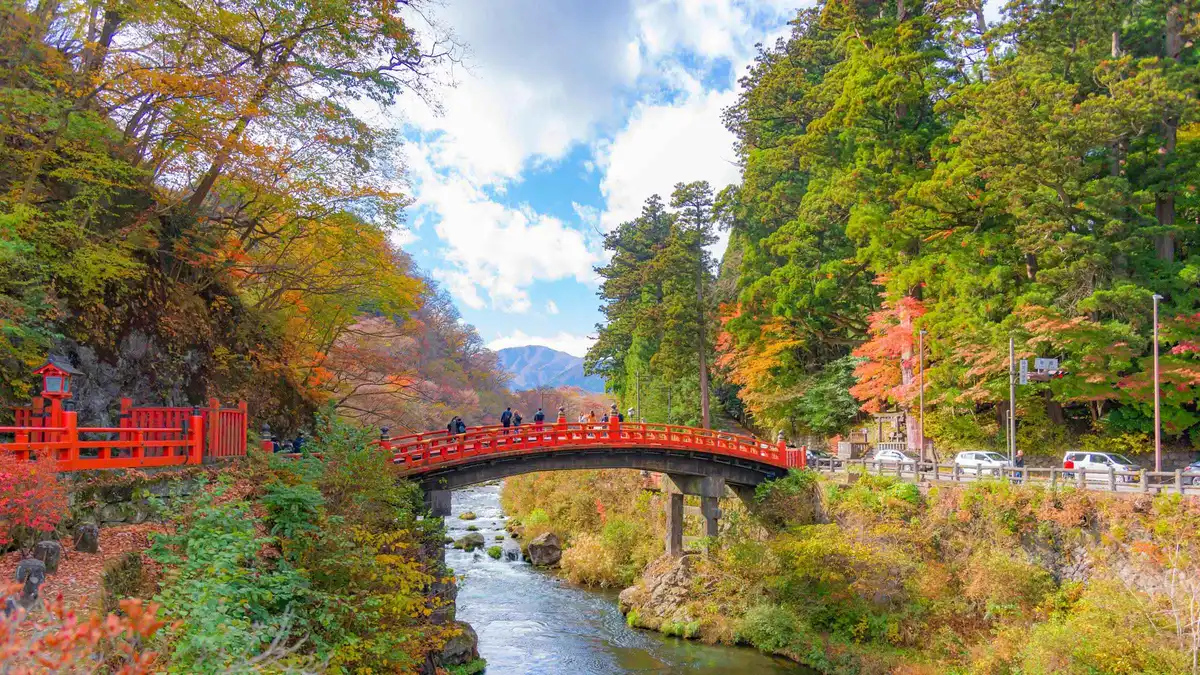 from $78.48
Nikko: Kegon Falls, Lake Chuzenji & Toshogu Temple
A day trip from Tokyo to Nikko's Toshogu Shrine, Kegon Falls and Lake Chuzenji, covering the region's UNESCO shrine and waterfall scenery for travelers short on time.
Check Availability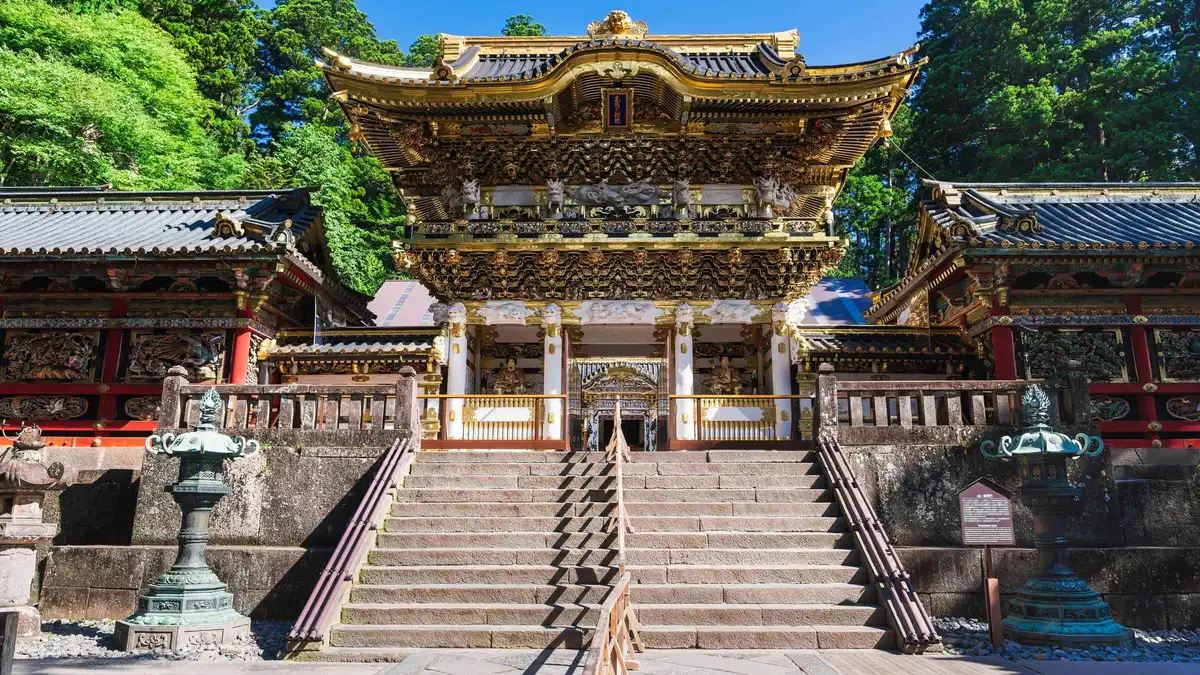 from $88
Tokyo: Nikko Toshogu Shrine and Kegon Waterfall Tour
A guided Nikko day trip from Tokyo visiting Shinkyo Bridge, the UNESCO-listed Toshogu shrine complex, Kegon Falls and Lake Chuzenji, pairing Nikko's historic shrines with one of Japan's noted waterfalls.
Check Availability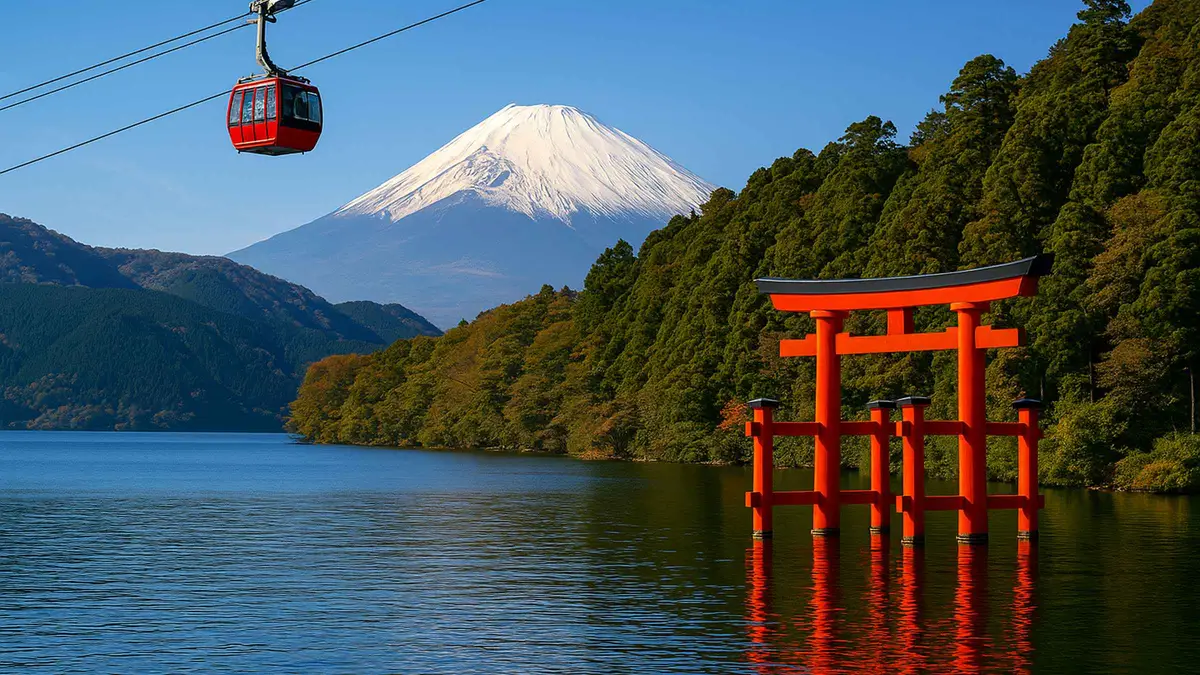 from $356.33
Tokyo: Hakone Full-Day Private Guided Tour with Pickup
A private full-day Hakone tour with pickup covering Lake Ashi, the ropeway, Owakudani Valley, Hakone Shrine, Sekisho Observatory and Gotemba Premium Outlets, at your own pace with a guide.
Check AvailabilityPrices, ratings and details are the platform's own. Dollar figures are the listed prices. The platform bills in your account's currency.
Doing Both, and the Case for Doing Neither
Two long days out of a Tokyo week is a lot, and the honest answer depends on how many nights you have and what else is already booked.
If your trip runs to seven nights or more, both fit, and they should not be consecutive. Put three or four days of what to do in tokyo between them, because eighteen to twenty-two hours of travelling in two days is how people come home saying they saw trains rather than Japan.
If your trip is five nights or fewer, take one. The three-day Tokyo plan already has more in it than most people finish, and a day trip on day one or two is a poor trade: nine hours on six vehicles while still adjusting to the time zone is a heavy way to open a trip.
The third option, which is neither
There is also a case for skipping both. Hakone and the Fuji Five Lakes sell the same photograph, and if a mountain in the frame is what you want, the Mount Fuji side has published visibility odds behind it while the caldera does not. If what you want is a shrine and a coastline rather than a shrine and a waterfall, Kamakura is closer than either, mostly at sea level and mostly on foot, which makes it the trip to take when the forecast is wind.
Hakone or Nikko: the Questions That Decide It
Which is better for a first trip to Japan, Hakone or Nikko?
Nikko, if it is your only excursion. Toshogu is a 1617 mausoleum carried on 103 UNESCO-listed structures and there is nothing comparable on the Hakone circuit, and a shrines-only day runs about eight hours and roughly $29.80 in pass and admission. Hakone is the better second excursion, or the better first for a traveller who would rather ride than look. The two are compared line by line in the scorecard above.
Which day costs less?
Nikko, clearly, as long as you stay below the switchbacks. The two-day shrine-area pass is ¥3,000, about $19.44, and the Toshogu ticket ¥1,600, about $10.37, for a total of roughly $29.80. Odakyu's own worked Hakone total is ¥9,500, about $61.60, being the two-day Freepass plus a reserved seat each way. Add the waterfall bus pass and the elevator to the Nikko side and the two land within a few dollars of each other, which is the arithmetic in full.
Is there a bullet train to either of them?
No, and this is the commonest planning error on both. No shinkansen serves the Hakone valley; Odakyu frames its Odawara-start pass as the version for travellers arriving from the Kansai direction, which is how a fast-train arrival joins the loop. No shinkansen serves Nikko either. Both trips run on private railways out of Tokyo, Odakyu from Shinjuku and Tobu from Asakusa, and the seat supplements are set out in the journey section.
Which one is better in autumn?
Hakone, for reliability. Nikko's foliage is the finest in the Kanto region, but the only road up to it is a pair of one-way switchbacks, and through November the traffic and the bus queues make a same-day return that includes the mountain a gamble. The Nikko shrine district in those weeks is superb and largely unaffected, so the sensible autumn Nikko is shrines only. The weather section sets out both failure modes.
Do you need to book anything in advance for either?
Only the seat. Nothing at either destination is timed and no venue sells a slot, so both passes can be bought on the morning you travel. Odakyu opens Romancecar seats at 10:00 one month ahead and refunds them until departure for ¥100; Tobu opens its limited-express seats at 9:00 on the first of the previous month. On an autumn Saturday the reservation matters more than the fare does, and buying the Hakone pass ahead is about the Shinjuku queue rather than availability.