 Visit Tokyo Guide
Tokyo Layover: What Fits Between Four and Twelve Hours
A Tokyo layover is two completely different problems wearing the same name, because the two airports are not the same distance from the Tokyo you are trying to reach (see what to do in Tokyo). Haneda's own access table puts Tokyo Station about 30 minutes away and Shinagawa about 15. Narita is roughly 60 kilometres out and its fastest published train reaches Nippori in 36 minutes and Tokyo Station in 53. That gap decides everything on this page, so the arithmetic below is worked separately for each airport, in both directions, with the immigration rule and the luggage question in front of it because both can end the plan before the trains do. Fares and times come from the airports' and the operators' own pages as recorded on the Haneda transfer page and the Narita transfer page. Dollars are converted at 1,000 yen to $6.48.
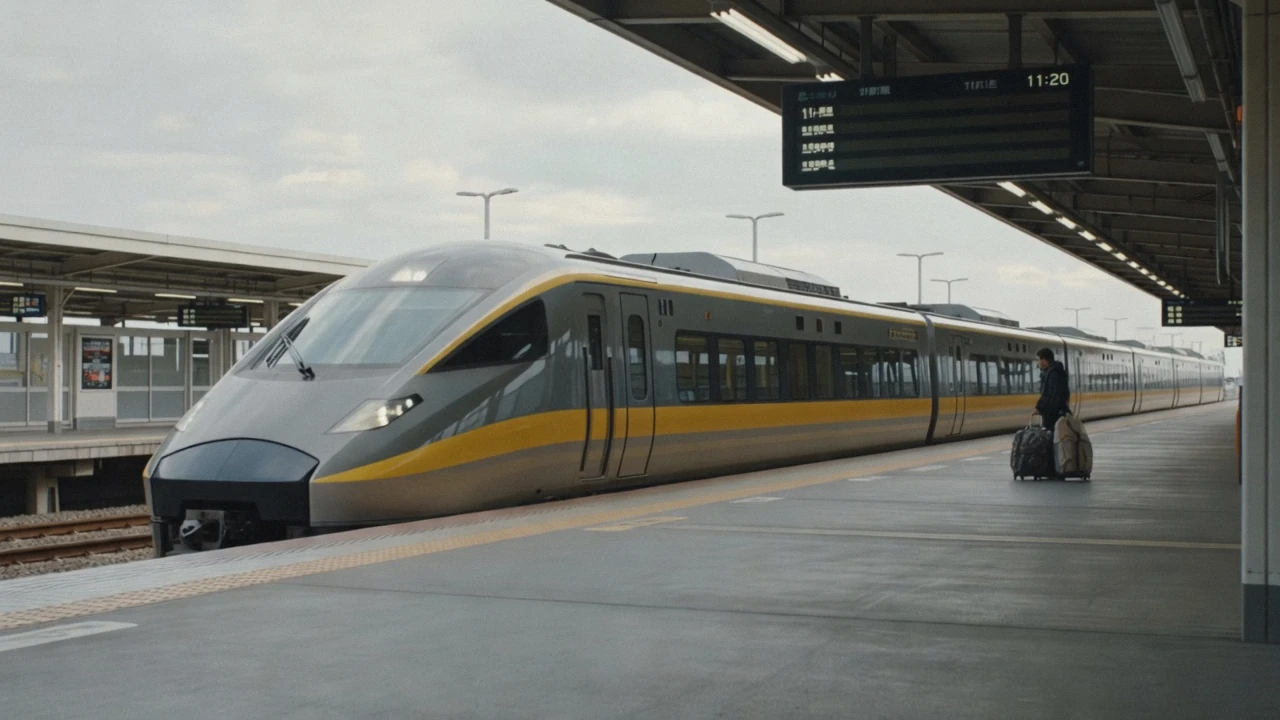
Quick answer The cut-off at each airport, the immigration rule, and what fits in the hours left
At Haneda a scheduled connection of 6 hours or more is worth leaving the airport for: the round trip to Tokyo Station is about an hour of trains at $3.37 (¥520) each way, which leaves real time in the city. At Narita the same call needs 8 hours, because the fastest train each way is 36 to 53 minutes and the round trip alone eats close to two. Below those numbers, stay airside. Either way you must clear Japanese immigration and customs to leave, and your checked bags may not be retrievable, which is the part most layover plans get wrong.
Key takeaways
- Narita's own connecting-flights page states the rule plainly: you skip immigration only if you stay in the departure area, and leaving the airport means immigration procedures and in some cases a visa. The entry section has the wording.
- A Haneda coin locker is $2.59 (¥400) a day for a small one and $9.72 (¥1,500) for the largest, all of them landside; Narita adds hourly lockers from $1.94 (¥300) for six hours. The luggage section has both ladders.
- From Haneda the monorail reaches the Yamanote loop at Hamamatsucho in about 20 minutes and Keikyu reaches Shinagawa in 11, which is why a short Haneda stop is a genuinely different proposition from a short Narita one.
- If the connection is long but awkwardly timed, a car that meets the flight number rather than the timetable removes the whole question: the Haneda private transfer is listed at $31.62 for the vehicle.
Before the Arithmetic: You Have to Enter Japan
This is the step that turns a plan into a non-plan, and it is worth reading before you price a single train.
Narita Airport's own guide to connecting between international flights puts it in one sentence: passengers are not required to undergo immigration procedures if they stay in the departure area until their next flight, and immigration procedures will be required if they wish to leave that area to meet somebody or to go outside the airport, with a visa required in some cases. So a layover in the city is a full entry into Japan, not a stroll. If your nationality needs a visa for Japan, a transit that never leaves airside is a different legal event from one that does, and the airport tells you to ask your airline or the Immigration Services Agency rather than guess.
The same page carries a second fact that catches overnight passengers: aircraft can only operate at Narita between 06:00 and midnight, and passengers cannot remain airside outside those hours. An overnight transit there is therefore not optional. You must complete arrival immigration and customs whether you wanted to see Tokyo or not.
The bags are the other half of the question
Whether your checked luggage follows you through to the second flight or comes out onto the belt is decided by your airline and your ticket, not by the airport, and neither airport publishes a rule you can plan around. Two separate tickets almost always means collecting the bags and checking in again, which turns a four-hour connection into no connection at all. One through-ticketed itinerary usually means the cases go on without you, which is the version that makes a city trip possible.
Ask the airline before you land. If the answer is that you are collecting them, the layover stops being about trains and starts being about lockers, which is the section below.
The Two Airports, on the Only Numbers That Matter
Journey times and fares are the airports' and the operators' own published figures, from Haneda Airport's train and monorail access table, Tokyo Monorail's fare page and Keisei's Skyliner and Access Express fare pages, all read in Q3 2026 and recorded on this site's two airport transfer pages.
| The question | Haneda | Narita | What it means for a layover |
|---|---|---|---|
| Distance from the centre | Inside the city; Shinagawa about 15 minutes | About 60 kilometres out | One is a suburb, the other is a separate journey |
| Fastest published run | About 30 minutes to Tokyo Station | 36 minutes to Nippori, 53 to Tokyo Station | Haneda gives you back roughly an hour on the round trip |
| Cheapest useful ride | $3.37 (¥520) on the monorail | $8.04 (¥1,240) on the Access Express | Two people save about nine dollars each way at Haneda |
| Sensible cut-off to leave | About 6 hours scheduled | About 8 hours scheduled | Our arithmetic, not an airport's, and it assumes hand luggage |
| Small locker, per day | $2.59 (¥400) | $2.59 (¥400) daily, or $1.94 (¥300) for six hours | Narita is the only one selling a short-stay rate |
The cut-off row is the only one on this page we worked out ourselves. Neither airport publishes a minimum layover for leaving the terminal, and neither publishes a typical immigration queue, so treat those two hours as the honest floor rather than a promise.
Haneda: the Arithmetic in Both Directions
Haneda is the easy case, because the airport is inside Tokyo. Every time below is from Haneda Airport's own train and monorail access table; the fares are the operators' own.
Two railways run under the terminals and they split the city between them. The Tokyo Monorail charges a flat ¥520, about $3.37, from any of the three terminals to Monorail Hamamatsucho, where you step onto the JR Yamanote loop, and it runs on average every five minutes so no visitor needs its timetable. The Keikyu Line reaches Shinagawa in 11 minutes from Terminal 3 and 14 from Terminals 1 and 2, then carries on into the centre without a change, which is why the airport's own table shows Asakusa and Ueno at about 40 minutes with no interchange.
On a weekend or a public holiday the monorail sells a flat discount ticket through to any Yamanote station at ¥590, about $3.82, against an ordinary fare of ¥680 to ¥870. It is sold at the terminal machines only, on the day, with no advance sale, so it is worth thirty seconds at the machine and nothing at all if you land on a Tuesday.
| Where you would go | Airport's published time | Round trip in trains | What the airport leg costs |
|---|---|---|---|
| Shinagawa | About 15 minutes | About 30 minutes | Keikyu; no static fare published |
| Hamamatsucho, for the Yamanote loop | About 20 minutes | About 40 minutes | $3.37 (¥520) each way |
| Tokyo Station and Ginza | About 30 minutes | About 1 hour | $3.37 (¥520) plus one loop stop |
| Asakusa or Ueno | About 40 minutes | About 1 hour 20 | Keikyu through train, no change |
| Shibuya or Shinjuku | About 45 to 50 minutes | About 1 hour 40 | $3.37 (¥520) plus the loop fare |
What that leaves you
Take a six-hour scheduled connection at Haneda. Subtract an hour for landing, immigration and customs on the way in, and the airline's stated check-in cut-off on the way out, commonly two hours before an international departure. That leaves roughly three hours of usable time, of which one goes on trains to Tokyo Station and back. Two hours in the city is a real two hours: a walk around the Imperial Palace moat, a meal in Ginza, an hour in a department-store food hall.
Stretch that to ten or twelve hours and the whole eastern half of the city opens. Asakusa is about 40 minutes on one Keikyu train with no interchange, Senso-ji charges nothing to enter and never closes its grounds, and you would still be back with time to spare. That is the best-value Haneda layover there is, and it involves no ticket, no slot and no booking.
Landing after midnight
Haneda takes international flights around the clock and the trains do not, and the airport publishes a night-bus table for exactly that problem. Terminal 3 has departures for Shinjuku and Ikebukuro at 00:20, 01:00, 01:40 and 02:20, with Terminal 2 at 00:05 and Terminal 1 at 00:10, and a Keikyu bus to Yokohama at 01:20 from Terminal 3. Four departures between midnight and half past two is a genuine safety net, and it is why a 23:50 arrival at Haneda is a far smaller problem than the same arrival at Narita.
The airport notes the services change with the flight schedule, so treat the table as the shape of the provision rather than a promise for one night.
Narita: the Arithmetic in Both Directions
Narita is the hard case, and the reason is arithmetic rather than inconvenience. Fares and times below are Keisei's, JR East's and the bus operators' own.
Four services matter for a layover, and they trade money against where they put you down. The Keisei Skyliner runs on a dedicated line and does not stop between the airport and Nippori: 36 minutes to Nippori and 41 to Keisei-Ueno, ¥2,470, about $16.01, every seat reserved. The Narita Express is slower at 53 minutes to Tokyo Station but continues to Shinagawa, Shibuya, Shinjuku and Yokohama without a change.
Below both sits Keisei's Access Express at ¥1,240 to Nippori or Ueno, about $8.04, stopping more and taking longer on the same rails, and the TYO-NRT bus at ¥1,500, about $9.72, with a fastest published run of 65 minutes to Tokyo Station.
| Service | One-way fare | Fastest published time | Where it puts you | Round trip in transit |
|---|---|---|---|---|
| Keisei Skyliner | $16.01 (¥2,470) | 36 min to Nippori | Nippori and Keisei-Ueno, both on the loop | About 1 hour 15 |
| Narita Express | $11.21 (¥1,730) charge plus base fare | 53 min to Tokyo Station | Tokyo, Shinagawa, Shibuya, Shinjuku | About 1 hour 50 |
| Keisei Access Express | $8.04 (¥1,240) to Ueno | Longer, stopping more | Ueno, Nippori, Asakusa, Ginza | Two hours or more |
| TYO-NRT bus | $9.72 (¥1,500) | 65 min to Tokyo Station | Tokyo Station, Ginza, Shinonome | About 2 hours 10, traffic permitting |
Why eight hours is the floor
Run the same subtraction as at Haneda. An eight-hour scheduled connection minus an hour for arrival formalities and two for the departure check-in leaves five hours. The fastest possible round trip, Skyliner both ways to Nippori, is an hour and a quarter of trains before a minute of margin, and nobody sensible plans an airport return with none: add thirty minutes and you are down to about three usable hours, in Ueno and its surroundings rather than anywhere you chose. That is a good afternoon. At six hours the same sum leaves about an hour and a half, which is not.
The bus is the wrong tool here for one reason: neither Narita bus operator publishes a guaranteed journey time, and the expressway does not always cooperate. On an arrival day that is fine. On a layover, where the return leg has a hard deadline, take the train both ways and accept the fare.
What actually fits at Narita
Three hours from the Skyliner's Ueno end is not a Tokyo highlights tour, and pretending otherwise is how people miss flights. What it is: Ueno Park and one museum inside it, the Ameyoko market street beside the station, or a train two stops on to Asakusa. Any of those is a real experience with almost no risk, because you never move more than one train from the machine that sells your ticket back.
The alternative that costs almost nothing is far shorter: Keisei's own line runs into Narita town, minutes from the airport rather than an hour from it. Neither Keisei nor the airport publishes a fare or a time for that leg on the pages we could read, so no numbers are printed for it here, but the geography is the point. On a connection between five and seven hours, the town at the end of the runway beats the city an hour away.
The Luggage Question, Priced
If the bags come out onto the belt, the layover is decided here rather than on the timetable. Both airports publish their locker rates and both publish them landside, which is where you will be standing.
Haneda's own coin-locker page is the simpler of the two: all lockers are outside the gate, storage runs up to seven days with a day counted as 24 hours from the start of use, and the keyless machines take cash, credit cards, electronic money and QR payment. Narita splits its stock into daily and hourly machines, and the hourly ones, on B1F of the Terminal 2 main building and 2F of Terminal 3, are the ones a layover actually wants: six hours for the price of most of a day elsewhere.
| Locker | Haneda, per day | Narita, per day | Narita, up to 6 hours |
|---|---|---|---|
| Small | $2.59 (¥400) | $2.59 (¥400) | $1.94 (¥300) |
| Medium | $3.24 (¥500) | $3.89 (¥600) | $3.24 (¥500) |
| Large | $3.89 (¥600) | $5.18 (¥800) | $3.89 (¥600) |
| Extra large | $6.48 (¥1,000) and $9.72 (¥1,500) | Not listed at a daily rate | $7.78 (¥1,200) per 12 hours |
Two things worth knowing
Narita counts a locker day from the start of use until midnight rather than for 24 hours, and its own page gives the worked example: store a bag at 21:00, collect it at 01:00, pay for two days. Haneda counts 24 hours. On a layover that is small money, and it is the kind of small money that makes people angry at three in the morning.
Only Narita advertises the second thing. Its multi-functional lockers offer same-day hotel delivery to participating hotels in ten central Tokyo wards and Urayasu City for luggage deposited by 11:30, with a ¥500 surcharge for the reservation function. That is not a layover tool, but it is the right answer for anyone whose long connection is really the start of the trip.
Six Hours at Haneda, Hour by Hour
One worked example, built on the airport's own published journey times and on a two-hour international check-in cut-off. It is a routing rather than a schedule, and the only fixed points in it are the ones the airport publishes.
-
0:00
Wheels down
The clock starts at the scheduled arrival, not at the gate.
-
0:15
Immigration and customs
Neither airport publishes a typical queue, so allow a generous hour to be standing in the arrivals hall with your bag.
-
1:00
Locker, then the platform
A small locker is $2.59 (¥400) for the day. Read the terminal sign rather than following the crowd: the Keikyu gates split by direction.
-
1:20
Hamamatsucho, or Shinagawa in 11 minutes
$3.37 (¥520) flat from any terminal, or the flat $3.82 (¥590) through-ticket on a weekend or public holiday.
-
1:45
In the city
Tokyo Station and Ginza are about 30 minutes from the terminal; Asakusa about 40 on one Keikyu train with no change.
-
3:45
Turn around
Two hours of actual Tokyo. Leave on the clock, not on the last thing you wanted to see.
-
4:15
Back at the terminal
Collect the locker, then join the airline's own check-in queue rather than the shortest one.
-
6:00
Scheduled departure
Two hours of margin at the airport, which is the entire reason the plan works.
The same shape at Narita needs eight hours for the same two hours in the city, which is the whole argument of this page.
What to Do with the Hours You Actually Have
If you have under 5 hours at either airport
Stay airside. Both terminals have showers, nap rooms and lounges, and the arithmetic in the two sections above simply does not leave you a city.
If you have 5 to 6 hours at Haneda
One stop only. Hamamatsucho and the loop, or Shinagawa on Keikyu in 11 minutes, and back. Around $3.37 (¥520) each way.
If you have 6 to 8 hours at Haneda
Asakusa, on one Keikyu train with no interchange. Senso-ji charges nothing and its grounds do not close.
If you have 6 to 8 hours at Narita
Do not aim for Tokyo. Keisei's line runs into Narita town within minutes of the airport, which is the low-risk version of the same idea.
If you have 8 hours or more at Narita
Skyliner to Nippori in 36 minutes, $16.01 (¥2,470), and give the time to Ueno Park and one museum inside it.
If the connection is long but lands or leaves at an ugly hour
Book a car that meets the flight number rather than the timetable: the Haneda private transfer at $31.62 for the vehicle, or the Narita one at $61.50.
If you are collecting checked bags between two separate tickets
Treat the whole connection as an arrival. Price a locker from the luggage section before you price a train.
When a Car That Meets the Flight Is the Right Answer
Four private-transfer listings, two per airport, at the two ends of the party-size range. Prices and ratings are the platform's own figures for those listings, and the price is for the vehicle rather than per person.
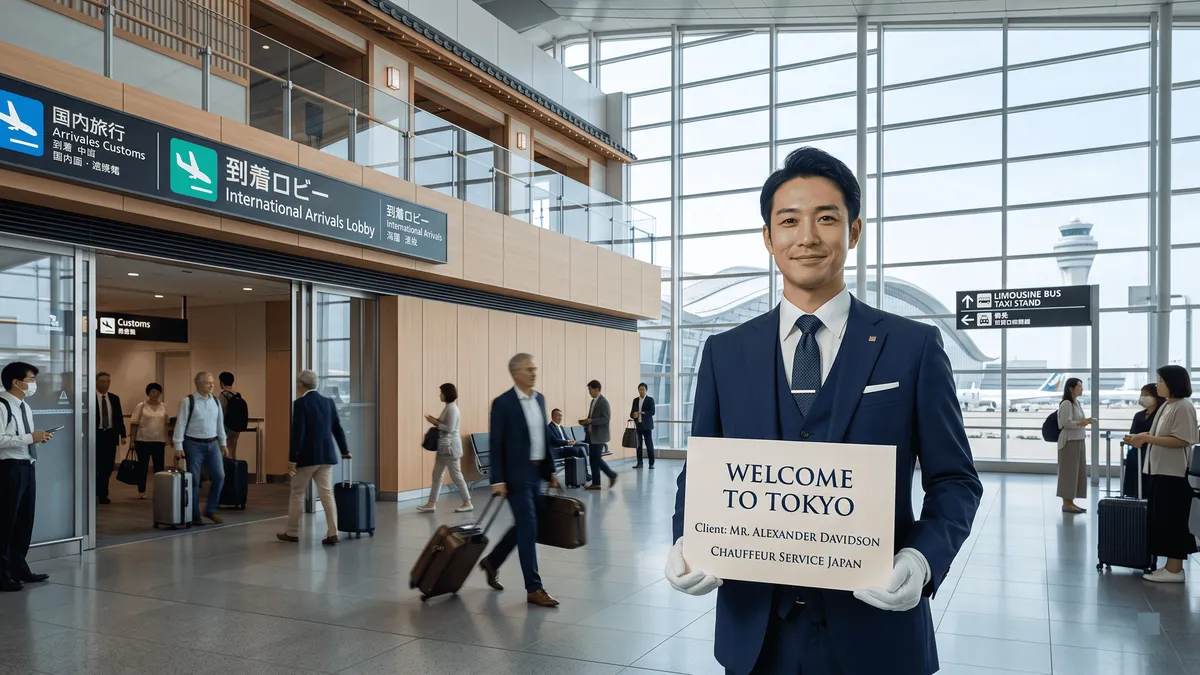 from $31.62
HND Airport Private Transfer to/from Tokyo City Center
A private one-hour transfer between Haneda Airport and your Tokyo accommodation in an air-conditioned vehicle, with the driver assisting with luggage on either the arrival or departure leg.
Check Availability from $61.50
Narita Airport (NRT): Private One-Way Transfer to/from Tokyo
A private one-way transfer between Narita Airport and your Tokyo hotel, timed so you reach your accommodation or the airport with time to spare instead of navigating trains after a flight.
Check Availability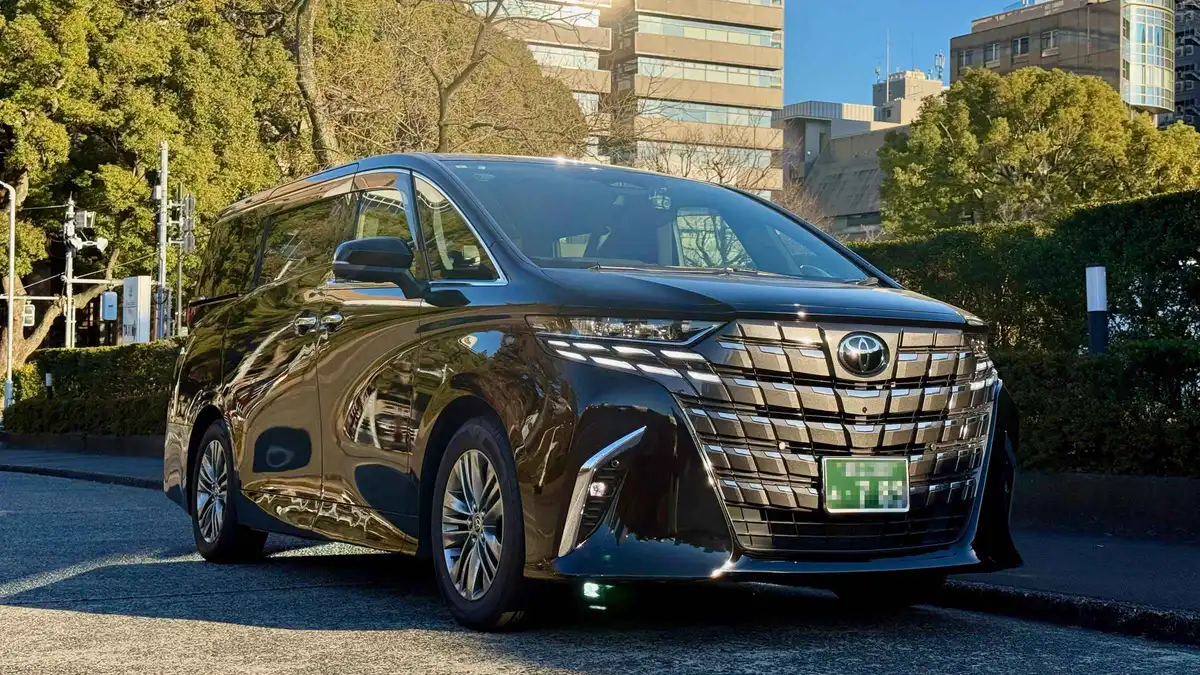 from $116.87
Haneda Airport (HND) Private Transfer to/from Tokyo City
A private one-way transfer of about an hour between Haneda Airport and central Tokyo, built to skip crowded trains, wrong-platform confusion and missed stops after a long flight.
Check Availability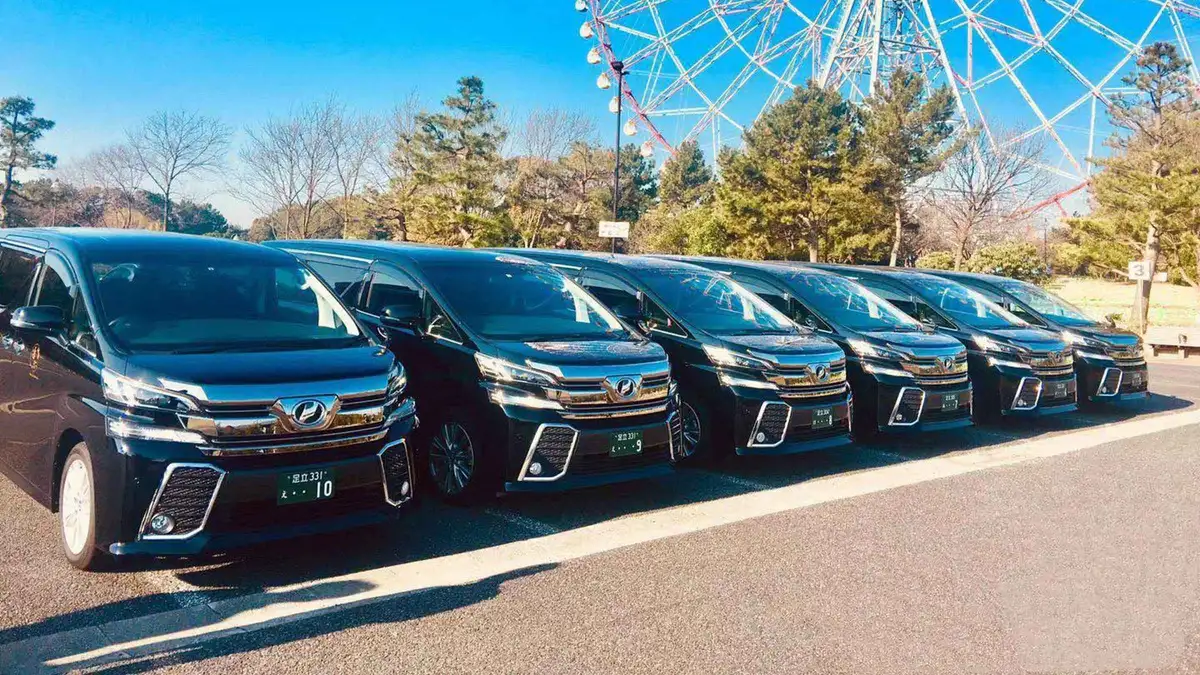 from $123
Tokyo: Narita Airport (NRT) Private Transfer for 1-9 Pax
A private Narita Airport transfer for up to nine passengers, run by a dedicated airport transfer operator focused on a smooth, comfortable ride between the airport and Tokyo.
Check AvailabilityPrices, ratings and details are the platform's own. Dollar figures are the listed prices. The platform bills in your account's currency.
The Honest Cut-Off, and What Nobody Publishes
Three numbers in this argument are ours rather than an operator's, and it is worth saying which.
The first is the arrival hour. Neither airport publishes a typical immigration or customs queue, and both vary with the bank of flights you land in. We allow an hour from wheels down to standing in the arrivals hall with a locker key, and on a bad afternoon that is optimistic.
The second is the check-in cut-off, which belongs to your airline rather than the airport. Haneda's own advice for departures is to allow the airline's stated time rather than the train time, which is the polite way of saying that thirty minutes from Tokyo Station is a journey and not a plan.
The third is the margin. A layover is the one journey where being late is not recoverable, so build in half an hour you fully expect to waste.
The case for not leaving at all
There is a respectable answer that involves no trains. Narita's connecting-flights page lists shower rooms and nap rooms alongside the lounges, and both airports have hotels inside or beside the terminals, which turns an overnight into a night's sleep. On a connection under five hours, or on any connection where you are collecting bags between separate tickets, that is not a consolation prize. It is the correct call.
And if the layover is really the beginning of the trip rather than a gap in it, stop treating it as one: send the case ahead, take the train in, and let the one-day Tokyo plan do the work. What it can reach in a day is the same list of top attractions in Tokyo this guide is built on.
Tokyo Layover: the Questions That Decide It
Can you leave the airport during a layover in Japan?
Yes, if you are eligible to enter Japan. Narita's own connecting-flights guide states that passengers skip immigration only while they stay in the departure area, and that leaving it requires immigration procedures with a visa in some cases. So a city trip is a full entry, and the airport's own advice is to confirm with your airline or the Immigration Services Agency in advance rather than assume. The entry section quotes the wording.
How many hours do you need for a layover in Tokyo?
About 6 hours at Haneda and about 8 at Narita, on our arithmetic rather than an airport's. Both figures come from the same subtraction: roughly an hour for arrival formalities, the airline's check-in cut-off at the far end, the round trip in trains, and half an hour of margin. At Haneda that round trip is about an hour to Tokyo Station and back; at Narita it is an hour and a quarter at best. The comparison table sets both out.
Which airport is better for a layover in the city?
Haneda, and it is not close. The airport's own table puts Tokyo Station about 30 minutes away and Shinagawa about 15, the monorail charges a flat $3.37 (¥520) from any terminal, and Asakusa is reachable on one Keikyu train with no interchange. Narita is roughly 60 kilometres out and its fastest train is 36 minutes to Nippori at $16.01 (¥2,470). Same layover, an hour and about twenty-five dollars of difference.
What do you do with your bags during a layover?
Whether you have them at all depends on your airline and whether your flights are on one ticket, which neither airport publishes a rule for. If you do have them, both airports sell lockers landside: Haneda from $2.59 (¥400) a day for a small one up to $9.72 (¥1,500) for the largest, Narita from the same $2.59 (¥400) daily or $1.94 (¥300) for six hours in its hourly machines. Note that Narita's day ends at midnight rather than after 24 hours.
Can you sleep at Narita Airport between flights?
Not airside. The airport states that aircraft can only operate between 06:00 and midnight and that passengers cannot remain in the terminals airside outside those hours, so an overnight transit must complete arrival immigration and customs. The airport lists shower rooms and nap rooms for waiting passengers within operating hours, and there are hotels at both airports for the rest of it.
Is a Tokyo layover worth doing at all?
At Haneda, often. Two hours around the Imperial Palace moat or in Ginza for about seven dollars of trains is a real piece of a city, and at eight hours or more Asakusa and the eastern arc open up. At Narita the honest answer is usually no under eight hours, and the better version of the idea is Narita town, minutes from the terminal rather than an hour away. If the connection is long enough to be a day rather than a gap, use the one-day plan instead.