 Visit Tokyo Guide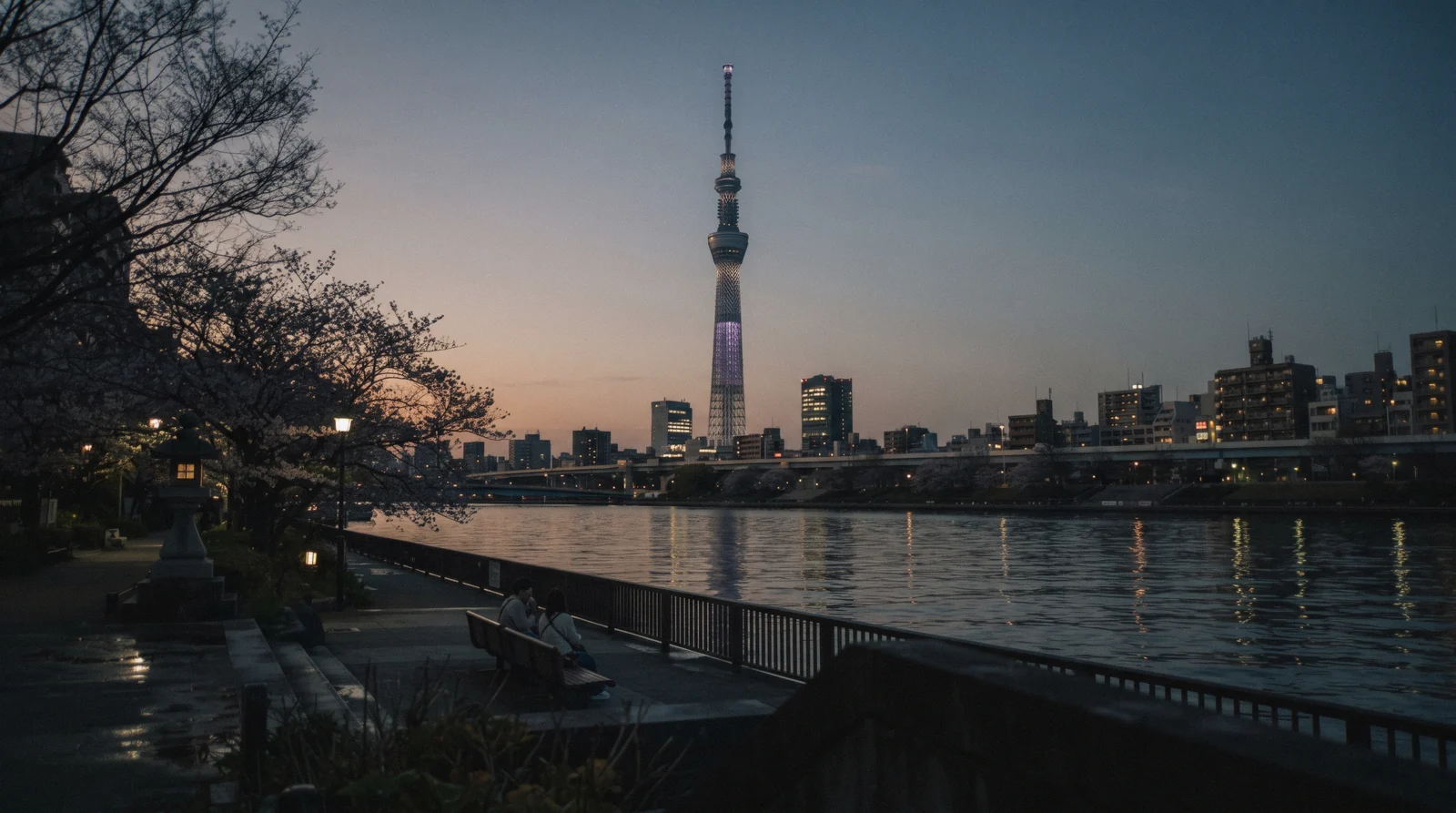
Tokyo Skytree
Tokyo Skytree is the 634-metre broadcasting tower in Oshiage, on the Sumida side of the river from Asakusa, with two paid viewing levels: the Tembo Deck at 350 metres and the Tembo Galleria, a glass ramp that spirals from 445 to 450 metres. This page covers the height, the hours that change from one date to the next, what each deck actually shows you, the queue rhythm and the walk from each station; the buying problem, with its date-based tiers and counter surcharge, is worked through on the Skytree tickets page, the rest of the city's viewpoints are indexed on the things to do hub, and the trip around them is planned with guided tours in Tokyo.
Quick answer Which deck, what it costs, when the view is clear, how long
Tokyo Skytree is 634 metres tall and sells two levels: the Tembo Deck at 350 metres from $11.66 (¥1,800) online, and a combined ticket that adds the Tembo Galleria at 445 to 450 metres from $19.44 (¥3,000). Standard days run 10:00 to 22:00 with last admission an hour before closing, but the closing time is set date by date on the operator's own calendar.
Key takeaways
- Buy the deck-only ticket unless the sky is genuinely clear: the admission ticket card holds a start time and lists the Galleria as a paid upgrade you can decide on once you are up there and can see how far the horizon goes
- Every ticket bought at the 4th-floor counter or the vending machines costs $3.24 (¥500) more per person than the same ticket bought online, which is the single most expensive mistake made here and is unpicked on the Skytree tickets page
- The view is the whole product and the weather decides it. On a clear winter morning the deck sees about 70 kilometres, which puts Mount Fuji on the horizon; in summer haze it sees the near suburbs and little else, and the months that are clearest are not the months most people come
- Below the tower sit a 300-shop mall and an aquarium, and the combined ticket with the aquarium is the version that turns a 90-minute stop into an afternoon in the rain
Key facts
Opening hours
| Standard days, daily | 10:00–22:00 |
|---|---|
| Short days, set per date | 10:00–20:30 |
| Extended days, set per date | 08:00–22:30 |
Closed No regular closed day is published. The operator's own opening-hours calendar shows the tower open on every date of the next three months, with the closing time set date by date
Admission
- Adult
- Tembo Deck from $11.66 (¥1,800); Tembo Deck and Tembo Galleria combined from $19.44 (¥3,000); the Galleria bought upstairs on its own $9.07 (¥1,400)
- Reduced
- Child rate applies to junior high school students and younger: Tembo Deck from $5.83 (¥900), combined from $9.72 (¥1,500), Galleria upstairs $4.54 (¥700)
- Free
- Children five and under. No senior tier is published
Planning it
- Time needed
- Not stated by the operator, which says only that there is no time limit once you are through the gate. Our routing: 90 minutes for the Tembo Deck alone, two hours with the Galleria
- Book ahead
- Essential — weeks ahead
- Address
- 1-1-2 Oshiage, Sumida-ku, Tokyo 131-0045 (main entrance on the 4th floor)
Five ways up, read off the operator's own ticket page and off GetYourGuide in Q3 2026. The yen figures are the official online fares and move with the visit date; the platform cards are listed in dollars by the seller and carry their own cancellation terms.
Are you paying for the view, or for the extra hundred metres and the spiral ramp?
| Option | Price | Includes | Cancel | Book |
|---|---|---|---|---|
| Tembo Deck, official online storeThe default, and the cheapest way in. Book the date and time yourself, pay in yen, carry a QR code | From $11.66 (¥1,800) adult, from $5.83 (¥900) child | Floors 340, 345 and 350, the glass floor, both cafés | Free over 31 days ahead, 20% fee inside 30 days | Official site |
| Tembo Deck and Tembo Galleria combined, officialAnyone who already knows the forecast is clear and wants the 450-metre ramp settled before arrival | From $19.44 (¥3,000) adult, from $9.72 (¥1,500) child | Everything above plus the 445 to 450-metre spiral walkway | Free over 31 days ahead, 20% fee inside 30 days | Official site |
| Admission ticket, GetYourGuideVisitors who would rather pay in their own currency and keep the option to cancel | Listed at $14.28 | The Tembo Deck, with the Galleria offered as an upgrade at booking | Free up to 24 hours before | Check Availability |
| Deck plus Sumida Aquarium, GetYourGuideA rainy afternoon, or anyone travelling with children who will not last two hours on a viewing deck | Listed at $28.57 | Observation deck entry and the aquarium four floors below | Non-refundable, and not sold at the counter on the day | Check Availability |
| Private guided visit with Galleria entryAnyone who wants the tower and the mall explained rather than just entered | From $98.69 | Guide, both decks, a walk through the shopping complex | Free up to 24 hours before | Check Availability |
The official store is cheaper than every reseller on this table and it is the only seller that can put you on a slot the resellers have not been allocated. What the platform cards buy is a card payment in your own currency, a free cancellation window that the official 30-day rule does not match, and in the aquarium case a bundle the tower's own shop sells only inside its Enjoy Pack. The one row that is never worth it is the 4th-floor counter, which is not on this table because it is the same ticket at $3.24 (¥500) more.
Ways up the Skytree compared
Four cards, each linking to the operator's own calendar, where the live date grid shows which slots are still open. Ratings and review counts are the platform's own figures, and the prices are the ones listed.
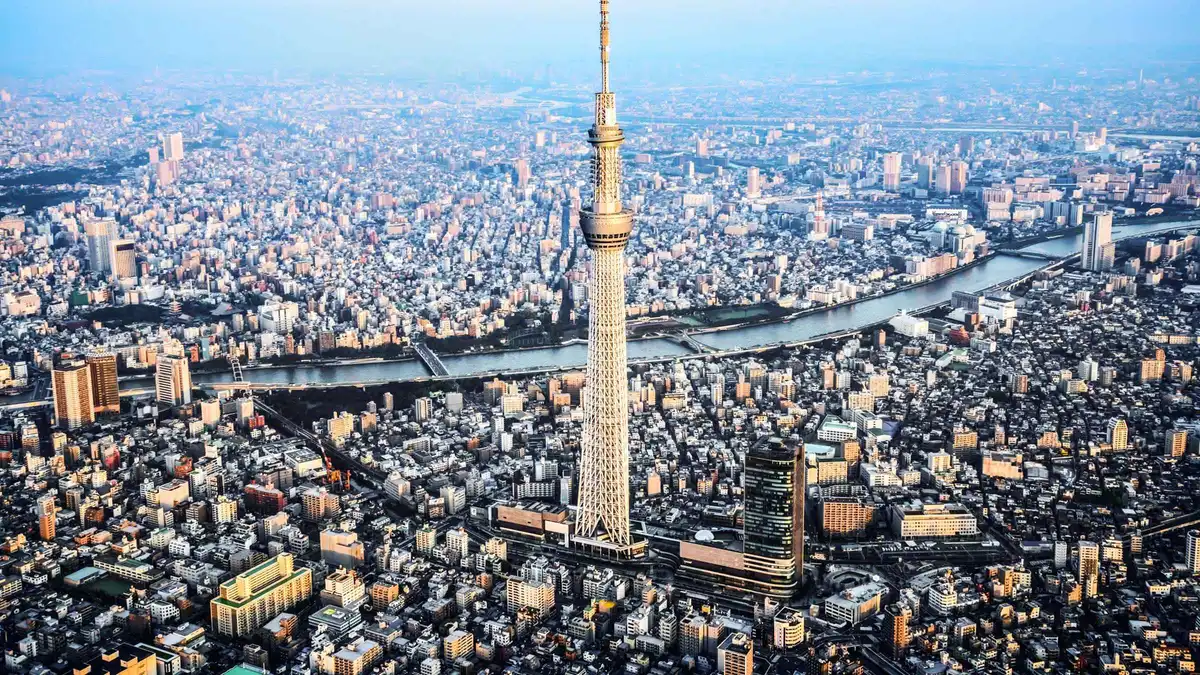 from $14.28
TOKYO SKYTREE® Admission ticket
Skip-the-line admission to Tokyo Skytree's Tembo Deck, with an optional upgrade to the higher Tembo Galleria, valid for one day with a booked start time.
Check Availability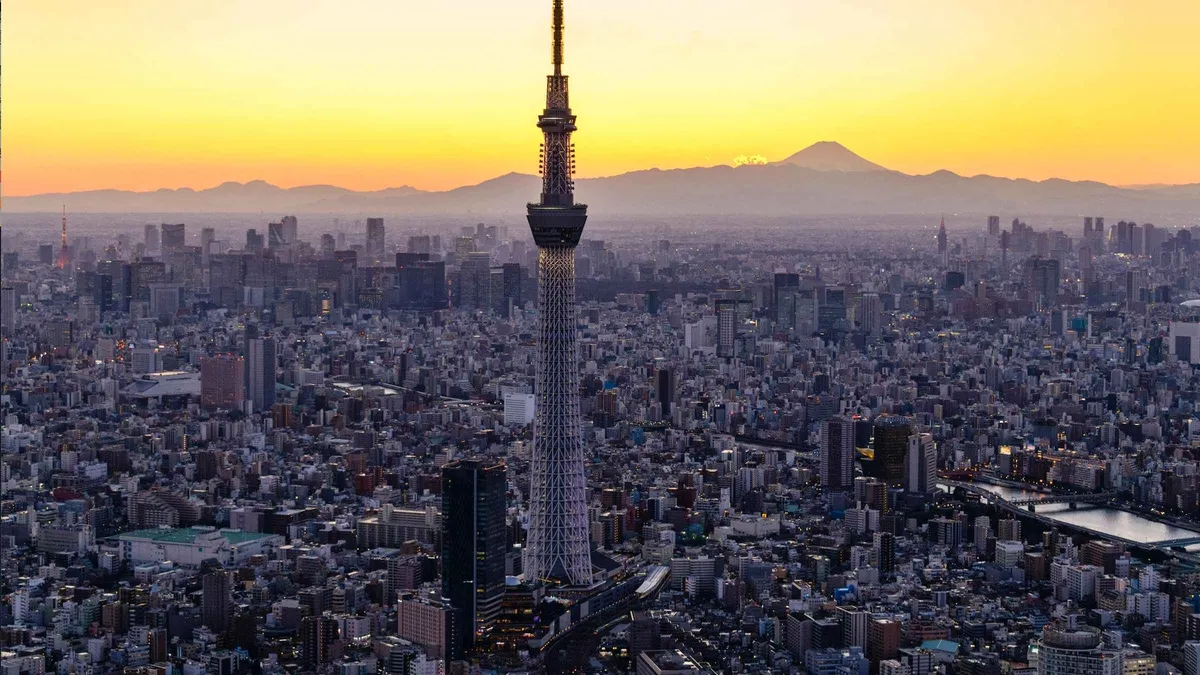 from $19.15
Tokyo Skytree: Admission Ticket with 24-Hour Subway Pass
A bundled Tokyo Skytree admission ticket and 24-hour Tokyo subway pass, non-refundable, saving on separate purchases and covering unlimited Metro and Toei Subway rides for a day.
Check Availability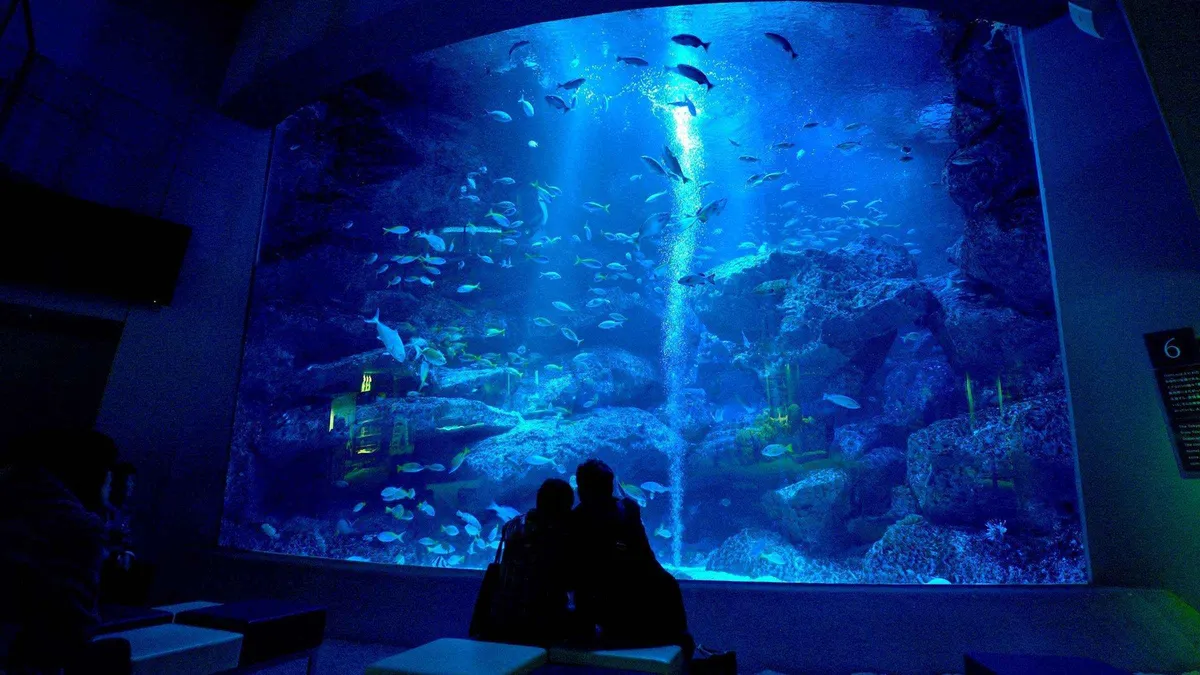 from $28.57
TOKYO SKYTREE® Admission Ticket with Sumida Aquarium Entry
A combo ticket pairing Tokyo Skytree's observation deck with next-door Sumida Aquarium, sold only in advance online, aimed at travelers wanting both stops at one discounted price.
Check Availability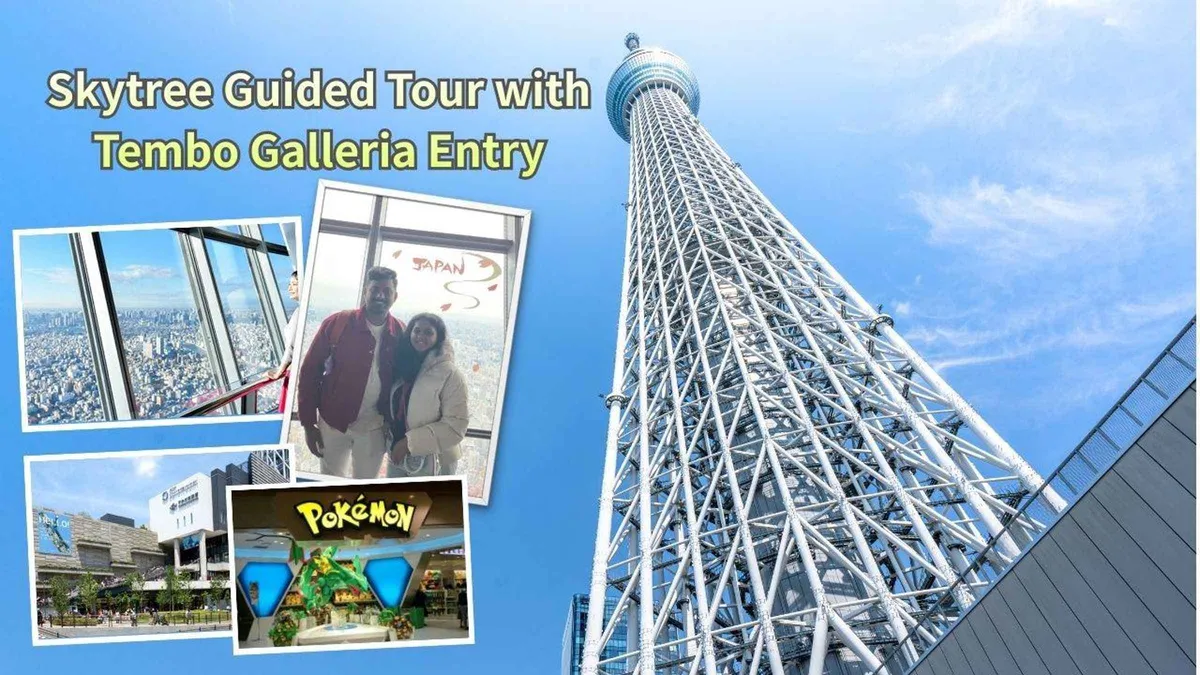 from $98.69
Tokyo: Skytree Guided Tour with Tembo Galleria Entry
A private guided visit to Tokyo Skytree's observation deck and Tembo Galleria, followed by a guided walk through Tokyo Solamachi, with photo tips and admission included in the price.
Check AvailabilityPrices, ratings and details are the platform's own. Dollar figures are the listed prices. The platform bills in your account's currency.
What The Skytree Is: A Broadcasting Mast You Are Allowed Inside
The tower exists to transmit television, and everything a visitor buys sits inside a structure designed for something else.
Six Tokyo broadcasters, NHK among them, went looking for a new transmitter in December 2003 because digital terrestrial signals were being blocked by the high-rise towers that had gone up around the older mast in Minato City. The plan was for something around 600 metres. Oshiage, a low-rise workshop district in Sumida with a railway yard on the site, was chosen as the location in March 2006, and the design was scaled up to 634 metres so the tower would be the tallest free-standing broadcasting structure in the world.
Guinness World Records certified it as the world's tallest tower on 17 November 2011, six months before it opened.
Why 634 and not 610
The operator's own specifications page is unusually candid about this: the height was originally set at about 610 metres and was pushed to 634 because the number reads in Japanese as mu-sa-shi, the name of the old province that covered what is now Tokyo, Saitama and part of Kanagawa. The tower stands on ground that was part of Musashi, and from the deck you look out over it. It is a marketing decision that happens also to be a good one, because the number is the single fact everyone leaves with.
What that means for the visit
A broadcasting mast has a narrow footprint, so the visitor levels are stacked rather than spread out. There is no ground-floor lobby to wander: the entrance is on the 4th floor, the exit on the 5th, and everything between the two is either a lift or a deck. The consequence is that the visit has almost no flexibility in it.
You go up, you walk two or three circular floors, you come down. What varies is how far you can see, which is why so much of this page is about weather and time of day rather than about the building.
Tokyo Skytree In Nine Dates
Every date below comes off the operator's own timeline page, which is more detailed than any secondary account and includes the figures it would rather not publish alongside the ones it would.
-
17 December 2003
Six broadcasters go looking for a tower
NHK and the major commercial stations launch a joint project for a new transmitter of around 600 metres, because digital signals from the existing mast are being blocked by new high-rises.
-
31 March 2006
Oshiage is confirmed as the site
The Sumida and Taito wards had lobbied jointly for it since 2005; the railway operator Tobu, which owned the land, took on the project.
-
10 June 2008
The name is decided by public vote
TOKYO SKYTREE wins a national ballot of six shortlisted names with 110,419 votes cast, beating Tokyo EDO Tower and Rising East Tower.
-
14 July 2008
Construction begins
Groundbreaking in Oshiage. Above-ground steelwork starts in April the following year with a first section four metres high and 2.3 metres across.
-
16 October 2009
The height is fixed at 634 metres
Raised from the original plan of about 610 metres, and chosen because 6-3-4 reads as Musashi, the old provincial name for this part of Japan.
-
31 March 2011
The tower tops out
Maximum height reached at 13:34, twenty days after the Tohoku earthquake, which the unfinished structure came through without structural damage.
-
22 May 2012
Tokyo Skytree Town opens
For the first fifty days admission is by reservation only and individual tickets are sold by lottery. Normal same-day sales begin on 11 July 2012.
-
31 March 2024
A million foreign visitors in one year
About 1.27 million overseas visitors between 1 April 2023 and 31 March 2024, the first time the figure has passed a million. Cumulative visitors reached 50 million on 21 September 2024, 4,506 days after opening.
-
1 April 2026
Variable pricing arrives
The operator switches individual observation-deck admission to a date-based pricing system, which is why the fare you are quoted depends on the day you pick rather than on a published rate card.
All nine dates are taken from the operator's own history page at en.tokyo-skytree.jp/about/timeline/ and its specifications page at en.tokyo-skytree.jp/about/spec/. The visitor figures are the operator's own; no independent audit of them is published.
Tembo Deck Or Tembo Galleria: What The Extra Hundred Metres Buys
This is the only real decision on the page, and the honest answer is that it depends on the visibility on the day rather than on the money.
The Tembo Deck sits at 350 metres and is three floors deep. Floor 350 is the arrival level, with glass panels over five metres tall arranged for an uninterrupted circuit; Floor 345 holds the shop, the postbox and the restaurant; Floor 340 has the café and the glass floor panel you can stand on and look straight down through. That is where most people spend their time, and it is where the city reads best, because at 350 metres the streets below are still legible as streets.
The Tembo Galleria is a different kind of space: a tube-shaped glass walkway that spirals from 445 metres up to a point at 450 called Sorakara Point. There is no floor plan to speak of, just the ramp and the view, and what changes is the horizon rather than the city. The operator's own figure for what the tower sees on a clear day is nearly 70 kilometres, and that number belongs to the upper level more than the lower one.
Its ticket counter is on Floor 350, so the upgrade can be bought after you have arrived and looked out of a window, which is exactly what we would do.
| Level | Height | What it is | Online adult fare | Worth it when |
|---|---|---|---|---|
| Tembo Deck, Floor 350 | 350 m | Arrival floor, full circuit, tall glass panels | From $11.66 (¥1,800) | Always. This is the ticket if you buy one thing |
| Tembo Deck, Floor 345 | 345 m | Shop, postbox, Sky Restaurant 634 | Included | You want a table at 345 metres, booked separately |
| Tembo Deck, Floor 340 | 340 m | Café and the glass floor panel | Included | Children, and anyone who came for the vertigo |
| Tembo Galleria, 445 to 450 m | 445 to 450 m | Spiral glass ramp to Sorakara Point | From $19.44 (¥3,000) combined | Visibility is good enough to see past the city |
| Galleria bought upstairs | 445 to 450 m | Same ramp, added on Floor 350 | $9.07 (¥1,400) | You have seen the horizon and decided it is clear |
The upgrade bought upstairs is not a trap
Two things make the on-the-spot upgrade the sensible route rather than a penalty. It carries no counter surcharge, which the operator states explicitly: the $3.24 (¥500) service fee applies to Deck and combined tickets bought at the 4th-floor counter or the machines, not to the Galleria ticket sold on Floor 350. And buying the combined ticket in advance locks you into a level you cannot see out of yet.
The one risk is that Galleria sales are suspended when the upper level is at capacity, and the operator says so in writing, so on a fine Saturday afternoon the upgrade may simply not be available.
How Much Time To Give The Skytree
The operator publishes no recommended visit length and states only that there is no time limit once you are through the gate. These three routings are ours, timed door to door from the 4th-floor entrance and including the lift queues we would expect at a normal hour.
The variable that swallows time here is not the deck, it is the base. The lifts take fifty seconds, the deck circuit takes twenty minutes if you walk it once, and then the exit puts you into a 300-shop mall on the way out. Budget for the mall or refuse it deliberately; drifting into it is how a one-hour stop becomes three.
| Routing | Door to door | What you get | What it skips |
|---|---|---|---|
| The view, and nothing else | About 1 hour | Lift up, one full circuit of Floor 350, the glass floor on 340, lift down | The Galleria, the mall, the aquarium, the café |
| Both decks, unhurried | About 2 hours | Everything above plus the 450-metre ramp and a coffee on 340 or 350 | The mall below and the aquarium |
| The tower as an afternoon | 3 to 4 hours | Both decks, the aquarium four floors down, and the mall on the way out | Nothing here, but it takes the day's second stop with it |
Where the time actually goes
A weekday morning slot at 10:00 runs close to the short routing: the lift queue is short, the deck is quiet enough to get to a window, and you can be back on the street inside an hour. The same visit at 18:00 on a Saturday is a different building. Slots run every thirty minutes, the entry line for a timed slot can still take twenty minutes at a busy hour, and the operator's call centre states plainly that it cannot tell you the wait in advance.
If the plan has anything after it, take a morning slot.
Hours, Weather And The Days The View Is Clearest
The hours are not a fixed line, and the view is not guaranteed at any price. Both facts are published by the operator, and both catch people out.
Standard days run 10:00 to 22:00. But the operator sets the closing time date by date on its own opening-hours calendar, and reading it for the three months from the present shows short days closing at 20:30, standard days at 22:00, and extended days opening at 08:00 or 09:00 and running to 22:30. There is no weekday and weekend pattern to memorise, and no regular closed day appears anywhere in the calendar or in the operator's FAQ.
Last admission is one hour before whatever the closing time is that day, and the page carries the warning that hours may change without prior notice.
The weather is the product
The operator's position on this is unambiguous and worth quoting in effect: it cannot tell you what the view will be, it will not comment on visibility in advance, and no refund or partial discount is given for rain or cloud. On top of that, lift service to the decks can be suspended in high wind at altitude, and the tower says to ask staff on site about resumption or refunds if that happens. The ticket buys a lift ride, not a horizon.
When the horizon actually appears
Clear air over Tokyo is a winter phenomenon: cold, dry days with a northwesterly behind them are when the 70-kilometre figure means anything and when Mount Fuji shows on the southwest horizon. Summer afternoons are humid and hazy, and a July visit at 15:00 will often see no further than the near suburbs. The practical rule is to keep the slot flexible if you can, take a morning slot in winter and an evening slot in summer, when the city lights make haze irrelevant.
Which months are clearest is worked through on the best time to visit page.
Night is a different ticket, not just a later one
The tower sells two time-limited variants alongside the plain ticket: a Morning View ticket from $16.20 (¥2,500) for an adult that includes a soft drink and a food item, and a Night Viewing ticket from $15.55 (¥2,400) that includes one alcoholic drink on Floor 350. Both are sold only when the events calendar carries them and both state that available hours change by season, so they are a check-the-calendar item rather than a standing option.
Inside The Tower: The Floors, The Glass Panel And The Lifts
The floor guide is published in full by the operator, and knowing it before you arrive saves the twenty minutes most people spend working out where they are.
You enter on the 4th floor, where the ticket counter, the ticket machines, the mobile-battery rental and a nursing room sit. The lifts, called Tembo Shuttles, go from there to Floor 350. You exit on the 5th floor, into a shop and a currency exchange.
Nothing about the sequence is optional and there is no re-entry once you have left the deck, which the operator states in its own FAQ.
- Floor 350: the arrival level, glass panels over five metres tall, a café, the commemorative photography stand, the Skytree Round Theater that turns the windows into a screen at night, and the ticket counter for the Galleria
- Floor 345: Sky Restaurant 634, the Skytree Shop and the Skytree post box, which takes real mail
- Floor 340: the second café and the glass floor panel, the one place where the height is a physical sensation rather than a picture
- Floors 445 to 450: the Tembo Galleria ramp, ending at Sorakara Point, with a high-definition digital telescope
- A wheelchair and stroller-priority lift serves the Tembo Deck floors only, not the Galleria
Bags, food and photographs
There is no published cloakroom for the observation decks, no dress code, and no restriction on cameras. What the tower does publish is a firm no-re-entry rule and a note that in rare cases staff will move people along on a congested deck, so the promise of unlimited time has a practical limit on a full Saturday evening.
Below The Tower: Tokyo Solamachi And The Sumida Aquarium
The base of the tower is a shopping complex with an aquarium inside it, and for a rainy afternoon that matters more than the deck does.
Tokyo Solamachi occupies the 2nd and 3rd floors of the tower's base and spreads through the surrounding block, with the exit from the deck feeding straight into it. It is a mall rather than a sight, but it is a covered one with food halls, and it is why an hour at the Skytree so often becomes three. The tower's own floor guide lists it plainly as the 2F and 3F occupant, which is the most honest description available.
Sumida Aquarium, on floors 5 and 6
The aquarium is a separate business inside the same complex, at 1-1-2 Oshiage on the 5th and 6th floors of Solamachi. Its own site gives current business hours as 10:00 to 20:00 with admission accepted until 19:00, and its published admission is $17.50 (¥2,700) for an adult, $12.96 (¥2,000) for a high-school student, $9.07 (¥1,400) for junior high and elementary students and $5.83 (¥900) for toddlers aged three and over. A disability certificate halves the price for the holder and one companion.
The two headline tanks are the coral reef on the 6th floor with its garden eels and the penguin pool with a café beside it, and the current admission figure has been in force since 10 February 2026.
The combined ticket, and its one condition
The deck and aquarium combo is the version of this stop that makes sense with children or in bad weather, and the condition attached to it is that it cannot be bought at the counter on the day: it is sold in advance only. The tower's own Enjoy Pack carries the same pairing among its plans, and those plans are listed by the ticket operator as non-refundable, which the platform card is too.
Getting There, And The Sumida-Side Approach Worth Taking
Two stations sit directly under the tower and a third approach, on foot from Asakusa, is the one that makes the building make sense.
Tokyo Skytree Station on the Tobu Skytree Line is the closest: it was called Narihirabashi until March 2012 and was renamed when the tower opened. Oshiage Station, on the Tokyo Metro Hanzomon Line, the Toei Asakusa Line and the Keisei Oshiage Line, is the other, and it is the one to use from most of central Tokyo. Both connect to the base of the tower without a street crossing.
The operator's Access page lists station names but not walking minutes, so anyone quoting you an exact figure is estimating, as are we.
The approach we would take
Come from Asakusa on foot. Cross the Sumida at Azumabashi, walk past the Asahi headquarters with the golden flame sculpture on its roof, and follow the Kitajukken River path east: it is about twenty minutes at an easy pace, the tower is in front of you the whole way, and the walk goes through the low workshop streets of Sumida that the tower was built to revive. Every photograph of the Skytree with water in the foreground is taken somewhere on this line.
From the Senso-ji temple it adds ten minutes to the same walk.
By train from the usual bases
From Shibuya or Omotesando, take the Hanzomon Line direct to Oshiage. From Ginza or Nihonbashi, the Toei Asakusa Line runs straight there. From Narita, the Keisei Access Express reaches Oshiage without a change, which makes the tower one of the few sights you can reach with a suitcase; how the airport routes work is set out on the Narita transfer page, and the passes that cover these lines are compared on the getting around page.
Five Things Most Visitors Do Not Know About The Skytree
Each of these is on an official page and none of them is on the ticket confirmation you will be sent.
- Tickets go on sale on the first day of the month two months before your visit, and no stock is held back for the day itself: a sold-out slot will not release more (operator's own ticket FAQ, global-official-ticket.tokyo-skytree.jp/en/faq)
- The date, the time and the number of guests cannot be changed after purchase. If you get any of them wrong, the only route is to cancel under the cancellation policy and rebook (operator's own ticket FAQ)
- Arriving late is survivable and arriving early is not: a late holder of a timed ticket may join the back of the current entry line on the same day, but entry before your slot is refused outright (operator's own ticket FAQ)
- If someone in your group does not turn up, the counter will refund that unused ticket on the day, minus a ¥300 handling fee per ticket, but only if at least one person in the booking actually enters (operator's own ticket FAQ)
- The Fast Skytree Ticket, the priority admission sold to foreign visitors from 19 February 2015, is no longer available for purchase, and the operator's own history page says so in a footnote rather than anywhere a buyer would look (en.tokyo-skytree.jp/about/timeline/)
The fifth one is the reason this page carries a warning rather than a recommendation about it: several third-party guides still describe the Fast Skytree counter on the 4th floor as though it were a live option, with prices attached. It is not on the operator's current English ticket page in any form, and the operator's own timeline marks it as discontinued.
At The Skytree: What To Do, And What Not To
Every line here is a decision argued above, compressed into the form you can act on that morning.
Do
- Check the operator's opening-hours calendar for your date before you book anything, because the closing time is set per date and the last admission moves with it
- Buy online rather than at the 4th-floor counter, which adds $3.24 (¥500) to every Deck and combined ticket
- Take a morning slot if the day has anything else in it, and an evening slot if the sky is hazy and you are coming for the lights
- Buy the Tembo Deck and decide about the Galleria upgrade upstairs on Floor 350, where you can see how far the horizon actually goes
- Walk in from Asakusa along the river if you have the twenty minutes; it is the only approach that shows you the tower rather than the mall
- Screenshot your QR code before you set off, which the operator recommends and which saves you if the station has no signal
Don't
- Don't expect a refund for bad weather. The operator states in writing that poor visibility from rain or cloud carries no refund and no partial discount
- Don't arrive before your slot and expect to go up early; entry before the booked time is refused, while arriving late is tolerated
- Don't book the combined ticket months ahead in summer, when the odds of a hazy afternoon are high and the upgrade can be bought upstairs for $9.07 (¥1,400) with no surcharge
- Don't count on the Galleria being on sale upstairs on a busy day, because the operator suspends those sales when the upper level is at capacity
- Don't plan to leave the deck and come back; re-entry is not permitted once you pass the exit
- Don't look for the Fast Skytree Ticket counter. It is discontinued, whatever the older guides say
Tokyo Skytree map: the entrance, the stations and the river approach
The tower, the two stations directly beneath it, and the three places on the Asakusa side that the twenty-minute river walk connects.
The tower's coordinate is its own published position; the station and river pins are placed from the operator's Access page and the street layout.
Next stop from the Skytree
Walk and ride times are ours, measured from the 4th-floor entrance. All three sit on the same side of the city, so none of them costs you a long transfer.
Senso-ji
The oldest temple in Tokyo, free to enter, with the Main Hall open from 06:00 in summer and 06:30 in winter and closing at 17:00 all year. It is the natural pairing with the tower because it is the opposite of it: low, old and open before anything else in the city. The walk between them along the Sumida is the good part of the day. Full detail on the Senso-ji page.
20 min walk or one stopAsakusa
The district the temple sits in, and the one place in the city where the old low-rise street grid survived in quantity. Kappabashi, the kitchenware street, is fifteen minutes further west and is where the plastic food models and the knives come from. The area guide is on the Asakusa page.
20 min walk across the riverUeno Park
Two stops on the Ginza Line from Asakusa puts you in the park that holds the Tokyo National Museum and four other museums. It is the obvious afternoon after a morning slot at the tower, and unlike the tower most of it closes on Mondays.
About 15 minutes by train via AsakusaTokyo Skytree questions
How tall is Tokyo Skytree, and why 634 metres?
634 metres to the tip, which made it the world's tallest tower when Guinness World Records certified it on 17 November 2011. The height was originally planned at about 610 metres and was raised because 6-3-4 reads as mu-sa-shi in Japanese, the name of the old province covering this part of Japan, which the operator states openly on its own specifications page. The visitor levels are far below the top: the Tembo Deck is at 350 metres and the Tembo Galleria runs from 445 to 450 metres, and what each of them costs is set out on the Skytree tickets page.
Is the Tembo Deck worth it, or should I pay for both levels?
Buy the Tembo Deck. At 350 metres the city is still legible as a city, and that is the view most people came for. The Galleria adds horizon rather than detail, so it is worth the difference only when the air is clear enough to see past the built-up area, which in Tokyo means a cold dry day rather than a summer afternoon. Because the Galleria counter sits on Floor 350, you can buy the deck ticket now and decide upstairs, at $9.07 (¥1,400) with no counter surcharge.
Can I get into Tokyo Skytree free?
No. Both observation levels are paid, with the online adult fare starting at $11.66 (¥1,800), and only children five and under go up free. What is free is everything below: the Tokyo Solamachi complex on the 2nd and 3rd floors, the plaza at the base and the river walk from Asakusa, which is where the best photograph of the tower is taken anyway. Other genuinely free viewpoints in the city are collected on the free things to do page.
Do Tokyo Skytree slots sell out?
Yes, and the sold-out state is final. Tickets go on sale on the first of the month two months before the visit date, and the operator states that no allocation is held back for same-day buyers: if a slot shows as full the day before, no additional tickets are released on the day. Weekends, national holidays and long-holiday weeks go first. The admission ticket card is a second inventory worth checking when the official calendar is full.
What are Tokyo Skytree hours, and is there a closed day?
Standard days run 10:00 to 22:00, with last admission an hour before closing, but the closing time is set date by date: reading the operator's own calendar for the coming three months shows short days ending at 20:30 and extended days opening at 08:00 and running to 22:30. No regular closed day is published anywhere on the operator's site, and the calendar shows the tower open on every date, which makes it one of the reliable options on a Monday, when much of the city's museum stock is shut.
What does the Skytree view actually show on a bad day?
The near suburbs, and not much else. The operator's own figure for a clear day is close to 70 kilometres, which reaches Mount Fuji on the southwest horizon, but it refuses to forecast visibility, gives no refund for rain or cloud, and can suspend lift service to the decks in high wind. In summer haze the deck is a picture of the city at your feet rather than a landscape. If the forecast is poor and the day is fixed, the combined ticket with the aquarium at least gives the afternoon somewhere else to go.
Where The Skytree Fits In A Tokyo Day
The tower is a one-hour sight with a three-hour building attached, and where it goes in the day depends on which of those you are buying.
The version that works for most first visits is a morning: an early slot, the deck to yourself, out by 11:30, and across the river on foot to Senso-ji and the Asakusa streets for the rest of the day. It puts the timed booking at the start, where a late train cannot break it, and it uses the clearest air of the day.
The version that works for a second visit is the opposite: a slot at dusk, the city lighting up under you, then dinner in the mall or back over the bridge. The trade is that the evening is when the queues build and when the Galleria is likeliest to be at capacity. Either way, the tower belongs on a Monday if your trip has one, because it does not close when the museums do; the pages that place it in a full route are the one-day and three-day itineraries.
The Skytree On Film: Both Decks, The Glass Floor And The Night View
Three walk-throughs that show what the fare buys before you pay for it: the deck circuit, the ramp above it and the complex underneath.
Tokyo SkyTree - Day to night 360° View of Tokyo + buying online tickets!
The same deck filmed in daylight and after dark, which is the clearest way to judge which slot you want.
Video: WHATchuHANAdoTokyo Skytree Observation Deck & Shopping Mall Day & Night Walking Tour
A full walk through the deck and then the complex below it, showing how much building sits under the view.
Video: Video Street View JapanIs visiting the world's tallest tower actually worth it?
A short, sceptical visit that argues the case both ways, useful if you are deciding whether to go up at all.
Video: Phill & Fang Around the WorldVideos load from YouTube only when you press play.
Prices, hours and terms are set by the venue or operator and confirmed at checkout.
We may earn a commission if you book through one of our links, at no extra cost to you. Full affiliate disclosure