 Visit Tokyo Guide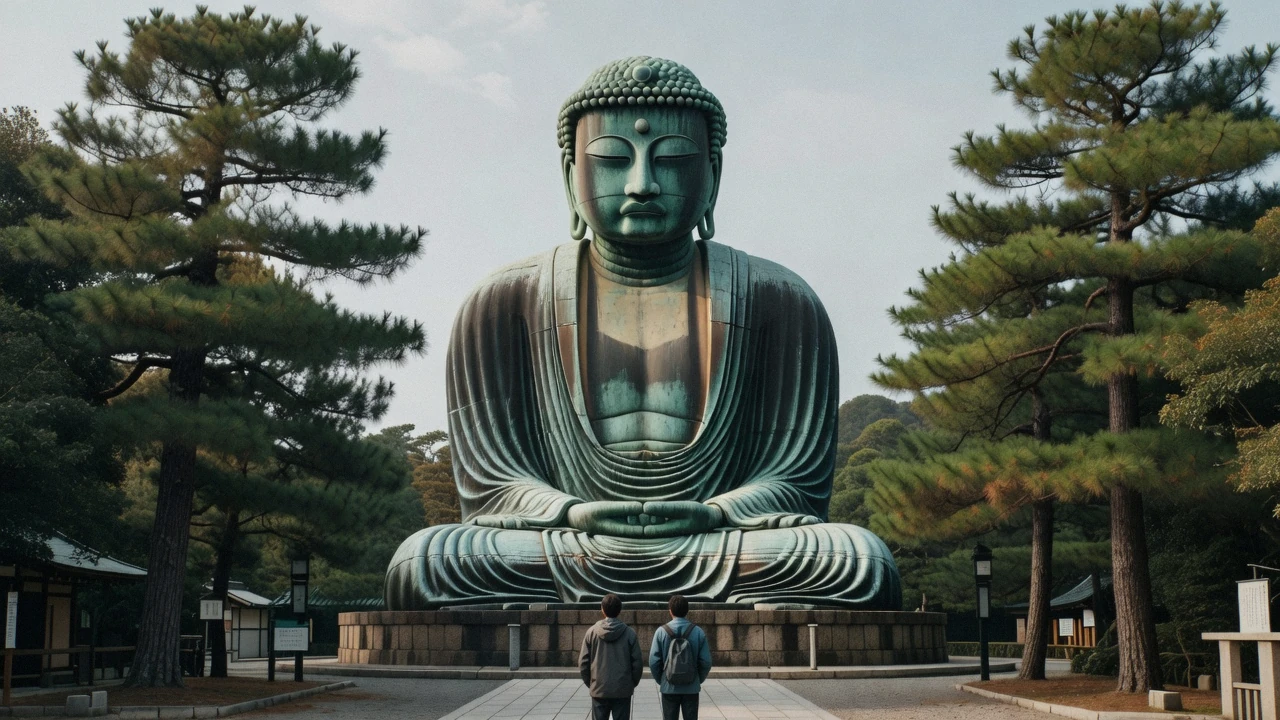
Kamakura Day Trip From Tokyo
A Kamakura day trip from Tokyo is an hour of train and then a day of walking between four things: a bronze Buddha sitting in the open air because the hall around it washed away, a hillside temple of sea views and stone Jizo figures, a bamboo grove with a tea house in it, and the shrine the shoguns built their capital around. The costs are small, $1.94 (¥300) at the Buddha and $2.59 (¥400) at each of the other two, and the transport is the part that needs thinking about, because the pass everybody recommends does not cover the train most people take. This page covers the fares, the temple hours, the little railway along the coast, the half-day version and the day the crowd makes it a mistake. The other destinations within two hours are ranked on the day trips hub, and for the city you are leaving, see what to do in Tokyo, and the island at the far end of the same railway has its own page at Enoshima.
Quick answer The fares, the four temples, what each costs, how long to allow
Kamakura is about an hour from Tokyo Station on the JR Yokosuka Line with no change, and the whole day's admissions come to under ten dollars. The Great Buddha is $1.94 (¥300) and cash only, Hase-dera $2.59 (¥400) and the bamboo temple $2.59 (¥400); the shrine at the top of the main avenue charges nothing and opens at six in the morning.
Key takeaways
- The seaside railway between Kamakura and Fujisawa is the day's transport and half its pleasure, and an Enoden day pass is $5.18 (¥800), which pays for itself in three rides and gets you a discount at Hase-dera.
- A nine-hour guided trip with temple tickets included runs $51.94 and covers the shrine, Hase-dera and the Great Buddha in one coach; the version with the little train built in is $58.12.
- It works as a half day if you skip the coast: shrine, Komachi-dori, Hase-dera and the Buddha is four hours from the station barrier and back. The three-day Tokyo plan has room for exactly that.
- Bring cash. Kotoku-in states plainly that it takes cash only, and the small shops in Hase are the same.
Key facts
Opening hours
| Kotoku-in, Great Buddha, April to September | 08:00–17:30 |
|---|---|
| Kotoku-in, October to March | 08:00–17:00 |
| Hase-dera, April to June | 08:00–17:30 |
| Hase-dera, July to March | 08:00–17:00 |
| Hokoku-ji bamboo garden, daily | 09:00–16:00 |
| Tsurugaoka Hachimangu, gates, all year | 06:00–20:00 |
Closed None published for the Great Buddha, Hase-dera or the shrine. The bamboo temple closes 29 December to 3 January and may shut in bad weather
Admission
- Adult
- Great Buddha $1.94 (¥300), plus $0.32 (¥50) to step inside the statue; Hase-dera $2.59 (¥400); Hokoku-ji $2.59 (¥400), or $6.48 (¥1,000) with matcha and sweets in the bamboo
- Reduced
- Great Buddha $0.97 (¥150) elementary; Hase-dera $1.30 (¥200) ages 6 to 11; Hokoku-ji $1.30 (¥200) elementary and junior high
- Free
- Tsurugaoka Hachimangu and its approach, Komachi-dori, the beach and the hillside trails
Planning it
- Time needed
- Not stated by the temples; our routing: 4 hours for the Buddha, Hase-dera and the shrine, a full day with the bamboo temple and the coast
- Book ahead
- Optional — walk-up usually fine
- Address
- Kotoku-in, 4-2-28 Hase, Kamakura, Kanagawa 248-0016; Hase-dera, 3-11-2 Hase; Hokoku-ji, 2-7-4 Jomyoji
The four ways to do a day here, with the walk-in temples first and their prices taken from Kotoku-in's and Hase-dera's own English pages, read in Q3 2026, converted at ¥1,000 to $6.48. The tour prices are what GetYourGuide listed for those cards on the same day. No temple in Kamakura sells a timed ticket or a skip-the-line pass, because none of them has a queue worth skipping outside cherry blossom season.
Are you paying for the temples, which are cheap, or for somebody to solve the transport, which is where the day actually goes wrong?
| Option | Price | How long | What it covers | Book |
|---|---|---|---|---|
| Walk in at Kotoku-in, the Great BuddhaEveryone. This is the cheapest famous thing in the Tokyo area and there is no version of the day that skips it. | $1.94 (¥300), plus $0.32 (¥50) to go inside the bronze; cash only | 30 to 45 minutes | The statue, the grounds and the straw sandals on the wall; last admission is 15 minutes before the gate closes | Official site |
| Walk in at Hase-dera, five minutes awayAnyone who would rather have one temple properly than four in a hurry; it takes no reservations at all. | $2.59 (¥400) adult, $1.30 (¥200) ages 6 to 11 | About an hour | The gardens, the sea view terrace, the Kannon hall, the cave and the ranks of small Jizo figures | Official site |
| Guided day trip with temple tickets includedVisitors on a short trip who want the whole area in one day without reading a timetable or buying six separate tickets. | $51.94 | 9 hours | The shrine, Hase-dera, the Great Buddha, Komachi-dori and the island at the end of the line; 4.5 from 1,687 reviews | Check Availability |
| Guided day trip that includes a ride on the coastal railwayAnyone who came for the railway and the coastline as much as the temples, and wants the ride handled for them. | $58.12 | 10 hours | The Great Buddha, the shrine, the island and a leg on the little train instead of the coach; 4.6 from 452 reviews | Check Availability |
The two guided options both run out to the island, which is why the prices sit close together. If you only want Kamakura, the honest comparison is the tours against a train ticket and about eight dollars of admissions, and the tours are buying you the guide and the transfers. Official temple links above are plain, untracked and go to the temples' own pages.
Kamakura day trips from Tokyo compared
Two guided day trips, both of which pair the temples with the island at the far end of the coastal railway. Ratings and review counts are the platform's own figures for these cards as listed.
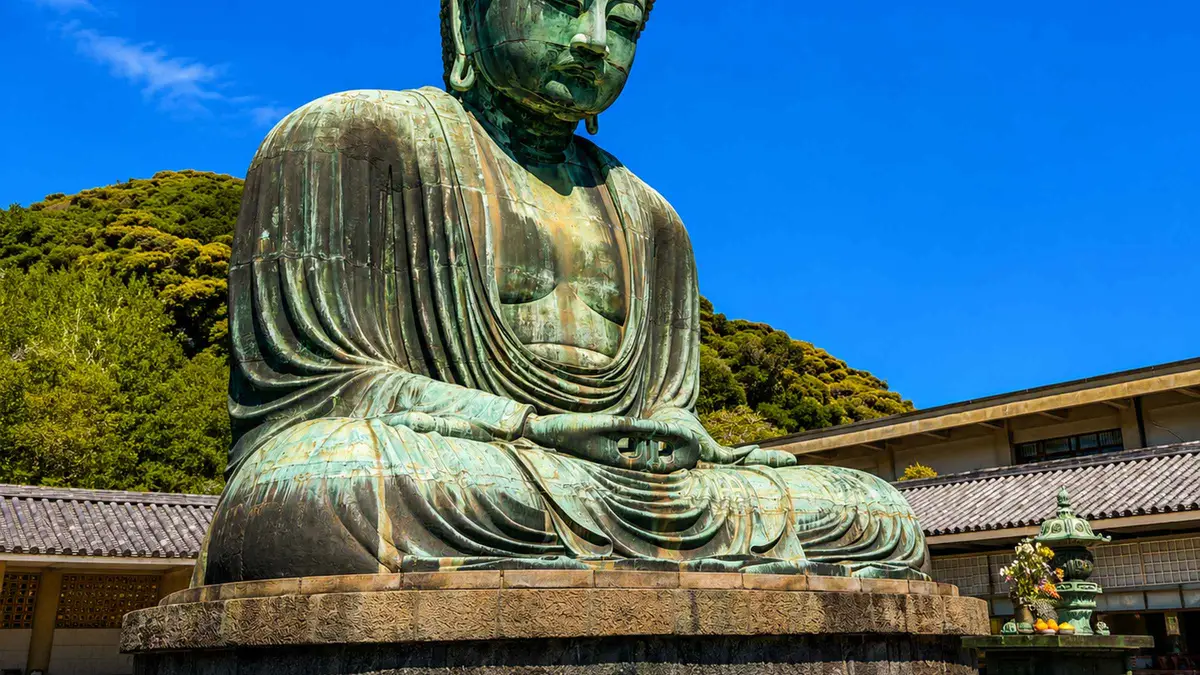 from $51.94
Tokyo: Kamakura & Enoshima Day Trip including Temple Tickets
A 9-hour Kamakura and Enoshima day trip with temple tickets included, taking in Tsurugaoka Hachimangu, Hase-dera, the Great Buddha, Komachi Street and Enoshima, with Mount Fuji visible on clear days.
Check Availability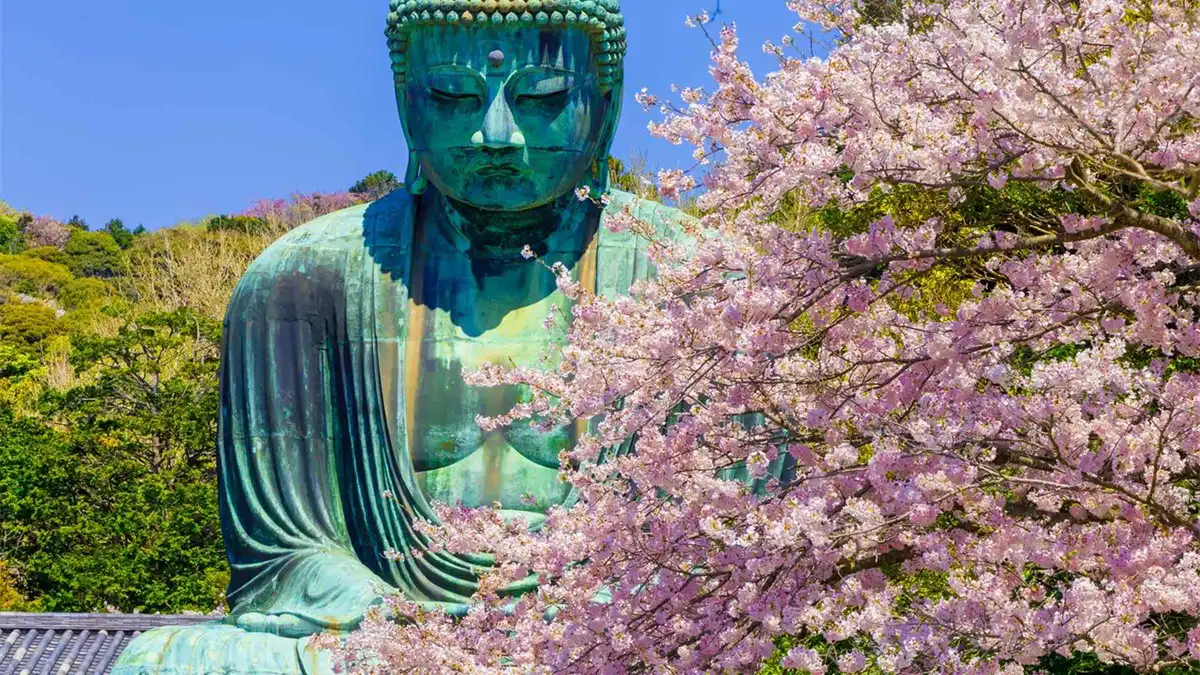 from $58.12
Tokyo: Kamakura, Enoshima Trip With Train Ride, Great Buddha
A 10-hour Kamakura and Enoshima day trip featuring a ride on the Enoden train, plus the Great Buddha, Enoshima Island and Tsurugaoka Hachimangu Shrine, guided from Tokyo.
Check AvailabilityPrices, ratings and details are the platform's own. Dollar figures are the listed prices. The platform bills in your account's currency.
The Four Things Worth The Train Fare
Kamakura has dozens of temples and a day holds four of them properly. Hours and prices below come from each temple's own site.
Kotoku-in and the Great Buddha
The bronze Amida sits in the open because the building around it did not survive: the hall was destroyed twice in the fifteenth century and never rebuilt, and the statue has weathered outdoors ever since. That accident is the reason the figure photographs the way it does, against sky rather than against a ceiling.
Entry is $1.94 (¥300) for junior high age and above, $0.97 (¥150) for elementary children, and a further $0.32 (¥50) to walk inside the hollow bronze itself and see the casting seams from the inside. Hours are 08:00 to 17:30 from April to September and 08:00 to 17:00 from October to March, with last admission 15 minutes before the gate closes and the interior shutting half an hour earlier than that. The temple states it takes cash only, which is the single most useful sentence on its website.
Hase-dera, five minutes downhill
Hase-dera is the one people are surprised by. It climbs a hillside above the bay, so the terrace outside the main hall looks over the roofs to the sea, and the grounds hold a garden, a cave you stoop through and hundreds of small Jizo figures placed for children who died.
It opens at 08:00 all year, closing at 17:30 from April to June and 17:00 from July to March, with last entry half an hour before. Admission is $2.59 (¥400) for adults and $1.30 (¥200) for children aged 6 to 11, and the temple states that it takes no reservations of any kind. Allow an hour rather than the twenty minutes most itineraries give it, and note that it is a five-minute walk from the Great Buddha, which is why the two are always done together.
Hokoku-ji, the bamboo temple
Hokoku-ji is a small Rinzai temple on the eastern side of town whose garden holds roughly 2,000 stems of bamboo, and it is the closest thing to Kyoto's famous grove within an hour of Tokyo. The garden costs $2.59 (¥400) for high-school age and above and $1.30 (¥200) for elementary and junior high pupils, and it opens 09:00 to 16:00.
The part worth planning is the tea house. A matcha with dried sweets, taken sitting in the bamboo, is $3.89 (¥600) on top of admission, and the ticket for it is sold only until 15:30 and can be suspended when the garden is busy. The temple closes from 29 December to 3 January and says it may close in bad weather. Its own access page gives the practical route: bus stand 4 outside the east exit of Kamakura Station, about 12 minutes to the Jomyoji stop, then three minutes on foot, or about seven minutes by taxi.
The temple also runs a zazen sitting every Sunday morning from 07:30 to 09:15, which is public and is the reason to be in Kamakura at seven in the morning.
Tsurugaoka Hachimangu
The shrine closes the long avenue that runs up from the sea and is the reason the medieval capital sits where it does. It is free, and its gates are open 06:00 to 20:00 all year, which makes it the first and last thing you can do in Kamakura on any given day.
One warning that is entirely practical. The domain that reads like the shrine's English site, tsurugaoka-hachimangu.jp, now serves unrelated commercial content and has nothing to do with the shrine. The shrine's real site is hachimangu.or.jp, and that is where the opening hours above come from. Its own access line is ten minutes on foot from the east exit of Kamakura Station.
The Little Railway, And The Crossing With The Crowd On It
The Enoshima Electric Railway, the Enoden, runs ten kilometres between Kamakura and Fujisawa on a single track that squeezes between houses and then breaks out along the sea wall. It is transport and it is also the reason many people come.
Four stops matter for a day trip. Kamakura for the shrine and Komachi-dori, Hase for the Great Buddha and Hase-dera, Kamakurakokomae for the level crossing with the sea behind it, and Enoshima at the far end for the island. The line is slow by design, the carriages are short, and standing at the front window is most of the appeal.
Kamakurakokomae is the problem stop. The crossing beside the station appears in the opening credits of a famous basketball anime, and on fine weekends the pavement fills with people photographing an empty road until a train arrives. There is no viewing platform, no barrier and no ticket: it is a working crossing on a public road, with a small station and a beach opposite. Kamakura's own tourist association has spent years asking visitors to keep off the roadway and out of residents' driveways, and it is worth taking seriously, because the alternative is that the town starts fencing things off.
The carriages themselves get crowded in the same hours. Between about eleven and three on a fine Saturday the Enoden runs full, and the queue at Kamakura station to board can take two or three departures to clear. That is an argument for doing Hase early and the coast in the late afternoon, when the light on the sea is better anyway. The line and its stops are easy to handle alone, though travellers who prefer to hand over the logistics can compare guided tours in Tokyo that cover Kamakura as a day trip.
The Pass Arithmetic, Including The One That Does Not Cover Your Train
Two passes are sold for this corner of Kanagawa and they cover different things. Prices come from Odakyu's and Enoden's own pages, and the sums below are ours.
The trap is the Enoshima-Kamakura Freepass. It is excellent value and it does not cover the JR Yokosuka Line, which is how most people reach Kamakura from central Tokyo. It is an Odakyu product: a round trip on the Odakyu Line from your starting station to Fujisawa, plus unlimited Enoden rides for the day.
If you start at Shinjuku it makes sense. If you start at Tokyo Station and ride JR to Kamakura, it does not.
| Ticket | Price | Covers | When it pays |
|---|---|---|---|
| Enoshima-Kamakura Freepass from Shinjuku | $10.63 (¥1,640) adult, $2.79 (¥430) child | Odakyu round trip Shinjuku to Fujisawa plus unlimited Enoden for one day | If you travel out on the Odakyu Line and use the Enoden more than twice |
| Enoshima-Kamakura Freepass from Fujisawa | $5.25 (¥810) adult, $2.66 (¥410) child | The local half only, for anyone already at Fujisawa | If you arrive by JR at Fujisawa or Ofuna rather than at Kamakura |
| Enoden Noriorikun one-day pass | $5.18 (¥800) adult, $2.59 (¥400) child | The whole Enoden line, all day, from any station machine | Three rides or more; it also carries discounts at Hase-dera and at the island's tower and aquarium |
| No pass, JR out and single Enoden fares | JR fare plus a few hundred yen a hop | Whatever you actually ride | A half day: shrine, Hase-dera, Buddha, back to Tokyo |
| Guided day trip | $51.94 to $58.12 | Coach or train, guide and temple entries | When you would rather not think about any of the above |
What the JR leg costs, and why we are hedging
The JR Yokosuka Line runs from Tokyo Station to Kamakura with no change. Hokoku-ji's own access page gives the timings: about 60 minutes from Tokyo Station, about 50 from Shinagawa, and about 53 from Shinjuku on the Shonan-Shinjuku Line. Those are official numbers from a temple that has to answer the question every day.
The fare is the part we cannot stand behind. JR East's fare-finder pages refused every automated request we made, and the figures in circulation for Tokyo to Kamakura sit between ¥920 and ¥950 one way, which is around $6 either way. We print the range and the reason rather than pick one and pretend. Tap in with an IC card and the machine will settle it; getting around covers how those cards work.
Kamakura In Eight Dates
Everything a day trip walks past belongs to about a hundred and fifty years of Japanese history, and then to eight centuries of the town being quietly by the sea.
-
1063
The Minamoto clan enshrines Hachiman by the shore
The shrine that became Tsurugaoka Hachimangu is founded near the beach, decades before the town becomes a capital [Wikipedia, Tsurugaoka Hachimangu].
-
1180
Minamoto no Yoritomo moves the shrine inland
He relocates it to the hill at the head of the avenue and lays out the approach that still runs from the sea to the steps, which is why the modern town has a spine [Wikipedia, Kamakura].
-
1192
The shogunate is established here
Kamakura becomes the seat of military government for a century and a half, and the temples on this page are built on the money and the faith of that period [Wikipedia, Kamakura shogunate].
-
1252
Casting begins on the bronze Buddha
The figure at Kotoku-in that visitors photograph today is started in this year, replacing an earlier wooden one [Wikipedia, Kotoku-in].
-
1498
The hall around the Buddha is destroyed
After earlier damage, a tsunami takes the building; the statue is left sitting in the open air and has stayed there ever since [Wikipedia, Kotoku-in].
-
1902
The Enoden opens along the coast
The single-track line between Fujisawa and Kamakura begins running, and the seaside stretch becomes one of the most photographed pieces of railway in the country [Wikipedia, Enoshima Electric Railway].
-
1958
The town is designated a historic city
National protection of the hills and the temple precincts is what keeps the skyline low and the hiking trails walkable between the valleys [Wikipedia, Kamakura].
-
2023 onward
The city starts publishing crowding in real time
The Kamakura City Tourist Association runs a live congestion map of ten areas, from Komachi-dori to Kita-Kamakura, so visitors can see where the crowd is before they walk into it [konzatsu-kamakura.jp].
Opening hours, prices and access timings on this page come from the temples' own sites, kotoku-in.jp, hasedera.jp, houkokuji.or.jp and hachimangu.or.jp. The historical dates are from the Wikipedia articles named beside each line, which we cite rather than present as our own archive work.
How Much Time To Give Kamakura
No temple here publishes a suggested visit length. These three routings are ours, built from the opening hours above and the walking distances between the stops, and the door-to-door figures start and end in central Tokyo.
The variable is the coast. Kamakura proper, meaning the shrine, the shopping street and the two temples at Hase, is a compact half day. Adding the railway, the beach and the island turns it into eleven hours, which is a different trip and a different level of tiredness.
| Routing | What you get | What it skips | Door to door |
|---|---|---|---|
| The half day | Shrine at opening, Komachi-dori, the Enoden to Hase, Hase-dera and the Great Buddha, back on an early afternoon train | The bamboo temple, the coast, the hiking trails and the island | About 6 hours, of which 2 is travel |
| The full day | All of the above plus Hokoku-ji and its tea house in the morning, and the coast in late-afternoon light | The island, unless you are prepared to be back after eight | 9 to 10 hours |
| With a guide | Nine hours with temple entries included, or ten with the railway ride built in | Choosing your own hours; the group moves when it moves | 9 to 10 hours, fixed |
The Hillside Trails Between The Temples
Kamakura sits in a bowl of wooded ridges, and footpaths cross them between the temple valleys. It is the part of the day that costs nothing and that almost no itinerary includes.
The best-known route runs from the temples at Kita-Kamakura over the ridge and down to the Great Buddha, coming out a few minutes from Hase-dera. It is a proper woodland path rather than a promenade, with roots, steps and a small shrine on the way, and walking it converts two separate temple visits into one continuous morning.
Three practical points. The paths are earth, so they are slippery for a day or two after rain and are occasionally closed after storms. There is nothing to buy on the ridge, so carry water. And the Kamakura City Tourist Association publishes hiking model courses on its own site, which is the source to check for closures before you set off rather than a blog post from three years ago.
If that sounds like more walking than you came for, the same association runs a live crowding map covering Komachi-dori, Wakamiya-oji, Hase, both station exits, Kita-Kamakura, Yuigahama beach, the Jomyoji area, Gokurakuji and the Kenchoji stretch. Three colour bands, a timestamp on every update, and a genuinely useful way to decide whether to do the shopping street now or after lunch.
Five Things Most Visitors Do Not Know About Kamakura
Each one changes something you would otherwise do on the day, and each carries its source.
- You can go inside the Great Buddha for the price of a vending-machine coffee. The interior of the bronze is open for a further $0.32 (¥50) on top of admission, and it closes half an hour before the main gate does [kotoku-in.jp/en]. - The temple takes cash only. Kotoku-in states it on its own English page, and the small shops on the walk between the Buddha and Hase-dera are much the same [kotoku-in.jp/en]. - The bamboo temple stops selling tea an hour before it closes. Matcha with dried sweets is $3.89 (¥600) and the ticket window shuts at 15:30, earlier still when the garden is busy [houkokuji.or.jp, guide page]. - The pass most guides recommend does not cover the JR train most people catch. The Enoshima-Kamakura Freepass is an Odakyu product covering the Odakyu Line and the Enoden, not the JR Yokosuka Line from Tokyo Station [odakyu-global.com, freepass page]. - The shrine's obvious English domain is not the shrine. tsurugaoka-hachimangu.jp now serves unrelated commercial content; the shrine's own site is hachimangu.or.jp, where the 06:00 to 20:00 gate hours are published.
In Kamakura: What To Do, And What Not To
Each line is a decision argued above, in the form you can act on at the station barrier.
Do
- Start at the shrine, which opens at 06:00, and be at Hase before the eleven o'clock crowd arrives
- Carry cash: the Great Buddha takes nothing else
- Buy the Enoden day pass at the station machine if you plan three or more rides, and use the Hase-dera discount it carries
- Give Hase-dera an hour rather than twenty minutes, and walk up to the sea view terrace
- Check the city association's live crowding map before deciding when to walk Komachi-dori
- Take the coast in late afternoon, when the light is better and the trains have thinned
Don't
- Don't buy the Odakyu freepass if you are travelling out on the JR Yokosuka Line, because it does not cover it
- Don't stand in the road at the level crossing by the sea: it is a live public road and the town has asked people repeatedly
- Don't count on tea at the bamboo temple after 15:30, and don't count on the garden at all between 29 December and 3 January
- Don't trust tsurugaoka-hachimangu.jp for the shrine's hours; that domain is no longer the shrine's
- Don't attempt the Great Buddha, Hase-dera, the bamboo temple and the island in one day unless you are content to be back in Tokyo after eight
- Don't walk the ridge trails the morning after heavy rain
Kamakura day trip map: the temples, the shrine and the railway
The four sights this page argues for, the two stations they hang off and the crossing on the coast. Positions are read at street level and are good enough to walk by.
Coordinates for the Great Buddha are the ones recorded on Kotoku-in's Wikidata item; the rest are read off the map and rounded.
What pairs with a Kamakura day
Travel times are the operators' own; the judgement is ours.
Enoshima
The island at the western end of the same railway, with a shrine, sea caves and a tower. Both guided day trips on this page include it, and the Enoden day pass covers the ride.
25 minutes along the coast on the EnodenYokohama
Halfway back to Tokyo, and the easiest evening addition if you left Kamakura early. Chinatown eats late, which suits a day that started at six.
About 25 minutes north by JRThe rest of the day trips
Every destination within two hours, compared on travel time, cost and what happens in bad weather, including Mount Fuji two hours west and Hakone beyond it.
One to two hours outKamakura day trip questions
Is Kamakura a good day trip from Tokyo?
Yes, and it is the cheapest good one. An hour each way on a direct train, under ten dollars of temple admissions and a coastline at the end of it. It suits anyone who wants old Japan without the Kyoto journey, and it works in most weather because the temples are outdoors but the distances are short. If you would rather have a mountain than temples, the day trips hub sets it against the alternatives.
Can you do Kamakura in one day, or even half a day?
Half a day is enough for the shrine, Komachi-dori, Hase-dera and the Great Buddha if you skip the coast: about six hours from central Tokyo and back. A full day adds the bamboo temple in the morning and the seaside railway in the late afternoon. What does not fit is all of that plus the island, which turns it into an eleven-hour outing. The nine-hour guided trip makes the same compromise, in the same order.
How long is the train from Tokyo, and what does it cost?
About 60 minutes from Tokyo Station on the JR Yokosuka Line with no change, about 50 from Shinagawa and about 53 from Shinjuku on the Shonan-Shinjuku Line, all figures published by Hokoku-ji on its own access page. The fare is the part JR does not publish where we could read it: the numbers in circulation sit between ¥920 and ¥950 one way, roughly six dollars, and an IC card settles it without you needing to know.
How much is the Great Buddha, and can you go inside it?
$1.94 (¥300) for junior high age and above, $0.97 (¥150) for elementary children, and a further $0.32 (¥50) to step inside the hollow bronze and look at the casting seams. Kotoku-in takes cash only. The gate opens at 08:00 and closes at 17:30 from April to September and 17:00 from October to March, with the interior closing half an hour earlier than the gate.
Which pass should I buy for the day?
If you travel out on the Odakyu Line from Shinjuku, the Enoshima-Kamakura Freepass at $10.63 (¥1,640) covers the round trip and unlimited local rides. If you arrive on JR, buy the Enoden one-day pass at the station machine instead: $5.18 (¥800), the whole line, and it carries a discount at Hase-dera. The full arithmetic is above, including why the Odakyu pass does not help a JR traveller.
Is the bamboo temple worth the extra bus ride?
If you have the morning, yes. Hokoku-ji holds around 2,000 bamboo stems and a tea house inside the grove, and at $2.59 (¥400) plus $3.89 (¥600) for matcha and sweets it is the quietest hour of the day. Note the constraints: 09:00 to 16:00, tea tickets only until 15:30, closed 29 December to 3 January, and reached by bus from stand 4 outside the station east exit, about 12 minutes.
When is the crowd at its worst?
Fine weekends between about eleven and three, on Komachi-dori, at the Hase corner and on the seaside railway, plus the cherry blossom weeks in spring and the colour weeks in late autumn. The city's tourist association publishes a live crowding map of ten areas, updated continuously, which is a better guide than any average. Early morning at the shrine, which opens at 06:00, is the reliable escape.
What is there to do here in the rain?
Less than you would like, honestly: this is an outdoor day. Hase-dera's halls, the cave and the museum give you an hour under cover, the shopping street is partly sheltered, and the tea house at the bamboo temple is a roof with a view of wet bamboo, which is not the worst hour of a bad day. If the forecast is heavy, swap to Yokohama, which is mostly indoors and closer.
Where Kamakura fits in a Tokyo trip
It is the day out that needs the least planning and the least luck, which makes it the right one to put early in a trip.
On a three or four day visit, Kamakura is the outing that survives a mediocre forecast, so it can be fixed in the diary while the Mount Fuji day waits for a clear sky. Take an early train, do the shrine and Hase before lunch, and decide over lunch whether the afternoon goes to the coast or back to the city.
The half-day version is the underrated one. Out on the 07:30, back at Tokyo Station by two, and an afternoon left for something timed that you have already booked. That is the shape the three-day plan uses, and it is the reason this page keeps insisting the coast is optional rather than compulsory.
Kamakura On Film: Temples, The Coast and The Little Train
Three walk-throughs that show the distances between the temples and how full the railway gets. Watch one and the geography of shrine, shopping street, Hase and coastline stops being abstract.
Kamakura: Things to Do on a Day Trip from Tokyo
Covers the same four sights this page argues for, with the walking between them shown rather than described.
Video: Tokyo CheapoDay Trip from Tokyo: Kamakura
A recent, plainly filmed run through the town and the temples, useful for judging crowd levels.
Video: Japan GuideTHE Kamakura Guide: Ultimate Iconic Day Trip from Tokyo!
Follows the coastal railway end to end, including the crossing and the beach stretch.
Video: PiQtour JapanVideos load from YouTube only when you press play.
Prices, hours and terms are set by the venue or operator and confirmed at checkout.
We may earn a commission if you book through one of our links, at no extra cost to you. Full affiliate disclosure