 Visit Tokyo Guide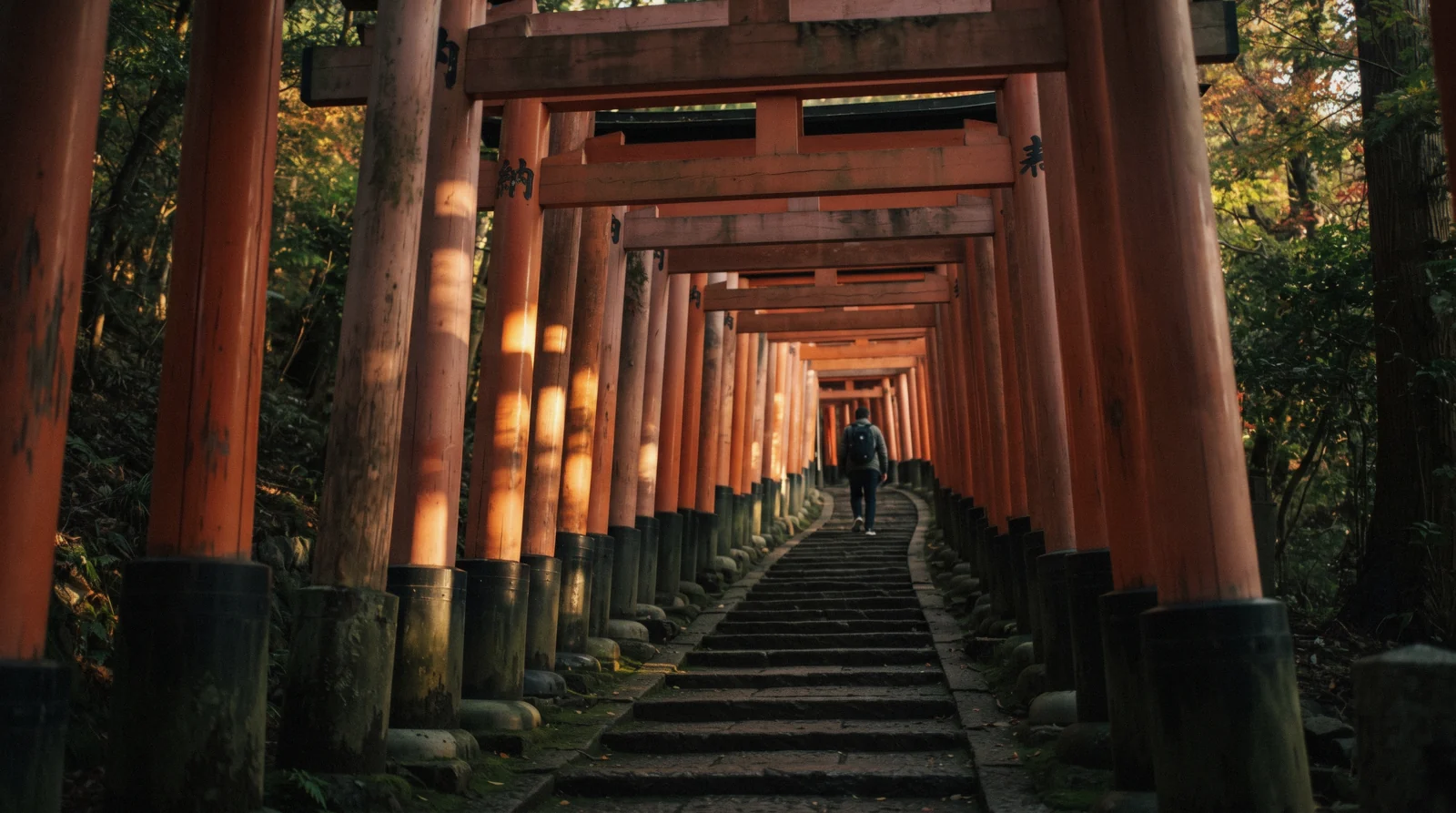
Temples In Tokyo, And The Shrines Beside Them
Temples in Tokyo are Buddhist and shrines are Shinto, they look different once you know what to look at, and the city has both in quantity: this page compares thirteen that a visitor actually reaches, with the hours and the price from each institution's own pages. It is a short list on purpose. Tokyo is not Kyoto, and almost everything standing here is a post-war reconstruction of something the firebombing took, so the case for any one of these rests on what it is rather than on how old the timber is. Below: the free-versus-paid split, the etiquette a first-timer gets wrong at the water basin and in front of the hall, what a goshuin book costs and where photography is not allowed. The two biggest have their own pages at Senso-ji and Meiji Jingu, and for the rest of the city see what to do in Tokyo.
Quick answer Which ones, what they cost, and the etiquette in three lines
Eleven of the thirteen temples and shrines on this page cost nothing to enter, and the two that charge are cheap: Ueno Toshogu asks $4.54 (¥700) and the museum inside Yasukuni is the other. If you are seeing one temple and one shrine in Tokyo, see Senso-ji in the old east and Meiji Jingu in the forest behind Harajuku, and do not do them on the same half day.
Key takeaways
- The gates open long before the offices do. Nezu-jinja and Gotoku-ji both open at 06:00, but Gotoku-ji's temple office runs 08:00 to 15:00 and no seal is written outside it, which is the timing trap most visitors hit.
- At a shrine you bow twice, clap twice and bow once. At a temple you do not clap at all. That is the single most-broken rule in the city, and the etiquette section has the rest of it, taken from the shrines' own instructions.
- A guided walk is worth it exactly where the building is unlabelled: the Meiji Jingu Shinto walk at $9.74 explains a shrine you would otherwise photograph and leave, and the Asakusa temple walk does the same at $12.99.
- If you are also going to Kyoto, Nikko or Kamakura, take this list down to two. What each day trip actually holds is on day trips from Tokyo.
Thirteen Tokyo temples and shrines: hours, price, what it is for
Read in Q3 2026 from each institution's own website and, where a site publishes nothing in English, from the Tokyo Convention and Visitors Bureau's spot pages at gotokyo.org. Dollar figures convert at ¥1,000 = $6.48. A cell reading 'not stated' means the operator publishes no figure, not that we did not look.
| Place | Type | Hours | Price | Go for |
|---|---|---|---|---|
| Senso-ji, Asakusa | Temple | Main Hall 06:00 to 17:00 April to September; 06:30 to 17:00 October to March | Free | The city's oldest temple, and the only one on this list that is genuinely crowded |
| Meiji Jingu, Harajuku | Shrine | Sunrise to sunset, set month by month: 05:00 to 18:30 in June, 06:40 to 16:00 in December | Free | A 70-hectare planted forest ten minutes from the busiest youth street in Japan |
| Asakusa-jinja, Asakusa | Shrine | Office 09:00 to 16:00 weekdays, 09:00 to 16:30 weekends and holidays | Free; goshuin ¥500, about $3.24 | The 1649 building that survived 1945, fifty metres from a temple that did not |
| Nezu-jinja, Bunkyo | Shrine | 06:00 to 17:00, open daily | Free | A tunnel of small torii and 3,000 azalea bushes on the hillside behind the hall |
| Kanda Myojin, Chiyoda | Shrine | Grounds open daily; hours change by season | Free | Amulets blessed for electronic devices, sold a five-minute walk from Akihabara |
| Ueno Toshogu, Ueno | Shrine | 09:00 to 16:30, last entry 16:00, open daily | General admission ¥700, about $4.54, cash | Gold leaf and Edo carving, standing since 1627 through wars and earthquakes |
| Yasukuni Jinja, Chiyoda | Shrine | 06:00 to 18:00; 06:00 to 17:00 in January, February, November and December | Grounds free; the Yushukan museum charges, price not stated on the pages we could open | The most politically contested site in the city, and the one that comes with reading to do |
| Hie Jinja, Akasaka | Shrine | Not stated on the pages the shrine rendered to us | Free | An escalator inside the hillside up to a shrine surrounded by government offices |
| Tomioka Hachimangu, Koto | Shrine | Not stated; the shrine's own domain did not respond | Free | Where professional sumo grew up, with the grand champions' names cut into stone |
| Zojo-ji, Minato | Temple | 09:00 to 17:00, last entry 15 minutes before closing | Grounds free; the Treasure Gallery and the shoguns' mausoleum charge, figures not stated on the pages we could open | Six Tokugawa shoguns buried under the tower, and the only pre-war gate left standing |
| Sengaku-ji, Takanawa | Temple | Not stated on the pages we could open | Grounds free; the memorial museum charges | The graves of the 47 ronin, and a memorial festival every 14 December |
| Gotoku-ji, Setagaya | Temple | 06:00 to 17:00; temple office 08:00 to 15:00 | Free | Several thousand beckoning-cat figures left by visitors, in the Ii clan's family temple |
| Yushima Seido, Bunkyo | Confucian hall | Not stated in English; the foundation publishes closures rather than opening hours | Free | A black-lacquered Confucian academy, one of very few in Japan, twenty minutes from Akihabara |
Sources: senso-ji.jp, meijijingu.or.jp, asakusajinja.jp, gotokuji.jp, zojoji.or.jp, sengakuji.or.jp, yasukuni.or.jp, hiejinja.net, kandamyoujin.or.jp, seido.or.jp and gotokyo.org. Six cells say 'not stated', and every one is a case where the institution publishes no English figure or its own site did not serve us a page. The two temples with a paid gallery, Zojo-ji and Sengaku-ji, both advertise the gallery without printing its price where we could reach it.
The Thirteen, Grouped By Where They Are And Numbered To The Map
Grouped by the half of the city they sit in, because that is what decides whether two of them fit into one day. Sort by price or time needed with the chips. Ratings stay empty: these are places of worship, not products, and borrowing a walking tour's star rating for a shrine would be dishonest.
Asakusa and the old east
-
Senso-ji
Buddhist temple Free45 minbook-ahead tier 1 of 3
Founded in 628 by the temple's own account, rebuilt after 1945, and the busiest religious site in the city. The full visit, gate by gate, is on the Senso-ji page; the district around it is a separate half day.
Tip: The Main Hall opens at 06:00 from April to September and the approach shops open hours later. That gap is the visit.
-
Asakusa-jinja
Shinto shrine Free15 minbook-ahead tier 1 of 3
Fifty metres east of the temple's Main Hall and almost always empty by comparison. It honours the two fishermen and the scholar who, in the legend, founded the temple. Designated an Important Cultural Property in 1951 for surviving the air raids.
Tip: The best place in the city to watch how Japanese visitors actually pray, because there is room to stand and no queue behind you.
-
Tomioka Hachimangu
Shinto shrine Free30 minbook-ahead tier 1 of 3
Built in 1627 and the ground on which professional sumo took shape: the earliest official tournaments were held here, and the promotion ritual for a new grand champion is still performed on the site. Two mikoshi covered in gold and gemstones are kept here.
Tip: Pair it with a bowl of Fukagawa-meshi, the clam and rice dish the district is known for, rather than travelling out for the shrine alone.
Ueno, Nezu and the north
-
Ueno Toshogu
Shinto shrine ¥700 (about $4.54)30 minbook-ahead tier 1 of 3
Built in 1627, renovated in 1651, and one of the very few structures in central Tokyo to come through both the earthquake and the war. The gold leaf and the carving are the reason to pay. It sits inside Ueno Park, with the museums a few minutes away.
Tip: Admission is cash. The peony garden alongside runs its own season and its own separate ticket.
-
Nezu-jinja
Shinto shrine Free40 minbook-ahead tier 1 of 3
Rebuilt on this site in 1706 on the order of the fifth Tokugawa shogun, styled after the great shrine at Nikko, and carrying seven buildings designated Important Cultural Properties including the only surviving two-storey gate of an Edo shrine. Around 3,000 azalea bushes flower on the slope in spring.
Tip: The torii tunnel to the Otome Inari sub-shrine is the photograph, and it is empty before nine on a weekday.
Central Tokyo
-
Kanda Myojin
Shinto shrine Free30 minbook-ahead tier 1 of 3
Founded in 730 and moved here in the Edo period, it is the tutelary shrine of 108 districts including Akihabara and Tsukiji, and it sells amulets to bless electronic devices because the electronics quarter is five minutes downhill. The Kanda Matsuri, one of Japan's three great festivals, starts and ends here in May of odd-numbered years.
Tip: Five minutes on foot from Suehirocho on the Ginza Line, and the natural pairing with Akihabara rather than with a temple.
-
Yasukuni Jinja
Shinto shrine Free grounds1 h with the museumbook-ahead tier 1 of 3
Founded as Shokonsha in 1869 by the will of the Meiji Emperor and renamed in 1879. It enshrines Japan's war dead, and because that includes convicted war criminals it is the subject of continuous diplomatic protest from Japan's neighbours. The Yushukan museum on the grounds presents the wars from the shrine's own standpoint.
Tip: Go, but go informed. This is the one entry on this page where knowing the argument beforehand changes what you see.
-
Hie Jinja
Shinto shrine Free30 minbook-ahead tier 1 of 3
The protective shrine of Edo Castle, and in 2026 it is marking 550 years since that enshrinement. It sits on a wooded rise surrounded by ministries and hotels, reached by a staircase of torii or by an escalator built into the hill.
Tip: The shrine publishes no general opening hours in a form we could read, so treat it as a daylight visit and expect the office to keep shorter hours than the grounds.
Minato and the south
-
Zojo-ji
Buddhist temple Free grounds45 minbook-ahead tier 1 of 3
Founded in 1393, moved here in 1598, and made the Tokugawa family temple: six shoguns are buried on the site. The Sangedatsumon gate of 1622 is the only original building left and one of the oldest wooden structures in Tokyo. It stands directly under Tokyo Tower, which is the photograph everyone takes.
Tip: The gate is under conservation work scheduled to finish in November 2032, so the classic view is scaffolded for years yet.
-
Sengaku-ji
Buddhist temple Free grounds40 minbook-ahead tier 1 of 3
A Soto Zen temple founded by Tokugawa Ieyasu in 1612 and moved to Takanawa after the fire of 1641. It holds the graves of the 47 ronin, who avenged their lord in 1703 and were ordered to take their own lives for it, and a small museum of the affair. A memorial festival is held every 14 December.
Tip: The temple runs free open zazen sessions and a paid calligraphy and tea programme; both are listed on its own site in Japanese with English event sheets.
West of the centre
-
Meiji Jingu
Shinto shrine Free1 h 30book-ahead tier 1 of 3
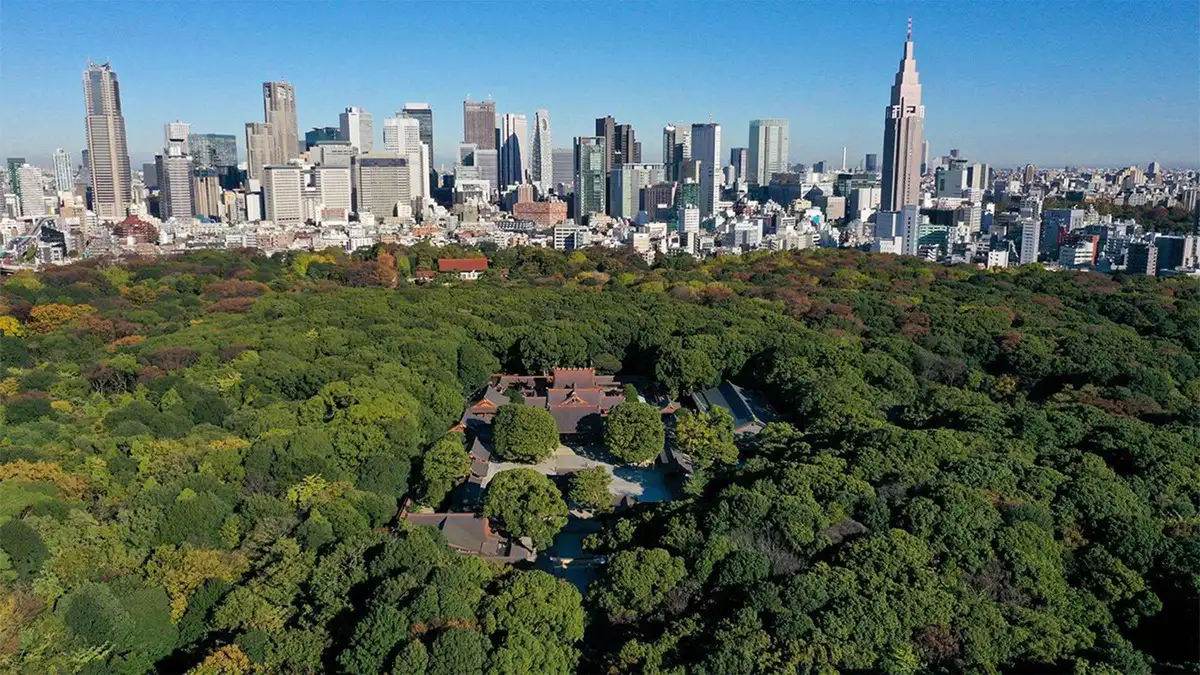
Completed in 1920 for the Emperor Meiji and Empress Shoken, inside a forest of 70 hectares planted with trees sent from every part of the country. It opens with sunrise and closes with sunset, which means the hours change every month. Full detail on the Meiji Jingu page.
Tip: It is a ten-minute walk from the first torii to the hall, so the shrine takes longer than its size on a map suggests.
-
Gotoku-ji
Buddhist temple Free1 hbook-ahead tier 1 of 3
The Ii clan's family temple, renamed in 1659 after the second lord of Hikone, with a graveyard designated a National Historic Site in 2008. It is better known for the shelves of beckoning-cat figures visitors leave behind, and it claims the maneki-neko legend as its own.
Tip: Five minutes on foot from Miyanosaka on the Tokyu Setagaya tram line, fifteen from Gotokuji on the Odakyu. The tram is the better arrival.
-
Yushima Seido
Confucian temple Free20 minbook-ahead tier 1 of 3
Not a temple in either of the usual senses: a Confucian hall in black lacquer, founded as the shogunate's academy, and one of very few of its kind in Japan. Its foundation publishes no general opening hours in English, and warns that the grounds close in typhoons, heavy weather and snow. It stands across the river from Kanda Myojin, on the way down to Akihabara.
Tip: Twenty quiet minutes between two loud places, which is the whole reason to include it.
Numbers match the list — tap a pin for the guide.
Coordinates from each institution's own address page and from Wikidata. Where an entry's CTA leaves this site it goes to the institution's own website, never to a booking platform.
When A Guide Is Worth It At A Tokyo Shrine Or Temple
Every place on this page can be walked into for nothing, so a guide buys explanation rather than access. The cards below are the walks that spend their time on the religion and the buildings rather than on shopping streets. Prices and ratings as listed by the operators.
 from $9.74
Tokyo: Meiji Shrine Walking Tour — Shinto & Imperial System
Ninety-minute English-only walking tour of Meiji Jingu explaining Shinto practice and Japan's imperial system, capped at 10 people. No separate ticket needed since the shrine grounds are free to enter.
Check Availability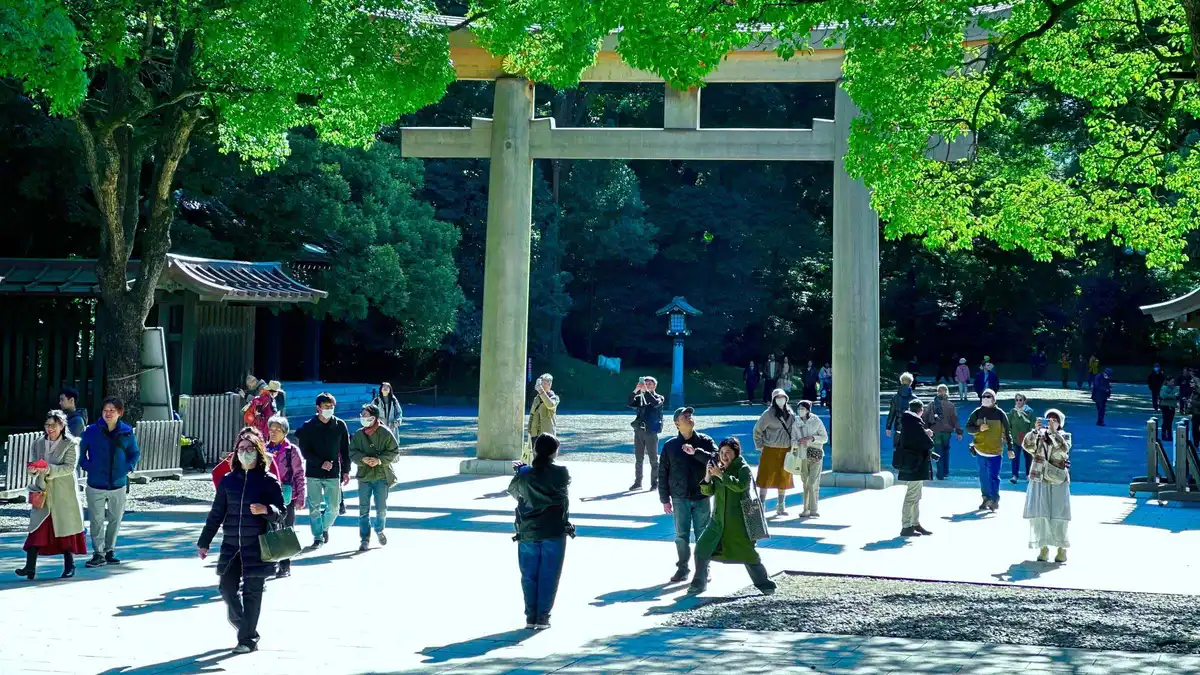 from $9.74
Tokyo: Meiji Jingu Shrine and Shinto Culture Walking Tour
Two-hour guided walk through Meiji Jingu, including the Imperial Garden, with a small-group format and shrine admission included. Suits travelers wanting the garden add-on the shorter tour skips.
Check Availability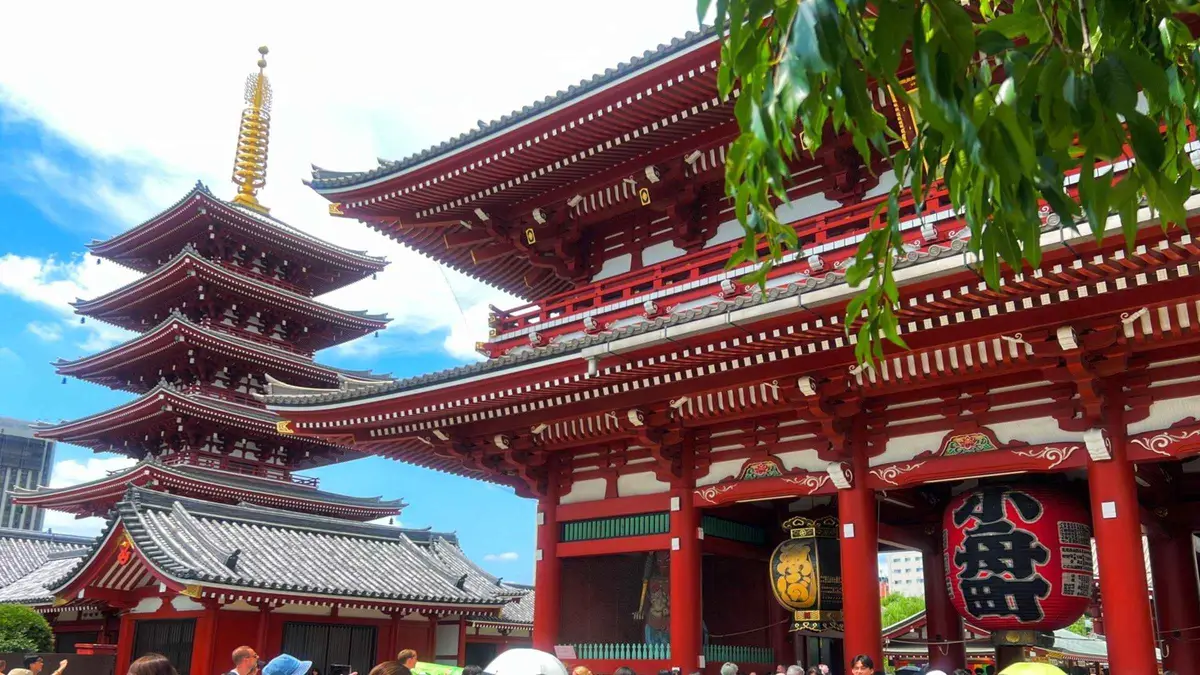 from $12.99
Tokyo: Asakusa and Sensoji Walking Tour
A small-group walking tour of Asakusa's oldest temple, Edo-era alleys and Nakamise Street, with history and local stories from a guide, capped at 10 participants for a closer experience.
Check Availability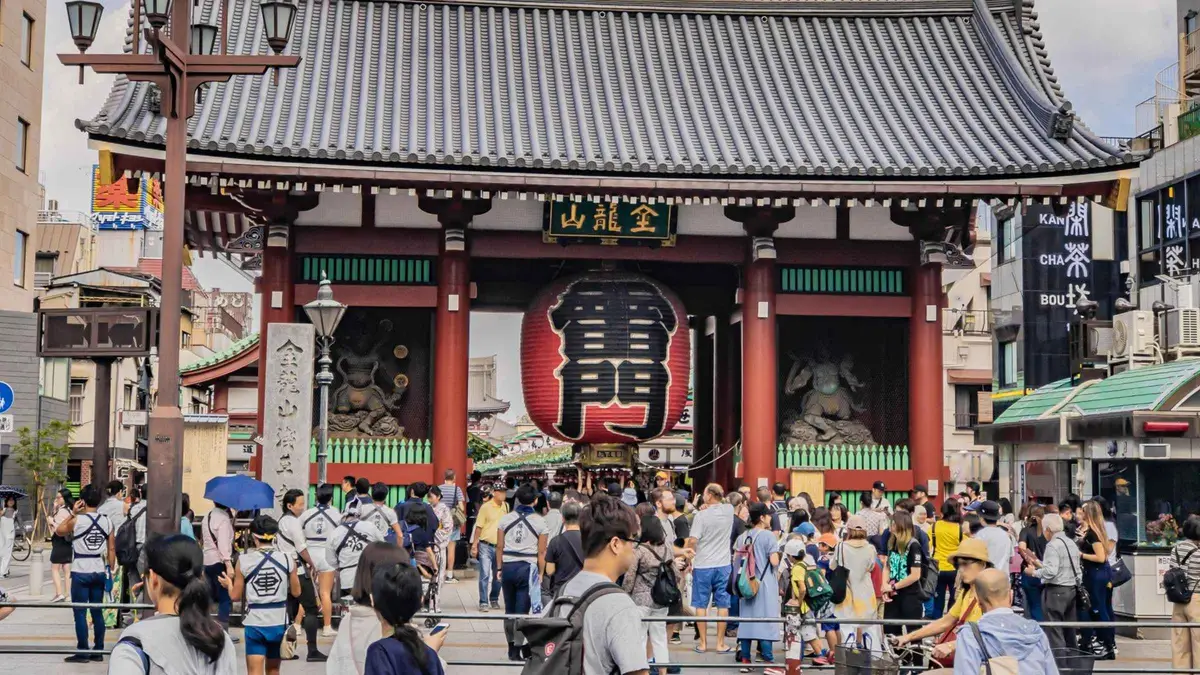 from $18.18
Tokyo: Asakusa Walking Tour with Sensoji Temple Visit
A two-hour guided walk through Asakusa covering Senso-ji Temple, the Thunder Gate and Nakamise Shopping Street, with historical and cultural context from a local guide.
Check Availability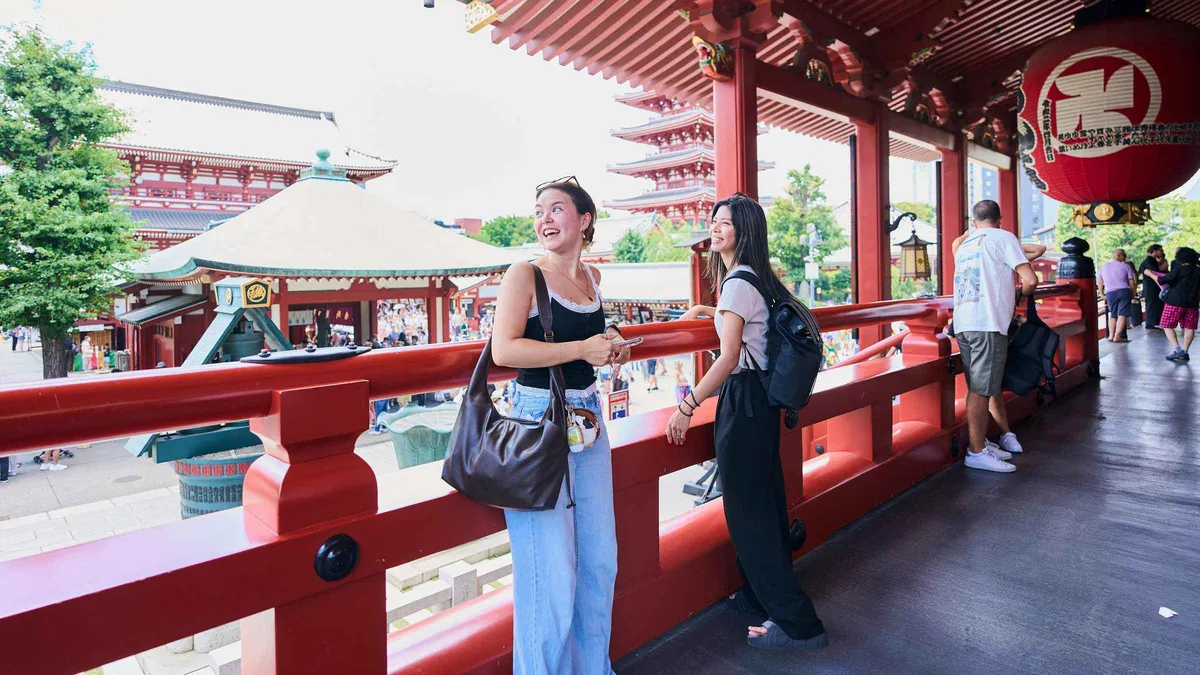 from $12.99
Tokyo: Asakusa & Sensoji ー Oldest Temple Walking Tour (2hrs)
A two-hour Asakusa walk pairing Senso-ji Temple and neighboring Asakusa Shrine with local street food tastings and stops at a knife shop and souvenir stores, guided in English.
Check Availability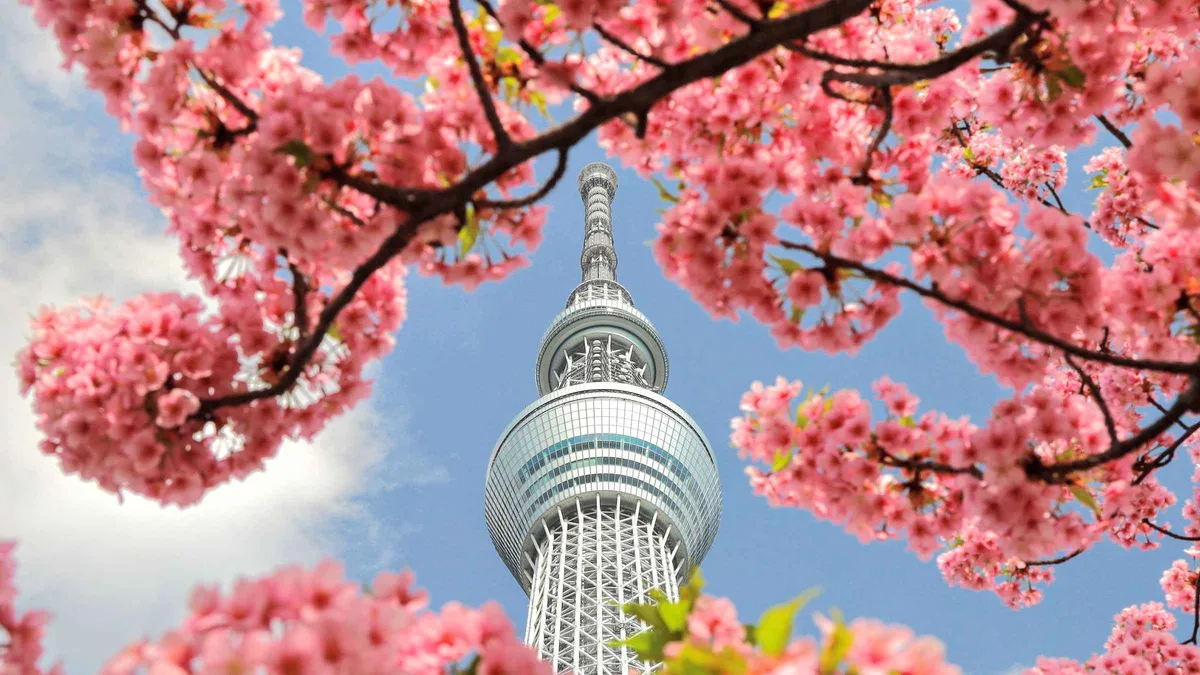 from $123.37
Tokyo: Meiji Shrine, Asakusa, Skytree Bus Tour and Cruise
A full-day coach circuit through Meiji Shrine, Asakusa, Tokyo Skytree and a Tokyo Bay cruise, with skip-the-line Skytree entry, a matcha tasting and an optional Japanese lunch included.
Check AvailabilityPrices, ratings and details are the platform's own. Dollar figures are the listed prices. The platform bills in your account's currency.
Temple Or Shrine: How To Tell, In Ten Seconds At The Gate
The distinction decides what you do with your hands, so it is worth being able to make it from the pavement.
A shrine is Shinto and a temple is Buddhist. Shinto is the older, indigenous set of practices, organised around kami, the spirits of places, forces and ancestors. Buddhism arrived from the Asian mainland in the sixth century and the two spent a thousand years intertwined, sharing precincts and clergy, until the Meiji government forcibly separated them in the 1870s.
That separation is why a shrine and a temple can still stand fifty metres apart in Asakusa and belong to different institutions.
| At the gate | Shrine (Shinto) | Temple (Buddhist) |
|---|---|---|
| The gate itself | A torii: two uprights and two crossbars, usually vermilion or plain wood | A roofed gate, often with guardian figures standing in alcoves either side |
| The name ending | jinja, jingu, gu or taisha | ji, tera, dera or in |
| What you do in front | Two bows, two claps, one bow | Palms together, a bow, no clap |
| What is inside | A mirror, a sword or an object housing the kami, never displayed | A statue of a Buddha or a bodhisattva, often visible |
| Who works there | Priests in white and pale blue, and miko in white and vermilion | Priests with shaved heads in dark robes |
| What is on the grounds | Ema plaques, shimenawa rope, komainu guardian dogs | Incense burner, a pagoda, a graveyard |
Two exceptions worth knowing. First, a graveyard is a reliable tell: Shinto treats death as a source of impurity, so a shrine has no graves and a temple usually does, which is why funerals in Japan are overwhelmingly Buddhist while weddings and new-year visits are Shinto. Second, Yushima Seido is neither, being Confucian, which is exactly why it is an odd twenty minutes rather than a thirteenth temple.
The Etiquette First-Timers Get Wrong
All of the below is taken from the shrines' own published instructions, principally the visiting pages of Meiji Jingu and the goshuin page of Asakusa-jinja. Nothing here is a matter of taste.
The gate
Bow once, shallowly, before you walk under the torii, and again on the way out as you turn back to face it. The centre of the approach is traditionally kept clear for the kami, so people walk to one side of it; nobody will correct you if you do not, but you will notice that the Japanese visitors around you are doing it.
The temizuya, the water basin, and the mistake everybody makes
The rite is one ladleful of water for the whole sequence, and the mistake is drinking from the ladle.
Take the ladle in your right hand and rinse your left. Swap hands and rinse your right. Swap back, pour a little into your cupped left hand, and rinse your mouth from the hand, not from the ladle; spill it beside the basin, never into it. Then stand the ladle upright so the last of the water runs down the handle and cleans it for the next person, and lay it back where you found it. If the basin has been converted to a running spout with no ladles, which a number of them were and stayed, rinse both hands and skip the rest.
In front of the hall: two bows, two claps, one bow
At a shrine, drop a coin into the offertory box, ring the bell if there is one, then bow deeply twice, clap twice with your right hand slightly lower than your left, hold your hands together for the silent part, and bow deeply once more. Asakusa-jinja prints exactly this sequence on its own pages, along with the instruction to bow at the torii and purify at the basin first.
At a temple you do the same with the coin and the bow, put your palms together, and do not clap. Half the visitors in front of a Tokyo temple hall clap because they were at a shrine an hour earlier, and it is the single most visible foreign error in the city.
The coin
A five-yen coin is the conventional offering because its name, go-en, is a homophone for a word meaning connection or good fortune. That is a pun, not a rule, and any coin is acceptable. What is not acceptable is throwing hard enough to make a noise, or filming somebody else's prayer at close range.
Goshuin: What The Seal Book Is, And What It Costs
The one souvenir from a Tokyo shrine that is not a souvenir. Prices below are published by the institutions themselves; where they are not, we say so.
A goshuin is a seal and an inscription, brushed by hand into a book you bring with you, recording that you visited. Asakusa-jinja's own explanation is that it began as a receipt: proof that a worshipper had handed a hand-copied sutra to a temple. Shrines took up the practice when pilgrimage became popular in the Edo period, and the shrine states plainly that it is a record of worship, so you pray first and go to the counter afterwards.
| What | Where it is priced | Figure |
|---|---|---|
| A single goshuin | Asakusa-jinja, per its own goshuin page | ¥500, about $3.24 |
| A goshuin book, Edo komon pattern | Asakusa-jinja, three colours | ¥1,000, about $6.48 |
| A goshuin book, Reiwa special | Asakusa-jinja, two colours | ¥1,500, about $9.72 |
| A limited seasonal goshuin | Ueno Toshogu, September design, edition of 500 | ¥1,000, about $6.48 |
| A goshuin at Senso-ji | Not published anywhere on the temple's own site | Not stated; carry small change |
The rules the counters actually enforce
- One book per person is taken in at a time, and one seal per design; Asakusa-jinja states both.
- The shrine will not sell you a book without writing a goshuin in it, and will not post either to you.
- Take off any button-down cover and loosen the binding cord before you hand the book over, because the stamp needs a flat page.
- The calligraphy differs from writer to writer. That is the point of it, and no shrine will redo one.
- Counters keep office hours, generally 09:00 to 16:00, while the grounds are open from dawn. Gotoku-ji's office closes at 15:00, an hour earlier than most.
Free Or Paid: Where The Money Actually Goes
The headline is that Tokyo's temples and shrines are close to free, and that the exceptions follow a pattern worth understanding before you plan a day around them.
Eleven of the thirteen places on this page charge nothing to walk in. That is not generosity, it is structure: a shrine's income is offerings, prayers commissioned by worshippers, amulets and seals, while a temple's is offerings, funerals and graves. Neither model needs a turnstile, which is why the money in Tokyo religious sites sits in the museum rather than the gate.
The paid layer, where it exists, is a gallery or a garden: Ueno Toshogu charges ¥700, about $4.54, for the shrine building itself and runs a separate ticket for its peony garden; Zojo-ji charges for its Treasure Gallery and the shoguns' mausoleum; Sengaku-ji charges for the museum of the 47 ronin; Yasukuni charges for the Yushukan. Of those four, only Ueno Toshogu published a figure to us on its own or the city's pages. Zojo-ji, Sengaku-ji and the Yushukan all advertise the attraction without an accessible English price, so we print none and you should carry cash.
What this means practically is that a full day of temples and shrines in Tokyo can cost you less than a single museum ticket. If a free day is what you are planning, free things to do in Tokyo takes the same approach to the rest of the city, and the running total for a day is on what Tokyo costs. A temple-and-shrine day like this one also works as a guided route, and guided tours in Tokyo compares the best Tokyo tours so you can see which one covers the same ground.
Timing: The Gap Between The Gate And The Office
The most useful thing to know about visiting temples in Tokyo has nothing to do with which ones to pick.
Grounds and offices keep different hours, and every itinerary that goes wrong goes wrong on that difference. Nezu-jinja and Gotoku-ji both open their gates at 06:00. Gotoku-ji's temple office takes visitors from 08:00 to 15:00, Asakusa-jinja's from 09:00, and Meiji Jingu warns on its own site that facilities inside the grounds mainly run 09:00 to 16:00 while the shrine itself opens with sunrise.
So the seal, the amulet and the prayer you commissioned all live inside a narrow midday window, and the photograph lives outside it.
| If you want | Go at | Because |
|---|---|---|
| The place to yourself | The first hour after the gates open | Nothing is staffed and nothing is selling, so the only people there are worshippers |
| A goshuin or an amulet | Between 09:30 and 15:00 | Counters open late and close early, and Gotoku-ji's shuts at 15:00 |
| The buildings at their best | Late afternoon in winter, early morning in summer | Low sun on lacquer and gold leaf; midday flattens both |
| An empty Senso-ji | Before 09:00 or after 17:00 | The approach shops set the crowd, and they open late and shut early |
Monday changes nothing here
Tokyo's museums close on Mondays and its temples and shrines do not. Not one of the thirteen on this page publishes a weekly closed day, which makes them the reliable fallback on the one day when a good part of the city's paid attractions is shut. The full Monday picture is on what is open on Monday.
The days that do change things are the first three of January, when tens of millions of people across the country make their first shrine visit of the year and Meiji Jingu alone takes some of the largest crowds in Japan, and the festival weekends: the Sanja Matsuri at Asakusa-jinja in May and the Kanda Matsuri in May of odd-numbered years. The events calendar has the dates.
Photography, Dress And The Things Nobody Signposts In English
There is no city-wide rule, and that is the problem: each institution sets its own, and the signs that say so are frequently in Japanese only.
The consistent line across every institution we read is that the grounds are photographable and the interiors are not. Inside a hall of worship, past the offertory box, assume no. At Meiji Jingu the inner precinct carries its own restrictions posted at the gate; Ueno Toshogu keeps the interior of its main building closed to the public except for a handful of announced days each autumn, which are allocated by application and lottery rather than first come; and Nezu-jinja maintains a standing notice about photography within its precinct.
None of these is a hard rule you can carry between sites, which is why the only durable advice is to look for the sign and to lower the camera when a priest walks past.
- Never photograph a person praying at close range, or a wedding party, without being invited to.
- Tripods, ring lights and reflectors count as commercial equipment at most sites and will be stopped.
- Do not photograph inside a hall of worship unless a sign says you may.
- There is no dress code at any of the thirteen. Shoulders and knees are not an issue at a Japanese shrine, and nobody will hand you a shawl.
- Shoes come off where a floor is raised and matted, which happens at a few temple halls and at almost no shrines.
Commercial guiding, and a temple that has had enough
Gotoku-ji posted a notice on its own site headed, in English as well as Japanese, on commercially guided tours and commercial activities, alongside an older notice asking visitors to stop writing on the beckoning-cat figures. Read together, they are what a small suburban temple looks like after it goes viral. Nothing on this page tells you not to visit Gotoku-ji, but it does mean going quietly, buying a figure from the temple rather than moving somebody else's, and thinking twice about a guided group.
The general form of the problem is worth stating once. These are working religious institutions with congregations, funerals and daily services, not exhibits with an opening time. Every one of them lets you in for nothing and asks for nothing back except that you behave as though somebody there is praying, because somebody there is.
Tokyo temples and shrines map
All thirteen, numbered as in the list above. The cluster in the middle is walkable in an afternoon; Gotoku-ji in the west and Tomioka Hachimangu in the east are each a deliberate trip.
Coordinates from Wikidata and from each institution's own address page.
Where to take this next
Three pages that carry on from here, in the order most people need them.
Senso-ji in full
Hours, the halls gate by gate, the early morning and the guided walks: the Senso-ji page. It is the one entry on this list that needs its own plan.
Asakusa Station, 5 minThe district around it
The kitchen-tool street, the drinking alleys, the riverbank and where to eat: Asakusa. Half a day, and the natural other half of a temple morning.
Same blockEverything else in the city
Temples are one layer of Tokyo and a small one. Things to do in Tokyo ranks the rest, and the museums hub covers the layer that does close on Mondays.
City-wideTemples in Tokyo: questions
Which temple in Tokyo should I see if I only see one?
Senso-ji in Asakusa, without much argument. It is the oldest, it is free, it opens at 06:00 from April to September, and it keeps no closed day, so it fits any itinerary including a Monday. The catch is the crowd between 10:30 and 16:00, which the timing section explains how to miss. If you want a quieter Buddhist temple with a better building, Zojo-ji under the tower has the only pre-war gate left in the city.
Are temples in Tokyo free to enter?
Eleven of the thirteen compared on this page are, and the two that charge are cheap: Ueno Toshogu at ¥700, about $4.54, and the museum inside Yasukuni. Where money does appear it is for a gallery or a garden rather than the gate, which the free-or-paid section sets out. A full day of them costs less than one museum ticket.
What is the difference between a temple and a shrine in Tokyo?
A shrine is Shinto and a temple is Buddhist, and you can tell them apart at the gate: a torii of two uprights and two crossbars means shrine, a roofed gate with guardian figures means temple. Names ending in jinja, jingu or gu are shrines; ji, tera and dera are temples. It matters because you clap at a shrine and never at a temple. The full comparison has six other tells.
What is the etiquette at a Tokyo shrine?
Bow before the torii, purify at the water basin with a single ladleful, then at the hall: coin in the box, two deep bows, two claps, hands held together, one deep bow. Asakusa-jinja publishes exactly that sequence on its own pages. The water-basin rite is the part people get wrong, because the ladle never touches your lips. The etiquette section has the full sequence and the coin convention.
What does a goshuin cost, and do I need a book?
Where it is published, ¥500, about $3.24, and yes: the calligraphy goes into a goshuin book, and a shrine will normally not sell you the book without inscribing one at the same time. Asakusa-jinja sells its books at ¥1,000 and ¥1,500, about $6.48 and $9.72. Senso-ji publishes no figure at all. The goshuin section has the counter rules that actually get enforced.
Are Tokyo temples and shrines open on Mondays?
Yes. Not one of the thirteen here publishes a weekly closed day, which makes them the reliable plan on the day Tokyo's museums shut. What does close on a Monday, and what stays open, is on what is open on Monday in Tokyo. The days to avoid instead are the first three of January and the big festival weekends in May.
Can I take photographs inside a Tokyo temple or shrine?
On the grounds, almost always. Inside a hall of worship, assume not unless a sign says otherwise, and never photograph someone praying at close range or a wedding party. Tripods and lighting rigs are treated as commercial equipment at most sites. The photography section covers the specific institutions that post their own restrictions.
How many temples and shrines in Tokyo are worth a whole day?
Two, and only if they are on opposite sides of the city: a morning at Senso-ji and an afternoon at Meiji Jingu is the classic pairing and it works because the second is a forest walk rather than another set of buildings. Three in one day is where people stop looking. If Nikko, Kamakura or Kyoto are also on your route, cut this list to those two and spend the time there instead: day trips from Tokyo compares them.
Tokyo's Temples And Shrines On Film: Manners, Routes And The Quiet Ones
Three that answer the three questions this page gets asked: what am I supposed to do, which ones are they, and what is left once the famous two are done.
Japan Shrine Manners | DONT make FOREIGNER MISTAKES
The water basin and the bow-clap-bow sequence performed at normal speed, which is easier to copy than a diagram.
Video: Paolo fromTOKYOTop 10 Shrines In Tokyo - Best Shinto Shrines To Visit
A run through the shrines on this list, useful for deciding which two you actually have time for.
Video: Japan Go!Hidden Gems: Tokyo's BEST Underrated Shrines and Gardens
The quieter end of the list, filmed at the sites rather than narrated over stills.
Video: Tokyo CheapoVideos load from YouTube only when you press play.
Prices, hours and terms are set by the venue or operator and confirmed at checkout.
We may earn a commission if you book through one of our links, at no extra cost to you. Full affiliate disclosure