 Visit Tokyo Guide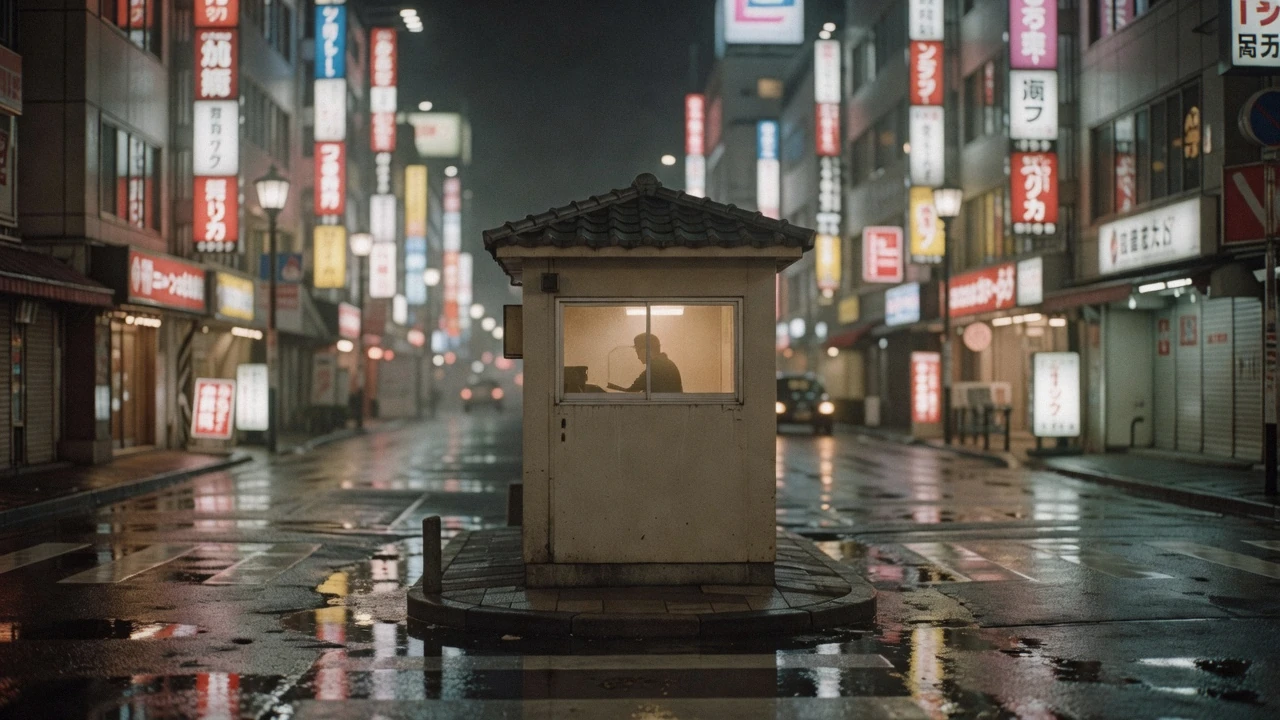
Is Tokyo Safe?
Is Tokyo safe? Yes, to the point where the honest version of this page is not a warning but a list of small, specific things that catch visitors out in a city where almost nothing else does. Tokyo's police took in 4.8 million lost items in a single year and returned more than half of them, which is the statistic that tells you what the streets are actually like. What goes wrong here goes wrong in four narrow places: a nightlife block where a tout is waiting, a chemist's bag with the wrong cold medicine in it, a hired bicycle ridden the way you ride one at home, and a summer afternoon nobody warned you about. Every section below states the risk, gives the official source and ends with the thing to do about it. The practical layer this page leans on, from the last train home to what a day costs, lives on its own pages. Nothing here should put anyone off: the rest of the guide is about what to do in Tokyo with the time.
Quick answer Safe city, four narrow risks, and the numbers to call
Tokyo is safe to walk at night, alone, including as a woman, and violent street crime against visitors is not the pattern here. The risks that are real are narrow and avoidable: touts in four named nightlife districts, an over-the-counter cold medicine that is illegal to carry into Japan, a bicycle ridden the way you ride one at home, and summer heat that the Environment Ministry grades as dangerous above a measured index of 31. Police took in 4.8 million lost items in one year and returned over half.
Key takeaways
- The UK Foreign Office names Kabukicho, Roppongi, Shibuya and Ikebukuro as the zones Japanese police flag for drink spiking and card fraud. The rule that covers all four is in what actually happens in the nightlife blocks: never follow a tout, and see a price list before you sit down.
- Check your medicine cabinet before you pack. Vicks inhalers and anything containing pseudoephedrine or codeine are banned outright, and the import limits cap even legal prescriptions at one month.
- Rent a bicycle and you become a road user under a ticketing system that started at the ¥5,000 mark. The fines are printed here, and riding on the pavement is not automatically allowed.
- Trains stop for the night and start again around five, so the expensive mistake is the missed last train rather than the walk home. The last-train hour and the taxi surcharge are on the transport page, and a guided evening walk is the low-effort way to see the nightlife districts without navigating them cold.
The Honest Frame: What The Official Sources Actually Say
Start with what is not on this page. There is no Tokyo crime rate quoted here, because the Tokyo Metropolitan Police Department does not publish one in English. Its English Safe Society section carries crime-prevention advice, victim support, a wanted list and cyber-security information, and no numeric table of any kind. Any site quoting you a Tokyo crime statistic in English is relaying it from somewhere else, and we would rather say so than pass one on.
What the police do publish, through their annual lost-property figures, is a number that describes the city better than a crime rate would. In one year 4.8 million items were handed in to police stations across Tokyo, up two percent, including 4.5 billion yen in cash, and more than half of the items went back to their owners. That is a city where a dropped wallet is picked up and carried to a koban rather than emptied.
The UK Foreign, Commonwealth and Development Office's Japan advice is the one official risk assessment written for visitors, and it is worth quoting in the shape it actually takes. It says to take the same precautions you would at home. Then it gets specific in exactly one direction: Tokyo's entertainment districts carry a higher risk of crime, particularly at night in and around clubs and bars, and foreign nationals have been targeted for extortion, robbery, assault and sexual assault. Every other warning on that page is about paperwork, medicines, driving and weather.
So the risk profile here is unusual. In most large cities the advice is about your bag in a crowd. In Tokyo it is about a specific type of bar, a specific list of medicines and a specific set of natural hazards. The rest of this page takes them one at a time.
Not ideal for
- One warning that is about crowds rather than districts: the FCDO records that female passengers on commuter trains have experienced inappropriate touching and upskirting, and that police advise shouting at the perpetrator to attract attention and asking a fellow passenger to call station staff. Women-only carriages run on many lines in the morning peak and are marked in pink on the platform floor.
The Nightlife Blocks, And The Approach That Starts It
Four districts are named in official advice, and the pattern in all four is the same: somebody stops you on the street in English and offers to take you to a bar. This table sets out what the UK Foreign Office describes happening after that, and what ends it. Nothing here involves a threat on the street, and none of it happens to a visitor who declines and keeps walking.
The counter to every row is one sentence: never walk into a venue with the person who approached you on the street, and never sit down anywhere without seeing a price list first. Both of those are the FCDO's own advice, and both are free.
| The approach | Where it is flagged | What follows | What to do |
|---|---|---|---|
| The street tout, or kyakuhiki | Kabukicho above all, and the other three named zones after dark | Most British victims of drink spiking report being approached in English by touts. The FCDO's instruction is blunt: do not follow street touts into bars | Say no once and keep walking. Touting is illegal in Japan, so the person doing it is already outside the law before you reach the door |
| The free drink or the free look | The same blocks, usually with a doorway a few metres away | Entry charges appear that were never mentioned, and the FCDO warns you may not be free to leave a venue you entered on the promise of a free drink | Do not enter to have a look. If a venue will not show you a price list at the door, that is the answer |
| The bill at the end | Clubs and bars in the high-risk zones | British nationals have been arrested following disputes with staff and doorpersons over excessive bar bills. The arrest is of the customer, not the bar | See a menu with prices before you enter, keep track of what you order, and confirm the admission charge on the way in |
| The spiked drink | All entertainment and nightlife districts, with the four Tokyo zones named | Victims describe waking with no memory and large sums billed to a credit card, from hundreds to tens of thousands of pounds | Do not accept drinks from strangers or leave a drink unattended, and carry only the card and cash you need for the night |
| The card afterwards | Anywhere the two rows above happened | Card fraud is reported alongside spiking, which means the loss shows up after you have left the venue | Turn on transaction alerts before the trip and set a low daily limit. It is the one preparation that works while you are asleep |
Two things this table is not. It is not a reason to avoid Kabukicho, Roppongi, Shibuya or Ikebukuro, all of which are ordinary, busy, well-lit and full of people eating dinner. It is a reason to arrive at a specific bar you chose in advance rather than a bar somebody chose for you. And it is not a warning about the street itself: the risk described in official advice starts once you are inside a venue, which is the opposite shape from the pickpocket advice most European cities carry.
If the districts themselves are the appeal, the low-effort route is to walk them with somebody who knows which doorways are which. The Shinjuku night-life walks start in the streets around Kabukicho and end before the last train, and Shibuya has its own set. Either removes the only decision that matters here, which is which door you go through.
The Rules That Catch Law-Abiding Visitors
Japan enforces a handful of rules that have no equivalent at home, and being unaware of them is not a defence. These are the ones a two-week visitor can realistically collide with, all from the FCDO's Japan advice.
Carry your passport. You must always have your passport or Japanese residence card on you, and police can arrest you if you cannot show proof of your status. This is the single most common gap between how visitors behave and what the law requires, because most people leave the passport in the hotel safe out of caution. In Japan the safe is the riskier choice.
Understand what an arrest means here. You can be arrested and detained without charge for up to twenty-three days, even for a minor offence such as theft or trespassing. That length is why the bar-bill disputes above matter more than the money involved.
Drugs are the hard line. There is zero tolerance, penalties are severe, and if police find an illegal substance in your bloodstream you may be charged regardless of whether you knew you had taken it. Refusing a test can itself lead to arrest for obstructing police duties, and medical institutions that detect illegal substances in a blood test are usually obliged to report it. Convictions for trafficking have drawn sentences of six to seventeen years.
Tattoos are a facilities question, not a legal one. Some public swimming pools, hot springs, beaches and gyms do not admit people with tattoos, and others ask you to cover them. Acceptance is increasing, but check the venue's own page before you travel to one, not after.
Drinking in public is generally legal, with local bans on specific days and in specific places, New Year's Eve being the example the FCDO gives. And loud, boisterous behaviour draws negative attention in a way that is worth knowing about before a group night out.
Not ideal for
- One rule that surprises drivers: you need the 1949 version of the international driving permit plus your own licence and insurance documents in the car, you cannot buy the permit once you have left home, and the drink-drive limit is about a third of the UK's. Passengers can be arrested too if police suspect they knew the driver had been drinking. Almost nobody visiting Tokyo needs a car, and this is one of the reasons.
The Medicine Bag: What You Cannot Bring, And How Much You Can
This is the section that catches the most careful travellers, because the offending item is usually a supermarket cold remedy. Two official sources set the rules: the FCDO names the products, and the Ministry of Health, Labour and Welfare sets the quantities.
The banned list first, because no quantity makes these legal. It is illegal to possess or use some common prescription and over-the-counter medicines under Japan's law on anti-stimulant drugs, and the FCDO names Vicks inhalers, medicines for allergies and sinus problems, cold and flu medication containing pseudoephedrine, and some over-the-counter painkillers containing codeine. Its own words on the consequence are that foreign nationals have been detained and deported for these offences, and that ignorance of the law does not count as a defence. Read the ingredients panel on anything in your washbag before it goes in the case.
Separately, narcotics and stimulants prescribed to you personally, which for many travellers means an ADHD medication, are strictly prohibited unless you obtain permission from a Japanese regional health bureau before you travel. That is a process with a lead time, not a form filled in at the airport.
The quantities you may carry without a certificate
Below these limits you carry the medicine in and say nothing. Above them you need an import certificate, the Yakkan Shoumei, applied for before you arrive. The figures are the Ministry of Health, Labour and Welfare's own, from its personal-import guidance.
| What you are carrying | Allowed without a certificate | What happens above that |
|---|---|---|
| Prescription drugs, including poisons and deadly poisons | Up to a one month supply | Apply for Import Confirmation before entering Japan |
| Other drugs and quasi-drugs, meaning most pharmacy and supermarket medicines | Up to a two month supply | Apply for Import Confirmation before entering Japan |
| External-use medicine, such as creams and patches | Up to 24 of any one item | Apply for Import Confirmation before entering Japan |
| Injectables and syringes, pre-filled or self-injection kits | Up to a one month supply | Apply for Import Confirmation before entering Japan |
| Cosmetics, and disposable contact lenses | 24 of any one cosmetic item; up to a two month supply of lenses | Apply for Import Confirmation before entering Japan |
Two practical notes. Carry prescription medicines in their original labelled packaging with a copy of the prescription, because the quantity rule is enforced against what customs can identify. And if you do need medical treatment while you are here, budget for it: the FCDO's plain statement is that medical facilities in Japan are of a high quality but treatment is expensive, and that you should expect to pay the whole cost of any treatment you receive.
Facilities may also check your insurance before treating you, which can delay care. Travel insurance is not optional on this trip, and what a Tokyo day otherwise costs is set out on the costs page.
Bicycles: Where A Tourist Quietly Becomes A Traffic Offender
Rented bicycles are everywhere in Tokyo and the rules around them are stricter than almost anywhere a visitor will have cycled before. Since the traffic-offence notification system was extended to cyclists, riders aged 16 and over can be issued a blue ticket on the spot. These are the Metropolitan Police Department's own published example fines.
Police normally warn first. The MPD's own wording is that officers generally give a warning at the scene, and issue a ticket when the offence is malicious and dangerous enough to pose a significant danger and nuisance to other pedestrians or vehicles. Pay the fine within the period given and the case closes with no criminal record; ignore it and criminal procedures begin.
| Offence | Fine | What it looks like on a rented bike |
|---|---|---|
| Disobeying traffic signals | ¥6,000 | Rolling through a pedestrian crossing on red because the road is empty |
| Running a flashing signal | ¥5,000 | Treating a flashing amber the way you would at home |
| Stop sign violation | ¥5,000 | Not putting a foot down at the white line on a side street |
| Driving on the wrong side of the road | ¥6,000 | Riding on the right. Bicycles keep left in Japan, in a single file line |
| Use of a mobile phone while holding it | ¥12,000 | Following a map on your phone in your hand. This is the most expensive item on the list |
The rules the fines are enforcing
The Metropolitan Police print five rules for cycling safely, and they are worth having in the order the police give them: one person per bicycle, no smartphones, no music on headphones, no umbrellas, lights on at night. A sixth line asks you to keep the bicycle in good condition, brakes and lights included, and a defective braking system is itself a ¥5,000 ticket.
The rule that catches visitors hardest is where you are allowed to ride. In principle cyclists travel on the roadway, in a single file line on the left. Riding on the pavement is permitted only when a sign or marking allows it, when the rider is under 13 or over 69, when the rider is physically challenged, or when riding on the roadway is dangerous. Where you are on the pavement legally, pedestrians have right of way, always.
Drink cycling is treated as drink driving. Alcohol-impaired cycling and using a phone in a way that causes danger to traffic are both listed by the MPD as serious offences that bypass the blue ticket and go straight to criminal procedure. And two offences within three years, or one accident, brings an order from the Prefectural Public Safety Commission to attend a cyclists' lecture.
None of this makes cycling a bad idea. It makes an unlit bicycle, a phone in your hand and a right-hand kerb the three things to fix before you set off.
Earthquakes: What The Alarm Sounds Like, And What To Do
Small earthquakes are routine in Tokyo and most visitors sleep through them. The one you will notice is announced before it arrives, which is the part worth understanding in advance.
Japan's Earthquake Early Warning is issued by the Japan Meteorological Agency the moment a quake starts, and its own description of the timing is the useful detail: the period between the warning and the arrival of strong tremors is very short, a matter of seconds, or between several seconds and a few tens of seconds. The agency is equally clear about the limitation, which is that areas close to the focus of the earthquake may not receive the warning before the strong tremors hit. The alert reaches you as a loud two-tone alarm on every phone in the room at once, on television and on radio, and it is not subtle.
What to do in those seconds is set out by the Tokyo Metropolitan Government's own visitor guidance, and it is shorter than people expect. Stay calm. If you are in a hotel, restaurant or store, follow the instructions of the staff, who are trained for this. Do not rush outside. If you are out in the city, be aware of what is above you and move to an open, safe place without panicking. When you check into a hotel, note where the emergency exits are, which takes ten seconds and is the only preparation this page asks for.
Two apps do the rest of the work. Safety Tips, published for visitors and listed on the city's own emergency page, pushes earthquake, tsunami and weather warnings in English. Disaster Preparedness Tokyo, the Metropolitan Government's own app, carries the preparedness material in English alongside the alerts. Install one before you fly, because the moment you want it is not the moment to be searching an app store.
Not ideal for
- The Japan Visitor Hotline, run by the national tourism organisation on 050-3816-2787 from inside Japan or +81-50-3816-2787 from outside, is staffed 24 hours a day, 365 days a year in English, Chinese and Korean, and it exists specifically for emergencies and natural disasters as well as ordinary tourist questions. It is the number to save if you save only one.
Typhoons, Rain And The Summer That Is Genuinely Dangerous
Two weather risks matter in Tokyo, and the summer one hurts more visitors than the storms do. Both have an official warning system you can read before you leave the hotel, and the heat index below is the Ministry of the Environment's own scale.
Japanese summers are hot and humid in a way that catches northern-European and coastal-American visitors out. Temperatures often exceed 35 degrees in July and August and high humidity makes it feel hotter, so heatstroke is a significant risk in those months. The Environment Ministry publishes a Wet Bulb Globe Temperature reading rather than an air temperature, because humidity is what turns a walk into a hospital visit, and it issues a Heatstroke Alert when the forecast reaches 31.
| Heat index reading | Official label | What the ministry advises | What it means for a sightseeing day |
|---|---|---|---|
| Below 21 | Almost safe | Replenish water | A normal day. Walk anything |
| 21 to 25 | Caution | Water should be replenished often | Carry a bottle; the vending machines are everywhere |
| 25 to 28 | Warning | Rests should be provided often | Break the day with an indoor stop every couple of hours |
| 28 to 31 | Severe warning | Heavy exercise prohibited | Drop the temple stair climbs and the long walking routes |
| 31 and above | Danger | Exercise prohibited, and a Heatstroke Alert is issued | Move the outdoor half of the day to before 09:00 and after 17:00 |
Typhoons and heavy rain
The tropical cyclone season runs June to December and peaks between July and September, with the highest risk in the south of the country. Roughly three typhoons make landfall on Japan each year out of about twenty-six tropical cyclones generated in the wider basin, and the damage concentrates in September, when typhoon activity overlaps the autumn rain front. Tokyo is rarely at the centre of one, but it does not need to be: a typhoon two hundred kilometres away closes the Hakone ropeway, cancels a Mount Fuji day and empties an airport departure board.
The practical form this takes for a visitor is a cancelled day, not a danger. Watch the Japan Meteorological Agency's warnings, take the advice of local authorities including any evacuation orders, and keep the flexible half of the itinerary for the day the forecast turns. Heavy rain outside typhoon season does the same thing, and conditions can worsen rapidly in low-lying and mountainous areas, which is exactly where the day trips go. When the mountains are out, the museums are not: what stays open covers the wet-weather fallback as well as the Monday one.
October is Tokyo's wettest month on the thirty-year reanalysis, at roughly 190 mm, and January its driest at about 62 mm, which is the opposite way round from what most visitors assume. The full month-by-month picture is on the seasons page. A weather-cancelled day is also the moment a guided option earns its keep, so it helps to know the best Tokyo tours before the forecast turns and pick from the guided tours in Tokyo that can slot into the flexible half of the itinerary.
When Something Has Already Gone Wrong: The Numbers
Tokyo's lost-property system is unusually good and unusually specific: the operator you were travelling with holds the item, not a central office, so the first question is always which company's train or taxi you were in. These are the numbers published on the Metropolitan Government's own emergency page.
If you know where you lost it, call the operator. If you do not, the Metropolitan Police's own Lost and Found Center is the catch-all, and there is a chat service, Lost Item Cloud Find, that searches Tokyo's JR lines, private railways, airports and taxi companies at once.
| Who to call | Number | When it is the right one |
|---|---|---|
| Police, fire and ambulance | 110 for police, 119 for fire and ambulance | Any emergency. Free from any phone |
| Japan Visitor Hotline | 050-3816-2787 | 24 hours, 365 days, in English, Chinese and Korean, for emergencies, natural disasters and general questions |
| Tokyo Metropolitan Police Lost and Found Center | 0570-550-142 | Lost on the street, or you have no idea where |
| Tokyo Metro Lost and Found Center | 0570-033-777 | Left on a Tokyo Metro train or in a Metro station |
| JR East Lost and Found Telephone Inquiry Center | 050-2016-1603 | Left on a JR line, including the Yamanote loop |
Toei Transportation's lost-property line is 03-3816-5711, Haneda's is 03-5757-8111 for domestic and international flights before outbound passport control, and Narita runs one number per terminal: 0476-32-2105 for Terminal 1, 0476-34-5220 for Terminal 2 and 0476-34-4195 for Terminal 3. For a taxi you contact the operator directly, identified from the radio base station name on the receipt, through the Tokyo Taxi Center.
For anything that is not an emergency and not a lost item, the koban is the answer. These small police boxes sit on most street corners, and they exist for directions, lost property and traffic incidents as much as for crime. Walking into one to ask the way is normal behaviour, not an imposition.
If the problem is medical or legal rather than practical, contact your own embassy: the Ministry of Foreign Affairs publishes the full list of foreign missions in Japan. And if you have been the victim of a crime, report it at a police station and get the paperwork before you leave the country, because an insurer will want the report and it is far harder to obtain from abroad.
Tokyo At Night, Honestly
The question behind most searches on this subject is whether it is sensible to walk back to a hotel at one in the morning, and the answer is that this is ordinary behaviour in Tokyo, done by everybody, in every district, in both directions. The streets are lit, overlooked and busy long after they would be empty elsewhere, convenience stores are open all night and staffed, and the last-train crowd puts thousands of people on the pavement at midnight.
What changes after dark is not danger but logistics. The trains stop. There is no all-night subway, the last services run somewhere around midnight to one in the morning depending on line and direction, and the first ones start around five, which turns a missed connection into either a taxi with a late-night surcharge between 22:00 and 05:00 or a night in a karaoke booth. The times are published per station rather than as one figure, so check the last train for your own station before the evening rather than during it, and read how the last-train hour works if you are planning a late night out.
The one place where the time of day does change the risk is the nightlife blocks covered above, and there the risk arrives as a person talking to you rather than as a place. Walking through Kabukicho at eleven at night to look at the signs is what tens of thousands of people do every evening. Following somebody through a door is the different act.
For solo women the FCDO's Japan advice contains no district-level warning about walking, and its only gendered warning is about commuter trains, which is why the women-only carriage exists. Tokyo is a city where solo evening walking is unremarkable, and the practical preparations are the ordinary ones: a charged phone, a hotel address written in Japanese, and knowing which station line gets you home.
Not ideal for
- The other thing that empties at night is the help desk. Station staff, tourist information and hotel front desks that speak English are all easier to reach at four in the afternoon than at one in the morning, which is the real argument for sorting out a problem the moment it appears rather than sleeping on it.
Where To Go Next
The three pages that answer the questions this one keeps pointing at.
Getting around Tokyo
The transport page carries the last-train hour, the taxi surcharge window and the fare tables that decide whether a pass is worth it. Read the transport page.
The last train, and the faresWhat Tokyo costs
Medical treatment is paid in full and travel insurance is not optional, so the money page is the companion to this one. See what a day costs.
The daily budgetTokyo with kids
Heat, crowds and the last train all behave differently with a four-year-old in the group. Read the family page.
The family versionTokyo Safety Questions
Is it safe to walk around Tokyo at night?
Yes. Walking home late is ordinary behaviour in every district, and official advice carries no warning about it. The risk that official advice does name starts inside venues in four nightlife zones, which is covered in the nightlife section. The practical problem after midnight is that the trains have stopped, and the last-train hour is on the transport page.
Is Tokyo safe for solo female travellers?
The UK Foreign Office's Japan advice contains no district-level warning about women walking alone. Its one gendered warning is about inappropriate touching and upskirting on commuter trains, with police advice to shout and ask a fellow passenger to call station staff. Women-only carriages run on many lines during the morning peak. The nightlife caution in the districts section applies to everybody equally.
What are the emergency numbers in Japan?
110 for police and 119 for fire and ambulance, both free from any phone. The Japan Visitor Hotline on 050-3816-2787 is staffed 24 hours a day in English, Chinese and Korean for emergencies, natural disasters and ordinary questions. The lost-property and embassy numbers are in the numbers section.
Which medicines are banned in Japan?
Vicks inhalers, medicines for allergies and sinus problems, cold and flu medication containing pseudoephedrine, and some over-the-counter painkillers containing codeine. Foreign nationals have been detained and deported for carrying them. Legal medicines are capped at a one month supply for prescriptions and two months for pharmacy medicines, with the detail in the medicine section.
Do I have to carry my passport in Tokyo?
Yes. You must always carry your passport or residence card, and police can arrest you if you cannot show proof of your visa or residence status. Leaving it in the hotel safe feels safer and is the riskier choice. The other rules in this category are in the rules section.
What should I do if there is an earthquake?
Stay calm, follow staff instructions if you are indoors, do not rush outside, and if you are in the street move to an open space while watching what is above you. The Earthquake Early Warning gives seconds rather than minutes. Install Safety Tips or Disaster Preparedness Tokyo before you fly, as set out in the earthquake section.
Can I be fined for cycling in Tokyo?
Yes. Riders aged 16 and over can be issued a blue ticket on the spot, and the Metropolitan Police publish example fines from ¥5,000 for a stop-sign offence to ¥12,000 for holding a phone while riding. Bicycles keep to the left of the roadway, and pavement riding is only allowed in specific circumstances. The fine table has the rest.
Tokyo Safety On Film
Three films that show the districts and the situations this page describes, which is more convincing than another paragraph about how quiet the streets are.
Is Tokyo Safe For a Solo Woman at Night? [SHINJUKU]
Filmed after dark in the streets around Kabukicho, the district named in official advice at the top of this page.
Video: Tokyo LensTokyo - Safe. Prepared. Welcoming.
The Metropolitan Government's own film on how the city prepares for the earthquakes and storms covered above.
Video: Tokyo Metropolitan GovernmentHow to Stay Safe in Tokyo's Red-Light District
A walk through the exact block where the tout approach described in the nightlife table happens.
Video: virgin earthVideos load from YouTube only when you press play.
Prices, hours and terms are set by the venue or operator and confirmed at checkout.
We may earn a commission if you book through one of our links, at no extra cost to you. Full affiliate disclosure