 Visit Tokyo Guide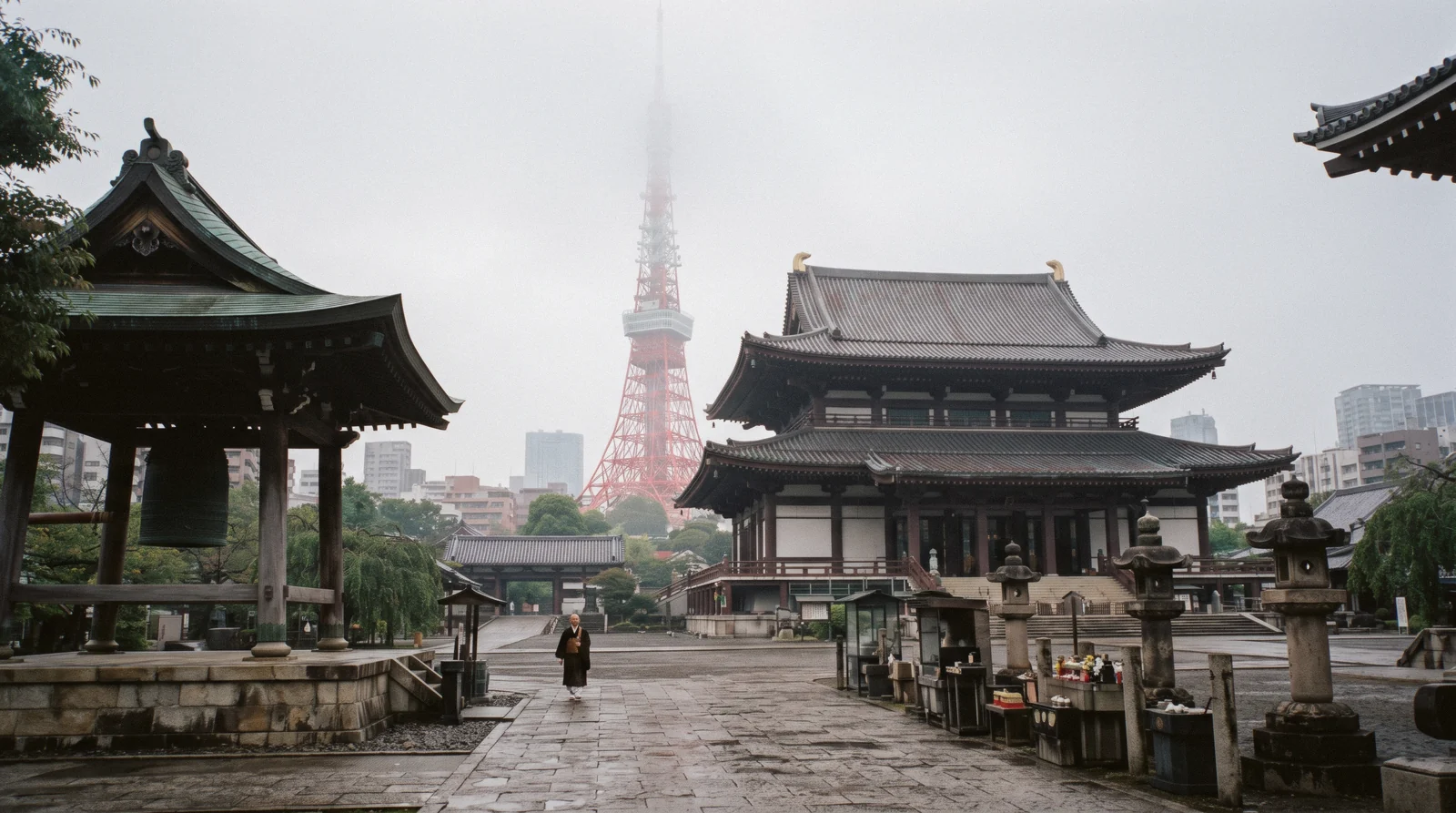
Tokyo Tower
Tokyo Tower is the orange and white lattice tower in Shiba-koen, 333 metres tall, open from 09:00 until 23:00 with two paid viewing levels: the Main Deck at 150 metres and the Top Deck Tour at 250 metres. This page covers the fares, the hours, the open-air stairs, the walk from each station exit and what sits next door; the wider list of top attractions in Tokyo is on the things to do in Tokyo hub, and the other observation decks are compared on the best Tokyo tours hub. Where it sits among the city's other views is set out on what to see in Tokyo.
Quick answer Which deck, what it costs, how late, how long
The Main Deck at 150 metres is open daily 09:00 to 23:00, last admission 22:30, and costs $9.72 (¥1,500) for an adult with no time slot to book. The Top Deck Tour to 250 metres runs 09:00 to 22:45, departs every fifteen minutes and costs $21.40 (¥3,300) online.
Key takeaways
- Buy the Main Deck ticket if you want the view and nothing else; the admission ticket card carries the same 150-metre deck at the platform's own listed price and takes a card payment before you arrive
- Pay the difference for the guided Top Deck experience only if you want the 250-metre deck with a host and the lounge; the extra hundred metres changes the horizon more than the city below
- The view from here contains the taller broadcasting tower across the river, which is the argument for coming to this one. Zojoji temple and its Tokugawa graves are a four-minute walk downhill, and the full evening plan sits on the three-day itinerary
Key facts
Opening hours
| Main Deck (150 m), daily | 09:00–23:00 |
|---|---|
| Top Deck Tour (150 m and 250 m), daily | 09:00–22:45 |
| Light-up, daily | 19:00–24:00 |
Closed No annual closed day is published. The Top Deck and the open-air stairs close in bad weather, and the day's status is printed on the tower's own operations banner
Admission
- Adult
- Main Deck $9.72 (¥1,500); Top Deck Tour $21.40 (¥3,300) online or $22.70 (¥3,500) at the counter; Tokyo Diamond Tour $45.40 (¥7,000)
- Reduced
- Main Deck: high school $7.78 (¥1,200), elementary and junior high $5.83 (¥900), age 4 and over $3.89 (¥600). Half price on every deck with a disability certificate, plus one carer
- Free
- Not stated. No free category is published beyond children under four, who are not listed as paying
Planning it
- Time needed
- Not stated by the tower. Our routing: one hour for the Main Deck, ninety minutes if you add the Top Deck Tour
- Book ahead
- Recommended — a few days
- Address
- Shiba-koen, Minato City, Tokyo — the tower's own Access page lists station exits rather than a street line
Five ways up, priced from the tower's own fee page and from GetYourGuide in Q3 2026. Yen figures are the official fares; dollar figures are converted at the site rate, and the platform cards are listed in dollars by the seller.
Are you paying for the view, or for the extra hundred metres and a guided lift?
| Option | Price | Includes | Cancel | Book |
|---|---|---|---|---|
| Main Deck, official counter or onlineThe default. No slot to pick, no app, walk in at any hour the deck is open | $9.72 (¥1,500) adult, $3.89 (¥600) age 4 and over | 150-metre deck over two floors, glass Skywalk Window, shrine, café | Not stated as refundable | Official site |
| Top Deck Tour, official booking siteAnyone who wants the 250-metre deck and is happy to fix a departure time | $21.40 (¥3,300) online, $22.70 (¥3,500) at the counter | Both decks, a welcome drink, guided lift departing every 15 minutes | Not stated as refundable | Official site |
| Main Deck admission ticket, GetYourGuideVisitors who would rather pay in their own currency and hold the ticket on a phone | Listed at $9.74 | The same 150-metre deck; the Top Deck is offered as a paid upgrade | Free up to 24 hours before | Check Availability |
| Guided tour with Top Deck viewsAnyone who wants the tower explained rather than just entered | From $99.18 | Guide, both decks, the Foot Town levels and the walk around Shiba-koen | Free up to 24 hours before | Check Availability |
| Morning bus tour including the towerFirst mornings, when the tower is one stop of several and you do not want to plan transfers | From $40.91 | Coach, the Imperial Palace outer plaza, Asakusa and the Main Deck | Free up to 24 hours before | Check Availability |
The official Main Deck fare and the platform card sit within three cents of each other, so the choice between them is about payment and cancellation rather than price: the counter takes cash and cards, the card cancels free a day ahead. The Top Deck Tour is the one place where buying online saves money outright, $1.30 (¥200) per adult against the counter fare. Group fares start at twenty people, $8.75 (¥1,350) each, falling to $7.78 (¥1,200) at fifty; school parties are cheaper again. A physical or mental disability certificate, a rehabilitation handbook or an atomic bomb survivor's certificate halves every fare for the holder and one carer, and the original document has to be shown at the counter.
Tokyo Tower tickets and tours compared
Four cards, each linking to the operator's own calendar. Ratings and review counts are the platform's own figures and the prices are the ones listed.
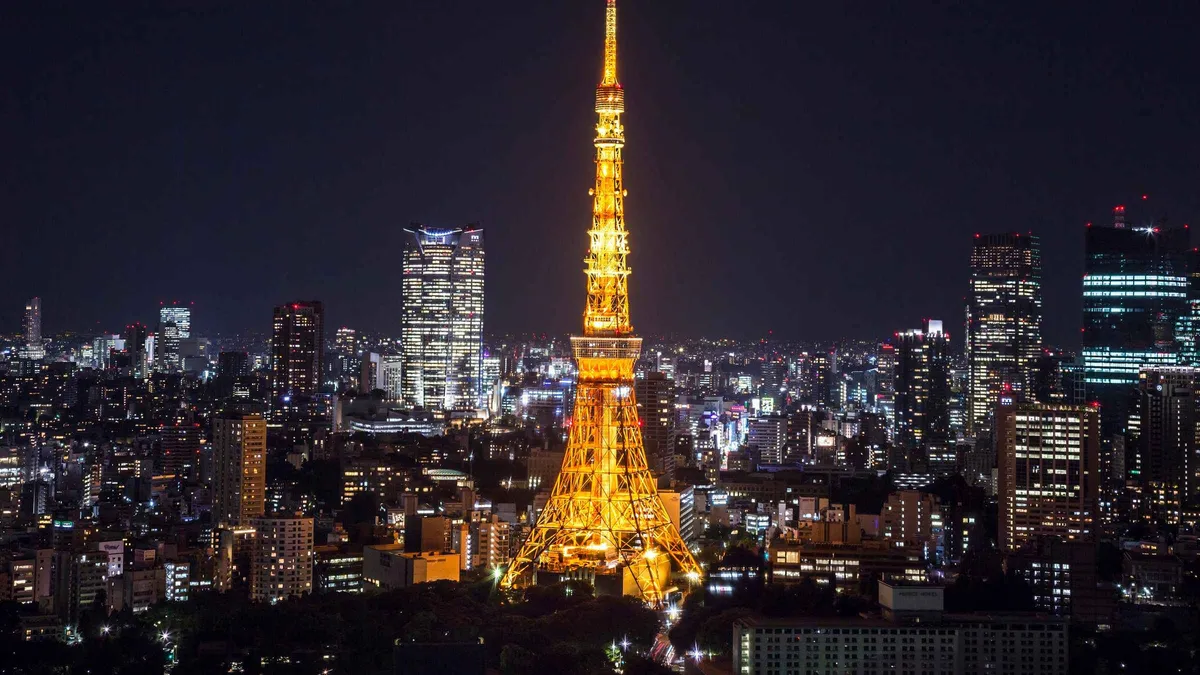 from $9.74
Tokyo Tower Admission Ticket
General admission ticket to Tokyo Tower's Main Deck, with an upgrade option for the Top Deck. Self-guided, valid one day to six months. Suits travelers who want the view without a guide.
Check Availability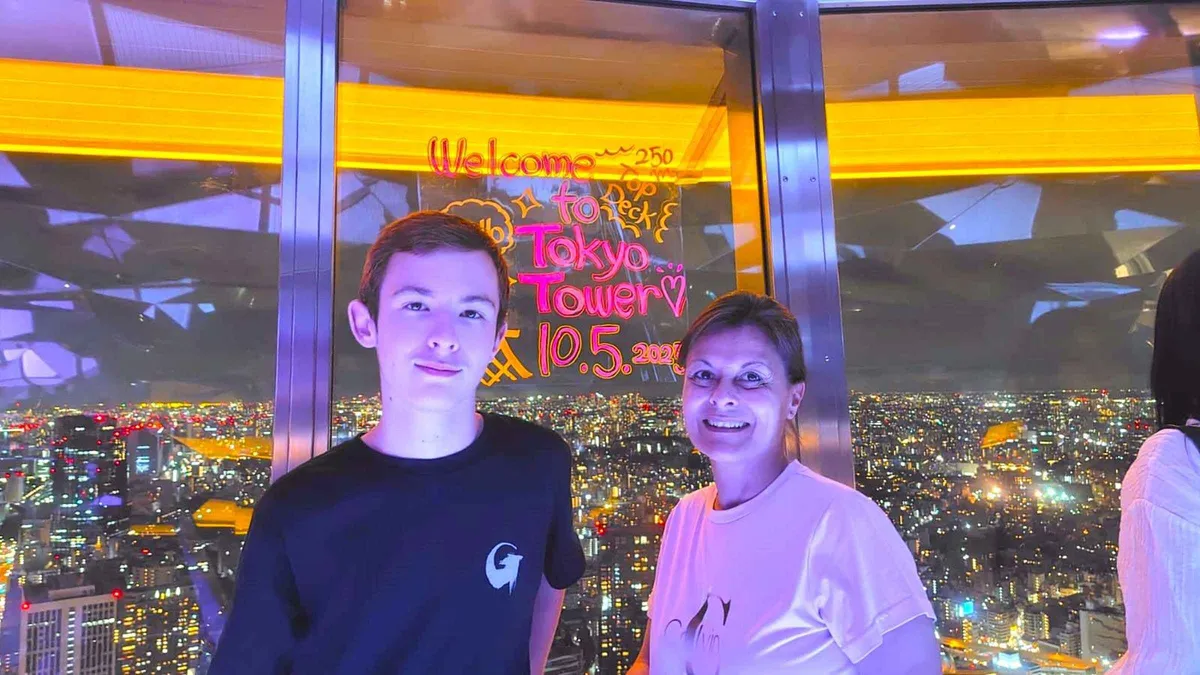 from $99.18
Tokyo: Tokyo Tower Guided Tour - Top Deck Views
Small guided group of up to 6 climbs to Tokyo Tower's Top Deck with a guide who explains the tower's history en route. For travelers wanting context and a fixed slot, not just self-guided entry.
Check Availability from $40.91
Tokyo: Morning Bus Tour Imperial Palace, Asakusa,Tokyo Tower
A half-day hybrid-bus tour of the Imperial Palace's outer grounds, Tokyo Tower's Main Deck and Asakusa's Senso-ji, with an English-speaking guide and Tokyo Tower admission included.
Check Availability from $58.12
Tokyo: Private Custom Walking Tour with Local Guide
A private, fully customizable walking tour with a local guide who tailors the route to your interests, from landmarks to hidden neighborhoods, suited to families, couples or solo travelers wanting flexibility.
Check AvailabilityPrices, ratings and details are the platform's own. Dollar figures are the listed prices. The platform bills in your account's currency.
What Tokyo Tower Is: A Broadcasting Mast That Outlived Its Job
The tower was not built to be looked at. It was built to carry television signals for a country that had just started broadcasting, and the observation decks were the part that paid for it.
Its formal name is the Japan Radio Tower, and the structure went up in a hurry between June 1957 and its opening on 23 December 1958. Tachu Naito designed it after the Eiffel Tower, with the engineering firm Nikken Sekkei, and claimed it would survive an earthquake twice the intensity of the 1923 Great Kanto shock or a typhoon gusting to 220 km/h. At least four hundred labourers worked on it each day, many of them tobi, the traditional high-steel crews.
About a third of the steel was scrap from American tanks damaged in the Korean War. When the 90-metre antenna was bolted on in October 1958, it took the title of tallest freestanding tower in the world off the Eiffel Tower by nine metres, and it did so weighing about 4,000 tonnes, some 3,300 tonnes less than the Paris tower, because it is thinner and simpler.
That is also why the comparison people make on arrival is the wrong one. The Eiffel Tower is a heavier, older, more decorated object; this is a light steel lattice built for radio and painted white and international orange because aviation law of the day required it. The paint is the detail that surprises visitors: the whole structure takes about 28,000 litres to cover, the repaint traditionally ran on a five-year cycle, and the 2019 coat used a longer-lasting formula that pushed the next one out to 2026.
Why it is famous, and why it stopped being useful
For half a century it was the mast that put Japanese television into Tokyo living rooms, and it became the shorthand for the city in the same way the Eiffel Tower is shorthand for Paris: Godzilla knocks it over, Sailor Moon stands under it, Death Note frames a scene against it. Then digital broadcasting arrived. The tower is not tall enough to push the higher frequencies past the high-rise blocks that grew up around it, an extension was costed at roughly four billion yen and never built, and the broadcasters moved to the 634-metre tower in Sumida in 2012.
Two FM radio stations still transmit from here. Everything else about the tower's income is now antenna leasing and the lifts.
The lighting is the reason people photograph it at night
Until 1987 the only lights on the frame were bulbs strung along its corners. Ticket sales had fallen badly by then, and the operator brought in the lighting designer Motoko Ishii, whose 1989 scheme replaced the bulbs with 176 floodlights inside and around the steel. From dusk until midnight the tower is lit, and the colour changes with the calendar: sodium lamps give it a warm orange from 2 October to 6 July, metal halide lamps a cool white from 7 July to 1 October.
The tower states that this light-up now runs entirely on its own solar generation.
Tokyo Tower In Eight Dates
Each date below is argued somewhere on this page. The list is here so the structure reads in order rather than in themes.
-
June 1957
Ground is broken in Shiba-koen
The Takenaka Corporation starts work on Tachu Naito's design, with at least four hundred workers on site each day.
-
14 October 1958
The antenna is bolted into place
The 90-metre mast takes the tower past the Eiffel Tower by nine metres, making it the tallest freestanding tower in the world at the time.
-
23 December 1958
The tower opens to the public
Final cost about 2.8 billion yen. Foot Town, the five-storey base building, opens with it and is advertised as a modern science museum.
-
1961
Radio antennas are added
The structure was designed for television, but it could carry radio, and NHK, TBS and Fuji among others transmitted from it.
-
1989
Motoko Ishii's floodlighting is unveiled
176 floodlights replace the corner bulbs after a slump in ticket sales. The seasonal orange and white scheme dates from this scheme.
-
11 March 2011
The Tohoku earthquake bends the antenna tip
Repairs the following year briefly cut the tower's height to 315 metres.
-
29 February 2012
A taller mast takes the broadcasting job
The 634-metre tower in Sumida is completed, and Tokyo Tower stops being the city's terrestrial television transmitter.
-
3 March 2018
The Top Deck reopens
The 250-metre level had been shut since 2016. It came back renovated, with the deck names changed: what was the Special Observatory became the Top Deck, and the Main Observatory became the Main Deck.
Dates from the tower's own company pages and the Wikipedia article on the structure; the deck renaming and the 2018 reopening are stated on both.
Main Deck Or Top Deck Tour: What The Extra Hundred Metres Buys
This is the only decision the tower asks you to make, and the fare gap is more than double. The figures below are the official adult fares; every deck sells child and student tiers underneath them.
The Main Deck is two floors at 150 metres and it is the deck the tower is designed around. The lower floor holds the Skywalk Window, a glass panel you stand on and look straight down through, along with Café La Tour and the Club333 stage. The upper floor holds the official shop, a Tokyo Tower-shaped post box, a Shinto shrine built into the deck, accessible toilets and the gate for the lift up. Nothing on this level is timed, which is why a walk-up at 21:00 works as well as a booking.
The Top Deck Tour is a different product. It is a guided departure every fifteen minutes to the 250-metre deck, sold for a named time, and it includes a drink and the mirrored interior the 2018 renovation gave the level. It also includes the Main Deck, so the comparison is not one deck against the other but one deck against both. Above that sits the Tokyo Diamond Tour, seven departures a day on the hour from 12:00 to 18:00, capped at seventy people a day, which adds a lounge.
| Ticket | Adult fare | Height | Timed | What it adds |
|---|---|---|---|---|
| Main Deck | $9.72 (¥1,500) | 150 m | No, walk in | Skywalk Window glass floor, Tower Daijingu shrine, café, shop, post box |
| Top Deck Tour, online | $21.40 (¥3,300) | 150 m and 250 m | Yes, every 15 minutes | The mirrored 250-metre deck, a drink, a host, both decks in one fare |
| Top Deck Tour, counter | $22.70 (¥3,500) | 150 m and 250 m | Yes, subject to space | The same tour bought on the day, $1.30 dearer |
| Tokyo Diamond Tour | $45.40 (¥7,000) | 150 m and 250 m plus lounge | Yes, seven departures | Lounge access, capped at 70 people a day, departures 12:00 to 18:00 |
Which one we would buy
The Main Deck, on most trips. Two thirds of what people come for is the city laid out at a height where you can still read the streets, and 150 metres does that better than 250 does. Buy the Top Deck Tour when the sky is clear enough to see far, when the fifteen-minute departure suits your evening, or when you want the 2018 interior rather than the view alone.
The one hard rule: the Top Deck closes in poor weather, so a booked departure on a wet day is a fare you may not use, and the tower prints the day's status on the operations banner at the top of its own site before you leave the hotel.
How Much Time To Give Tokyo Tower
The tower publishes no visit length, which leaves the question open. These three routings are ours, built from the deck layout and the lift arrangement rather than from an official figure.
The variable is not the view, it is the lift queue. One set of lifts runs from the first floor of Foot Town to the Main Deck, and a second set runs from the Main Deck's upper floor to the Top Deck. Every visitor uses the first pair, so the wait at the base is what decides your hour, and it is worst in the two hours after sunset.
| Routing | What you get | What it skips | Door to door |
|---|---|---|---|
| The short visit | Main Deck, both floors, the Skywalk Window and one full circuit of the glass | The 250-metre deck, Foot Town, the shrine queue | About an hour, including the lift wait |
| The full visit | Main Deck and the Top Deck Tour, with a stop in Foot Town on the way out | Nothing at the tower; the walk to Zojoji comes after | Ninety minutes to two hours |
| The stairs visit | About 600 open-air steps to the Main Deck, then the deck itself and the lift down | The Top Deck, unless you buy it separately at the deck gate | Two hours, and only when the stairs are open |
Add thirty minutes to any of these if you go up between 17:00 and 20:00. That is the window in which the last of the daylight, the sunset and the light-up all fall, and it is the only time the tower feels crowded in a way that changes the visit.
The Open-Air Stairs: About 600 Steps To The Main Deck
The stairwell is bolted to the outside of the tower and it is the one thing here that no other observation deck in the city offers.
The entrance is on the roof of Foot Town and the exit is on the first floor of the Main Deck, where the tower lists the Open-air Outdoor Stairs Walk among the deck's own attractions. The tower's site says about 600 steps are open; the Wikipedia article on the structure puts the stairwell at roughly 660 and records that on weekends and holidays visitors may use it in place of the lifts for the same fare, earning a certificate for the climb. We could not find a weekday rule stated in English on the tower's own pages, so treat the certificate and the weekend limit as reported rather than official, and check the operations banner on the day.
What is stated plainly is when the stairs shut. The banner at the top of every page on the tower's own site carries an Open-air Stair line, and on the morning we read it that line said the stairs to the Main Deck were closed due to bad weather. They are outdoors, uncovered, and the tower closes them whenever the weather turns.
Is it worth doing
Yes, if you are steady on stairs and the day is dry. The climb takes most people fifteen to twenty minutes, the fare is the same as the lift, and the view opens gradually through the steel rather than arriving at once through a window. It is not a shortcut: on a busy evening the lift queue may still be shorter than the climb.
And there is no stair option for the Top Deck, which is lift-only.
Hours, The Light-Up And The Quiet Slots
The tower keeps longer hours than any museum in the city and closes on no fixed day, which makes it the reliable evening in a trip built around places that shut.
The Main Deck runs 09:00 to 23:00 with last admission at 22:30; the tower warns that last admission may be brought forward when the base is congested. The Top Deck Tour runs 09:00 to 22:45 with the last departure at 22:15. The Tokyo Diamond Tour departs at 12:00, 13:00, 14:00, 15:00, 16:00, 17:00 and 18:00.
The light-up runs from 19:00 to midnight.
- Before 11:00 is the quietest stretch of the day, and the one time the Skywalk Window is free enough to stand on for more than a moment.
- 17:00 to 20:00 is the busiest, because sunset and the light-up fall inside it. If that is when you want to be up there, buy the Top Deck departure ahead rather than joining two queues.
- After 21:00 the base empties again and the deck is close to quiet, with the city fully lit. This is our pick for a first evening.
- No weekly closing day is published. That is the point of putting the tower on a Monday, when the state and metropolitan museums close.
When it does close
Weather. The Top Deck is suspended in poor conditions or for operational reasons, and the open-air stairs close in bad weather. Both are printed on the operations banner at the top of the tower's own site, updated for the day, and that banner is the only source we would trust the morning of a visit.
Why Some Visitors Still Pick The Older Tower
The obvious objection is that a taller, newer deck exists across the river. Three answers, and the first one is the one that decides it.
The view from here contains the Skytree. The view from the Skytree contains this. Which of those two skylines you want in your photographs is the whole argument, and it is why plenty of people who have been up the taller one come here anyway: the orange lattice is the object the city puts on its own posters, and you cannot see it from inside it.
Second, the money. An adult pays $9.72 (¥1,500) for the 150-metre deck here. That is the cheapest paid deck of the three big ones, and the free municipal observatory in Shinjuku is the only view in the city that undercuts it, at nothing.
Third, the neighbourhood. This tower stands in a temple precinct. Zojoji, the Tokugawa family temple, is four minutes downhill; its 1622 main gate is one of the oldest wooden structures in the city; six shoguns are buried behind it. Shiba Park wraps around both. The taller tower stands in a shopping complex. If you want an afternoon rather than a lift ride, this is the side of the river that has one, and the three-day itinerary routes it that way.
Five Things Most Visitors Do Not Know About Tokyo Tower
All five change something practical or explain something visible. Each carries the source it came from.
- Buying the Top Deck Tour online is the only saving the tower offers. The web fare is $21.40 (¥3,300) against $22.70 (¥3,500) at the counter, while the Main Deck costs the same either way [tower fee page]. - About a third of the steel came from American tanks damaged in the Korean War, bought as scrap during the 1957 construction [Wikipedia, Tokyo Tower]. - The tower colour changes twice a year, and the reason is temperature, not fashion. Sodium lamps light it orange from 2 October to 6 July because orange reads as warm in winter; metal halide lamps light it white from 7 July to 1 October because white reads as cool in summer [Wikipedia, Tokyo Tower, citing the Ishii lighting scheme]. - There is a Shinto shrine on the upper floor of the Main Deck, the Tower Daijingu, and it issues a red seal stamp to visitors who ask [tower Main Deck floor guide]. - Present a JCB card issued outside Japan at the ticket counter or the official shop and you get a discount, which is stated on the fee page and nowhere on the resale platforms [tower fee page].
How To Get There, And Which Station Exit
Six stations put you within a quarter of an hour on foot, and the walking times below are the tower's own figures from its Access page, not estimates.
There is no station called Tokyo Tower. The closest is Akabanebashi on the Toei Oedo Line, five minutes from the Akabanebashi gate, and it is the exit to aim for if you are arriving with luggage or in the rain.
| Station | Line | Exit | On foot |
|---|---|---|---|
| Akabanebashi | Toei Oedo Line | Akabanebashi gate | 5 minutes |
| Onarimon | Toei Mita Line | Exit A1 | 6 minutes |
| Kamiyacho | Tokyo Metro Hibiya Line | Exit 1 | 7 minutes |
| Shibakoen | Toei Mita Line | Exit A4 | 10 minutes |
| Daimon | Toei Asakusa Line | Exit A6 | 10 minutes |
| Hamamatsucho | JR | North Exit | 15 minutes |
The free bus, and the one that costs money
A free hydrogen shuttle circulates between Tokyo Station's Marunouchi exit, Waters Takeshiba, Hinode Pier, Takanawa Gateway and the tower, taking about an hour end to end from Tokyo Station. The Tokyu Bus route East 98 covers the same first leg in about twenty minutes from Tokyo Station's Marunouchi South Exit, plus a two-minute walk. Which you want depends entirely on whether you have the hour.
The rest of the network is explained on the getting around page.
Arriving by car or on two wheels
The car park sits under the tower, open 09:00 to 23:00 with last entry at 22:30, at ¥800 for the first hour and ¥400 for every half hour after it. Bicycle parking on the south side is free for two hours, then ¥150 per four hours; motorbikes are ¥400 per four hours. Both are stated on the tower's Access page.
Photography is asked to stop on the underground car park stairs.
At Tokyo Tower: What To Do, And What Not To
Every line here is a decision argued above, compressed into the form you can act on that evening.
Do
- Check the operations banner on the tower's own site before you set out: it prints whether the Top Deck and the open-air stairs are running today
- Go up after 21:00 if you want the city lit and the deck quiet, or before 11:00 if you want the Skywalk Window to yourself
- Buy the Top Deck Tour online rather than at the counter, the only fare on the site where doing so saves money
- Walk downhill to Zojoji afterwards; the treasures gallery under the main hall is open until 15:00 on weekdays and 16:00 at weekends
- Show a JCB card issued outside Japan at the counter, or a disability certificate, either of which changes what you pay
Don't
- Don't book a Top Deck departure on a forecast of heavy weather; the 250-metre level is suspended in poor conditions and the fare is not stated as refundable
- Don't assume the stairs are open. They are outdoors and they close in bad weather, and the closure is announced the same day
- Don't arrive at 22:20 for the Main Deck. Last admission is 22:30 and the tower reserves the right to bring it forward when the base is busy
- Don't pay counter price for the Main Deck expecting the Top Deck to be included; they are separate fares and the second lift has its own gate
- Don't build the evening around a Monday closure. Nothing here shuts on Mondays, which is exactly why it belongs on that day of a trip
Tokyo Tower map: the entrance, the stations and what is next door
The tower, the two closest station exits and the three places within a ten-minute walk of the base.
Coordinates for the tower are its own published position; the station and park pins are placed from the tower's Access page walking times.
Next stop from Tokyo Tower
Walk minutes are ours, measured from the Foot Town entrance. The tower keeps late hours, so all three of these work better before you go up than after.
Zojoji Temple
The Tokugawa family temple, founded 1393 and moved here in 1598. Its Sangedatsumon gate of 1622 is the only original building left standing after the 1945 air raids and one of the oldest wooden structures in the city. The treasures gallery under the main hall costs ¥700 for an adult and holds a 1:10 model of the Taitokuin mausoleum; a combined ticket with the shoguns' graveyard is ¥1,000. Closed Tuesdays. More on how to visit a temple politely is on the temples and shrines hub.
4 min walkShiba Park
The park the tower rises out of, and the place almost every photograph of it is taken from. It costs nothing and has no closing time, which makes it the cheap half of this evening; the rest of the free things to do are indexed on their own page.
6 min walkGinza
Take the Toei Asakusa Line one stop from Daimon and change, or walk it in twenty-five minutes along the canal. Ginza is where the evening goes next if you want dinner rather than another view.
10 minutes by train from DaimonTokyo Tower questions
Is Tokyo Tower worth visiting?
For most first visits, yes, and for a specific reason: this is the deck whose view contains the city's other landmarks rather than the one that has to leave itself out of the picture. At $9.72 (¥1,500) for the Main Deck it is also the cheapest of the paid decks. Skip it if the forecast is heavy cloud, because 150 metres in fog is a lift ride to a grey window. The admission ticket cancels free up to a day ahead if you want to hedge the weather.
How much does it cost to go up Tokyo Tower?
An adult pays $9.72 (¥1,500) for the Main Deck at 150 metres, $21.40 (¥3,300) online for the Top Deck Tour that covers both decks, or $45.40 (¥7,000) for the Tokyo Diamond Tour with lounge access. Children aged four and over pay $3.89 (¥600) on the Main Deck. The guided Top Deck tour bundles a guide with the same climb, and every fare on the site is compared on the tickets hub.
What time does Tokyo Tower close?
The Main Deck closes at 23:00 with last admission at 22:30, and the tower can bring that admission forward when the base is congested. The Top Deck Tour stops at 22:45, with its last departure at 22:15. The light-up runs 19:00 to midnight, so the tower is worth looking at from Shiba Park for an hour after the deck has shut.
Can you climb the stairs at Tokyo Tower instead of taking the lift?
Yes, when they are open. The tower's own pages describe an Open-air Outdoor Stairs Walk of about 600 steps from the Foot Town roof to the Main Deck, and the Wikipedia article records roughly 660 steps, a weekend and holiday rule and a certificate on completion, which the tower does not repeat in English. They close in bad weather, and the day's status is on the operations banner. The guided tour uses the lifts.
Do you need to book Tokyo Tower in advance?
Not for the Main Deck, which sells no time slot and admits walk-ups all day. Book the Top Deck Tour if you want a specific departure, because it runs every fifteen minutes to a fixed capacity and the online fare is $1.30 (¥200) cheaper than the counter. Booking ahead also fixes the payment: the platform ticket is charged in your own currency.
Is Tokyo Tower open on Mondays?
Yes. No weekly closing day is published, which is unusual in a city where the national and metropolitan museums close on Mondays as a rule. That makes the tower a reliable Monday evening; the full list of what else stays open is on the Monday openings page.
How tall is Tokyo Tower compared with the Eiffel Tower?
It is 332.9 metres against the Eiffel Tower's 330 with its current antennas, so it is taller, and it was the tallest freestanding tower in the world when its mast went up in October 1958. It is also far lighter, around 4,000 tonnes against roughly 7,300, because it is a thinner lattice built to carry broadcast aerials rather than to be walked up. A private guide will take the comparison further if the engineering is the part that interests you.
Is there anything to do at Tokyo Tower besides the view?
Foot Town, the five-storey base building, holds shops and restaurants, and the Main Deck itself carries the Skywalk Window glass floor, Café La Tour, the Club333 stage and the Tower Daijingu shrine, which issues a red seal stamp. A tea ceremony and a VR bungee run as separate set tickets. Outside, Zojoji and its shogun graves are four minutes downhill, and the morning bus tour pairs the tower with the Imperial Palace outer plaza.
Where Tokyo Tower Fits In A Tokyo Day
It is an evening, not a morning, and it pairs with one specific neighbourhood rather than with the rest of the city.
Build the afternoon around Zojoji and Shiba Park while the light is still good, take an early dinner in Ginza or Daimon, and come back for the deck after 21:00 when the base has emptied and the light-up has been running for two hours. That order costs nothing extra and turns a twenty-minute lift ride into a half-day.
On a Monday it becomes the anchor of the day rather than the end of it, because so much else is shut. Pair it with the temples and shrines, which keep their own calendar, and leave the museums for a day when they are open. If you are fitting the tower into a fixed number of nights, the two-day and three-day itineraries both place it on the evening it works best.
Tokyo Tower On Film: Both Decks, The Stairs And The Night View
Three walk-throughs that show what the fare actually buys: the deck layout, the 250-metre level and the outdoor stairwell most visitors never see.
The Complete Tour of Tokyo Tower | Amazing Tokyo Views
A full walk from Foot Town up through both decks, which is the clearest way to see what the Top Deck fare adds.
Video: I Will Always Travel for FoodTokyo Tower Guide: Prices, Hours, and What to Expect
A short briefing on the fares and the lift arrangement, useful before you choose a deck at the counter.
Video: Globe Travel AdventuresTokyo Tower: Climbing the Open-Air Stairs
The outdoor stairwell filmed from bottom to top, so you can judge the climb before you commit to it.
Video: EN SMILESVideos load from YouTube only when you press play.
Prices, hours and terms are set by the venue or operator and confirmed at checkout.
We may earn a commission if you book through one of our links, at no extra cost to you. Full affiliate disclosure