 Visit Tokyo Guide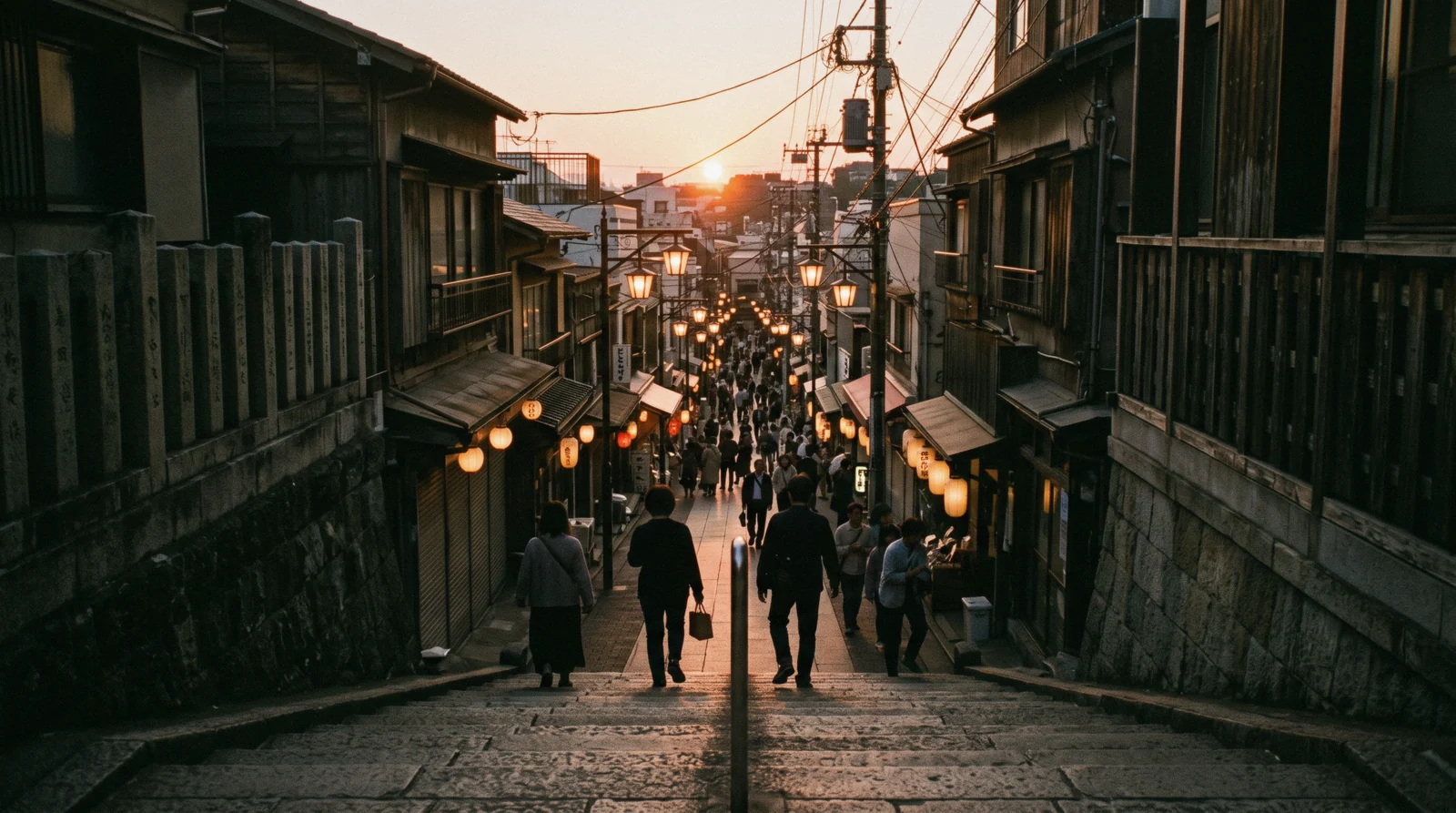
Tokyo Neighbourhoods
Tokyo neighborhoods are seven separate downtowns rather than quarters of one centre, and six of the seven sit on a loop of railway that takes about an hour to circle. They are not quarters of one centre, because Tokyo has no single centre; they are separate downtowns, each built around its own major station, each with a different trade, and each capable of absorbing a full day. That is why an itinerary that would work in Paris or Rome falls apart here: the distances between them are twenty to forty minutes and the districts do not sit in a walkable ring. This page compares seven of them by what each is actually for, which traveller each suits and which evening each is worth, sets out the loop-line model that makes the geography legible in about a minute, and gives an honest answer to how many fit in a day. Choosing a hotel is a different question and has its own page; for everything else about the city, see things to do in Tokyo.
Quick answer The loop-line model, and how many districts fit in a day
Learn one thing and the city becomes legible: the Yamanote Line is a circle, it takes about an hour to go all the way round, and six of the seven districts on this page sit on or just inside it. Pick two districts a day, one for the daytime and one for the evening, and choose them from the same side of the circle. Three in a day is possible and is mostly a day spent on trains.
Key takeaways
- For a first afternoon and evening, take Shinjuku or Shibuya on the western side of the loop; for a first morning, Asakusa in the east. Which pairs with which is set out in the day-pairing section.
- The day of the week matters more than most guides admit. Ginza closes its main street to traffic at weekends and Akihabara closes its own on Sundays, while museums across the city shut on Mondays. The week table puts all of it in one place.
- Odaiba is the exception to every rule here: it is out in the bay, it pairs with nothing, and it eats a day of its own. The comparison table says who that is worth it for.
- If you would rather have the geography placed for you on the first day, a three-hour bike ride across the city at $64.93 crosses several of these districts in one go, and a private walking guide at $58.12 will build the route around whichever ones you have picked.
Seven Districts Compared: Who Each One Is For
The seven districts this guide covers in full, ranked by how a visitor actually uses them rather than by size. Travel times are measured from Tokyo Station on the operators' own published journeys, read in Q3 2026; the last column is the one to read first, because it is the question everything else follows from.
| District | What it is | From Tokyo Station | Best time of day | Who it is for |
|---|---|---|---|---|
| Shinjuku | The largest transport hub on earth, wrapped in shopping, skyscrapers and neon drinking alleys | 14 minutes on the Chuo Line rapid | Late afternoon into the night | First-timers, night owls, anyone who wants a free tower view and a bar alley in the same evening |
| Shibuya | The scramble crossing and the vertical shopping and observation built into the station | About 20 minutes on the Yamanote Line | Dusk, when the crossing lights up | Anyone who came for the photograph, and for youth fashion and food |
| Asakusa | The old-town temple district, with the approach street and the kitchenware trade behind it | About 20 minutes via the Ginza Line | Early morning, before the coaches | First-timers who want the traditional half of the city, and early risers |
| Ginza | The oldest luxury shopping street, free gallery floors, a kabuki theatre and food-hall basements | 3 minutes on the Marunouchi Line | Weekend afternoons, in the traffic closure | Walkers, eaters and anyone who thinks they are not interested in shopping |
| Harajuku | Youth fashion streets beside the city's largest forested shrine precinct | About 25 minutes on the Yamanote Line | Late morning, before the street fills | Younger travellers, and anyone pairing a shrine with a shopping street |
| Akihabara | Electronics turned anime, manga, models and arcades, stacked ten floors at a time | 4 minutes on the Yamanote Line | Sunday afternoon, in the street closure | Collectors, gamers, and anyone with two spare hours on the north side |
| Odaiba | Artificial islands in the bay: promenades, a beach, a bridge and large indoor attractions | About 30 minutes via Shimbashi and the Yurikamome | The two hours around sunset | Families, and travellers on day three or four who want space and a horizon |
Journey times are from Tokyo Station and will differ from wherever you are staying; the seventh row is the outlier in every column, which is the point of including it. The two districts not listed here because they are attractions rather than areas, the Imperial Palace grounds and Ueno Park, have pages of their own.
The Seven District Guides, Grouped By Where They Sit
Each district has a full page with its own hours, prices, station exits and walking routes. The numbers below match the numbered pins on the map underneath, and the grouping is the one your feet will care about: which side of the loop each is on.
The western side of the loop
-
Shinjuku
Hub and nightlife Half a daybook-ahead tier 1 of 3
The busiest station on earth, a free twin observation deck, a national garden at $3.24 (¥500) and two drinking alleys of completely different character.
Tip: Do not get off at Shinjuku for the garden or the towers; the two small stations one stop away put you on the right street.
-
Shibuya
Crossing and shopping Half a daybook-ahead tier 2 of 3
The scramble crossing, the statue beside it, and a rooftop observation deck built into the station complex with a timed ticket.
Tip: The Hachiko Exit was rebuilt in January 2025, so the walk from the gates to the crossing is now a signposted minute.
-
Harajuku
Fashion and shrine 3 to 4 hoursbook-ahead tier 1 of 3
A youth-fashion street running from one station exit and the forested approach to the city's grandest shrine about three minutes from another.
Tip: Two exits of one small station lead to two completely different districts; pick before you tap out.
The centre and the east
-
Ginza
Shopping and theatre 2 to 4 hoursbook-ahead tier 1 of 3
Flagship stores over food-hall basements, free corporate galleries, a kabuki theatre selling single acts, and the fish stalls ten minutes east.
Tip: The main street is closed to cars from noon on weekends and holidays, which is the whole reason to come at that hour.
-
Akihabara
Pop culture and electronics 2 hoursbook-ahead tier 1 of 3
Ten-floor buildings holding a different specialist on every level, multi-storey arcades, component alleys and a shrine that blesses computers.
Tip: Ride the lift to the top floor and walk down; browsing upward from the pavement wastes the afternoon.
-
Asakusa
Old town and temple Half a daybook-ahead tier 1 of 3
The city's oldest temple with its gate and approach street, the kitchenware wholesale district behind it, and the river at the bottom.
Tip: Arrive before 09:00 and the approach street is a different place entirely from the one in the photographs.
Out in the bay
-
Odaiba
Waterfront A full daybook-ahead tier 1 of 3
Made islands with promenades, a beach, a free nightly fountain show and a driverless line that crosses the bridge with a front-window view.
Tip: It pairs with nothing else in the city; give it its own day or leave it out.
Numbers match the list — tap a pin for the guide.
Coordinates are the districts' main station positions rather than their centres, because that is where you will actually arrive. Time estimates are ours, based on the routings set out on each district's own page, and no authority publishes an official one.
The Tokyo Neighbourhood Map
The seven districts as the loop line arranges them, plus the two central stations everything is measured from. Positions are the stations' own published coordinates on the OpenStreetMap base layer; the circle you can see in the pin pattern is the Yamanote Line, and understanding that shape is most of the navigation.
The one thing this map shows that a list cannot: six of the seven pins sit on or just inside a circle, and the seventh does not. That is the whole of Tokyo's geography for a visitor, and the loop-line section explains how to use it.
Tours That Stitch The Districts Together
Four products that exist precisely because Tokyo's districts do not connect on foot: two city-wide rides that cross several in one go, and two private guides who will build a route around whichever ones you have chosen. Prices are the platform listings in US dollars, and each card opens the operator's own page with the live calendar.
 from $64.93
Tokyo: 3-Hour Bike or E-Bike City Highlights Tour
A three-hour guided cycling loop through central Tokyo's temples, parks and modern districts, riding a road bike or e-bike with an English-speaking local guide, suited to riders comfortable on shared roads.
Check Availability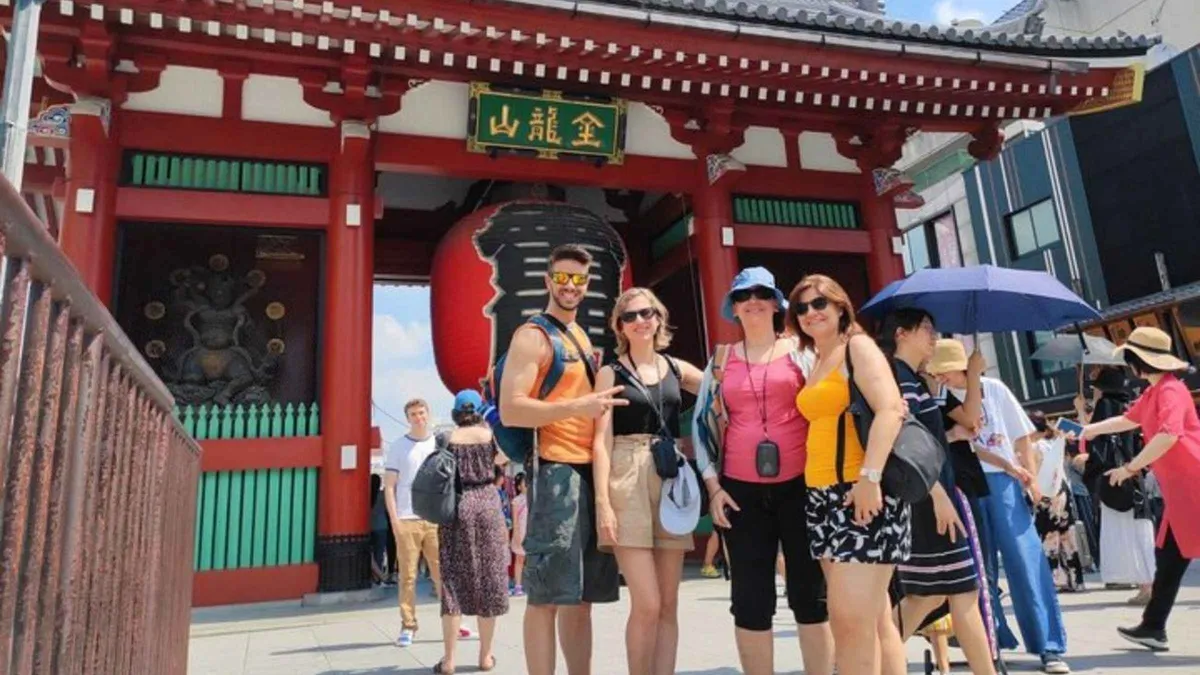 from $58.12
Tokyo: Private Custom Walking Tour with Local Guide
A private, fully customizable walking tour with a local guide who tailors the route to your interests, from landmarks to hidden neighborhoods, suited to families, couples or solo travelers wanting flexibility.
Check Availability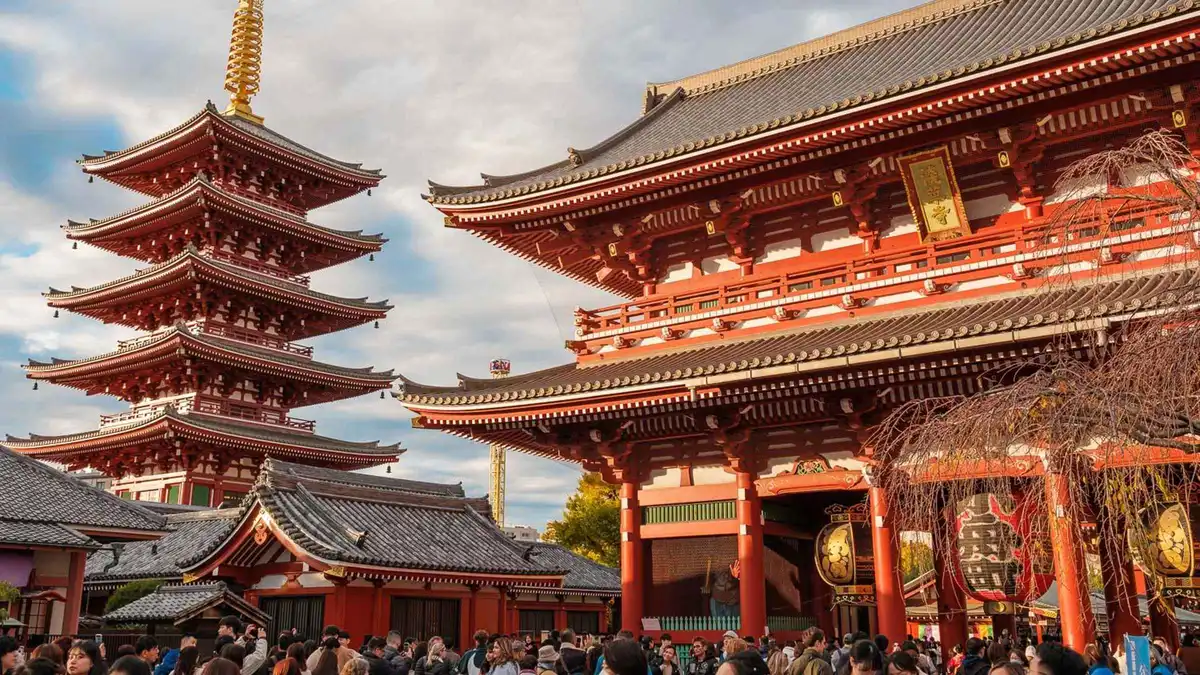 from $58.44
Tokyo: Private Walking Tour with a Local Guide
A private walking tour shaped around your own picks, from famous landmarks to quiet temples and local neighborhoods, with temple entrance fees on the agreed route and hotel pickup included.
Check Availability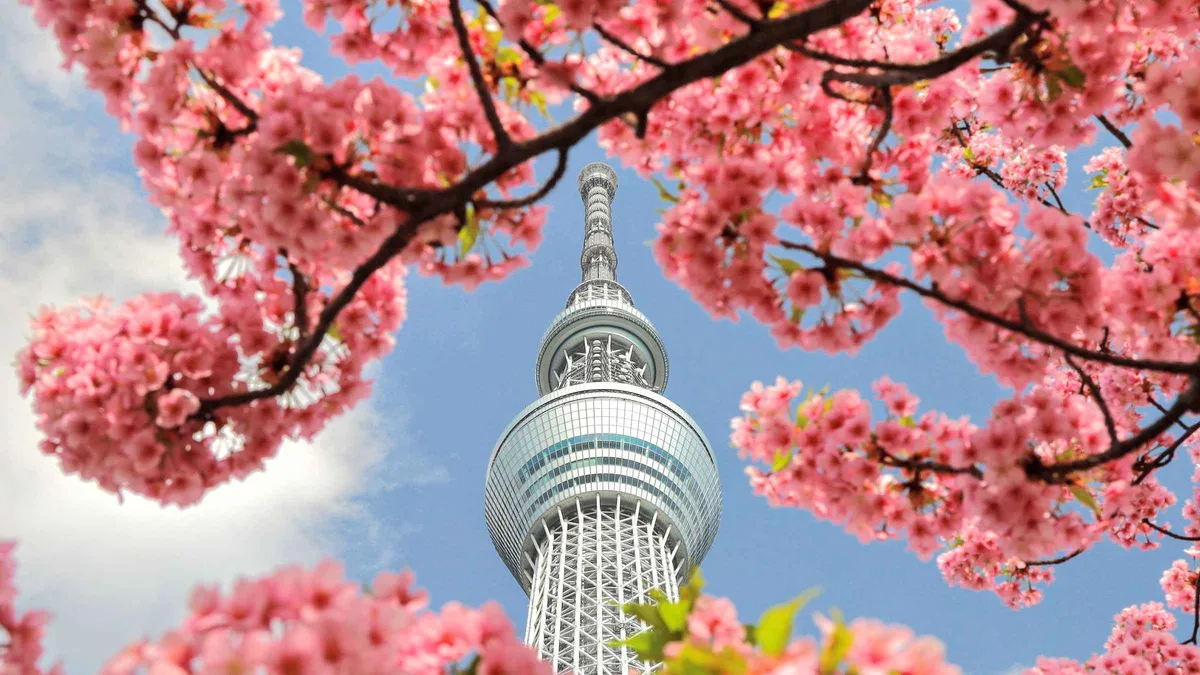 from $123.37
Tokyo: Meiji Shrine, Asakusa, Skytree Bus Tour and Cruise
A full-day coach circuit through Meiji Shrine, Asakusa, Tokyo Skytree and a Tokyo Bay cruise, with skip-the-line Skytree entry, a matcha tasting and an optional Japanese lunch included.
Check AvailabilityPrices, ratings and details are the platform's own. Dollar figures are the listed prices. The platform bills in your account's currency.
The Loop-Line Model That Makes Tokyo Legible
There is one mental model worth learning before you arrive, and it takes about a minute. Almost everything a first-time visitor does in Tokyo is arranged around a circle.
The Yamanote Line is a loop of JR track running clockwise and anticlockwise around central Tokyo, and it stops at almost every district on this page. It takes roughly an hour to go all the way round, which means the furthest two points on it are about thirty minutes apart in either direction. Trains run every few minutes and you do not need a timetable.
Once you know that, three otherwise confusing things resolve at once: why every guidebook describes districts rather than a centre, why the same journey can be quoted at very different times depending on direction, and why nothing in Tokyo is genuinely far from anything else.
Inside the loop is the administrative and commercial core: the palace grounds, the business districts, Ginza. On the loop itself are the big station-towns, Shinjuku, Shibuya, Harajuku, Ueno, Akihabara. Just outside it to the east, off the loop and on a subway line, is the old town around Asakusa.
And out in the bay, connected to none of it, is Odaiba. That is the entire geography a visitor needs, and it fits in four sentences.
The practical consequences
Three of them are worth stating outright. Districts on the same side of the loop chain easily, so Shinjuku, Harajuku and Shibuya are one afternoon and evening. Districts on opposite sides of the loop cost you thirty minutes each way, which is why an itinerary alternating east and west burns an hour a day in transit.
And the loop is JR, not the subway, so the Metro and Toei day passes do not cover it: that trap, and the arithmetic of which pass to buy, is on getting around Tokyo. The operators' own network maps are the source for the loop's shape, and the Tokyo Metropolitan Government publishes the district guides these pages check against at gotokyo.org.
How Many Districts Fit In A Day, Honestly
Two. The temptation is to say three, and three is physically possible, but it produces a day in which you have photographed three places and been in none of them. Here is the arithmetic behind that.
A district visit has three parts: the travel to it, twenty to forty minutes; the walk within it, which for these seven is between one and three hours if you are not shopping; and the sit-down, the meal or the drink or the hour in a garden, which is where the day actually becomes a memory. Two districts with all three parts is a full day, roughly nine hours door to door. Adding a third removes the sit-down from all of them.
| Pairing | The shape of the day | Why it works | What to leave out |
|---|---|---|---|
| Harajuku then Shibuya | Late morning shrine and fashion street, cross one stop, evening at the crossing | One stop apart on the same line, and the second one is better after dark | Do not add Shinjuku unless you skip dinner |
| Asakusa then Akihabara | Temple before 09:00, river or kitchen street, then ten minutes on the Ginza Line | Both on the north east, and both are morning-and-afternoon places | The bay, in any form |
| Ginza then Tsukiji | Fish stalls early, walk ten minutes west into the traffic closure | Adjacent on foot, and they run on opposite clocks | Nothing; this is the shortest good day here |
| Anything then Shinjuku | Daytime elsewhere, evening in the alleys from about 17:30 | Shinjuku is an evening district and connects to everything | Another evening district |
| Odaiba alone | Out mid-afternoon, waterfront at sunset, back after the fountains | It connects to nothing else, so it gets its own day | Every other district |
The other half of the answer is the one people find hardest to accept: for a first trip of three or four days, five districts is a good total, not seven. Doing five properly and missing two beats doing seven at a jog, and the two you miss are the two your interests care least about. The one, two and three-day itineraries in this guide each make that choice explicitly rather than pretending the city compresses.
The Day Of The Week Changes Which District Is Worth It
Tokyo is open every day, but not everything in it is, and two of these districts are noticeably better on one particular day. Getting this right is worth more than any amount of route optimisation.
The single biggest constraint is Monday. The national and metropolitan museums close on Mondays as a rule, and so does the national garden in Shinjuku; temples and shrines do not, which is why a Monday is a good day for the eastern districts and a poor one for the museum cluster. The full list of what stays open, with the exceptions that catch people out, is on what is open on Monday.
| Day | What changes | The district it favours |
|---|---|---|
| Monday | Museums and the Shinjuku garden close; temples and shrines do not | Asakusa, and any shrine day |
| Weekdays before 11:00 | Most shops in the retail districts have not opened | Asakusa and the parks, which are at their best early |
| Saturday and Sunday, from noon | Ginza's main street closes to traffic, to 18:00 in summer and 17:00 in winter | Ginza, decisively |
| Sunday, from 13:00 | Akihabara's main street closes to traffic, to 18:00 in summer and 17:00 in winter | Akihabara, decisively |
| Sunday, evening | A significant number of Golden Gai bars are shut | Not Shinjuku for a bar night |
| Any evening after about midnight | The last trains go; the districts stop being connected | Wherever you are sleeping |
Two of those rows are worth a change of plan rather than a note. If your trip includes a weekend, put Ginza in it, because the street closure turns an expensive shopping road into a public space and it is free. If your trip includes a Sunday, put Akihabara in the afternoon of it for the same reason.
Both closures are cancelled in heavy weather, which is the one caveat. Both closure timetables are published by the Tokyo Metropolitan Government, on its Ginza destination guide and its Akihabara Electric Town listing.
Seasonal timing, briefly
Across all seven districts the same two windows are best, late March into April and October into November, and the same two are hardest, the humid heat of July and August and the short daylight of December and January. That matters most for the districts whose value is outdoors, which here means Odaiba, the shrine precinct at Harajuku and any garden. The best time to visit Tokyo has the month-by-month detail.
What Each District Is Actually Like To Be In
The comparison table gives the facts. This is the part a table cannot carry: what the seven feel like, which is usually what decides whether a traveller enjoyed a day or endured it.
Shinjuku is loud, vertical and relentless, and it is the district that most rewards knowing where you are going; arrive without a plan and it is exhausting, arrive with one and it is the best evening in the city. Shibuya is younger, denser and more photographed, organised around a single piece of choreography at the crossing that is genuinely worth standing and watching for ten minutes. Harajuku is two districts wearing one name, a narrow shopping street of teenage fashion and a vast quiet forest with a shrine in it, three minutes and a world apart.
Asakusa is the one that looks like the Tokyo of the imagination and behaves like a market town, low-rise and busy in the morning and largely closed by early evening. Ginza is formal, wide and expensive-looking and is, on a weekend afternoon, one of the most pleasant walks in the country. Akihabara is a single street of stacked shops and is the only district here that is genuinely a specialist interest: two hours if it is not yours, a whole day if it is.
And Odaiba is not like any of them. It has sky, water, wind and distance, which no other district on this list has, and it also has the least density of things to do per minute of walking. It is the district people either love for the space or resent for the travel, and the deciding factor is almost always how many days they have.
On day two it is a mistake; on day four it is a relief.
The two areas that are not on this list
Two more places come up constantly and belong to different pages, because they are attractions rather than districts. Ueno Park is the museum cluster on the northern corner of the loop, and it behaves like a campus rather than a neighbourhood. The Imperial Palace grounds sit inside the loop in the middle of the business district, with their own gardens, their own closed days and their own tour booking. Neither is a place to spend an evening, and both slot into a district day rather than replacing one.
Choosing A District To Visit Is Not Choosing One To Sleep In
The two decisions get run together constantly, and they answer to different criteria. This page is about the first. It is worth being clear about the difference before you book anything.
A district you visit is chosen for what is in it. A district you sleep in is chosen for what runs through it, which is a completely different test: how many lines serve the station, whether an airport train stops there, how the last train home works at 23:30, and whether there is food within five minutes of the hotel door at that hour. On that test the best visiting districts and the best sleeping districts are not the same list.
Asakusa is a fine morning and an indifferent base; Shinjuku is an average daytime district and one of the strongest bases in the city.
The one thing this page will say about hotels is a negative finding, and it is a useful one: there is no wrong central district to stay in on a first trip, because the network is good enough that thirty minutes reaches almost everything from almost anywhere inside the loop. What varies is price, noise and the walk from the platform to your door, not access. The full comparison, area by area, is on where to stay in Tokyo, and what a night actually costs is inside what Tokyo costs.
Where To Go Next
The three pages that turn this comparison into a plan, in the order most trips need them.
Tokyo in 3 days
Which five of these seven districts a three-day trip should actually contain, placed in the hours that suit them, with the timed tickets in the right slots. Read the three-day itinerary.
The full itineraryGetting around Tokyo
The three operators that share the city, why the subway day pass does not cover the loop line, and the ride count at which a pass beats paying per journey. Read getting around Tokyo.
The transport pageWhere to stay in Tokyo
The separate question this page keeps handing off: which area to sleep in, judged on connections, noise and price rather than on what is in it. Compare the areas.
The base decisionTokyo Neighbourhood Questions
How many Tokyo districts can I see in one day?
Two, if you want to have been in them rather than photographed them. A district visit is travel of twenty to forty minutes, one to three hours of walking, and one sit-down meal or drink; two of those is a nine-hour day. Three is possible and removes the third part from all of them. The pairings section sets out the five combinations that actually work.
Which area of Tokyo should I visit first?
For an arrival afternoon, the western side of the loop: Shinjuku or Shibuya, because both are at their best as the light goes and neither needs anything booked. For a first full morning, Asakusa before 09:00, when the temple approach is a different place. The comparison table matches each district to a traveller and a time of day.
What is the difference between the Tokyo districts and a city centre?
Tokyo does not have one. It has a ring of separate downtowns, each grown around its own major station and each with its own trade, connected by a loop of railway that takes about an hour to circle. That is why the districts do not chain on foot and why an itinerary written for a European city fails here. The loop-line model explains the geography in four sentences.
Which Tokyo districts are best in the evening?
Shinjuku first, for the drinking alleys and the free tower view that stays open until 22:00, and Shibuya second, because the crossing is a night-time spectacle. Ginza and Asakusa both close down early and are daytime propositions, and Akihabara keeps its arcades running after the shops have shut. The week table covers which evenings are worse than others.
Which parts of Tokyo should a visitor avoid?
None on grounds of safety, which is the honest answer and not a diplomatic one: Tokyo's crime rate against visitors is very low and every district on this page is walkable at night. What to avoid is a category rather than a place, namely any bar or club you entered because someone on the pavement invited you in. That is a real and documented cost, and safety and scams in Tokyo sets out how it works.
Is it worth going out to the bay district?
On a trip of four days or more, yes; on a trip of two, no. Odaiba is the only part of the city with an open horizon, a beach and a free nightly fountain show, and it is also thirty to forty-five minutes out, spread over a long walk and connected to no other district. It gets its own day or it gets left out, which the comparison table states plainly.
Do I need a transport pass to move between districts?
Usually not. An IC card taps you through every gate in the city and a sightseeing day is normally three or four rides, below the five or six at which a subway pass pays. The trap is that the loop line is JR and the subway passes do not cover it, so a day spent circling the districts is not a day the subway pass suits. The arithmetic is worked through on getting around Tokyo.
The Districts Of Tokyo On Video
Three overviews that do what this page cannot, which is show the difference in texture between the districts side by side rather than describing it one at a time.
Tokyo's 7 Unique Neighborhoods
Seven districts in one run, which is the fastest way to see how different they are from each other.
Video: Tokyo KenchanWhere to Stay in Tokyo (2025) – Best Areas & Neighborhood Guide 🇯🇵
The separate base question this page keeps handing off, covered area by area on the ground.
Video: Howzit JapanWhy Tokyo Is Insanely Well Designed
Why the city grew as a ring of station-towns rather than around one centre, which is the reason the loop-line model works.
Video: OBFVideos load from YouTube only when you press play.
Prices, hours and terms are set by the venue or operator and confirmed at checkout.
We may earn a commission if you book through one of our links, at no extra cost to you. Full affiliate disclosure