 Visit Tokyo Guide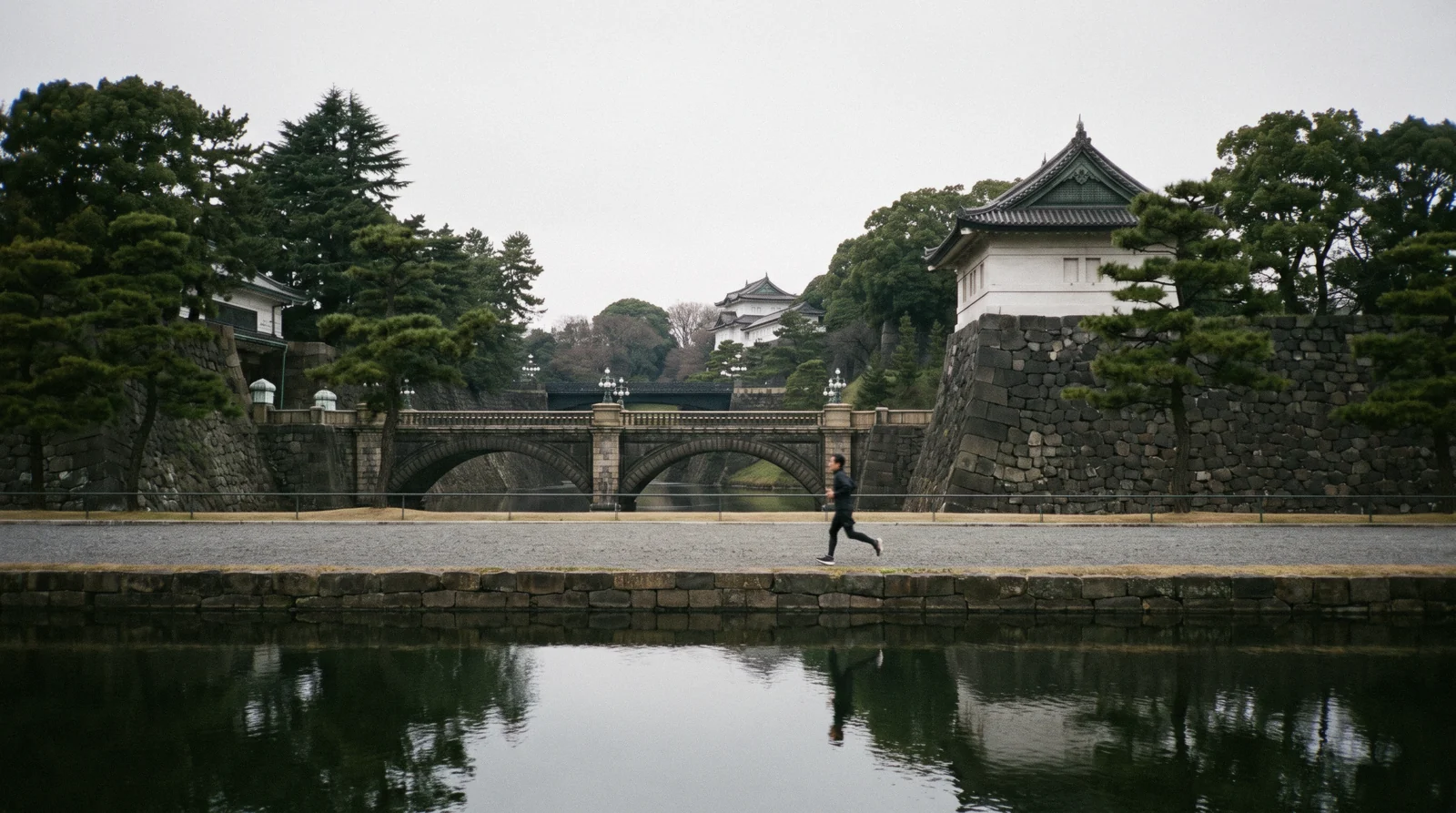
Tokyo Imperial Palace
The Tokyo Imperial Palace is not one place you buy a ticket for. It is a 1.15-square-kilometre walled compound in Chiyoda, built on the site of Edo Castle, and a visitor meets it in three separate ways: the East Gardens, which are free and need no booking but close on Mondays and Fridays; a free guided walk on the palace grounds themselves, which has to be applied for through the Imperial Household Agency; and the outer plaza, which is open ground you can cross at any hour. This page, part of our guide to what to do in Tokyo, sets out which is which, what each one costs in time, and what you actually see. The rest of the city's free ground is indexed on the free things to do page, and the walking tours that use these gardens are compared on the Tokyo tours hub.
Quick answer Which of the three, what it costs, when it closes, how long
Three different places carry this name, and only one of them is a garden you can walk into on the day. The East Gardens open at 09:00 and cost nothing, with no reservation of any kind, but they close on Mondays and Fridays. The guided walk on the palace grounds is also free and has to be applied for through the Imperial Household Agency, morning or afternoon, 200 people per tour. The outer plaza in front of the main gate has no gate, no hours and no ticket at all.
Key takeaways
- If your day is fixed and it is a Monday or a Friday, the gardens are shut and the two-hour guided walk through them will not be running either; put the palace on another morning and use the Monday openings page to fill the gap
- The famous photograph is taken from open ground outside the walls, so the view of the stone bridge and the Fushimi watchtower costs nothing and needs no plan; it belongs with the rest of the free things to do
- A guide is worth paying for here in a way it is not at most Tokyo sights, because almost nothing inside the gardens is labelled as what it was. The small-group walk with hotel pickup caps the group at ten per guide
Key facts
Opening hours
| East Gardens, 1 March to 14 April | 09:00–17:00 |
|---|---|
| East Gardens, 15 April to 31 August | 09:00–18:00 |
| East Gardens, 1 September to 30 September | 09:00–17:00 |
| East Gardens, 1 October to 31 October | 09:00–16:30 |
| East Gardens, 1 November to end of February | 09:00–16:00 |
| Imperial Household Agency tour office, telephone | 08:45–17:00 |
Closed East Gardens: Mondays and Fridays, 28 December to 3 January, and days affected by court events. Public holidays other than the Emperor's Birthday stay open, and when an open Monday falls on a holiday the following Tuesday closes instead. The guided grounds tour does not run on Sundays, Mondays or public holidays, drops its afternoon slot from 1 July to 30 September, and stops entirely from 28 December to 4 January
Admission
- Adult
- Free. The East Gardens charge no admission and take no reservation; the guided grounds tour is free and issues no ticket
- Reduced
- Not applicable, there is no fare to reduce
- Free
- Everyone. Entry to the East Gardens is unconditional; the guided tour requires a permit number and photo identification rather than a payment
Planning it
- Time needed
- Not stated by the Imperial Household Agency. Our routing: 90 minutes for the East Gardens, one hour for the guided tour, 20 minutes for the outer plaza
- Book ahead
- Recommended — a few days
- Address
- Chiyoda 1, Chiyoda-ku, Tokyo. East Gardens via Ote-mon, Hirakawa-mon or Kitahanebashi-mon; the guided tour gathers at Kikyo-mon
Four ways in, read off the Imperial Household Agency's own garden and tour pages and off GetYourGuide in Q3 2026. Nothing here has a fare: the two official rows are free of charge, and the two platform rows are paying for a guide to walk beside you through ground that is free to enter.
Do you want to walk the castle grounds today, or stand where the state ceremonies happen and wait for a permit?
| Option | Price | Includes | Booking | Book |
|---|---|---|---|---|
| East Gardens, walk in at the gateAlmost everyone. It is the only part of the compound you can decide to visit at breakfast and be inside by ten | Free | Honmaru, Ninomaru and Sannomaru: the donjon base, Ninomaru Garden, the guardhouses and the Fujimi watchtower | None. Closed Mondays and Fridays | Official site |
| Guided grounds tour, Imperial Household AgencyVisitors who want the ceremonial half: the palace building, the East Court and Nijubashi seen from inside the walls | Free, no ticket is sold | A 2.2 km escorted walk of about an hour past the palace, the East Court, Fujimi-yagura and the iron bridge | Apply online from 05:00 on the 1st of the previous month, or take a same-day numbered ticket at Kikyo-mon | Official site |
| Imperial Palace and Shogun walking tour, 2 hoursAnyone who would rather have the stones explained than photographed, and does not want to spend on it | From $6.49 | English guide through the East Gardens, the Edo Castle walls, Ninomaru Garden and the koi ponds | Free cancellation up to 24 hours before | Check Availability |
| Small-group history walk with hotel pickup, 2 hoursTravellers on a tight morning who want collecting from the hotel and a group capped at ten | From $38.96 | Guide, Ote-mon, the guardhouse ruins and Ninomaru Garden, hotel pickup and drop-off, English or French | Free cancellation up to 24 hours before | Check Availability |
The gap between the two guided walks is $32.47, and it buys the pickup, the second language and the cap of ten guests per guide rather than any extra ground: both cover the same free gardens. The operator of the cheaper walk states its route is flat and wheelchair accessible; the small-group one warns of steep slopes and says it is not suitable for anyone needing frequent rests, which is the detail to read before booking for an older traveller. Neither includes the Imperial Household Agency tour, which no commercial operator can sell: the agency states that sightseeing businesses and the agents who recruit for them are not permitted to apply.
Guided walks through the Imperial Palace East Gardens
Both cards below cover ground that is free to enter, so what you are paying for is the guide. Ratings and review counts are GetYourGuide's own figures and the prices are the ones listed.
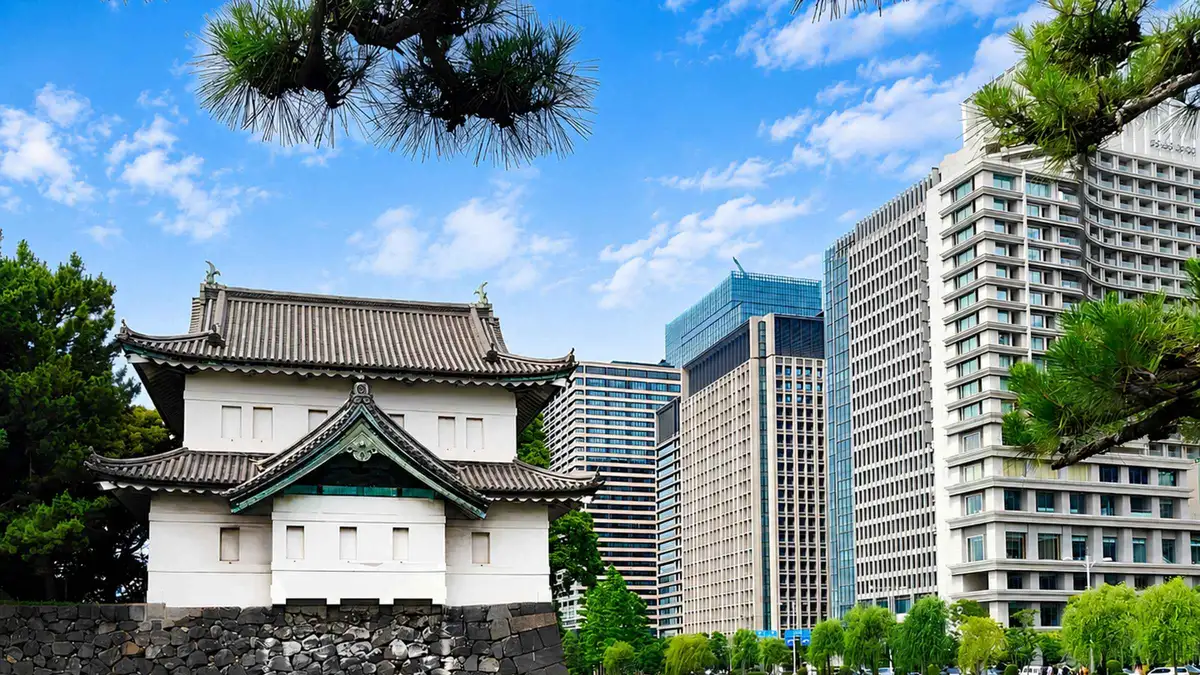 from $6.49
Tokyo: Imperial Palace and Shogun Walking Tour
A 2-hour guided walk through the free Imperial Palace East Gardens covering Edo Castle ruins, stone walls and koi ponds. The palace residence itself is not open to visitors; this covers the gardens only.
Check Availability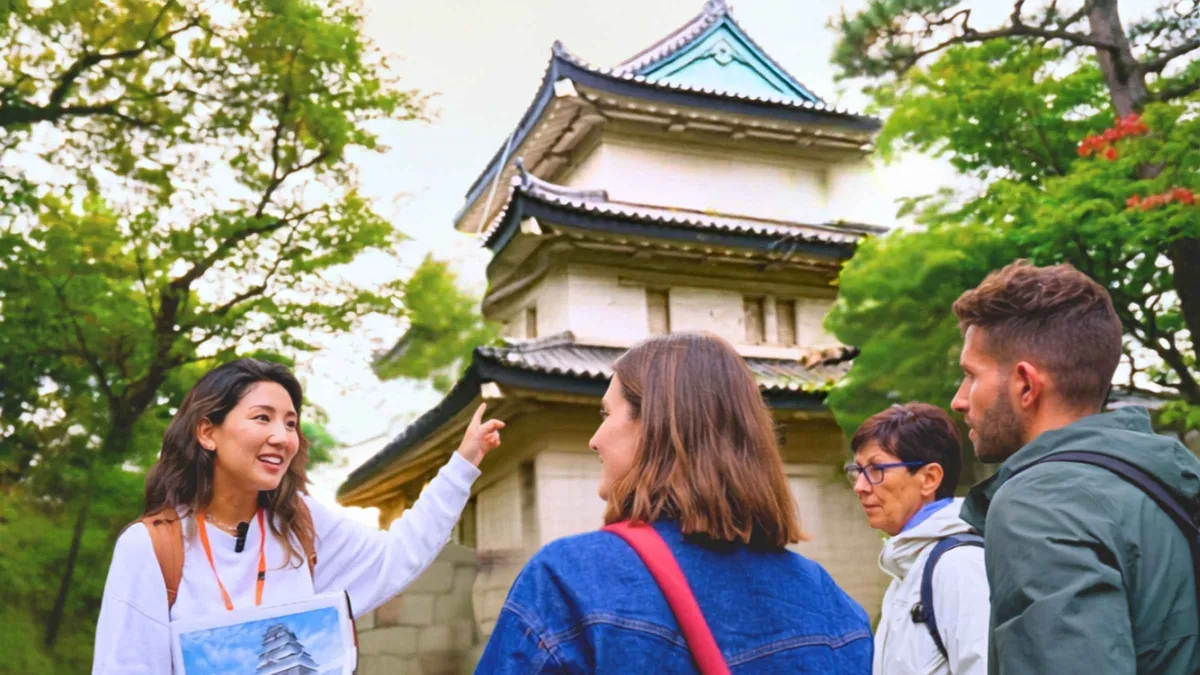 from $38.96
Tokyo: Imperial Palace A Walk Through Japanese History
A small-group walk (max 10 per guide) through the Imperial Palace East Gardens and Edo Castle ruins, with hotel pickup included. Priced higher than similar tours but keeps groups small.
Check AvailabilityPrices, ratings and details are the platform's own. Dollar figures are the listed prices. The platform bills in your account's currency.
Three Different Places Share One Name
Most of the confusion about visiting starts here, and it is worth ten seconds of reading: the compound has a public garden, a permit-only ceremonial core and an open outer ring, and they keep different hours, sit behind different gates and answer to different offices.
The whole walled area covers about 1.15 square kilometres of central Chiyoda and stands on the retrenchments of Edo Castle, which the Tokugawa shoguns enlarged into the largest stronghold ever built in Japan. Emperor Meiji moved in during 1869. Most of what stood here burned in the firebombing of 25 May 1945; the present palace hall, the Kyuden, was finished in 1968, put into use in April 1969, and covers 24,175 square metres in seven wings.
The Emperor lives in the Fukiage Palace, completed in 1993, in the western part of the grounds. None of those buildings is open to visitors on any day of the year, and that is the first thing to understand: nobody tours the inside of the Imperial Palace.
The East Gardens, the part that is simply a park
The eastern third of the compound was renamed the East Garden in 1948 and opened to the public in 1968, and it takes in the old Honmaru, Ninomaru and Sannomaru enclosures of the castle: about 210,000 square metres, declared a Special Historic Site on 30 May 1963. This is the piece with no admission, no reservation and three gates. It is also the piece with the closed days most trips fall foul of, because it shuts on Mondays and Fridays rather than the single Monday most museums keep.
The guided tour, which is free but not spontaneous
The Imperial Household Agency runs an escorted walk on the grounds proper, twice a day, once in the morning and once in the afternoon. It sells nothing. What it requires instead is an application and, on the day, a permit number and photographic identification.
The route is about 2.2 kilometres, takes roughly an hour and passes the palace, the East Court in front of the Chowaden, the Fujimi watchtower, the Hasuike moat, the Imperial Household Agency building, the Fushimi watchtower and the iron bridge, all of which are otherwise invisible from outside.
The outer plaza, which never closes
Around all of it lies Kokyo Gaien National Garden, run not by the Imperial Household Agency but by the Ministry of the Environment: a little over a square kilometre of moats, pine plantings, lawns and paths ringing the walls, twelve moats in all, taking in Kitanomaru Garden to the north. It publishes no admission and no closing time. This is where the photograph everybody has seen is taken from, and you can take it at any hour, on a Monday, in the rain, without telling anyone you are coming.
Edo Castle To Imperial Palace In Eight Dates
The gardens read as a set of unlabelled stone platforms until you know what stood on them. These are the dates that put the platforms in order.
-
1457
Edo Castle is founded
The castle is first built during a period of civil conflict, to guard the approaches to Kamakura, then the seat of the shogunate.
-
1603-1867
The Tokugawa shogunate enlarges it
Under the shoguns the castle grows into the largest fortress ever built in Japan. Its moats, gates, watchtowers and stone walls are what survive today, several of them designated Important Cultural Properties.
-
1636
Kobori Enshu lays out the Ninomaru garden
The pond garden at the foot of the castle hill is planted by the era's most famous garden designer. It burns in 1867.
-
1868-1869
The emperor moves in
The palace becomes the residence of the emperor from 1868, and Emperor Meiji takes up residence in 1869. The wooden double bridges over the moat are later replaced in stone and iron.
-
1873
Fire takes most of the castle
A fire burns the greater part of Edo Castle to the ground, which is why the great keep is a bare stone platform today and not a tower.
-
25 May 1945
The firebombing
Most structures of the palace are destroyed in the Allied raid on Tokyo. In August the emperor and the Privy Council take the surrender decision in an air-raid shelter on these grounds.
-
1961-1968
The East Gardens are made
Work starts in 1961 with a new Ninomaru pond and the repair of the surviving Edo structures. The area is declared a Special Historic Site on 30 May 1963, the Ninomaru garden is relaid in 1968 to a plan from the reign of the ninth shogun, and the gardens open to the public that year.
-
3 November 2026
The palace museum reopens
The Museum of the Imperial Collections, Sannomaru Shozokan, inside the East Gardens, has been shut for renovation and expansion since 2025; its own site gives a grand opening of Tuesday 3 November 2026.
Dates from the Imperial Household Agency's East Gardens pages, the Ministry of the Environment's Kokyo Gaien National Garden site, the Sannomaru Shozokan museum site and the English Wikipedia article on the Tokyo Imperial Palace, all read for this guide.
The East Gardens: Free, Unbooked, And Closed Two Days A Week
This is the part of the compound almost every visitor actually walks in, and the only complication is the calendar. Hours below are the agency's own published seasons.
Opening is at 09:00 every day the gardens run, and closing moves five times a year, which catches out anyone who plans a late afternoon here in winter. From 1 March to 14 April the gardens close at 17:00, with last entry at 16:30. From 15 April to the end of August they hold on until 18:00, last entry 17:30.
September drops back to 17:00, October to 16:30, and from 1 November to the end of February the gates shut at 16:00 with last entry at 15:30. There is no admission charge and no reservation of any kind: the agency's own page prints the fee and booking line as not required.
| Season | Open | Close | Last entry |
|---|---|---|---|
| 1 March to 14 April | 09:00 | 17:00 | 16:30 |
| 15 April to 31 August | 09:00 | 18:00 | 17:30 |
| 1 September to 30 September | 09:00 | 17:00 | 16:30 |
| 1 October to 31 October | 09:00 | 16:30 | 16:00 |
| 1 November to end of February | 09:00 | 16:00 | 15:30 |
The two closed days, and the exception inside the exception
The gardens close on Mondays and Fridays, from 28 December to 3 January, and on days when a court event gets in the way. Public holidays are open, with one exception: the Emperor's Birthday. And there is a rule beneath the rule.
When a Monday is a holiday the gardens open on that Monday and close the following Tuesday instead, so a Tuesday visit in a holiday week can fail even though Tuesday is normally a good day. The agency publishes a closed-day calendar for exactly this reason, and it is worth a glance the night before rather than a shrug at the gate.
Which gate, and what you find inside each
Three gates admit visitors. Ote-mon, the castle's old main gate, is the one to use from Tokyo Station and the one the guided walks meet at. Hirakawa-mon and Kitahanebashi-mon sit on the north side, five minutes from Takebashi station, and put you straight at the foot of the donjon base.
You are handed a numbered token on the way in and give it back on the way out, which is how the agency counts who is still inside at closing.
What is actually in there
The headline is the Tenshudai, the stone platform of the great keep, which you climb for a view over the Honmaru lawn: the tower it carried burned in the seventeenth century and was never rebuilt. Below it are the Ninomaru garden and pond, relaid in 1968 from a plan drawn in the reign of the ninth shogun; a grove of 260 trees representing every prefecture in 30 varieties; the Suwa no Chaya teahouse, rebuilt in 1912 and moved here when the gardens were made; and three Edo guardhouses, the Doshin-bansho, the O-bansho and the hundred-man Hyakunin-bansho. The Fujimi-yagura watchtower and the long Fujimi-tamon storehouse are the only substantial Edo structures left standing.
The octagonal Tokagakudo music hall, its eight outer walls each in a different mosaic, was built for the sixtieth birthday of Empress Kojun and finished in February 1966. A marker on the Honmaru lawn shows where the Matsu no Orokka, the great pine corridor, ran, and another shows the site of the Ooku, the women's quarters. The Museum of the Imperial Collections stands here too, closed for rebuilding until 3 November 2026.
The Imperial Household Agency Tour: Free, But It Has To Be Applied For
This is the tour people mean when they say they toured the Imperial Palace, and the rules on it come straight from the agency's application page and its own Japanese calendar.
The rules below come from the agency's own visit guide for the palace. There are two departures a day, one in the morning and one in the afternoon, each capped at 200 people, with any single group limited to 50. It costs nothing.
There are three ways to get on it. Online applications open at 05:00 Japan time on the first day of the month before the month you want, and close at 23:59 four days before your date. You can apply by post or in person at the agency's tour office.
Or you can turn up on the day at Kikyo-mon, where numbered tickets are handed out one per person until they run out.
The suspensions are the part that breaks plans
No tour runs on a Sunday or a Monday, or on a public holiday unless that holiday falls on a Saturday. From 1 July to 30 September the afternoon departure is dropped completely, so a summer visit means a morning or nothing. Nothing runs from 28 December to 4 January, and individual dates or single departures are suspended whenever a court event needs the ground.
The agency prints a month-by-month calendar marking each day as full, morning-only, afternoon-only or closed, and it is the only reliable source: in the month we read it, the afternoon slot was struck out on every single open day.
What you need in your hand on the day
The permit number from your confirmation, printed or screenshotted, and photographic identification, which the agency lists as a driving licence, a My Number card or a student card, with a passport doing the same job for a foreign visitor. Photocopies are refused outright and anyone who cannot show the document is not admitted. Bags are inspected at the gate, and the agency asks you to leave what you can in a coin locker first.
Visitors under 18 must be accompanied by an adult. Once an application is complete the date, time and party cannot be changed; only reducing the number of people is allowed.
What the hour actually shows you
The route is a 2.2-kilometre loop with, in the agency's own words, little shade, and it takes about an hour on foot. It passes the former Privy Council building, the Fujimi watchtower, the Hasuike moat, the long Fujimi-tamon, the Imperial Household Agency building, the East Court in front of the Kyuden, the palace itself from the outside, the Seimon iron bridge that everyone calls Nijubashi, the Fushimi watchtower and the Yamashita path. You do not go inside any building.
The tour runs in rain and is called off in severe weather, and the agency does not publish the clock times of the two departures on its guide page: the permit notification carries them. Commercial sightseeing operators are barred from applying, which is why no platform sells this tour and why anyone offering to book it for you is selling something else.
The two days the main gate opens
On 2 January and on the Emperor's Birthday the public is let in through the Nakamon to the East Court, where the imperial family appears on the Chowaden balcony and the emperor gives a short address. Those are the only days the formal main gate is used for anybody but a head of state or an ambassador presenting credentials, and they are also the two days the East Gardens are least useful, so treat them as a separate outing rather than a bonus.
The Outer Plaza And Nijubashi: What You See With No Booking At All
Everything in this section is free, ungated and available at any hour, which makes it the answer for a Monday, a Friday, an early morning or a wet afternoon.
Kokyo Gaien National Garden is the ring of open ground around the walls, managed by the Ministry of the Environment rather than the Imperial Household Agency, and it covers a little over a square kilometre including twelve moats and Kitanomaru Garden. The plaza in front of the main gate is a gravel expanse planted with several hundred black pines, and the path across it leads to the low viewing point every photograph of the palace is taken from. The service centre publishes a phone number and an address but no opening or closing time, because there is no gate to close.
The bridge is not the one you think
The classic view is a stone bridge in the foreground, the main gate to the left, an iron bridge behind, and the Fushimi watchtower rising over the trees. Nijubashi, the double bridge, is the iron bridge at the back, not the stone one in front and not the pair together. The name comes from the Edo period, when the span sat so high above the moat that it was built as a wooden bridge braced underneath by a second wooden bridge.
Almost every guidebook and half the signage gets this wrong, and the Ministry of the Environment states it plainly on its own page for the main gate and the Nijubashi double bridge.
When the main gate opens, and to whom
The gate is the formal entrance to the palace and is used only when the emperor leaves for a state occasion, when a state guest arrives, or when an ambassador presents credentials, in which case the ambassador may choose to arrive by horse-drawn carriage. It opens to the public on 2 January and on the Emperor's Birthday and on no other day.
The rest of the outer ring
Wadakura Fountain Park sits on the Tokyo Station side and is where the guided walks meet. Sakuradamon, the gate where a Tokugawa chief minister was assassinated in 1860, stands on the south-west corner. North of the compound, Kitanomaru Garden was held by the Imperial Guard from 1874 to 1945 and is now a public park containing the Nippon Budokan, and the moat beside it, Chidorigafuchi, is one of the city's heaviest cherry blossom crowds in season, covered on the best time to visit page.
Permission is required in the outer garden for commercial photography, sales and any organised gathering, which is worth knowing if you are shooting anything that looks like a paid session.
How Much Time To Give The Tokyo Imperial Palace
The Imperial Household Agency publishes no suggested visit length for the gardens and only the one-hour figure for its own tour, so the three routings below are ours, timed door to door from the nearest station exit.
Pick by what you came for. The short version is a photograph and a moat; the full version is a castle without a castle; the guided version is the only one that gets you inside the ceremonial half.
| Routing | Door to door | What it covers | What it skips |
|---|---|---|---|
| The plaza only | 20 to 30 minutes | Nijubashi, the stone bridge, the Fushimi watchtower and the pine plaza | Everything behind the walls; works on a Monday or a Friday |
| East Gardens, unhurried | 90 minutes to 2 hours | Ote-mon, the guardhouses, the donjon base, the Honmaru lawn and Ninomaru Garden | The palace, the East Court and Nijubashi from inside |
| Guided grounds tour plus gardens | 3 hours | The agency's 2.2 km escorted hour, then Ote-mon and the gardens afterwards | Nothing, but it costs an application weeks ahead and locks your morning |
The half day that works best
Enter at Ote-mon at 09:00, walk up Shiomi-zaka to the donjon base, come down through Ninomaru, leave by Hirakawa-mon and be at Takebashi station by 10:30. That leaves the whole afternoon for Ueno's museums or a walk down to Ginza, and it is the version we would book if the trip allowed one visit here.
Five Things Most Visitors Do Not Know About The Tokyo Imperial Palace
Each line ends in the source it came from, because every one of them contradicts something that circulates widely about this place.
- Nijubashi is the iron bridge behind, not the stone bridge in front and not the two together, and the name refers to a vanished Edo bridge that was propped up by a second bridge underneath (Ministry of the Environment, Kokyo Gaien National Garden, page on the Main Gate and the Nijubashi Double Bridge)
- The great keep of Edo Castle has not existed since the seventeenth century; what you climb in the East Gardens is its bare stone platform, and a non-profit founded in 2004 has been campaigning to rebuild the tower ever since, without agency backing (English Wikipedia, Tokyo Imperial Palace)
- The East Gardens close on Fridays as well as Mondays, which no other major sight in the city does, and a Monday that is a public holiday pushes the closure to the Tuesday (Imperial Household Agency, East Gardens visitor guidance)
- The free guided tour cannot be booked through any travel company: the agency states that sightseeing businesses and the agents who recruit for them are not permitted, so every commercial Imperial Palace tour is a walk through the free gardens or the free outer plaza (Imperial Household Agency, application notes)
- The museum inside the East Gardens, the Museum of the Imperial Collections, has been closed for renovation and expansion since 2025 and gives its grand opening as Tuesday 3 November 2026, so trip reports praising it are describing a building nobody has been able to enter for over a year (Sannomaru Shozokan official site)
How To Get There, And Which Station Exit
Walking times below are the Imperial Household Agency's own, printed on its access pages for the gardens and for the tour meeting point.
For Ote-mon and the East Gardens: Otemachi station, exit C13a, five minutes on foot, on the Chiyoda, Tozai, Marunouchi, Hanzomon and Toei Mita lines. Nijubashi-mae station on the Chiyoda line, exit 6, is ten minutes. Tokyo Station's Marunouchi north exit is fifteen minutes and the pleasanter walk, straight down the avenue past the brick station facade.
For Hirakawa-mon and Kitahanebashi-mon on the north side: Takebashi station, exit 1a, on the Tozai line, five minutes.
| Going to | Station and exit | Line | On foot |
|---|---|---|---|
| Ote-mon, East Gardens | Otemachi, exit C13a | Chiyoda, Tozai, Marunouchi, Hanzomon, Toei Mita | About 5 minutes |
| Ote-mon, East Gardens | Tokyo, Marunouchi north exit | JR lines and Marunouchi line | About 15 minutes |
| Hirakawa-mon or Kitahanebashi-mon | Takebashi, exit 1a | Tozai | About 5 minutes |
| Kikyo-mon, guided tour meeting point | Nijubashi-mae, exit 6 | Chiyoda | About 10 minutes |
| Kikyo-mon, guided tour meeting point | Otemachi, exit D2 | Toei Mita | About 10 minutes |
Getting it wrong is a twenty-minute mistake
The compound is a walled kilometre across and the moat has no crossings between gates, so arriving at the wrong side costs a long walk on a pavement with no shade. Nijubashi-mae puts you at the plaza and the photograph; Otemachi and Tokyo Station put you at the gardens; Takebashi puts you at the back. Bicycles and private cars are not allowed inside, tour coaches have to arrange parking through the Kokyo Gaien office, and the getting around page covers which pass, if any, is worth buying for a day built like this.
At The Imperial Palace: What To Do, And What Not To
Every line here is a decision argued above, compressed into what you can act on the morning of the visit.
Do
- Check the agency's closed-day calendar the night before, not the general rule: court events close individual days without notice in any guidebook
- Enter at Ote-mon by 09:00 if you want the Honmaru lawn without other people in the frame
- Carry your passport if you have a permit for the guided grounds tour route; a photocopy is refused at the gate
- Take the plaza and Nijubashi first if it is a Monday or Friday, since that half needs nothing to be open
- Use a coin locker at the station before a tour departure, because bags are inspected at Kikyo-mon and large ones slow the whole line
Don't
- Don't expect to see inside any palace building. No tour, official or commercial, enters one
- Don't book a summer afternoon on the agency tour; the afternoon departure is suspended from 1 July to 30 September
- Don't assume Tuesday is safe in a holiday week: an open holiday Monday moves the closure onto the Tuesday
- Don't pay an agency or a platform that claims it can reserve the Imperial Household Agency tour for you. It cannot
- Don't plan the visit around the palace museum until it reopens; the museums hub has the collections that are actually open now
Tokyo Imperial Palace map: the gates, the meeting point and the stations
The three public gates of the East Gardens, the tour meeting point at Kikyo-mon, the plaza where the photograph is taken and the four station exits that serve them.
Gate and station positions are placed from the Imperial Household Agency's own access lists and its garden map; the walking times on the pins are the agency's figures, not ours.
Next stop from the Imperial Palace
Walk minutes are ours, measured from Ote-mon unless the entry says otherwise. All three work on a Monday or a Friday, when the gardens do not.
Tokyo Station and Marunouchi
Straight down the avenue from Ote-mon to the 1914 brick facade, which is the other end of the same view: the station was built to face the palace. The basement passages are the easiest lunch in the district and the getting around page explains which lines converge here and what a day pass is worth.
15 min walkGinza
South-east of the moat, and the obvious afternoon after a morning in the gardens. Ginza closes its main avenue to traffic at weekends, which turns the walk from the palace into a straight line down the middle of the road.
20 min walk, or 2 stops from OtemachiUeno Park and its museums
Four stops on the Chiyoda line and a change, or one straight run from Tokyo Station, and you are in the park that holds the country's oldest national collection. The whole cluster, and which of them close on Mondays, is on the museums hub.
About 12 minutes by train from OtemachiTokyo Imperial Palace questions
Is it free to enter the Tokyo Imperial Palace?
Yes, on every route that exists. The East Gardens charge no admission and take no reservation. The Imperial Household Agency's guided walk on the grounds is free and issues no ticket at all, only a permit. The outer plaza is open ground with no gate. The only money involved is a guide, and the two-hour walking tour is the cheap way to hire one. Nothing on the site sells an entry ticket, so anyone charging you for admission is charging for something else.
Can you go inside the Tokyo Imperial Palace?
Not into any building, on any day, on any tour. What the Imperial Household Agency's escorted walk gets you is the ground the public otherwise never crosses: the East Court in front of the Chowaden, the palace seen from outside, the Fujimi and Fushimi watchtowers and the iron bridge. The residence, the state rooms and the throne room are closed to visitors permanently. The small-group guided walk covers the East Gardens instead, which is castle ground rather than palace ground.
What are the Imperial Palace East Gardens opening hours?
The gardens open at 09:00 all year and close on a five-season scale: 17:00 from 1 March to 14 April, 18:00 from 15 April to 31 August, 17:00 through September, 16:30 through October, and 16:00 from 1 November to the end of February. Last entry is always 30 minutes before closing. They shut on Mondays and Fridays, from 28 December to 3 January, and on court event days. The other closures worth knowing across the city are listed on the Monday openings page.
How do you book the Imperial Palace tour?
Through the Imperial Household Agency and nowhere else. Online applications open at 05:00 Japan time on the first day of the month before your visit month and close at 23:59 four days before the date; you can also apply by post or at the tour office, or take a same-day numbered ticket at Kikyo-mon, one per person, until they run out. Each departure holds 200 people. Bring the permit number and photographic identification, since photocopies are refused. Commercial operators are barred from applying on your behalf, so the tours you see on booking platforms, including this one through the gardens, are a different walk.
Does anyone still live in the Imperial Palace in Tokyo?
Yes. The Emperor and Empress live in the Fukiage Palace in the western part of the compound, a building completed in 1993 which the present emperor moved into in September 2021. The Kyuden, the palace hall used for ceremonies and state guests, was finished in 1968 and covers 24,175 square metres in seven wings. Both are inside the walls and neither is open to visitors, which is why the guided grounds tour route stays outdoors.
Is the Tokyo Imperial Palace worth visiting?
The East Gardens are worth 90 minutes if you want to stand on the foundations of the largest castle Japan ever built, and they cost nothing to enter. They are not worth a special journey if you are expecting a palace to look at, because the palace is behind trees and the keep has been gone since the seventeenth century. If your time in the city is short, walk the plaza for the bridge view and give the hours to something with an interior; the things to do hub ranks the alternatives.
Can you just walk around the Imperial Palace grounds?
You can walk right around the outside, and a lot of people run it: the loop of the outer moat is a five-kilometre circuit on public pavement with no gate and no closing time, taking in Sakuradamon, the plaza and Kitanomaru. What you cannot do is wander inside the walls. The East Gardens are the only interior open to a walk-in visitor, and only on the days they run.
What is Nijubashi, and where do you photograph it from?
Nijubashi is the iron bridge behind the stone one, not the pair and not the stone bridge in front, and the Ministry of the Environment states this on its own page for the gate. The view everyone photographs is from the plaza in Kokyo Gaien National Garden: the stone bridge in front, the main gate to the left, the iron bridge behind and the Fushimi watchtower over the trees. It is two minutes from exit 6 at Nijubashi-mae and works at any hour, which makes it the best free thing to do in the district on a day when everything else here is closed. More of those are on the free things to do page.
Where The Imperial Palace Fits In A Tokyo Day
It is a morning, and specifically an early one, for reasons that have nothing to do with crowds.
The gardens open at 09:00 and close as early as 16:00 in winter, which makes them the only major sight in central Tokyo that is finished before most people have thought about dinner. Put them first. From Ote-mon you are fifteen minutes from Tokyo Station and can be anywhere on the network by mid-morning, which is why this half-day pairs so cleanly with an afternoon in Ueno or an evening on the other side of the river.
The three-day itinerary places it on the morning of day two for exactly this reason.
The version for a rainy day
There is almost no shelter inside the gardens: two rest houses and a lot of open lawn. In heavy rain, walk the plaza for the bridge, spend ten minutes on it, and move the rest of the plan indoors. The guided grounds tour, by contrast, runs in rain and is only cancelled in severe weather, so a permit is not wasted by a wet forecast.
The Imperial Palace On Film: The Gardens, The Gates And The Bridge
Three walk-throughs that show what the free half of this compound actually looks like, which is the part hardest to judge from a photograph of the bridge.
Tokyo Imperial Palace Guide
A short orientation to the compound and its gates, useful for working out which of the three parts you are heading for.
Video: Tokyo CheapoDiscover the Hidden Gems of Tokyo Imperial Palace East Gardens
A full walk through the East Gardens, which shows how much of the ground is lawn and stone platform rather than buildings.
Video: Born In VacationsImperial Palace Tokyo Travel Guide: Best Time to Visit, History and Tips
Covers the outer plaza and the bridge view alongside the gardens, which is the pairing that works on a closed day.
Video: Globe Travel AdventuresVideos load from YouTube only when you press play.
Prices, hours and terms are set by the venue or operator and confirmed at checkout.
We may earn a commission if you book through one of our links, at no extra cost to you. Full affiliate disclosure