 Visit Tokyo Guide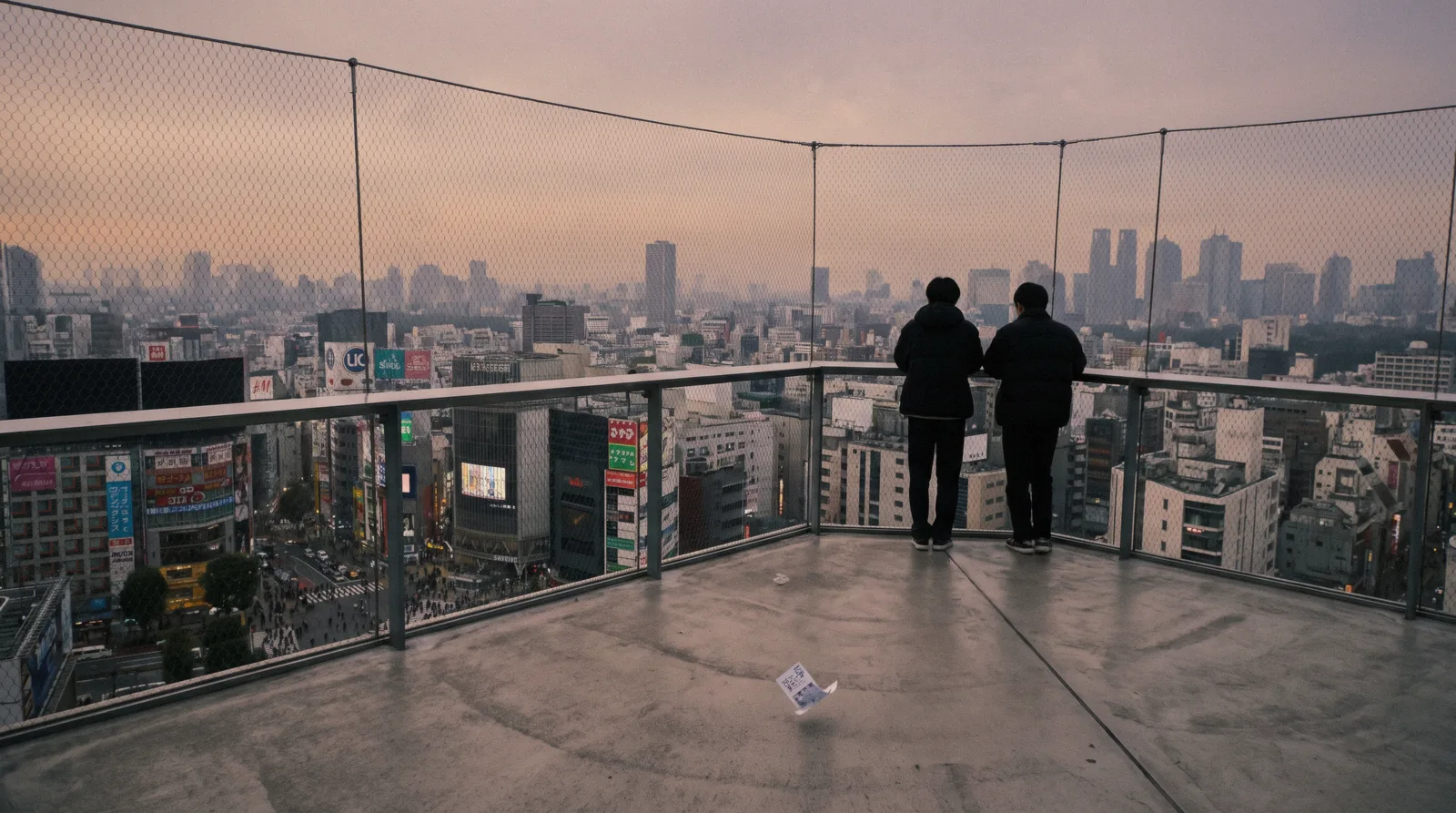
Shibuya Sky
Shibuya Sky is the open-air rooftop on top of Shibuya Scramble Square, 229 metres above the street and reached by lift from the 14th floor of the building that sits directly on the station. It opens daily at 10:00 and stops admitting visitors at 21:20, entry is sold in 20-minute windows, and the price changes at 15:00 rather than by season. This page covers the hours, the two price bands, the weather rule that closes the rooftop without notice, what you are allowed to carry up there and how the deck compares with the other paid views in the city. This page is part of an independent Tokyo guide written from official sources, covering things to do in Tokyo, written from the venue's own published rules. If you have already decided to go and only need the buying advice, that is on the ticket page; the district around the tower is on the Shibuya area guide.
Quick answer Hours, the two price bands, the weather rule, how long to allow
Shibuya Sky is open daily 10:00 to 22:30 with last admission at 21:20, and an adult ticket bought online costs $17.50 (¥2,700) for entry up to 14:59 or $22.00 (¥3,400) from 15:00. Entry is a dated 20-minute window and tickets go on sale exactly two weeks ahead, at midnight Japan time.
Key takeaways
- The rooftop closes without notice in strong wind, rain, snow, approaching thunder, photochemical smog or extreme heat, and the indoor 46th-floor gallery stays open in its place. If the rooftop is shut at your entry time you can cancel free before you go in, which is the single most useful line on the ticket page
- Nothing goes up to the roof with you: no bag, no hat, no earphones, no tripod, no food. Pockets, a phone and a camera on a neck strap are the whole permitted list, and the lockers are on the 46th floor
- A two-hour evening walk with admission included puts the deck at the end of a route through the crossing and Miyashita Park, and a longer version adds the old drinking alleys. If you want the view without the guide, the venue's own shop is the cheapest door
Key facts
Opening hours
| Daily | 10:00–22:30 |
|---|---|
| Last admission, daily | 10:00–21:20 |
| 14F ticket counter, daily | 10:00–21:20 |
Closed New Year's Day. The venue also runs occasional temporary closures and shortened hours, announced on its own site rather than on a fixed calendar
Admission
- Adult
- Online $17.50 (¥2,700) for entry up to 14:59, $22.00 (¥3,400) from 15:00; at the 14F counter $19.44 (¥3,000) and $24.00 (¥3,700)
- Reduced
- Child, meaning 11 and under plus a 12-year-old still in elementary school, $7.78 (¥1,200), sold only at the counter on the day and only with the child present
- Free
- Five and under, including a six-year-old who has not started school. Holders of a Japanese disability certificate are refunded half of what they paid, at the 14F counter, and one companion gets the same
Planning it
- Time needed
- The venue sets no limit on how long you stay. Tokyo's own tourism site says visitors usually spend about 90 minutes; an hour is enough if you are not waiting for the light to change
- Book ahead
- Essential — weeks ahead
- Address
- Shibuya Scramble Square, 14F, 45F, 46F and rooftop, 2-24-12 Shibuya, Shibuya City, Tokyo
Five ways up, priced from the venue's own ticket page and from GetYourGuide in Q3 2026. Yen figures are the official fares and the dollar conversions are ours; the guided cards are listed by the platform in dollars.
Are you paying for the view, or for someone to walk you through the district and hand you the ticket at the end of it?
| Option | Price | Includes | Cancel | Book |
|---|---|---|---|---|
| Official web ticket, dated 20-minute windowThe default, and the only door for anyone who wants a slot before 15:00 at the lower fare | $17.50 (¥2,700) up to 14:59; $22.00 (¥3,400) from 15:00 | Entry to the 45th and 46th floors and the rooftop | Free until the day before; on the day only if the rooftop is closed | Official site |
| Official counter ticket, 14th floorFamilies, because a child ticket exists nowhere else, and anyone arriving on spec | $19.44 (¥3,000) up to 15:00; $24.00 (¥3,700) after; child $7.78 (¥1,200) | Same entry; the child fare is same-day and needs the child there | Not cancellable at all | Official site |
| THE ROOF rooftop bar, sofa seat with admissionTwo or more adults who would rather sit on the roof with a drink than circle it | $45.40 (¥7,000) standard set; $51.80 (¥8,000) champagne set | Admission, a reserved sofa seat, drinks and snacks; seasonal | Event terms differ; check at the checkout screen | Official site |
| Two-hour evening walk, admission includedA first evening in the district, when you want the route as much as the deck | From $101.16 | Guide, Shibuya Sky ticket, the crossing, Miyashita Park | Free up to 24 hours before | Check Availability |
| Two-and-a-half-hour night walk, admission includedAnyone who wants the back streets explained rather than pointed at | From $122.72 | Guide, admission, Shibuya Stream, Sakura Stage, Nonbei Yokocho | Free up to 24 hours before | Check Availability |
The venue publishes a list of the agents it authorises to resell its tickets, and it invalidates tickets bought anywhere else. GetYourGuide is not on that list, which matters less than it sounds: the cards above are guided walks whose operator arranges the admission as part of the activity, not resold entry tickets, and if all you want is entry, the first row is the door. Sofa seats at THE ROOF are sold to parties of two or more, everyone aged 20 or over. A Japan-resident photo plan with a professional photographer runs $193.10 (¥29,800), or $373.20 (¥57,600) with a kimono fitting, and covers two people's admission.
Guided ways up, compared
Four cards, each linking to the operator's own calendar. Ratings and review counts are the platform's own numbers and the prices are the ones listed.
 from $101.16
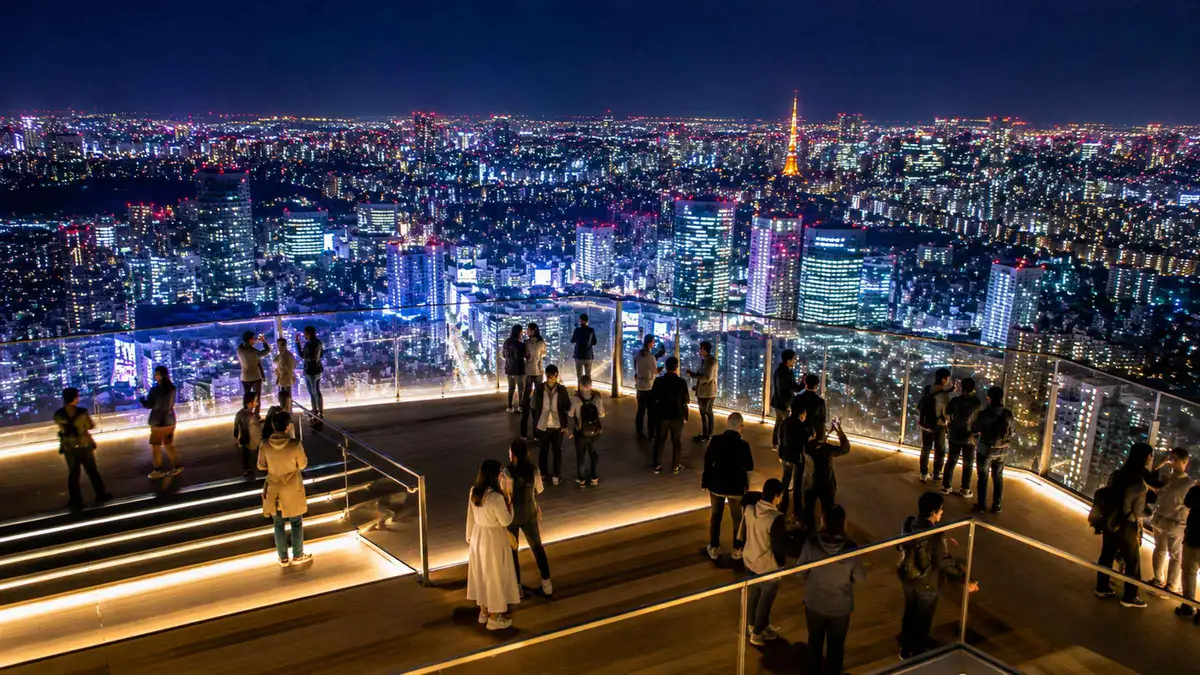
Tokyo: Shibuya Sky Night View, Crossing & Local Vibe Tour
Two-hour night tour combining a Shibuya Sky observation deck visit, ticket included, with a walk across Scramble Crossing and a stop in Miyashita Park's food alley. Suits a first night out in Shibuya.
Check Availability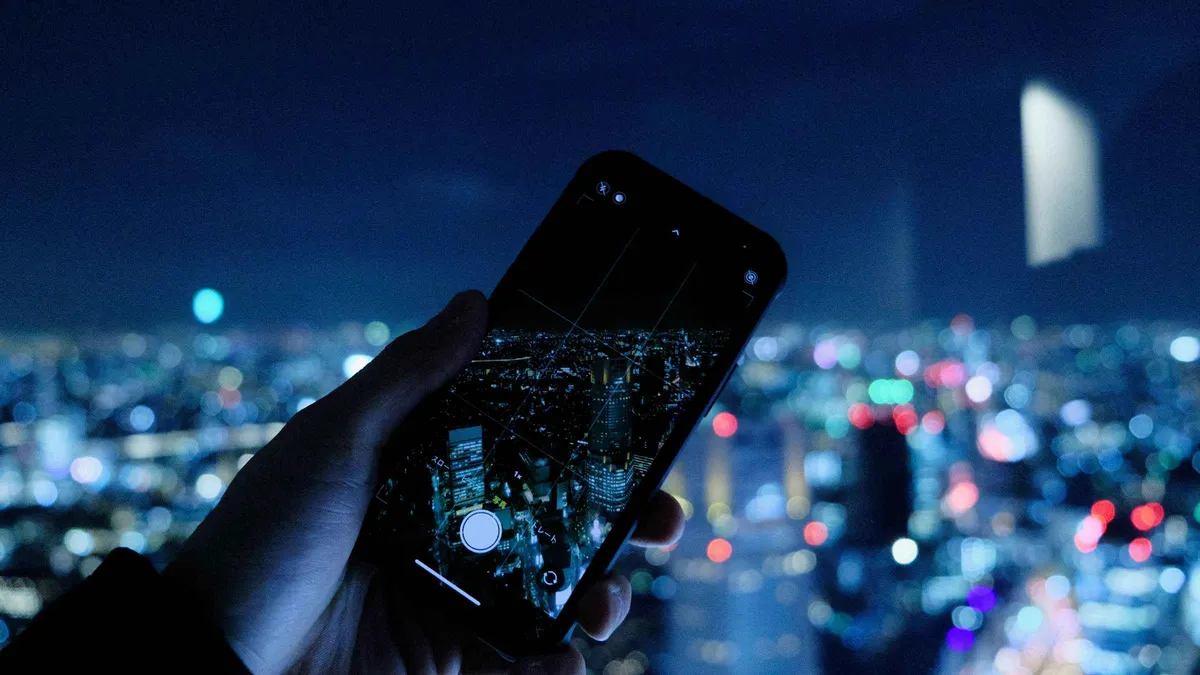 from $122.72
Tokyo: Shibuya Sky Night Views and Nightlife Adventures
Longer Shibuya Sky night walk pairing the observation deck, ticket included, with Shibuya Stream, Sakura Stage, Center Gai and the old bar alleys of Nonbei Yokocho. More neighborhood history than the shorter route.
Check Availability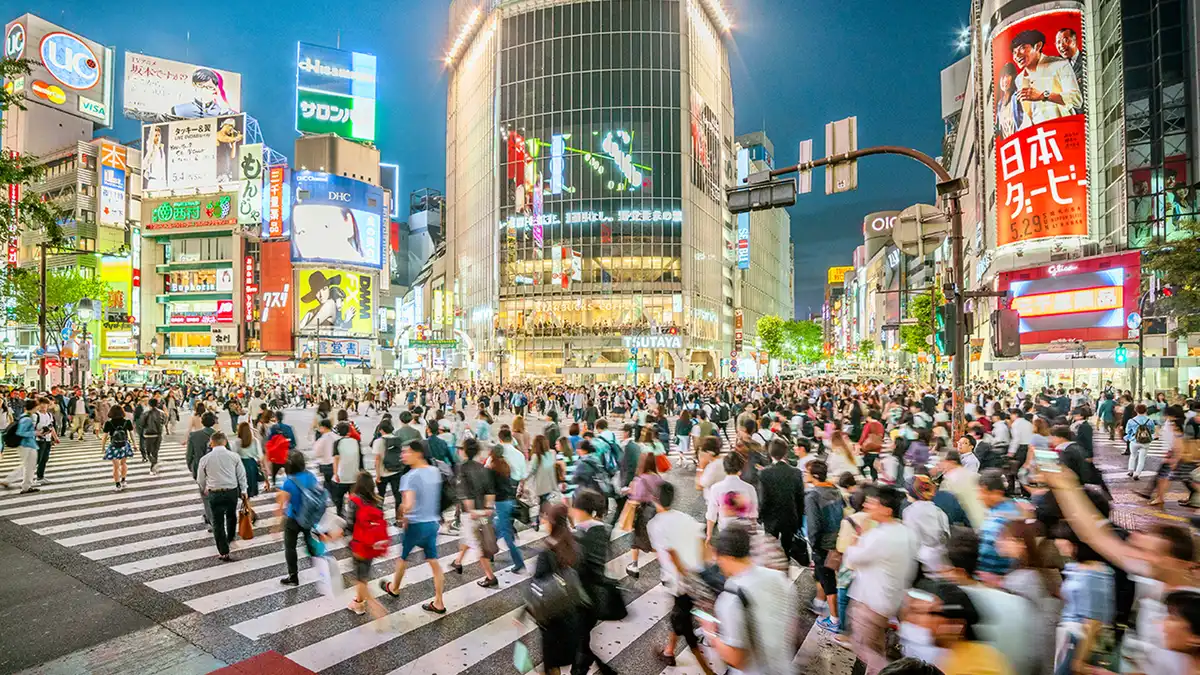 from $12.99
Tokyo: Shibuya Highlights Walking Tour & Secret View Spot
Ninety-minute walking tour of Shibuya covering the Scramble Crossing, Miyashita Park and Center Gai with a local guide, no attraction tickets included. One of the cheapest guided ways to get oriented to the district.
Check Availability from $58.12
Tokyo: Private Custom Walking Tour with Local Guide
A private, fully customizable walking tour with a local guide who tailors the route to your interests, from landmarks to hidden neighborhoods, suited to families, couples or solo travelers wanting flexibility.
Check AvailabilityPrices, ratings and details are the platform's own. Dollar figures are the listed prices. The platform bills in your account's currency.
What Shibuya Sky Actually Is: Three Zones On Top Of A Station
The deck is not a tower. It is the roof of a shopping and office block that was built over the railway, and that is exactly why the view works.
Shibuya Scramble Square runs from two floors below ground to the 45th, with a rooftop above that, and reaches about 229.7 metres. Its lower fourteen floors are shops and restaurants, 213 of them. The observation experience begins at the ticket gate on the 14th floor, and the venue divides it into three named zones: SKY GATE, the lift ride from 14 to 45 with light and sound; SKY GALLERY, the indoor gallery on the 46th floor with the cafe, the souvenir shop and the windows; and SKY STAGE, the open-air roof itself.
What separates it from every other paid view in the city is what sits underneath. You are standing on the station, so the scramble crossing is directly below and the streets radiate out from the foot of the building rather than lying somewhere in the middle distance. The Tokyo Metropolitan Government's own tourism site makes the same point: the other decks look at the city, this one looks down into it.
The parts people queue for
Two spots absorb most of the crowd. The glass escalator that carries you the last stretch onto the roof is one, and the corner the venue calls SKY EDGE, where the deck meets the glass on the northwest side and the drop is under your feet, is the other. There is a compass laid into the deck for finding landmarks, a set of hammocks, and after dark a light installation the venue calls Crossing Light.
On a clear day the western horizon holds Mount Fuji, which is the one part of the view no ticket can promise.
The indoor half is not a consolation prize
The 46th floor carries the Paradise Lounge cafe and bar, the souvenir shop, the multipurpose toilet, the baby room with a nursing space and two changing tables, and the lockers. Eating and drinking are banned everywhere except the lounge and the seasonal rooftop bar. It is also the floor you are sent to when the roof is shut, and on a wet evening it is the whole visit.
Hours, The Two Price Bands And The Slot Everyone Wants
There is no seasonal pricing here and no child discount online. There is one boundary, at 15:00, and one channel that sells to children, and both catch people out.
The deck runs 10:00 to 22:30 every day, the last people are admitted at 21:20, and the 14th-floor counter keeps the same closing time. New Year's Day is the one published closure. Everything else the venue calls irregular: temporary closures and shortened hours are announced on its own site, which is also where the day's rooftop status is printed, beside the sunrise and sunset times.
| Ticket | Online | At the 14F counter | Who it is for |
|---|---|---|---|
| Adult, entry up to 14:59 | $17.50 (¥2,700) | $19.44 (¥3,000), stated as up to 15:00 | Anyone happy with daylight and a clear horizon |
| Adult, entry from 15:00 | $22.00 (¥3,400) | $24.00 (¥3,700) | Sunset, blue hour and the night view |
| Child, 11 and under plus a 12-year-old in elementary school | Not sold | $7.78 (¥1,200) | Families, who have to buy on the day, in person |
| Five and under, including a six-year-old before school | Free | Free | Toddlers, with a ticket-holding adult |
| THE ROOF sofa seat with admission | $45.40 (¥7,000) or $51.80 (¥8,000) | Not sold | Two or more adults, all aged 20 or over |
Why the sunset window goes first
Sunset moves across the year, and the venue prints the day's figure on its own front page: it read 18:01 on the day we checked. Tokyo's tourism site suggests booking about thirty minutes before sunset, which puts you on the roof for the last of the daylight, the blue half hour and the first of the lights on one ticket. That is why the windows either side of sunset sell out before the rest of the day does, and why the after-15:00 band exists at all.
In early December sunset falls close to 16:30 and in late June it runs to about 19:00, so the slot you want is a different hour in each season.
The two-week rule
Tickets go on sale at midnight Japan time exactly two weeks before the entry date, online and at the counter alike, and nothing is sold further ahead. That is the fact that decides how you plan: there is no booking this six months out with the rest of the trip, and there is no walk-up strategy either, because the venue states plainly that when the adult web tickets sell out, the counter is sold out too. The one crack in that is other people's cancellations, which put slots back into a sold-out hour. How to work that window is the ticket page's whole subject.
How Much Time To Give Shibuya Sky
There is no limit on how long you stay once you are through the gate, so the question is really how much of your evening the building deserves. Three routings, with the door-to-door time from the station gates.
The venue publishes no recommended duration. Tokyo's tourism site says most people spend about 90 minutes, which matches what the layout invites: fifteen minutes to get up, a slow circuit of the roof, the indoor gallery on the way down and a queue at the escalator if your slot is a popular one.
| Routing | Door to door | What you skip | Best for |
|---|---|---|---|
| The view and out | About 1 hour | The indoor gallery, the shop, the cafe | A slot squeezed between dinner and a train |
| The full deck | About 1 hour 45 | Nothing, including the hammocks and the light show | A booked sunset window, which is what the fare is for |
| Deck plus a seat at THE ROOF | About 2 hours 30 | Nothing, but you are committed to a party of two and to the bar's season | A last night, or weather you want to sit out in |
Add twenty minutes to any of these if you are coming from a train rather than from the building's own shops. The lift queue on the 14th floor is the variable nobody can plan around, and it is worst in the hour on either side of sunset. Re-entry does not exist: leave the gate and your ticket is finished, so do the shop and the cafe before you go down.
The three-day plan places this at the end of a Shibuya afternoon rather than as a stop on the way somewhere else.
The Tower Under The Deck, In Eight Dates
The rooftop only exists because the station beneath it was rebuilt, and that rebuild is still going on around you as you walk in.
-
2005
The government designates the area an Urban Renewal Area
The legal step that made the scale of the rebuild possible.
-
2008
A master plan for the station district is announced
Drawn up between the ministry, the metropolitan government, the ward and the railway operators.
-
2010
The metropolitan government approves the plan and building starts
The old station buildings come down, the Toyoko Line platforms go underground and the Ginza Line platform moves.
-
1 November 2019
Shibuya Scramble Square opens with Shibuya Sky on its roof
About 229.7 metres, from the second basement to the 45th floor plus the roof, with 213 shops and restaurants below the observation floors.
-
November 2019
Shibuya Fukuras opens on the other side of the station
It carries the tourist information centre and the airport bus terminal used by many visitors arriving for this deck.
-
July 2020
Miyashita Park reopens as a four-storey park and shopping deck
The rooftop lawn that appears in the middle distance from Shibuya Sky, three minutes' walk from the base of the tower.
-
2026 season
THE ROOF rooftop bar runs 29 April to 25 December
Sofa seats with admission at ¥7,000 or ¥8,000, sold to parties of two or more aged 20 and over; new annual passports are suspended in the same year, renewals continue.
-
Fiscal 2034
The station rebuild is scheduled to finish
Seven years later than first planned, because trains had to keep running and the pedestrian plan was redrawn mid-project.
Dates from the venue's own ticket and event pages, and from the Wikipedia articles on Shibuya and Shibuya Scramble Square for the redevelopment sequence; the 2019 opening figures are as published by Rakuten Travel's Shibuya guide and the Tokyo Metropolitan Government tourism site.
When The Rooftop Shuts, And What You Get Instead
This is the risk the ticket carries, and the venue is unusually straight about it. Read this before you pick a date in a typhoon month.
The venue states that it closes the rooftop, without notice, for strong wind, rain, snow, an approaching thundercloud, photochemical smog and extreme heat, all in the name of visitor safety. The word it uses is closure, not delay. On the day we checked its ticket page, the live status board on its own site was reading CLOSE for the roof while the indoor gallery was still running, which is what a wet afternoon looks like from the buyer's side.
What you get instead is the 46th floor: the indoor gallery, the windows, the cafe and the shop. That is a real view and a poor substitute for the thing you paid for, and the venue knows it, which is why it offers a free cancellation when the roof is shut at your entry time, available up to the moment you go through the gate. Miss that moment and it is gone: once you are inside, the venue says flatly that no refund and no discount are given, whatever the weather does next.
How to check before you leave the hotel
The status board sits on the venue's own front page, alongside the sunrise and sunset times, and the venue also posts rooftop openings and closures on its official account. Check it the hour before your slot rather than in the morning: a thundercloud that clears at 17:00 puts the roof back in service for the sunset window. September is the month to watch, because that is when typhoon activity over Japan is at its most concentrated, and the best time to visit page sets out the rest of the weather year.
What You May Carry Onto The Roof, And What Has To Go In A Locker
The rooftop rules are stricter than any other deck in the city, for one reason: anything that blows off a 229-metre roof lands on a crowd.
The permitted list is short. A camera with a neck strap or one that fits in a pocket, binoculars on the same terms, and a smartphone. That is all.
- Banned on the roof: bags, backpacks and pouches of every size
- Banned: tripods, monopods and selfie sticks, which are allowed indoors on the 46th floor but refused when it is busy
- Banned: earphones and headphones
- Banned: hats and caps of any kind, knitted ones included
- Banned: food and drink, chewing gum specifically included
- Banned: anything that could scatter or fall, and any stroller except the venue's own loan model
The lockers for all of that are on the 46th floor and they are not large: the venue gives the size as 320 mm high by 375 mm wide by 430 mm deep. Suitcases and carry-on bags are asked to stay out of the building altogether, in the coin lockers around the station, at the shibuya-san tourist information centre on the ground floor of Shibuya Fukuras, which also halves the price of a drink if you show a Shibuya Sky ticket, or at the left-luggage desk on the 11th floor of Shibuya Hikarie, which has to be booked ahead. If your clothes have no pockets, the 46th-floor information counter lends out a small bag.
Strollers, wheelchairs and who is turned away
Electric wheelchairs and walking frames are admitted, though parts of the roof are closed to them and staff may ask you to transfer into one of the venue's own chairs for safety. Your own stroller cannot go onto the roof at all; the venue lends one, free, from the 46th floor for children up to 18 kilograms who can sit unaided, no reservations taken, identification required, and the helipad area is off-limits to anyone pushing one. There is no height or age limit on admission itself.
The whole facility is non-smoking, guide dogs are welcome and other animals are not, and a bag check runs at the gate. Wider notes for visitors with reduced mobility are on the accessibility page.
Getting There: Which Station Exit Puts You At The Lift
The building is on the station, so this is a two-minute problem rather than a walk, provided you leave by the right side.
Shibuya Station is served by the JR Yamanote, Saikyo and Shonan-Shinjuku lines, the Tokyo Metro Ginza, Hanzomon and Fukutoshin lines, the Tokyu Toyoko and Den-en-toshi lines and the Keio Inokashira line. Shibuya Scramble Square sits directly above the JR tracks and connects to the concourse; from the JR gates the signed route to the tower is a short walk, and the exit to use is the one on the Miyamasuzaka side rather than the Hachiko side, which belongs to the crossing. Once inside, everything starts at the ticket gate on the 14th floor.
Journey times from the places most visitors sleep, as published by the Tokyo tourism site: seven minutes from Shinjuku and 23 minutes from Tokyo Station, both on the Yamanote line. From Haneda it is about 45 minutes by train or 55 by limousine bus; from Narita, about an hour and 40 minutes by train or an hour and 55 by bus. The airport runs are set out on the Narita and Haneda pages, and the ticket types that make the local hops cheap are on getting around.
Do not drive
Shibuya Scramble Square has no car park, no bicycle parking and no drop-off bay of its own, and says so on its own site; partner car parks nearby take the overflow. The car park under Miyashita Park, three minutes away, charges ¥350 per 30 minutes or ¥2,500 for 24 hours and has 97 spaces with a 2.1-metre height limit. In a district built on top of the busiest station complex in the country, the train is not the fallback, it is the plan.
Paying For A View In This City: How The Decks Differ
Four paid or free viewpoints compete for the same evening. The prices below are each operator's own adult fare, and the last column is the reason to choose one.
The honest summary: this is the deck to pay for if you want the city underneath you and you can take the weather risk, the broadcasting tower in Sumida is the one to pay for if you want height and a guaranteed indoor visit, and the metropolitan government's decks are the ones to take if you want to spend nothing.
| Viewpoint | Height | Adult fare | Open air? | The argument for it |
|---|---|---|---|---|
| Shibuya Sky | 229 m | $17.50 (¥2,700) to $22.00 (¥3,400) online | Yes, and it shuts in bad weather | You look straight down onto the crossing and the streets |
| Tokyo Skytree Tembo Deck | 350 m | From $11.66 (¥1,800) online, higher on some dates | No, fully enclosed | The highest view in the city and it never weathers out |
| Tokyo Tower Main Deck | 150 m | $9.72 (¥1,500) | Partly, on the outdoor stairs | The cheapest paid deck, and the taller towers are in your photo |
| Metropolitan Government Building | 202 m | Free | No | Costs nothing, and it is the fallback when this roof is shut |
One caution on the comparison: the fare for the deck in Sumida moves with the calendar, so the figure above is its standard-day online price rather than a fixed one, and its ticket counter adds ¥500 to the deck and combo tickets. Neither of the towers sells its entry two weeks ahead only, which makes them the pages to read when this one has nothing left on your date. All four are indexed on the things to do hub.
On The Day: What To Do, And What Not To
Every line here is argued somewhere above, compressed into the form you can act on that afternoon.
Do
- Check the rooftop status board on the venue's own front page in the hour before your slot, not in the morning
- Empty your pockets into the 46th-floor lockers before you queue for the escalator, and leave the suitcase at the station
- Book the window that starts about thirty minutes before sunset if you want daylight, blue hour and the lights on one fare
- Set an alarm for midnight Japan time exactly fourteen days before your date, which is when the calendar opens
- Do the shop and the cafe before you leave the gate, because there is no re-entry
- Bring the certificate if you hold one: half of what you paid is refunded at the 14F counter, and one companion gets the same
Don't
- Do not go through the gate when the roof is already closed. Cancel first and free; after entry the venue refunds nothing, ever
- Do not count on buying at the counter when the web says sold out, because the venue says the counter is sold out too
- Do not arrive after your 20-minute window and expect to be waved in; you may be made to wait, refused, or charged the difference to the later band
- Do not buy from a resale site. Tickets from anyone outside the venue's authorised list are void at the gate
- Do not plan a child's ticket online. It does not exist there, and the child has to be at the counter in person to get one
Five Things Most Visitors Do Not Know
Each of these comes off the venue's own pages, and each one changes what you do at the door.
- When the adult tickets sell out online, the ticket counter is sold out at the same moment. It is one inventory, not two, and the only thing that reopens a full hour is another visitor cancelling. [Source: the venue's own ticket FAQ]
- Child tickets are sold at the counter only, on the day, with the child standing there, and they stay on sale even when everything else has gone. That single exception is the reason a family can still get up on a sold-out evening. [Source: the venue's own ticket FAQ]
- Your ticket is a 20-minute window, not a day pass. Turn up late and the venue may hold you back, refuse you outright, or charge the difference if the delay pushes you into the after-15:00 band. [Source: the venue's own entry FAQ and ticket page]
- There is a free cancellation on the day, but only while the rooftop is closed and only before you pass the gate. Step through it and no weather, however bad, gets you a yen back. [Source: the venue's own cancellation FAQ]
- Tripods and selfie sticks are permitted on the 46th floor indoors and banned on the roof and on the 46th-floor terrace, so the shot most people came for is a handheld one. [Source: the venue's own facilities FAQ]
Shibuya Sky map: the entrance, the station and what is next door
The tower, the station exits either side of it and the three places within a five-minute walk of the base.
The tower's coordinate is the venue's own published position; the other pins are placed from the walking times published by Miyashita Park and the Tokyo tourism site.
Next stop from Shibuya Sky
Walk minutes are ours, measured from the tower's ground-floor entrance. The deck keeps late hours, so all three of these work better before you go up than after.
Shibuya Scramble Crossing
The intersection directly below the deck, free and always open, and the thing you will spend ten minutes photographing from 229 metres. Walking it afterwards is the other half of the same experience: the crossing page covers where to stand and which of the free overlooks actually works.
2 min walkMiyashita Park
A four-storey park and shopping deck with a lawn of about 1,000 square metres on the roof, three minutes north. The food alley on its ground floor runs 11:00 to 05:00 every day, which makes it the obvious place to eat after a late slot. It is one of the anchors of the Shibuya area guide.
3 min walkHarajuku and Omotesando
Twenty minutes north on foot through Cat Street, or a single stop by train. If your slot is an afternoon one, this is where the hours before it belong; Harajuku and the shrine woods beyond it fill a half day without a ticket.
20 minutes on foot, or one stop on the Yamanote lineShibuya Sky questions
Is Shibuya Sky worth going up?
For a first visit, yes, and for one specific reason: it is the only paid deck in the city that puts the crossing and the street grid directly under your feet rather than in the middle distance. At $17.50 (¥2,700) online before 15:00 it is also cheaper than it looks. The case against it is the weather, since the rooftop shuts in wind, rain, snow, thunder or extreme heat, and the fact that the whole appeal is the open air. If the forecast is poor, take the free metropolitan government decks instead and keep your money, or book an evening walk that includes admission and let the guide reschedule the route.
What are Shibuya Sky hours and when is the last entry?
Daily 10:00 to 22:30, with the last admission at 21:20 and the 14th-floor ticket counter closing at the same time. The venue states that nobody is admitted after 21:20 under any circumstance. New Year's Day is the one published closure, and shortened hours or temporary closures are posted on the venue's own site rather than fixed in a calendar. Nothing here shuts on a Monday, which puts it on the short list of places open on the museums' closing day.
How far ahead do tickets go on sale, and can I just turn up?
Sales open at midnight Japan time exactly two weeks before your entry date, and nothing is sold earlier, online or at the counter. Turning up works only when that date still has slots, because the venue states that once the adult web tickets are gone the counter is gone with them. The exception is the child fare, which is sold at the counter on the day even when the rest is sold out. The tactics for a full date, including what other people's cancellations do to a sold-out hour, are on the ticket page.
What happens if the rooftop is closed when I arrive?
The indoor gallery on the 46th floor stays open and you can go up to that instead, or you can cancel for nothing, as long as you do it before you pass the ticket gate. After you enter, the venue gives no refund and no discount, whatever the weather does. The status of the roof is printed live on the venue's own front page, which is the page to check an hour before your slot rather than the forecast.
What can I take onto the open-air deck?
A phone, a camera on a neck strap or one that fits a pocket, and binoculars on the same terms. Bags, hats, earphones, tripods, selfie sticks, food and drink and your own stroller all stay behind in the 46th-floor lockers, which measure 320 by 375 by 430 millimetres. Suitcases should not come into the building at all; the station lockers and the tourist information centre in Shibuya Fukuras take them, and that centre also halves your drink price if you show the ticket.
Is there a cheaper ticket for children?
Yes, $7.78 (¥1,200) flat for children aged 11 and under, plus a 12-year-old still in elementary school, and free for five and under including a six-year-old who has not started school. The catch is the channel: the child fare is sold only at the 14th-floor counter, only on the day, and only with the child present, and every child aged 11 or under has to be with an adult who holds a ticket. Families with a fixed date should buy the adult tickets online two weeks ahead and collect the child's at the counter. More on family logistics is on the Tokyo with kids page.
How long do people spend up there?
There is no time limit once you are inside, and the venue does not publish a recommendation. Tokyo's own tourism site puts the usual visit at about 90 minutes, and that matches the layout: the lift and the queue take fifteen, the roof holds you for forty, and the indoor gallery, the shop and the cafe absorb the rest. Remember that leaving the gate ends the visit, because there is no re-entry.
Where This Fits In A Tokyo Day
It is the end of an afternoon, not the start of one, and it pairs with one district rather than with the city at large.
Give the afternoon to the streets underneath: the crossing, Center Gai, the record shops in Udagawacho, the walk up Cat Street towards Harajuku, then back for a slot half an hour before sunset. That order costs nothing extra and turns a lift ride into a day. Afterwards the food alley under Miyashita Park is running until 05:00, which is the reason to book late rather than early.
On a Monday the deck becomes the anchor of the day instead of the finish, because so many museums are shut; the Monday openings page lists what else stays open. If you are fitting it into a fixed number of nights, the two-day and three-day itineraries both place it on the evening it works best, and the ticket arithmetic sits on the tickets hub.
Shibuya Sky On Film: The Deck, The Queue And The Light
Three walk-throughs that show what the fare buys: the layout floor by floor, the practical warnings, and how this deck compares with the others in the city.
What Nobody Tells You About Visiting Shibuya Sky in TOKYO!
The practical briefing: the entry window, the lockers and what the roof rules mean when you are standing at the gate.
Video: Jimmy Visits WorldTips for SHIBUYA SKY - Newest Observation Deck in Tokyo, Japan
A full walk from the 14th-floor gate up through the gallery to the open roof, which is the clearest way to see the three zones.
Video: Cakes with FacesWhich is the Best View in Tokyo: Top Observation Decks
The comparison in pictures, filmed from each deck, if you are still deciding which view to pay for.
Video: Tokyo CheapoVideos load from YouTube only when you press play.
Prices, hours and terms are set by the venue or operator and confirmed at checkout.
We may earn a commission if you book through one of our links, at no extra cost to you. Full affiliate disclosure