 Visit Tokyo Guide
Nikko Day Trip from Tokyo
A Nikko day trip from Tokyo is two hours out on the Tobu line from Asakusa, a UNESCO shrine complex that charges its own admission on top of everything you have already paid, and a decision about whether to climb the mountain behind it to Kegon Falls and Lake Chuzenji. This page prices all three from the operators' and the shrine's own pages: the two Tobu passes against ordinary fares, Toshogu's ticket ladder, and what the waterfall detour costs in bus time. The other destinations are compared on the day trips hub, and the city you are leaving is covered in our guide to the top attractions in Tokyo, and the fare logic before you leave the city is on getting around Tokyo.
Quick answer The fare, the pass that beats it, the shrine ticket, and how far up the mountain to go
Nikko is about two hours from Asakusa on Tobu's own limited expresses, and the shrines charge separately when you arrive: Toshogu asks ¥1,600, about $10.37, which no rail pass covers. Tobu's NIKKO PASS World Heritage Area costs ¥3,000, about $19.44, and includes the round trip on ordinary trains plus the buses inside the shrine district.
Key takeaways
- Two passes, two different trips. The ¥3,000 World Heritage version covers the shrines and the buses around them; the ¥8,000 All Area version is the one that reaches Lake Chuzenji and includes the lake cruise, and only makes sense if you are going up the mountain.
- Every Tobu limited express is fully reserved, so the seat is a supplement on top of the ticket or the pass, exactly as it is on every other reserved train out of Tokyo. The ordinary trains cost nothing extra and take longer.
- The waterfall is the decision that shapes the day: a guided tour that includes Kegon Falls and Lake Chuzenji does the mountain leg for you, while doing it yourself means a bus up the Irohazaka switchbacks and back, and in autumn that road is the slowest hour in the region.
Key facts
Opening hours
| Toshogu, 1 April to 31 October | 09:00–17:00 |
|---|---|
| Toshogu, 1 November to 31 March | 09:00–16:00 |
| Kegon Falls elevator, 1 March to 30 November | 08:00–17:00 |
| Kegon Falls elevator, 1 December to 28 February | 09:00–16:30 |
Closed None published for Toshogu, which states no closed day in either season; reception closes 30 minutes before the gate in both. The Akechidaira Ropeway is suspended from 16 January 2026 to 31 August 2027 for construction
Admission
- Adult
- Toshogu shrine ticket ¥1,600 (about $10.37); with the Treasure Museum ¥2,400 (about $15.55). Kegon Falls elevator ¥600 return (about $3.89)
- Reduced
- Elementary and junior high ¥550 at Toshogu (about $3.56), ¥870 with the Treasure Museum (about $5.64); Kegon elevator ¥400 for elementary pupils (about $2.59). Group rates from 35 people
- Free
- Preschool children ride the Kegon Falls elevator free. The shrine publishes no free category
Planning it
- Time needed
- Not stated by the shrine; our routing: about 2 hours for Toshogu and the shrine district, about 11 hours door to door from Asakusa if you add Kegon Falls and Lake Chuzenji
- Book ahead
- Recommended — a few days
- Address
- Nikko Toshogu, 2301 Sannai, Nikko, Tochigi 321-1431
Five ways to pay for the day, priced from Nikko Toshogu's own Japanese-language admission page and Tobu Railway's own pass pages, all read in Q3 2026, beside the two Nikko tours GetYourGuide listed on the same day. Yen figures are the operators' own; dollars are converted at ¥1,000 to $6.48.
Are you buying transport, or admission? Nikko splits the two more sharply than anywhere else in this guide: no rail pass sold by Tobu includes a single yen of shrine entry, and the shrine sells no transport.
| Option | Price | Covers | Cancel or catch | Book |
|---|---|---|---|---|
| Toshogu shrine ticketEveryone who comes for the shrines. There is no way around this ticket and no pass that includes it. | ¥1,600 adult and high school, ¥550 elementary and junior high, about $10.37 / $3.56 | The front gate through the Yomeimon, the prayer hall, the east corridor with the sleeping cat, the Okumiya where Ieyasu is buried, and the Honjido with the crying dragon | Sold at the gate only; reception closes 30 minutes before the shrine | Official site |
| NIKKO PASS World Heritage AreaDay trippers doing the shrines and nothing above them, which is most first visits. | ¥3,000 adult, ¥1,500 child, about $19.44 / $9.72 | One round trip Asakusa to Tobu-Nikko or Shimo-Imaichi on ordinary trains, all Tobu rail between Shimo-Imaichi, Tobu-Nikko and Shin-Fujiwara, and Tobu buses inside the World Heritage area | Two days. A limited-express ticket is extra, and no shrine, Tobu World Square or Edo Wonderland admission is included | Official site |
| NIKKO PASS All AreaAnyone going up to Kegon Falls, Lake Chuzenji or Yumoto, and staying at least one night. | ¥8,000 adult, ¥4,000 child, about $51.80 / $25.90 | The same round trip plus every Tobu bus line in Nikko, the Lake Chuzenji cruise from mid-April to 30 November, the Odashirogahara hybrid bus, the Edo Wonderland shuttle, one day-use onsen at the Nikko Astraea Hotel and a winter ski-lift ticket | Four days, foreign-passport holders only. Shrine admissions still not included | Official site |
| Guided day trip: Toshogu, Kegon Falls and Lake ChuzenjiVisitors who want the waterfall and the lake without working out the bus timetable up the Irohazaka. | $78.48 (about ¥12,110) | The shrine, the waterfall and the lake in one day from Tokyo, rated 4.6 from 2,298 reviews | Confirm inclusions at checkout; the listing does not state what admissions are covered | Check Availability |
| Guided tour with Shinkyo Bridge addedTravellers who want the Shinkyo bridge and the whole shrine district explained rather than walked past. | $88 (about ¥13,580) | Shinkyo Bridge, the UNESCO shrine complex, Kegon Falls and Lake Chuzenji, rated 4.5 from 1,507 reviews | As above | Check Availability |
The official rows carry plain operator and shrine links with no tracking. One figure is deliberately missing: Tobu does not publish a printed Asakusa to Tobu-Nikko limited-express fare table on the English pages we could read, so this page prices the passes, which it does publish, and flags the point-to-point number as indicative in the fares section.
Nikko day tours compared
Both cards cover the same three places and differ mostly in what they explain on the way. Ratings and review counts are the platform's own figures for those cards as listed.
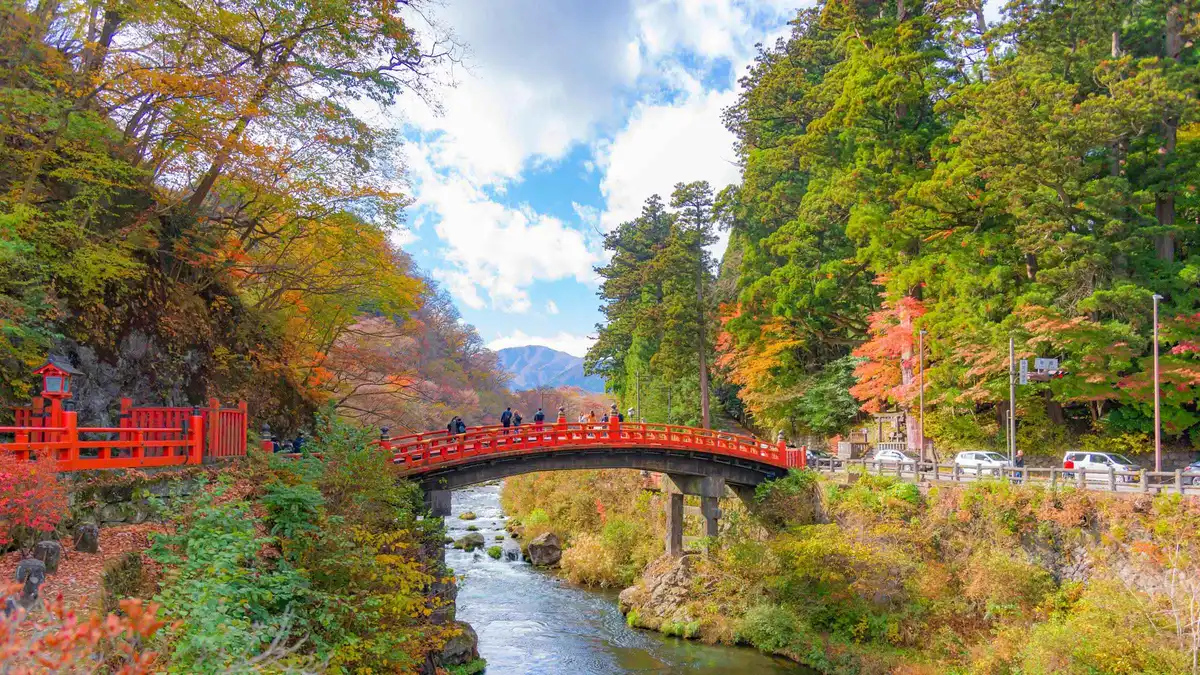 from $78.48
Nikko: Kegon Falls, Lake Chuzenji & Toshogu Temple
A day trip from Tokyo to Nikko's Toshogu Shrine, Kegon Falls and Lake Chuzenji, covering the region's UNESCO shrine and waterfall scenery for travelers short on time.
Check Availability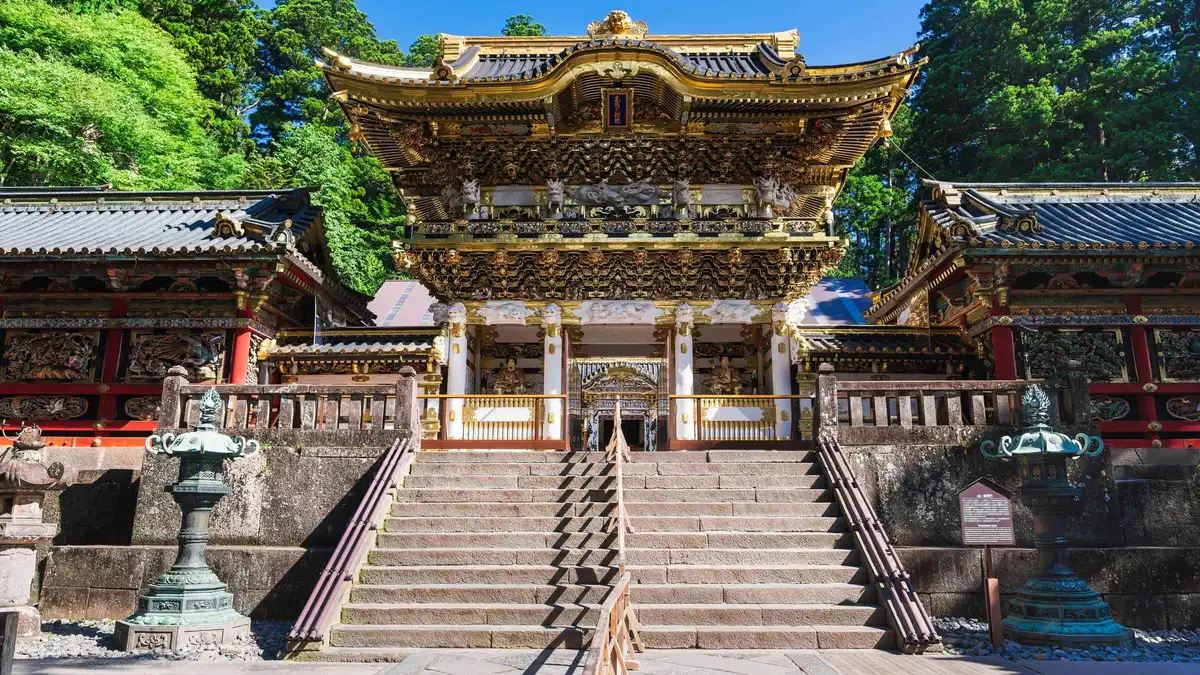 from $88
Tokyo: Nikko Toshogu Shrine and Kegon Waterfall Tour
A guided Nikko day trip from Tokyo visiting Shinkyo Bridge, the UNESCO-listed Toshogu shrine complex, Kegon Falls and Lake Chuzenji, pairing Nikko's historic shrines with one of Japan's noted waterfalls.
Check AvailabilityPrices, ratings and details are the platform's own. Dollar figures are the listed prices. The platform bills in your account's currency.
What Nikko Is: A Mausoleum, A Mountain And Two Separate Bills
Nikko is a city of about 80,000 people covering 1,449 square kilometres, the third largest by area in Japan, roughly 140 kilometres north of Tokyo. Almost all of what a visitor wants sits in two clusters, and the second one is 1,200 metres higher than the first.
The lower cluster is the shrine district at Sannai, a fifteen-minute walk or a short bus ride from Tobu-Nikko station: Rinno-ji, Futarasan Shrine and Toshogu, together inscribed on the UNESCO World Heritage List in 1999 as 103 structures in their setting of cedars. Toshogu is the reason most people come. It was completed in 1617 as the burial place of Tokugawa Ieyasu, and per the shrine's own admission page the ticketed route covers everything from the front gate to the tomb; it is the most extravagantly carved thing in Japan, which was the point: a country at peace could afford to spend its money on gold leaf.
The upper cluster is Okunikko: Lake Chuzenji, the 97-metre Kegon Falls that drains it, and the Senjogahara marsh beyond. Getting between them means the Irohazaka, a pair of one-way switchback roads that climb the escarpment, and about an hour of bus each way. That single fact decides more Nikko itineraries than anything else on this page.
Nobody bundles it
The thing that catches people out is that the two Tobu passes and the shrine tickets are separate products from separate organisations. Tobu says so plainly on both pass pages: admission fees for Nikko's shrines and temples, for Tobu World Square and for Edo Wonderland are not included. So the minimum honest cost of a shrine day is the pass or the fares, plus ¥1,600 at the Toshogu gate, plus whatever else you open.
Getting There: Asakusa, The Limited Expresses And The Trains That Cost Nothing Extra
Tobu runs the line and publishes the journey times on its own access page. What it does not publish in English is a plain point-to-point fare table, and this page says so rather than borrowing a number and calling it official.
Trains for Nikko leave from Tobu Asakusa station, with some services also calling at Tokyo Skytree station. Tobu's own figures: a direct limited express runs Asakusa to Tobu-Nikko in about 1 hour 50 minutes, or 1 hour 40 to Shimo-Imaichi with about 10 minutes more on the Nikko line. There is also a through limited express from Shinjuku and Ikebukuro over JR tracks, about two hours, and Tobu states flatly that this route is not covered by the Nikko passes, which is the single most expensive assumption a pass holder can make.
| Service | From | Tobu's stated time | Seat | Covered by the passes |
|---|---|---|---|---|
| Limited Express SPACIA X | Asakusa | About 1 h 50 min direct | All reserved; premium, box and compartment seats extra | Fare portion only; the limited-express ticket is bought separately |
| Limited Express SPACIA Kegon | Asakusa | About 1 h 50 min direct | All reserved, 1,100 mm seat pitch | As above |
| Limited Express Revaty Kegon | Asakusa | About 1 h 50 min direct | All reserved; the train splits en route for two destinations | As above |
| Ordinary and rapid trains | Asakusa | Not stated on the English pages | Unreserved, no supplement | Yes, fully, on both passes |
| Through limited express over JR | Shinjuku or Ikebukuro | About 2 hours | All reserved | No. Tobu states this route is not covered by the Nikko passes |
What a point-to-point ticket actually costs
Tobu prices its limited expresses as a fare plus a limited-express charge, and its own worked example on the SPACIA X page shows the shape: ¥1,400 fare plus ¥1,940 standard-seat charge, ¥3,340 in total, for the Kitasenju to Kinugawa Onsen run. The same pair of figures circulates widely for Asakusa to Tobu-Nikko and our research pack carries it that way, sourced from a search index rather than from a Tobu fare table. We print it as indicative and not as the operator's own number for this route.
Even taken at face value it makes the passes look good, which is the useful part: two of those one-way totals is ¥6,680, about $43.30, against ¥3,000 for a World Heritage pass that covers the same round trip on ordinary trains and the shrine-district buses on top. The pass loses only if you insist on a reserved seat both ways and then have to buy the limited-express charge anyway.
Buying the seat
Limited-express tickets are all reserved and go on sale from 9:00 on the first of the month before travel, through Tobu's own digital ticket site, station windows and the Tourist Information Center at Asakusa, which is also where a voucher is exchanged. Both NIKKO PASSes are sold as digital tickets on the same site: All Area at ¥8,000 for up to four consecutive days, World Heritage Area at ¥3,000 for up to two.
The Two Tobu Passes, Compared On What They Actually Reach
Both prices are Tobu's own, from the two pass pages and its digital ticket store. The difference between them is not four days against two; it is whether the mountain is in your plan.
The World Heritage Area pass buys the round trip on ordinary trains, unlimited Tobu rail between Shimo-Imaichi, Tobu-Nikko and Shin-Fujiwara, and the buses inside the shrine district. That is exactly a shrine day and nothing more. The All Area pass adds every Tobu bus line in Nikko, which is what carries you up the Irohazaka, plus the Lake Chuzenji sightseeing cruise from mid-April to 30 November, the Odashirogahara access bus over the same season, the Edo Wonderland shuttle, one day-use onsen at the Nikko Astraea Hotel and a four-ride lift ticket at the Yumoto ski resort in winter.
It is sold to foreign-passport holders only, with Japanese nationals able to buy when accompanying one.
| Pass or ticket | Price | Approx. USD | Valid | Reaches |
|---|---|---|---|---|
| NIKKO PASS World Heritage Area | ¥3,000 adult, ¥1,500 child | $19.44 / $9.72 | Up to 2 consecutive days | Shrines, the district buses, Kinugawa Onsen |
| NIKKO PASS All Area | ¥8,000 adult, ¥4,000 child | $51.80 / $25.90 | Up to 4 consecutive days | All of the above plus Lake Chuzenji, Kegon Falls, Yumoto and the lake cruise |
| World Heritage Area Bus Free Pass | ¥600 adult, ¥300 child | $3.89 / $1.94 | 1 day | The shrine-district bus loop only, if you already hold a rail ticket |
| Chuzenji Onsen Bus Free Pass | ¥2,300 adult, ¥1,150 child | $14.90 / $7.45 | 2 days | Akechidaira, Kegon Falls and Chuzenji Onsen by bus |
| Yumoto Onsen Bus Free Pass | ¥3,500 adult | $22.70 | 2 days | The above plus Ryuzu Falls, Senjogahara and Yumoto Onsen |
The pass we would buy for one day
For a same-day return that stops at the shrines: the World Heritage Area pass at ¥3,000, plus a limited-express ticket on the way out if you want to arrive rested, plus ¥1,600 at the Toshogu gate. For a same-day return that also wants Kegon Falls: the World Heritage pass plus the ¥2,300 Chuzenji Onsen bus pass comes to ¥5,300, still under the ¥8,000 All Area pass, and the All Area version only overtakes it once the lake cruise or a second day is in play. Tobu does not publish that comparison; it is ours, from its own printed prices.
The bus-only passes are the part almost nobody knows about, and they are sold on Tobu's own digital ticket site rather than buried in a station machine.
How Much Time To Give Nikko
Only the train times and the closing hours here are the operators' and the shrine's own. The rest are our routings, and every one of them is built backwards from a fixed fact: Toshogu stops selling tickets 30 minutes before it closes, at 17:00 from April to October and 16:00 from November to March.
Nikko punishes late starts more than any other day trip in this guide, because the two clusters are an hour apart by bus and the upper one shuts earlier in effect than it does on paper. A traveller who leaves Asakusa mid-morning gets the shrines. A traveller who wants the waterfall as well is on a morning train, no argument.
| Routing | Door to door from Asakusa | What it skips | Rough cost |
|---|---|---|---|
| Shrines only: Toshogu, Rinno-ji, Futarasan | About 8 hours | The waterfall, the lake, the marsh | ¥3,000 pass plus ¥1,600 shrine ticket |
| Shrines plus Kegon Falls and Lake Chuzenji | About 11 hours | The Treasure Museum, Kinugawa Onsen, any unhurried lunch | ¥3,000 pass, ¥2,300 bus pass, ¥1,600 shrine, ¥600 elevator |
| Overnight, Okunikko on day two | Two half days | Nothing; this is what the four-day All Area pass was priced for | ¥8,000 pass plus a room |
Two hours inside Toshogu, minimum
The shrine states no visit duration, so this is our figure. The ticketed route runs from the front gate through the Yomeimon, into the prayer hall and the stone chamber, along the east corridor under the sleeping-cat carving, up the flight of steps to the Okumiya where Ieyasu is buried, and into the Honjido to hear the crying dragon. Two hours covers that at a pace that lets you look up, which is where all the carving is. Add half an hour for the Treasure Museum if you buy the ¥2,400 combined ticket.
An audio guide in English is rented just inside the front gate for ¥500 a day, about $3.24, with the desk open 9:00 to 16:00 from April to October and 9:00 to 15:00 from November to March. It covers 29 buildings, and it is the difference between admiring the gold and knowing what you are looking at.
Nikko In Eight Dates
The mountain was sacred for eight and a half centuries before the shogunate arrived and gilded it, and the order matters: Toshogu was built into an existing pilgrimage site, not onto an empty hillside.
-
766
Shodo Shonin founds Rinno-ji
The temple came first and the village grew around it. The same monk is credited on the Kegon Falls operator's own pages with the discovery of the waterfall about 1,200 years ago.
-
767
Futarasan Shrine is founded
The shrine of the mountain deity, dedicated to Mount Nantai above the lake, which is why the upper and lower halves of Nikko were always one religious landscape.
-
784
Chuzen-ji is established by the lake
Eighteen years after Rinno-ji, the pilgrimage route had already climbed the escarpment that visitors now ride a bus up.
-
1617
Nikko Toshogu is completed
Built as the burial place of Tokugawa Ieyasu, the first shogun of the Edo period. It drew visitors from the start and new roads were cut across the region to carry them.
-
Edo period
The cedar avenues are planted along the approach roads
The roads built to bring pilgrims and officials to the shrine are the reason the district is still walled in by cedars rather than by suburbs.
-
1999
UNESCO inscribes 103 structures
The Shrines and Temples of Nikko, meaning Toshogu, Futarasan and Rinno-ji together with their setting, went onto the World Heritage List as one property of 103 structural sites.
-
2020
The population is 80,239
Across 1,449.83 square kilometres, which makes Nikko the third-largest city by area in Japan and one of the emptiest places a Tokyo day tripper can reach before lunch.
-
16 January 2026
The Akechidaira Ropeway closes for construction
Tobu's own pass pages state the suspension runs to 31 August 2027 and may be extended depending on the scope of the work, which removes the classic viewpoint over the Irohazaka and the lake for the whole of this period.
Foundation dates, the 1617 completion, the 1999 inscription and the population and area figures come from the English Wikipedia article on Nikko, Tochigi. The ropeway suspension is from Tobu Railway's own NIKKO PASS pages, and the Shodo Shonin attribution for the waterfall is from the Kegon Falls elevator operator's site.
Kegon Falls And Lake Chuzenji: What The Detour Costs
The waterfall is the second half of Nikko and the reason a day here runs to eleven hours. Everything below is from the elevator operator's own page and Tobu's bus tickets.
Kegon Falls drops 97 metres in a single fall about seven metres wide, draining Lake Chuzenji over the lip of the escarpment, and it is counted as one of Japan's three great waterfalls alongside Nachi and Fukuroda. You can look at it for nothing from the free platform at the top. The view people come for is from the bottom, and that is a paid elevator: 100 metres straight down through the rock, one minute, 30 people a car, in service since 1930.
The elevator charges ¥600 for adults and ¥400 for elementary pupils, about $3.89 and $2.59, and that is a return fare, not a single. Preschool children go free and groups of 30 or more pay ¥550. There is no reservation system: it is first come, first in the car. It runs 8:00 to 17:00 from 1 March to 30 November and 9:00 to 16:30 from 1 December to the end of February, so in winter the last car down is earlier than the last bus back.
The bus is the real cost
Getting up there means a Tobu bus from Tobu-Nikko station or the shrine district, up the Irohazaka switchbacks to Chuzenji Onsen, and back down the parallel road. Tobu sells the two-day Chuzenji Onsen Bus Free Pass at ¥2,300 adult and ¥1,150 child, about $14.90 and $7.45, covering Akechidaira, Kegon Falls and Chuzenji Onsen; the Yumoto version at ¥3,500 reaches Ryuzu Falls, Senjogahara and the Yumoto hot springs beyond. Neither the timetable nor the journey time is printed on the English pages we could read, so this page does not invent one. Budget roughly an hour each way and confirm the last downhill departure at the bus stop when you arrive, which is the discipline the whole day rests on.
The lake cruise is included in the ¥8,000 All Area pass from mid-April to 30 November and is not sold as a separate fare on any Tobu page we could read. If the boat matters to you, that seasonal window is the reason to buy the bigger pass rather than the bus ticket.
Autumn On The Irohazaka, And When Not To Come
Nikko's foliage is the best-known in the Kanto region and the road to it is a pair of one-way switchbacks with no alternative route. Those two facts collide once a year.
Roughly through November, the traffic up and down the Irohazaka slows to a crawl and the bus queues at Tobu-Nikko station lengthen with it. We flag this as our reading and as general seasonal knowledge rather than an official figure: no operator publishes a queue count or a delay statistic for the road, and our research pack records the same caveat. What we would not do is plan a same-day return that depends on the mountain leg in that month.
The shrine district is a different matter. It absorbs crowds far better, it is walkable from the station, and it is at its best under cedar shade in exactly that season. So the autumn compromise is straightforward: shrines yes, mountain no, unless you are staying the night.
The other seasonal fact worth planning around is the ropeway. Akechidaira, the cable car to the viewpoint over the switchbacks and the lake, is suspended from 16 January 2026 until 31 August 2027 for construction work, and Tobu warns the period may be extended. Anything you read that recommends that viewpoint predates the closure.
Five Things Most Visitors Do Not Know About Nikko
Each one is argued above and ends in the source it came from.
- No Tobu pass includes a yen of shrine admission. Both NIKKO PASS pages state that fees for Nikko's shrines and temples, Tobu World Square and Edo Wonderland are excluded (tobu.co.jp NIKKO PASS pages).
- The through limited express from Shinjuku and Ikebukuro is not covered by the passes at all, and Tobu prints that warning on its own access page beside the two-hour journey time (tobu.co.jp access to Nikko).
- Tobu sells bus-only day passes that most itineraries never mention: ¥600 for the shrine-district loop, ¥2,300 for Chuzenji Onsen, ¥3,500 for Yumoto (Tobu's own digital ticket store).
- The Kegon Falls elevator fare is a return, not a single, and preschool children ride free (kegon.jp business hours and fares page).
- Toshogu rents an English audio guide covering 29 buildings for ¥500 a day, from a desk just inside the front gate that closes an hour before the shrine does (toshogu.jp admission page).
On A Nikko Day: What To Do, And What Not To
Each line is a decision argued above, in the form you can act on at the ticket window.
Do
- Leave from Asakusa, not Shinjuku, because the Shinjuku through service is the one route Tobu excludes from both passes
- Buy the ¥3,000 World Heritage pass for a shrine day and add the ¥2,300 bus pass only if the waterfall is in the plan
- Take the first reserved seat you can get in the morning, since the shrine stops selling tickets 30 minutes before it closes
- Rent the ¥500 audio guide at the Toshogu front gate before you walk in, not after you have passed the carvings
- Confirm the last downhill bus at the Chuzenji stop the moment you arrive up there
- Check whether your date falls in the autumn window before committing to the mountain leg
Don't
- Don't assume a rail pass covers the shrines, because none of them does at any price
- Don't buy the ¥8,000 All Area pass for a single day at the shrines; it is priced for the mountain and for four days
- Don't plan around the Akechidaira Ropeway viewpoint, which is closed for construction into 2027
- Don't expect the free platform to be the view you have seen in photographs; that one is at the bottom of the elevator
- Don't leave Kegon Falls for the end of a winter afternoon, when the last car down is 16:30
- Don't try to add Nikko to a day that already contains anything else in the wider list
The Last Train Home, And The Timetable Nobody Prints
This is the gap in Tobu's English pages, and pretending otherwise would be the most expensive thing this page could do.
Tobu publishes its limited-express timetable through its booking system and its station boards rather than as a first-and-last table in English, and we could not read a last-departure figure for Tobu-Nikko to Asakusa. Its digital ticket store gives its own operating hours as 4:50 to midnight, which is the shop, not the trains. So this page prints no last-train time, and any page that gives you one without naming where it read it is guessing.
What you can do instead is fix the day around the two closing times that are published. Toshogu's reception shuts at 16:30 from April to October and 15:30 from November to March. The Kegon Falls elevator's last car is 17:00 in the long season and 16:30 in winter. Work back from whichever of those you are attending, allow an hour for the bus down if you went up, and buy your return seat before you leave Tokyo so that the decision is already made when you are tired.
One more piece of insurance: a limited-express seat is a reservation, and Tobu's ticket site lets you hold it from 9:00 on the first of the previous month. On an autumn Saturday that matters more than the fare does. A day this tightly scheduled is exactly why some travelers hand the timing over entirely, and a tokyo tour comparison will show how many guided tours in Tokyo run the Nikko loop for you.
Nikko map: the shrines below, the waterfall above
The two clusters that make up a Nikko day, and the road between them. Coordinates come from the Wikipedia entries for each place; they are accurate enough to plan a day around, not to navigate with.
Coordinates are from the English Wikipedia entries for Tobu-Nikko Station, Nikko Toshogu, Kegon Falls, Lake Chuzenji and Asakusa Station; prices and hours from the shrine's and the elevator operator's own pages.
Where to go instead, or next
Distances are the operators' where they publish them and ours where they do not.
Hakone
The same length of trip in the opposite direction, with a transport loop instead of a shrine complex and a two-day pass instead of a shrine ticket. If the point is scenery rather than history, Hakone is the better use of the day.
The other two-hour mountain dayAsakusa, where the train leaves from
Tobu's Nikko trains start in the middle of Tokyo's oldest tourist district, so an early return leaves an evening at Asakusa without another journey.
The departure stationThe full comparison
Time from which Tokyo station, one-way fare, the pass that covers it, hours out of your day and best season, for all six destinations side by side on the day trips hub.
Every destination on one tableNikko day trip questions
Is a day trip to Nikko from Tokyo worth it?
Yes, if you accept that it is a full day and that the shrines, not the scenery, are the reliable part. Toshogu is the most heavily carved building in Japan and it is a two-hour visit at ¥1,600, about $10.37. The scenery above it is genuinely spectacular and genuinely far: an hour of switchback bus each way, and one of the two viewpoints is closed for construction into 2027. Visitors who come for the shrines rarely regret it; visitors who come for a quick waterfall photo often do.
How do I get to Nikko from Tokyo, and which station?
Tobu Asakusa, with some services also calling at Tokyo Skytree station. Tobu's own figure is about 1 hour 50 minutes for the direct limited express to Tobu-Nikko, all seats reserved with the supplement bought separately, and ordinary trains cover the same line with no supplement and no reservation. The through limited express from Shinjuku and Ikebukuro takes about two hours but is not covered by either pass, which is the mistake worth avoiding.
How much time do you need in Nikko?
About eight hours door to door for the shrine district alone, and about eleven if you go up to Kegon Falls and Lake Chuzenji, which is our routing rather than an operator's. Inside Toshogu allow two hours for the ticketed route from the front gate to the Okumiya, half an hour more with the Treasure Museum on the ¥2,400 combined ticket. Reception closes 30 minutes before the shrine, at 16:30 in the long season and 15:30 from November.
Which Nikko pass should I buy?
For a shrine day, the World Heritage Area pass at ¥3,000, about $19.44, which covers the round trip on ordinary trains and the district buses. For the mountain, either the All Area pass at ¥8,000 or, for a single day, the World Heritage pass plus the ¥2,300 Chuzenji Onsen bus pass, which comes to ¥5,300 and is the cheaper way to reach the waterfall and back. Neither pass includes shrine admission. If working that out is not how you want to spend the morning, a guided day trip prices the whole thing at once.
Is Toshogu shrine included in any rail pass?
No. Tobu states on both NIKKO PASS pages that admission fees for Nikko's shrines and temples are not included, and the shrine sells its ticket only at its own gate: ¥1,600 for adults and high-school students, ¥550 for elementary and junior-high pupils, with a ¥2,400 combined ticket if you add the Treasure Museum. Groups of 35 or more pay less. There is no online sale and no timed entry.
Can you see Kegon Falls without paying?
Yes, from the free platform at the top of the escarpment. The view from the base of the fall, which is the one in most photographs, needs the elevator: ¥600 for adults and ¥400 for elementary pupils as a return fare, first come with no reservations, running 08:00 to 17:00 from March to November and 09:00 to 16:30 in winter. It drops 100 metres in about a minute and carries 30 people a car, and it has been doing so since 1930.
Where A Nikko Day Fits In A Tokyo Trip
Nikko is the most rewarding day trip in this guide for anyone who likes buildings, and the least forgiving for anyone travelling on a tight schedule.
It belongs on a second visit, or on day five or six of a long first one. Two hours out and two back is a real bite from a short trip, and what to do in Tokyo on a first visit leaves plenty to fill it, and the shrine district asks for slow attention rather than a checklist pass. A Monday is fine here.
Nikko is a shrine and temple complex, not a museum, so the closure day that shuts so much of the capital does not apply; Toshogu publishes no closed day at all. That makes it one of the better answers to what is open on a Monday, alongside the other outdoor day trips.
Nikko or the mountains
If the choice is between this and a mountain day, decide on what you want to look at rather than on distance, because they cost the same day. Nikko gives you the most ornate architecture in the country with a waterfall attached. Hakone gives you a caldera, a ropeway over volcanic vents and a lake crossing, with no admission ticket anywhere in it. Doing both in one week is defensible; doing them on consecutive days is not, because each is eight hours of moving.
Nikko On Film: The Shrines, The Falls And The Road Between
Three run-throughs of the same day, which is the quickest way to judge whether the mountain leg belongs in yours. All three show the walk from the station to the shrine district that this page prices.
Nikko Day Trip from Tokyo: Is It Worth It? (THE Guide!)
Puts the day-trip question directly and walks the route from Asakusa to the shrines and back.
Video: PiQtour JapanTop 5 Things to do in Nikko
Covers the shrine district and the Okunikko half above it, which is the split this page is built around.
Video: Japan GuideNIKKO Day Trip from Tokyo - Toshogu Shrine & Mysterious Kanmangafuchi Abyss
Shows Toshogu at walking pace and a quieter riverside detour most itineraries leave out.
Video: Peter and YenVideos load from YouTube only when you press play.
Prices, hours and terms are set by the venue or operator and confirmed at checkout.
We may earn a commission if you book through one of our links, at no extra cost to you. Full affiliate disclosure