 Visit Tokyo Guide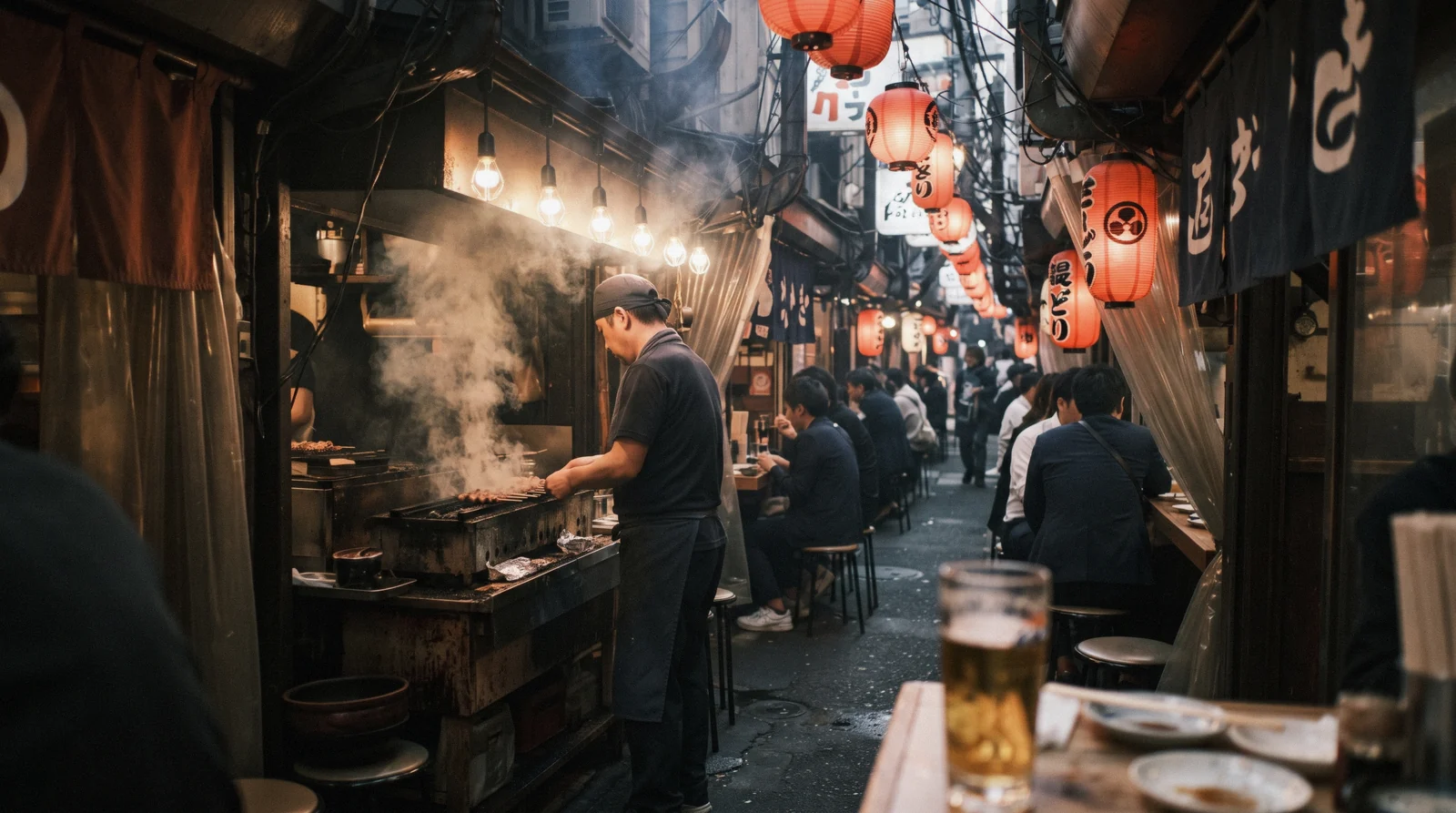
Where to Eat in Tokyo
Deciding where to eat in Tokyo is not a shortlist problem, it is a system problem: the city has more restaurants than any other on earth, almost none of them advertise in English, the good ones are often one flight up or one floor down, and the same kitchen can cost a third of its evening price at lunch. This page explains the mechanics a visitor actually needs, from the standing noodle counter to the reserved sushi counter, with every figure taken from an authority that publishes one. The venue names on it come only from the MICHELIN Guide's Tokyo 2026 selection; the districts they sit in have their own pages, starting with Ginza and Asakusa, and what a day in the city costs in total is on Tokyo costs. For the rest of the city, see what to do in Tokyo.
Quick answer What a meal costs, when kitchens open, what to book, in three lines
Tokyo's eating day runs in two shifts, roughly 11:00 to 14:00 and 17:30 to 22:00, and the cheapest way to eat well is the lunch set at a place that is expensive in the evening. Japan's national tourism body still puts an inexpensive restaurant meal at 1,000 yen or less, about $6.48, and the tax you pay changes with where you eat it: 10% at the table, 8% on the same food carried out.
Key takeaways
- No tipping, anywhere: the Japan National Tourism Organization states plainly that it is not customary in bars, cafes, restaurants, taxis or hotels, and a tip left on a counter will usually be run after you down the street (what things cost).
- The reservation problem is real and it is not about status: many of the best counters seat eight to twelve people, take bookings by phone in Japanese only, and are full 4 weeks out. A small-group food walk of Shibuya's back streets is the shortcut that gets you into three of them in one evening.
- The single most useful building in the city for a hungry visitor is a department store: the basement food hall does not need a reservation, does not need Japanese, and is open when the independent kitchens are shut. The Tsukiji Outer Market does the same job in the morning, and closes when they open.
The Tokyo Eating Ladder, And What Is Actually Published About Each Rung
Five rungs, from a standing noodle counter to a reserved kaiseki or sushi counter, with the only figures anybody official publishes about them. The sources are the Japan National Tourism Organization's own line on an inexpensive meal, the National Tax Agency's two consumption-tax rates, and the MICHELIN Guide's four-step price band, all read in Q3 2026.
| Rung | What is published about the price | Reserve? | Language | Pay how |
|---|---|---|---|---|
| Standing noodle counter, ticket machine at the door | JNTO's own guidance still reads that inexpensive restaurants serve meals at 1,000 yen or less, about $6.48; the machine prints the price before you commit | Never. Standing room, five to ten minutes | None needed. You press a photo button and hand over the ticket | Cash and IC card at most machines; some take cards |
| Konbini or a department-store basement counter | Priced item by item on the shelf; the 8% takeaway rate applies unless you sit in the store's eat-in corner, where it becomes 10% (National Tax Agency) | No | None. Barcodes and a screen do the work | Card, IC card and phone accepted almost everywhere |
| Lunch set at a place that is a different animal in the evening | MICHELIN prints a band, not a figure: one yen symbol on tonkatsu counters such as Sugita, two on soba, unagi and yakitori houses like Asakusa Hirayama and Yakitori SANKA | Rarely for lunch, often for dinner | A photo menu or a plastic model is normal; English is not | Cash still wins at older counters |
| Izakaya, the evening drinking-and-eating room | No published figure. Expect a per-person otoshi seat charge that arrives as a small dish you did not order and cannot refuse | Worth it on a Friday, walk in on a Tuesday | Increasingly a tablet with photographs | Card usual in chains, cash in the old rooms |
| Reserved counter: sushi, kaiseki, a starred kitchen | MICHELIN's top band, four yen symbols, on rooms such as the two-starred Ginza Kojyu; the restaurant itself often publishes only a course name | Always, and often a month ahead | Some take English bookings, many take none | Card at this level; deposits and cancellation fees are normal |
No authority publishes an average Tokyo restaurant bill, so the price column stops where the sourcing stops. Sources: the JNTO visitor FAQ line on inexpensive meals at 1,000 yen or less, about $6.48, on japan.travel, a page that dates itself to January 2018; the National Tax Agency's consumption-tax page for the 10% standard rate, made up of a 7.8% national and a 2.2% local component, and the 8% reduced rate that covers food sales but not dining out; and each restaurant's own page on guide.michelin.com for its band, on a scale that runs from one yen symbol to four. Where a rung has no published number we print none rather than an estimate.
Guided Eating, Compared: What Somebody Else's Reservation Buys
Four walks and one class, priced as the platform listed them: $77.92 for three hours in Shibuya, $85.71 for four eateries and 15 dishes in Shinjuku, $97.40 for five tastings at Tsukiji, $12.99 for a guided market walk without them, and $59.09 for a sushi class in Asakusa. The case for a guided meal in Tokyo is narrower than in most cities and it is specific: a guide holds the seats at counters that take no walk-in bookings, orders in Japanese, and gets you through three rooms in an evening you would spend queueing for one.
 from $77.92
Tokyo: Shibuya Food Tour (13 dishes and 3 Eateries)
A three-hour small-group walk through Shibuya's Dogenzaka and Center Gai, stopping at three eateries for around 13 local dishes and two drinks, plus a photo stop at Shibuya Crossing.
Check Availability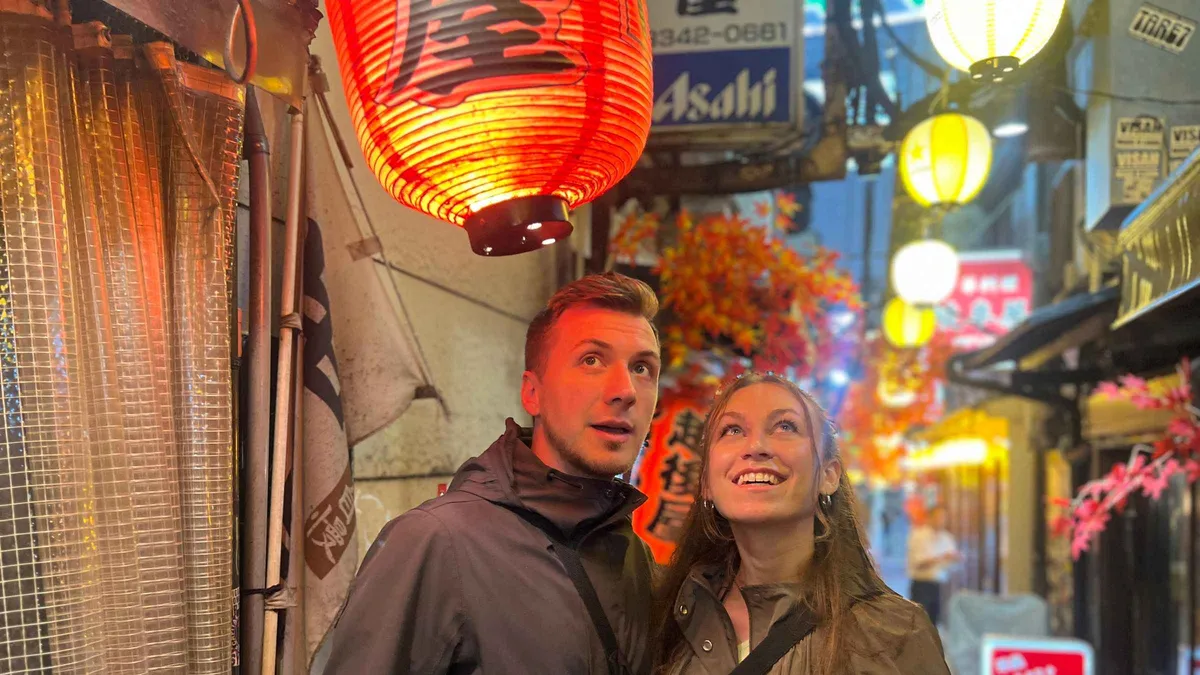 from $85.71
Tokyo: Shinjuku Food Tour (15 Dishes and 4 Eateries)
A three-hour small-group walk through Shinjuku's Omoide Yokocho and Kabukicho backstreets, stopping at four eateries for around 13 Japanese dishes and two drinks with an English-speaking local guide.
Check Availability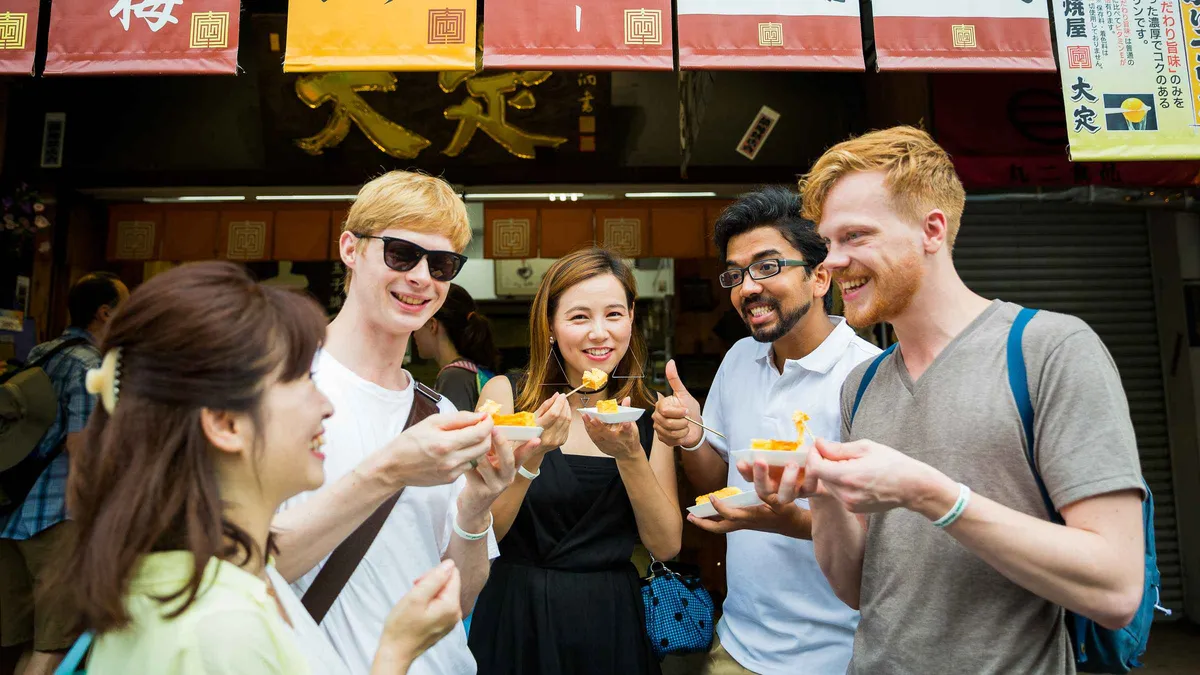 from $97.40
Tokyo: Tsukiji Fish Market Food Walking Tour with 5 Tastings
A 3-hour small-group food walk through Tsukiji Outer Market with five tastings including Wagyu beef skewers and sushi or a seafood bowl. Not suitable for vegetarians, vegans or wheelchair users.
Check Availability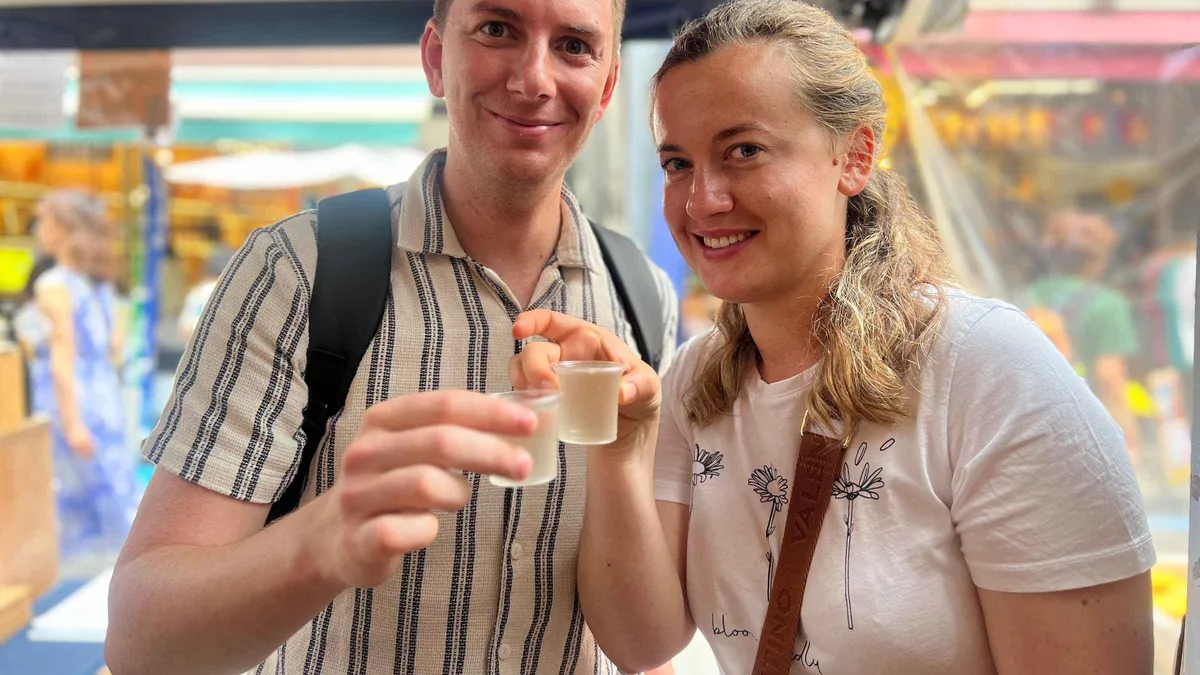 from $12.99
Tokyo: Tsukiji Fish Market Guided Walking Tour
A guided 2-hour walk through Tsukiji Outer Market and Tsukiji Hongan-ji Temple with a small group capped at 10. Food and drinks are extra, so bring cash for tastings along the way.
Check Availability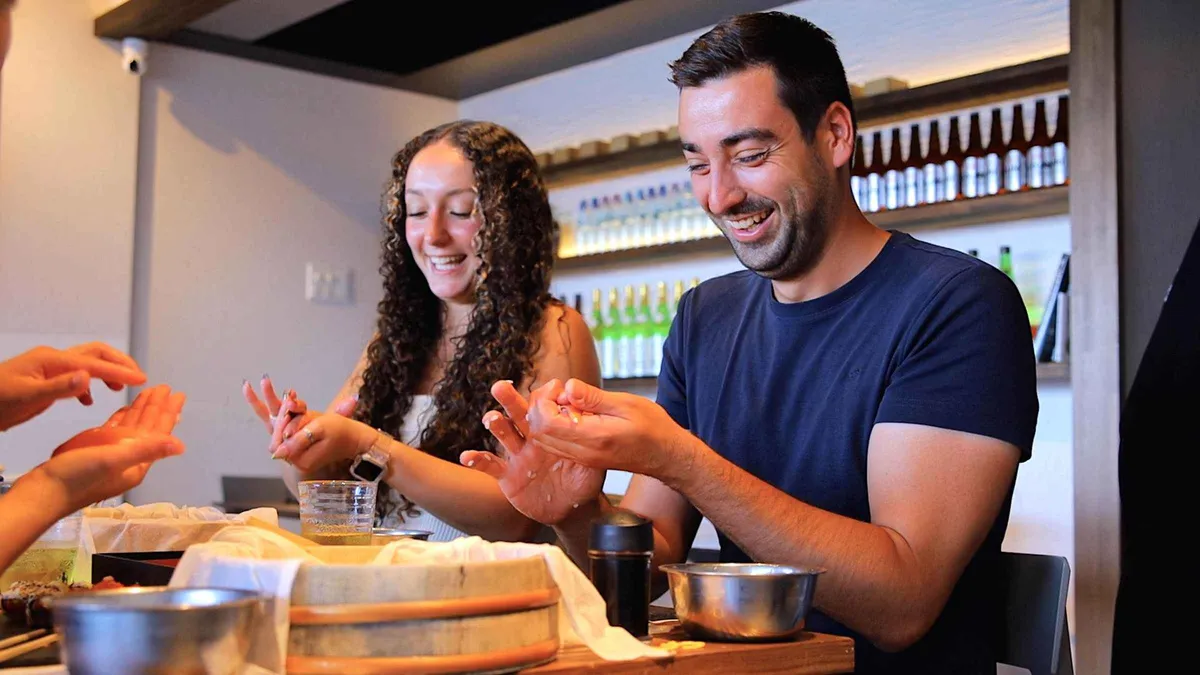 from $59.09
Tokyo: Roll and Authentic Sushi Making Class in Asakusa
A 100-minute hands-on class in Asakusa near Tokyo Skytree, learning sushi history before making both maki rolls and nigiri with an English-speaking instructor, then eating what you make.
Check AvailabilityPrices, ratings and details are the platform's own. Dollar figures are the listed prices. The platform bills in your account's currency.
How Eating In Tokyo Works, In The Order It Happens To You
Almost every friction a visitor hits in a Tokyo restaurant comes from a rule nobody states out loud, because everybody in the room already knows it.
The ticket machine is the menu
At noodle counters, curry houses and many cheap set-meal rooms, the ordering happens at a vending machine inside the door. You pay first, the machine prints a ticket, you hand it across the counter and sit. Newer machines carry photographs and an English button; older ones carry nothing but kanji, in which case the top-left button is conventionally the house's basic bowl and pressing it is a safe answer.
This is also why these places are fast. There is no bill at the end, no card terminal, no waiting to catch anybody's eye. The bowl lands in front of you within 3 minutes, you eat, you put it back on the counter and you leave. A 10 minute lunch is normal, and a bowl at that kind of counter sits at or under the 1,000 yen mark, about $6.48, that Japan's tourism body still uses to define an inexpensive meal.
Water, the hot towel and the small dish you did not order
Water or tea arrives free and is refilled without being asked for; you will not be charged for it and there is no cover charge in the European sense. The hot towel is for your hands before eating, not for your face at the end.
The exception is the izakaya, the evening room where drinking and eating happen together. There you may be served an otoshi, a small dish that functions as a seat charge, typically a few hundred yen a head. It is not a scam and it is not refusable; it is how the room charges for the table. If a place will have a per-person charge, that is where you meet it.
Two shifts, and the hour when the city stops feeding you
Independent kitchens work a lunch service from about 11:00 to 14:00 and a dinner service from about 17:30 to 22:00, and many close the shutter completely for the three hours in between. A visitor who leaves a museum at 15:30 and starts looking for a proper meal is looking at a locked door, repeatedly, for two hours.
The places that stay open through the afternoon are the department-store basements, the chains, the konbini and the cafés. Plan the sit-down meal into one of the two shifts and treat the gap as a coffee, and Tokyo stops feeling difficult. This is exactly why the morning food streets, including the Tsukiji Outer Market, are a breakfast and early-lunch proposition rather than an afternoon one.
One shop, one thing
The specialisation runs deeper here than the phrase suggests. A tempura counter fries; it does not also do sushi. A soba house boils buckwheat; the tonkatsu place next door fries pork cutlets and nothing else. Menus are short because the kitchen is built around one technique, and the reason the food is good at 1,200 yen is that the cook has made the same dish for thirty years.
The practical consequence for a group: a party of 4 that wants sushi, ramen and yakitori in one sitting is asking for something that mostly does not exist outside hotel restaurants and tourist floors. Split up, or accept an izakaya, which is the one format designed to feed a table that cannot agree.
The Lunch-Set Arithmetic: The Same Kitchen, A Third Of The Money
This is the single most useful habit to bring to Tokyo, and it is the reason a visitor on a normal budget can eat in rooms that look, at night, entirely out of reach.
Most serious Japanese kitchens run a lunch service built around a teishoku, a set: one main, rice, miso soup, pickles, at a fixed price printed on a board outside. The evening version of the same room is a course menu, often several times the price, with a reservation attached. Nothing about the cooking changes between them; the portion and the ceremony do.
The MICHELIN Guide's Tokyo selection is full of rooms that work this way. The soba house Asakusa Hirayama, a Bib Gourmand entry near Kappabashi, and the tonkatsu counter Sugita, listed in the Guide's cheapest band, are both lunchtime propositions in practice, and the Guide's own Bib Gourmand distinction exists precisely to flag kitchens judged to give good value rather than luxury: MICHELIN's Tokyo 2026 selection carries 114 of them, 16 of them new that year, against 12 three-star restaurants, 26 with two stars, 122 with one and 13 green stars.
The arithmetic to hold in your head: 2 lunch sets at a good counter and one convenience-store breakfast will cost less for a couple than a single mid-range dinner with drinks, and the food at lunch is frequently better because the room is not managing a course.
Where the lunch set is not a bargain
Two exceptions. Hotel restaurants and the restaurant floors of shopping complexes price lunch as an event, not as a working meal, and the set is a smaller version of dinner at close to dinner money. And the very top counters, the ones with a four-symbol price band, frequently do not serve lunch at all, or serve the same course at the same price at midday.
So the rule is about the middle of the market, which is where most of the eating in this city happens anyway.
Depachika: The Basement That Solves Your Worst Meal
Every large department store in Tokyo puts a food hall in its basement, and for a visitor it is the most forgiving room in the city.
A depachika is one or two basement floors, usually B1 and B2, of counters: grilled eel, tempura, croquettes, salads sold by weight, sushi packed to travel, cakes wrapped as though they were jewellery, pickles, tea, sake. Nobody asks you to sit down, nothing needs a reservation, every price is printed, cards work everywhere and the sample trays mean you can point at what you want without a word of Japanese.
It covers the 3 situations that ruin a visitor's evening. You arrive back at the hotel at 15:00 starving, when the independent kitchens are shut. You are travelling with somebody who cannot face another counter. Or it is raining and the queue outside the ramen shop is forty people long. In all three the basement is open, dry and cheap by comparison.
The tax rule matters here more than anywhere: food bought to carry out is taxed at 8%, and the same food eaten at the store's own eat-in corner is taxed at 10%, because the National Tax Agency's reduced rate covers food sales but not dining out. Take it back to the room or to a park bench and you pay the lower rate.
The late-afternoon discount, and why it is not a myth
Prepared food in Japan is dated to the hour it was made, and counters that will not sell it tomorrow start marking it down as the store's closing time approaches, with stickers reading 20% or 30% off and, later still, 50%. This is a real and normal practice, not a tourist rumour, and it is not published anywhere as a policy, so we cannot print a time: it varies by store, by counter and by how the day went.
What we can say is where to look for it. Ginza and Nihombashi hold the flagship food halls, Shinjuku's are the biggest, and every one of them sits directly on top of a station, so the detour costs nothing. Most run from about 10:00 to 20:00, an hour or two beyond the independent kitchens at both ends of the day. The Ginza guide covers the street the stores stand on.
Konbini Food, And Why Nobody Here Is Embarrassed By It
The convenience store is not a fallback in Tokyo, it is a category of restaurant, and most of them are open 24 hours. Onigiri rice balls, egg sandwiches, cold noodles with dipping sauce, fried chicken from the hot counter, a coffee machine that grinds beans to order, and a hot water tap for instant noodles. Everything carries a printed price and an expiry time to the hour, and the staff will heat what should be hot without being asked twice.
For a traveller the value is the hours. The independent kitchen you wanted is closed on Sunday, shut between services, or already full. The convenience store on the corner is open, has a lavatory, an ATM that takes foreign cards, and a bin, which is more than the street will offer you.
The same 8% versus 10% rule applies: takeaway is taxed at 8%, and telling the till you will eat at the counter inside moves it to 10%. The difference on a 600-yen lunch is twelve yen, so nobody agonises, but the question at the till is not the cashier being difficult, it is the tax code.
The other reason to know where the nearest convenience store is: its cash machine. Seven Bank's ATMs, in 7-Eleven stores and at stations and airports, take Visa, Plus, American Express, Discover, JCB, Diners Club and China UnionPay, operate in 12 languages, and allow up to 100,000 yen a transaction, or 30,000 yen on a magnetic-stripe card. That is the safety net behind every cash-only counter on this page.
The eating-in-the-street question
Eating while walking is mildly frowned on rather than forbidden, and the reason is practical: there are almost no public bins. The convention is to eat where you bought it, in front of the shop, at the store's own counter, or on a bench, and to carry the wrapper until you find a bin, usually back at a convenience store or a station, which on a busy street can be a 5 minutes walk.
The exception is a market street, where standing and eating what you just bought is the entire point. The Tsukiji Outer Market page covers the rule as the market itself publishes it, which is stricter than most visitors expect.
The Reservation Problem, And Which Places Take Walk-Ins
The counters visitors most want to sit at are the ones structurally hardest to book, and the obstacle is arithmetic before it is exclusivity.
A sushi or kaiseki counter seats 8 to 12 people and serves two sittings a night. That is about 20 covers a day, in a city of roughly 14 million people, with a global waiting list. The room does not need a website, an English page or a booking platform, and many do not have one; the telephone at 15:00 in Japanese is the system.
That produces four honest routes in, in the order most visitors should try them.
The first is the hotel concierge, who calls in Japanese and stakes the hotel's own standing on you turning up. The second is an international booking platform: MICHELIN's own restaurant pages carry Reserve a table buttons through its booking partnerships with OpenTable and Resy, so the subset of Tokyo rooms that accept foreign online bookings is visible on the Guide itself. The third is a guided walk, where the operator holds the seats: that is what you are buying on a Shibuya food walk or the equivalent walk through Shinjuku's alleys, not the food. The fourth is to give up on the counter and take the same chef's lunch.
What does not work is turning up at 19:00 at a twelve-seat room and asking. It also does not work to book through a third-party reseller charging a fee for a table it does not hold, which is a recurring complaint in this city.
What genuinely takes walk-ins
Standing noodle counters, ticket-machine curry and set-meal shops, conveyor sushi, ramen shops of every rank, department-store basements, izakaya on a weeknight, and almost every kitchen at lunch. That is a very large part of the city's best eating, and it needs no plan at all: a 30 minutes wait outside a good ramen shop is the worst case, and the queue moves because nobody lingers over a bowl.
The practical shape of a first trip: book nothing, eat lunch wherever the queue is Japanese and moving, and spend the reservation effort on one evening rather than five.
Tipping, Service Charges And Reading The Bill
Do not tip. The Japan National Tourism Organization's own guidance is unambiguous: it is not common to tip for services such as those provided in bars, cafes, restaurants, taxis and hotels. Money left on a table is treated as forgotten property, and staff will chase you into the street to return it. The one recognised exception JNTO names is kokorozuke, a discretionary gratuity in an envelope, sometimes given to a private guide or interpreter used to international customs, and even that is optional rather than expected.
What does appear on bills: consumption tax at 10% on a meal eaten in, made up of a 7.8% national and a 2.2% local component, which is normally already inside the printed price rather than added at the end; the otoshi seat dish at an izakaya; and at the top of the market a service charge, which the restaurant will state when you book. Nothing else.
Payment usually happens at the till by the door rather than at the table, and the small tray beside the register is where you put the money, rather than into the cashier's hand. Cards are accepted in chains, department stores and anything modern; the old counters, the market stalls and some of the best cheap rooms are still cash, which is the practical argument for carrying notes.
Tax-free shopping does not cover your dinner
Japan's tax-free system applies to goods you carry out of the country, not to a meal you have eaten, and the system itself changes on 1 November 2026 from an exemption at the till to a refund claimed at customs on departure, with the 5,000-yen minimum purchase kept, the 500,000-yen cap on consumables dropped, and customs confirmation required within 90 days of the purchase date.
The reason it belongs on a food page at all is the depachika: sweets, tea and packaged food bought as gifts can qualify, a restaurant meal never does. What Tokyo costs carries the change in full.
Allergies, Vegetarians And The Dashi Problem
This is where an honest food page has to print what nobody publishes rather than a reassuring paragraph.
There is no official Tokyo register of certified allergen-safe or vegetarian restaurants. We looked for one on the metropolitan government's own visitor site and found no such list, which means anything a guide tells you about a specific venue's allergen handling is the writer's word, not an authority's. So this page names no venue as safe.
The structural difficulty for vegetarians is not meat on the plate, it is dashi: the stock under most soups, simmered dishes, noodle broths and dipping sauces is made with katsuobushi, dried skipjack tuna. A bowl of vegetable soba is very often not vegetarian, and the kitchen does not think of it as a fish dish, so asking whether something contains meat gets a truthful no. The question that works is whether the dish is made without katsuobushi or niboshi, dried sardine.
What does work reliably: shojin ryori, the Buddhist temple cuisine that is vegan by construction and is served at specialist restaurants; Indian and Southeast Asian kitchens, of which Tokyo has many, including MICHELIN's own 2026 Bib Gourmand additions in that direction; the vegetable counters of a depachika, where every ingredient is labelled; and konbini onigiri, where the fillings are printed.
Carrying the information rather than explaining it
Two habits solve most of it. Have your allergen or dietary requirement written in Japanese on your phone, as a sentence rather than a word, and expect it to take 2 minutes at the door rather than an argument at the table, and show it before you sit rather than after you order, because a counter that cannot accommodate it will say so at the door and lose nothing.
And choose formats that are transparent by design. A ticket machine with photographs, a labelled basement counter, a sushi counter where every piece is put in front of you one at a time, all of these let you see what you are eating. A set course at an izakaya does not.
Seven Places We Can Name, And Who Says So
This site names a restaurant only when a citable guide has already named it, so the list below is drawn entirely from the MICHELIN Guide's Tokyo 2026 selection, each card carrying the distinction, the cuisine and the price band exactly as MICHELIN prints them on that restaurant's own page. It is not a ranking and it is not a recommendation to book them in this order. MICHELIN's restaurant pages do not publish opening hours, so no hours are shown here.
-
Asakusa Hirayama
MICHELIN band: two yen symbolsSoba near Kappabashi, listed as a Bib Gourmand for 2026 and flagged by MICHELIN as good for solo dining and eating like a local. The Asakusa guide covers the streets around it.
- Address
- 1-3-14 Nishiasakusa, Taito-ku, Tokyo, 111-0035, Japan
- Hours
- Not published on the MICHELIN page
-
Hatsuogawa
MICHELIN band: two yen symbolsUnagi, freshwater eel, a few minutes from the Kaminarimon gate, carried in the Guide's 2026 Bib Gourmand list. Eel is a Tokyo speciality with a season, and this is the classic format for it.
- Address
- 2-8-4 Kaminarimon, Taito-ku, Tokyo, 111-0034, Japan
- Hours
- Not published on the MICHELIN page
-
Sugita
MICHELIN band: one yen symbolTonkatsu in Kotobuki, next to the Kappabashi kitchenware street, and one of the few 2026 Bib Gourmand entries in MICHELIN's cheapest band.
- Address
- 3-8-3 Kotobuki, Taito-ku, Tokyo, 111-0042, Japan
- Hours
- Not published on the MICHELIN page
-
Yakitori SANKA
MICHELIN band: two yen symbolsYakitori on the first floor above street level in Yaraicho, a 2026 Bib Gourmand and the single most loved entry on this list by MICHELIN's own counter. Skewers are the format that feeds a table with different appetites.
- Address
- 2F, 64-4 Yaraicho, Shinjuku-ku, Tokyo, 162-0805, Japan
- Hours
- Not published on the MICHELIN page
-
RAMEN MATSUI
MICHELIN band: one yen symbolRamen in Yotsuya, a 2026 Bib Gourmand in the Guide's cheapest band. Ramen shops of this rank take no bookings, which makes them the honest answer to a night with no reservation.
- Address
- 4-25-10 Yotsuya, Shinjuku-ku, Tokyo, 160-0004, Japan
- Hours
- Not published on the MICHELIN page
-
Ginza Katsukami II
MICHELIN band: two yen symbolsTonkatsu on the fourth floor of the Kojun building in Ginza, a 2026 Bib Gourmand. It is the kind of address that explains why this city hides its food upstairs: nothing about the street frontage tells you it is there.
- Address
- 4F, Kojun Bldg, 6-8-7 Ginza, Chuo-ku, Tokyo, 104-0061, Japan
- Hours
- Not published on the MICHELIN page
-
Ginza Kojyu
MICHELIN band: four yen symbolsTwo MICHELIN stars for 2026, Japanese cuisine, on the fourth floor of a Ginza block a few minutes from the Kabukiza Theatre. This is the top of the ladder, in the Guide's highest price band, and it is a reservation weeks out rather than an evening decision.
- Address
- 4F, 5-4-8 Ginza, Chuo-ku, Tokyo, 104-0061, Japan
- Hours
- Not published on the MICHELIN page
Distinctions, cuisines, addresses and price bands as printed on each restaurant's own page at guide.michelin.com. Two names that circulate widely in visitor guides are deliberately absent: we could not confirm either against a live MICHELIN restaurant page in this pass, and this site does not print a star count it has not read. Anywhere else in Tokyo that we could not source to a published guide is described on this page by type and street rather than named.
Eating By District, And The Page That Covers Each One
Where you sleep decides where you eat on four nights out of five, because nobody crosses this city twice in an evening. Each entry below says what that district's food actually is and links the guide that covers its streets, stations and opening hours.
Central, and open latest
-
Shinjuku
District
The densest eating in the city, from the tiny grilled-chicken counters of the alleys to the department-store basements over the station. MICHELIN's 2026 Bib Gourmand list reaches into it at Yaraicho and Yotsuya.
Tip: The station's own basements are open when the alleys are not.
-
Shibuya
District
Young, loud and vertical: the food is on the third, fourth and eighth floors, reached by a lift with a directory board in the lobby. This is the district the three-hour food walk works.
Tip: Look up. The ground floor is shops.
-
Ginza
District
The concentration of serious counters, including the two-starred room on this page's list, plus the two flagship department-store food halls. Prices at night are the highest in the city; lunch is not.
Tip: The lunch set is the way into Ginza.
Old Tokyo, and earlier hours
-
Asakusa
District
Soba, unagi, tonkatsu and street snacks around the temple approach, with three of the seven guide-listed places above inside a few blocks of each other.
Tip: Kitchens here shut early. Eat at 18:00, not 21:00.
-
Tsukiji Outer Market
Market
The morning counterpart to everything else on this page: stalls, standing counters and knife shops, running on market hours that end when the rest of the city starts thinking about lunch.
Tip: A breakfast plan, not a dinner one.
-
Toyosu Market
Market
The working wholesale market that took the auctions, with its own restaurant row upstairs and its own early rhythm. It is a different place from Tsukiji, on a different island.
Tip: Two markets, two trips, two mornings.
Where a district is not the answer
-
Harajuku
District
Snacks and queues rather than meals, and a good example of a place where the famous food is the sweet thing on the street, not a restaurant.
Tip: Eat before or after, not here.
-
Akihabara
District
Themed cafés, curry and standing counters near the station. No MICHELIN entry surfaced here in our search of the Guide, which we record as an unconfirmed absence rather than a verdict.
Tip: Come for the shops, eat at the station.
-
Odaiba
District
Mall food courts on a bay island, which is exactly what you want with children and exactly what you do not want on a food night.
Tip: Family dinner, not a counter.
District character is our own summary; every venue-level fact on this page is sourced in the cards above. Opening hours belong to the individual district guides, which carry them for the streets and stations they cover.
What To Read Next
Three pages that decide the rest of the eating day.
Tokyo costs
What a day of eating adds up to alongside transport and tickets, with the live exchange rate and the tax rules in full. Tokyo costs is where the 8% and 10% question is worked through properly.
The money pageTsukiji Outer Market
The market lanes, their opening hours and the eating rules the market itself publishes. Tsukiji is the one food destination in the city with a published closing time you must respect.
Morning foodTokyo tours
If a guided meal is the plan, the tours hub compares every walk, class and excursion on this site in one table, including the food walks listed above.
Every guided optionEating In Tokyo: Questions
Where should I eat in Tokyo on my first night?
Somewhere that takes no reservation, near where you are sleeping, because jet lag will beat any plan. A ramen shop, a ticket-machine set-meal counter or a department-store basement all work and none of them needs Japanese. Save the effort for one booked evening later in the trip, or hand the problem to a guide on a Shibuya food walk, where the seats are already held.
How much does a meal cost in Tokyo?
No authority publishes an average, so the only figure we will print is the Japan National Tourism Organization's own: inexpensive restaurants serve meals at 1,000 yen or less, about $6.48. Above that, MICHELIN prints a price band rather than a number, and the ladder table above shows what each rung actually publishes. Tokyo costs builds the daily total.
Do you tip in Tokyo restaurants?
No. JNTO states that tipping is not common in bars, cafes, restaurants, taxis or hotels, and staff will return money left behind. The only charges you will meet are the consumption tax inside the printed price, the otoshi seat dish at an izakaya, and a stated service charge at the top of the market.
Do Tokyo restaurants take cards, or do I need cash?
Chains, department stores, hotel restaurants and anything recently opened take cards and IC cards. Older counters, market stalls and many of the cheapest and best rooms are cash only, and the ticket machines at noodle counters often are too. Carry notes for a food day; the convenience-store ATMs take foreign cards if you run out.
Can vegetarians eat well in Tokyo?
Yes, but not by default. The stock under most soups and noodle broths is made with dried skipjack tuna, so a vegetable dish is often not vegetarian, and no official register of vegetarian restaurants exists for the city. Shojin ryori temple cuisine, Indian and Southeast Asian kitchens, labelled department-store counters and konbini onigiri are the reliable routes, and the dashi section above has the question that actually works at a counter.
What time do restaurants close in Tokyo?
Independent kitchens work roughly 11:00 to 14:00 and 17:30 to 22:00, and many lock the door between the two services. Department-store basements, chains and convenience stores cover the afternoon gap. Market streets are the opposite: the Tsukiji Outer Market is a morning place and shuts when the evening rooms open.
Is it rude to eat while walking in Tokyo?
It is mildly frowned on outside market streets, and the practical problem is bins rather than manners: there are almost none. Eat in front of the shop that sold it to you, at the counter provided, or on a bench, and carry the wrapper to the next convenience store.
Tokyo Food On Film: Counters, Basements And What People Order
Three films that show the formats described above rather than a list of restaurants: what a ticket machine looks like, what a cheap counter charges, and how a food street is actually eaten.
TOKYO Food Guide | 40 Places to Eat & Drink (With Prices!)
The rare food film that prints the price of each thing eaten, which is the number this page cannot source anywhere official.
Video: Locavore Eats18 BEST Local Japanese CHEAP EATS in Tokyo Japan
The bottom two rungs of the ladder above, filmed: standing counters, ticket machines and set meals.
Video: Strictly Dumpling12 Must Try Japanese Foods in Tokyo
A run through the one-shop-one-dish formats, useful for working out which counter you are looking at from the street.
Video: Abroad in JapanVideos load from YouTube only when you press play.
Prices, hours and terms are set by the venue or operator and confirmed at checkout.
We may earn a commission if you book through one of our links, at no extra cost to you. Full affiliate disclosure