 Visit Tokyo Guide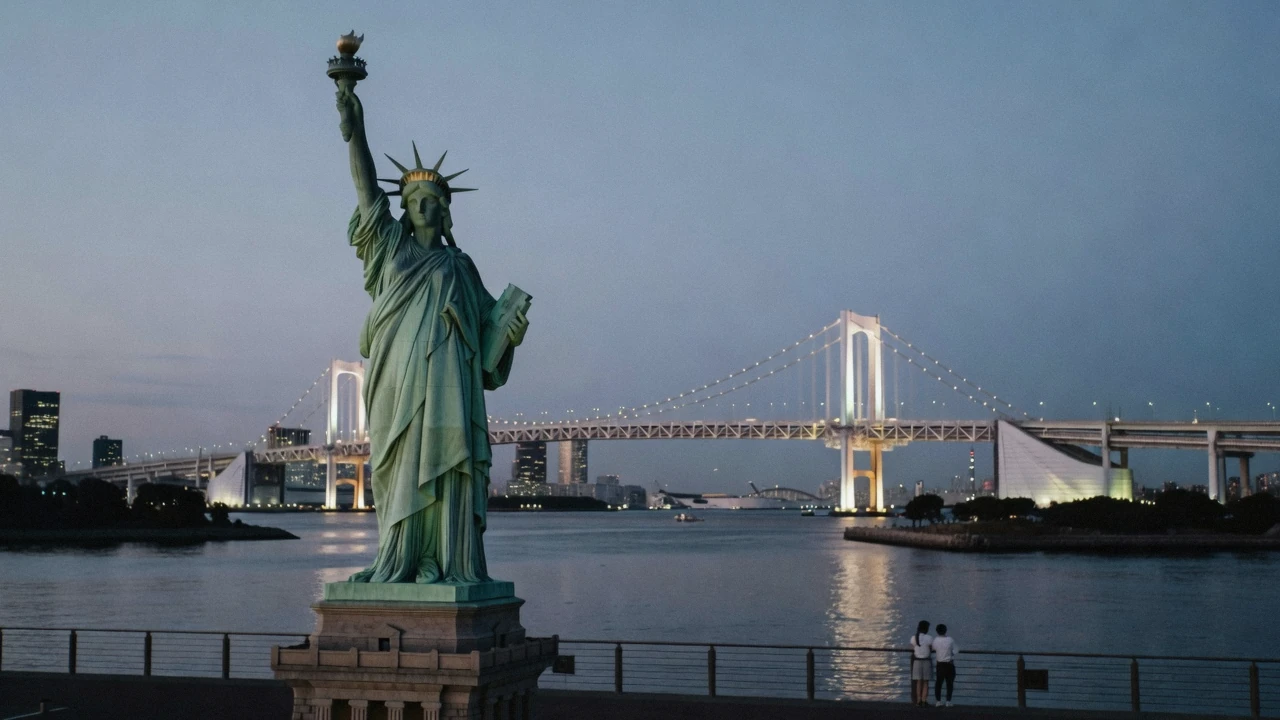
Odaiba, Tokyo
Odaiba is a set of artificial islands about 30 minutes from Tokyo Station, whose 1850s gun batteries, laid down by the Edo shogunate against foreign warships, were rebuilt in the 1990s into a waterfront district of malls, museums and promenades. It is the furthest of the seven districts on what to do in Tokyo. It is the only part of Tokyo with a horizon, and the only one where the attraction is the view back at the city rather than the city itself. It is also the district this guide is most cautious about, because several of the things visitors come here for have closed or moved in the last few years, and because getting here is a commitment: no JR line reaches the island directly, and the Tokyo Metropolitan Government's own guide tells you to set aside a full day. This page covers the three ways over, what is standing and what is not, the bridge walk, the beach, and how the art venue across the water in Toyosu fits. Yen figures come from the operators' own pages, dollars are converted at ¥1,000 = $6.48.
Quick answer Which train, what is still there, and how long it eats
Take the Yurikamome from Shimbashi if the ride is part of the point, and the Rinkai Line if it is not. The Rinkai Line operator puts Odaiba at 18 minutes from Shibuya, 24 from Shinjuku and 29 from Ikebukuro, and the city's own guide puts it at about 30 minutes from Tokyo Station via the Yurikamome. Allow half a day at least, and a full day if you cross to Toyosu as well.
Key takeaways
- The Yurikamome is a driverless elevated line that crosses the Rainbow Bridge with a view; the Rinkai Line runs in a tunnel and is faster. Which to pick, and the third option by boat, is in getting there.
- Check the Gundam statue before you travel for it. Reports have it scheduled for removal and the mall's own site no longer lists it; what we could and could not confirm is set out in the statue section.
- The bridge has a free pedestrian walkway with published seasonal hours and a closed day, and the city's guide puts the crossing at a good thirty minutes. The bridge section covers which side to walk.
- Across the water in Toyosu, teamLab Planets sells no tickets at the door at all: it is advance purchase only, and the entry ticket at $24.67 is the thing to have bought before you set out.
The Three Ways Over To Tokyo Bay
Journey times taken from the Tokyo Waterfront Area Rapid Transit operator's own site and the Tokyo Metropolitan Government's Odaiba guide, both read in Q3 2026. The last column is the one that decides it: two of these three are transport, and one of them is the sightseeing.
| Route | From where | Roughly | What you get |
|---|---|---|---|
| Yurikamome, elevated and driverless | Shimbashi, sixteen stations to Toyosu | About 30 minutes from Tokyo Station including the change at Shimbashi | A front-window ride over the Rainbow Bridge; the journey is the attraction |
| Rinkai Line, in tunnel | Tokyo Teleport Station, through-running with the JR Saikyo Line | 18 minutes from Shibuya, 24 from Shinjuku, 29 from Ikebukuro, per the operator | The fastest way in from the western districts, with no view at all |
| JR Saikyo Line direct | Shinjuku to Tokyo Teleport without changing | 22 minutes, per the city's guide | One seat from the west side, on the same tracks as the Rinkai Line |
| Water bus on the Sumida | Hinode Pier, Asakusa, Hamarikyu and Toyosu piers | Not published as a single figure; the operator runs a route search rather than a printed table | The approach from the water, which is the best first sight of the island |
| Limousine bus | Haneda Airport | 35 minutes by bus, or 45 minutes by train, per the city's guide | The one district in Tokyo that is genuinely close to an airport |
The Rinkai Line's own headline figures are printed on twr.co.jp; the rest come from the Tokyo Metropolitan Government's Odaiba guide at gotokyo.org. Neither the Yurikamome nor the Rinkai Line publishes a fare table we could read as static content this pass: both route fares through an interactive search tool, so we print no per-ride figure here rather than repeat one from a blog. An IC card removes the need to know it, and getting around Tokyo covers how the cards and passes work.
The Bay By Boat, And The Bus That Includes It
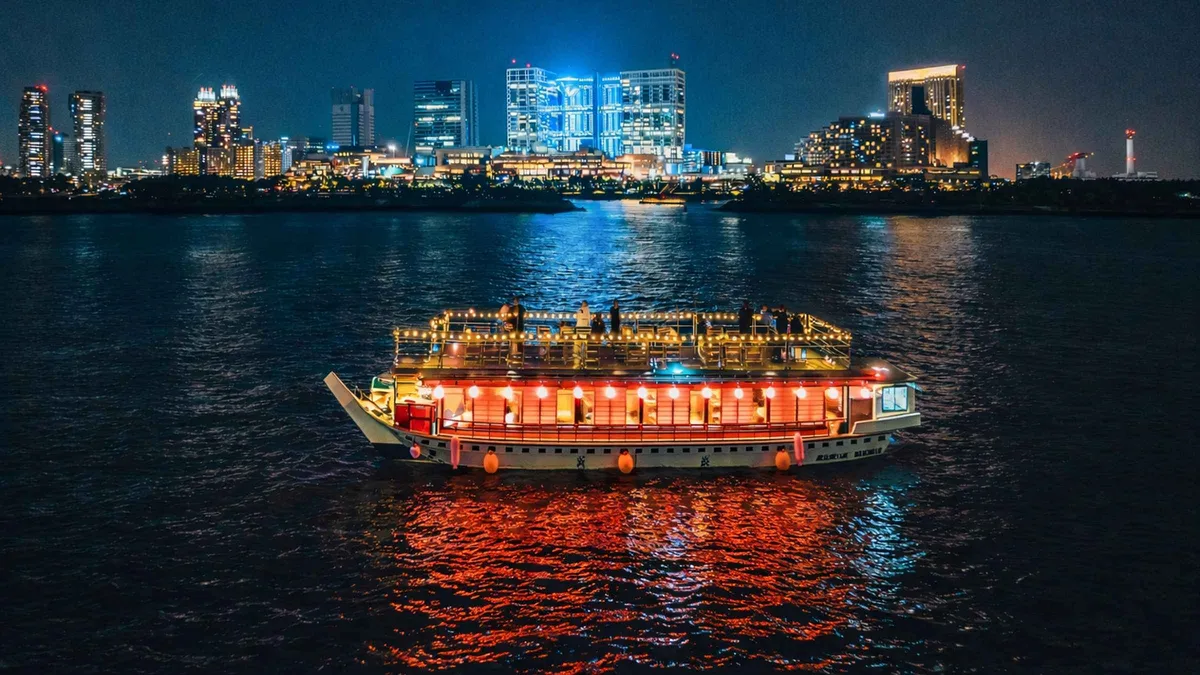
What is actually sold for Odaiba is the water rather than the island: traditional roofed pleasure boats, the yakatabune, that run dinner cruises down the Sumida and along the bay route past the bridge. A city bus tour also calls here. Prices are the platform listings in US dollars, and each card opens the operator's own page with the live calendar.
 from $102.59
Tokyo Yakatabune Cruise: 400yr Edo Tradition & Odaiba Route
A yakatabune houseboat cruise along the Odaiba Bay route featuring 400 years of Edo tradition, live shamisen music, a sukiyaki hot pot dinner, unlimited soft drinks and open-deck bay views.
Check Availability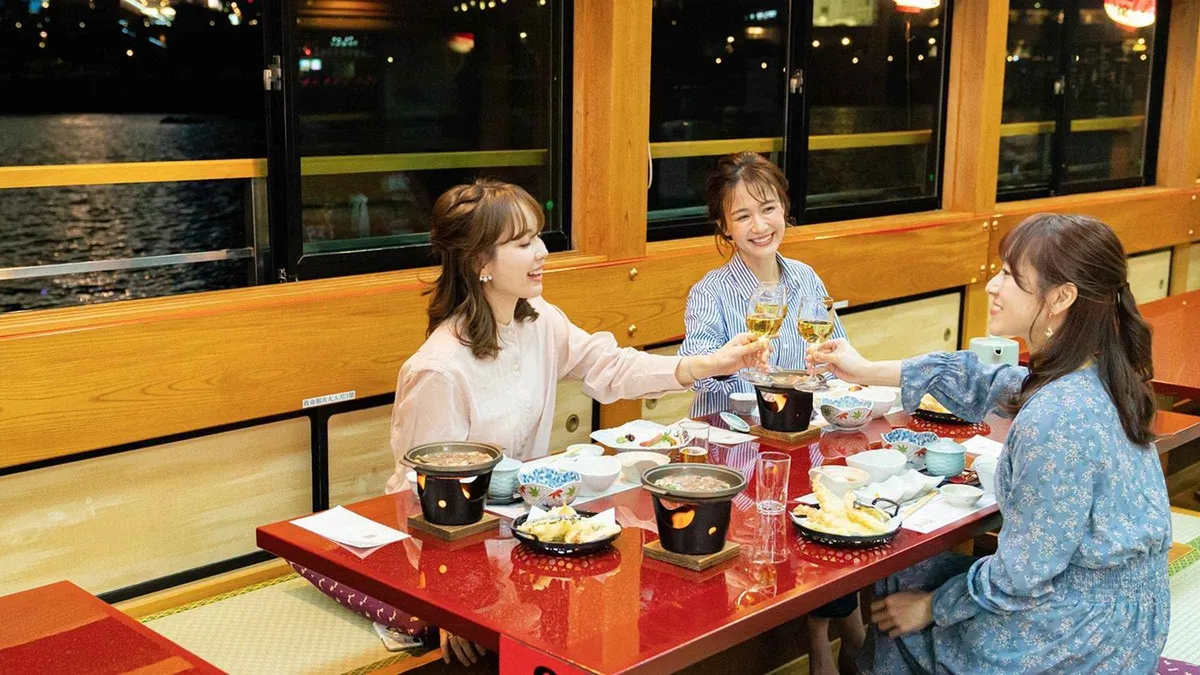 from $103.89
Sumida River: Japanese Traditional Yakatabune Dinner Cruise
A traditional Yakatabune dinner cruise on the Sumida River, with a full dinner served on board while you take in views of Tokyo Skytree and Tokyo Bay from the water.
Check Availability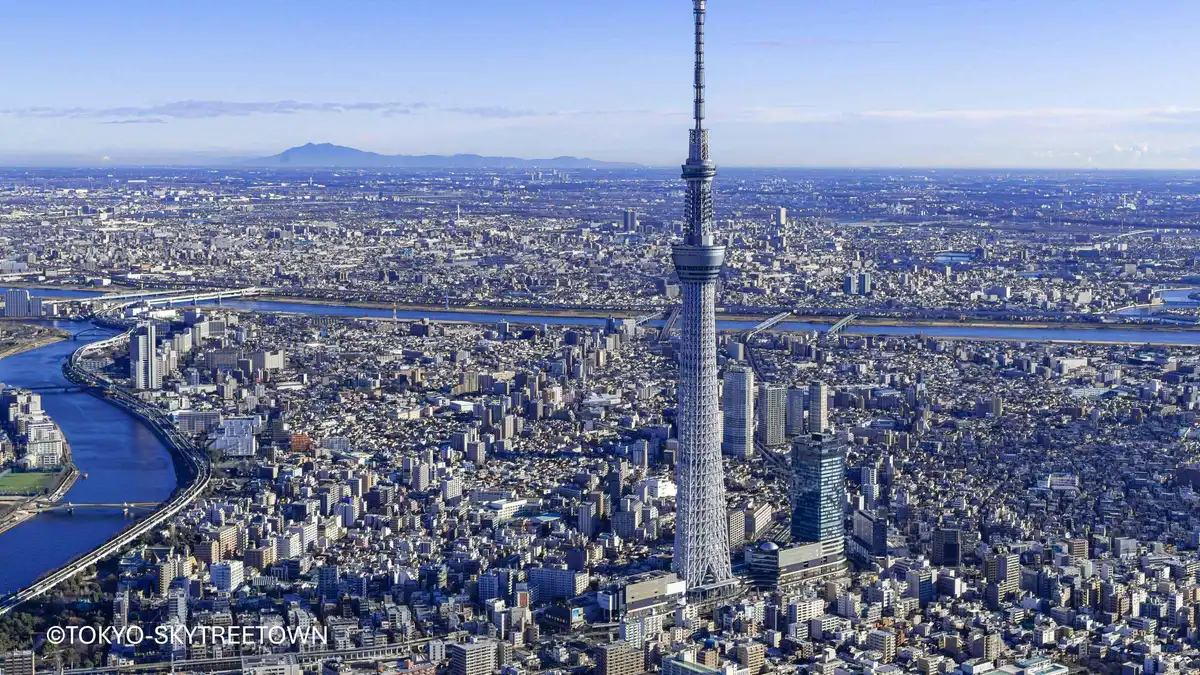 from $84.41
Tokyo: 1 Day Bus Tour with Meiji-Jingu,Odaiba,lunch&Skytree
A full-day Hato Bus circuit through Meiji Shrine, the Imperial Palace outer garden, Odaiba and Asakusa, with a buffet lunch and Tokyo Skytree Tembo Deck entry included, guided in English.
Check Availability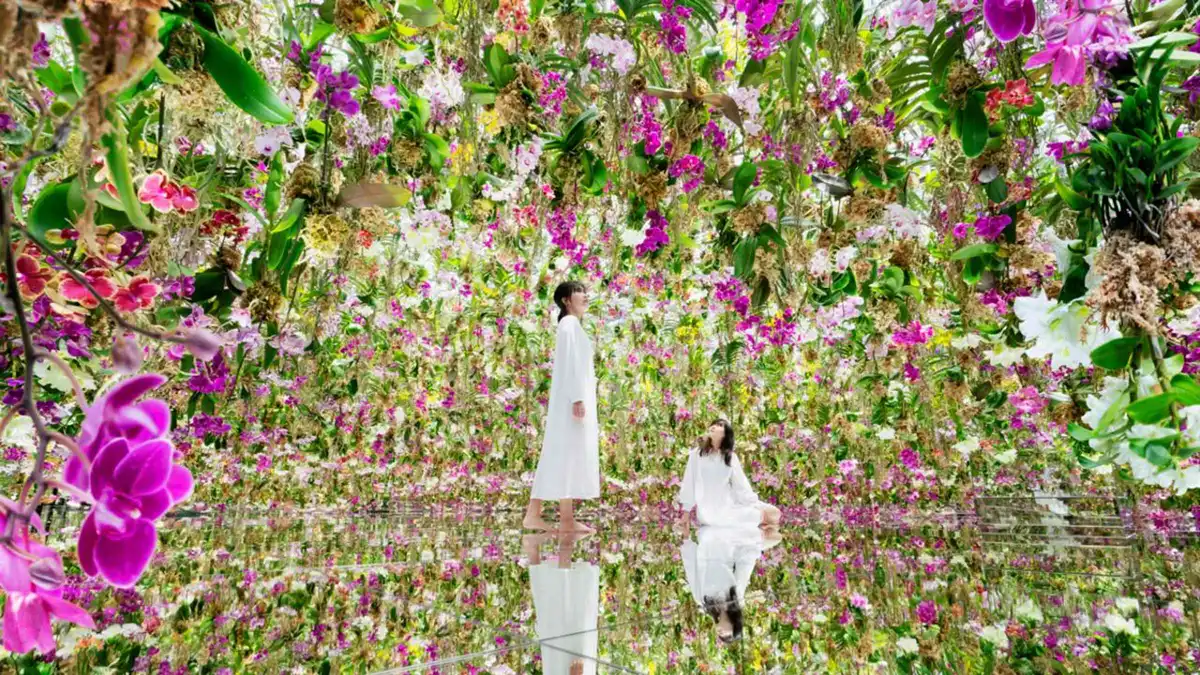 from $24.67
Tokyo: teamLab Planets TOKYO Digital Art Museum Entry Ticket
Entry ticket to teamLab Planets, a barefoot walk-through digital art museum in Toyosu with water rooms and mirrored floors. Self-guided, timed entry, official e-ticket emailed after booking.
Check AvailabilityPrices, ratings and details are the platform's own. Dollar figures are the listed prices. The platform bills in your account's currency.
What Odaiba Is, And Why It Feels Unlike The Rest Of Tokyo
The district reads as a resort dropped into a working port, and the reason is that it is exactly that: land made for one purpose in the nineteenth century and repurposed for another at the end of the twentieth.
The islands were built in the 1850s as gun batteries to defend the shogun's capital from warships, which is where the name comes from. The modern district was laid out in the 1990s as a waterfront development, and what it inherited from that plan is unusually generous space: wide promenades, a beach, parks between the buildings, and sightlines across the bay to the city skyline. Tokyo has almost nothing else like it.
The city's own guide describes the difference as a holiday feeling, and that is fair; it is the one district here where nobody is in a hurry.
What that costs is density. Everything on the island is large and far apart, and the distances between the malls, the parks and the museums are ten to twenty minutes on foot in the open, which in August is genuinely punishing and in February is windy. The city's guide says to set aside a full day for maximum enjoyment, and that is not padding: this is not a district you drop into for ninety minutes on the way to something else.
One correction, because it recurs everywhere
The teamLab digital-art venue that made Odaiba famous is no longer here. It closed on the island in August 2022 and reopened at Azabudai Hills in central Tokyo as teamLab Borderless. The other teamLab venue, teamLab Planets, is in Toyosu at the far end of the Yurikamome line, which is near Odaiba but is not on it.
Two different venues, two different tickets, neither of them in Odaiba. A great deal of travel writing still says otherwise.
The Gundam Statue: What We Could And Could Not Confirm
The full-scale robot statue outside the mall on the island's eastern side has been Odaiba's signature photograph for years, and it is the single most common reason a first-time visitor comes out here. It is also the fact on this page we are least able to guarantee.
Here is exactly where the evidence stands. The statue is widely reported to have been scheduled for removal after August 2026. We could not confirm that against an official notice: the mall's own English site returned no readable content to us, and its Japanese homepage, which we did read, carries no mention of the statue at all, neither as an attraction nor as a farewell.
The Tokyo Metropolitan Government's Odaiba guide lists the mall as a shopping destination and does not mention the statue either. None of that is proof of removal. It is, at minimum, the absence of the promotion a standing landmark would normally carry.
So the honest instruction is this: do not travel to Odaiba for the statue without checking the mall's own site on the morning you go. If it is still standing, it is outside on the plaza, free, and visible without entering the building. If it is not, the rest of this page still holds, because the statue was never the strongest reason to come here.
The waterfront, the bridge and the view back at the city are, and none of them can be taken down.
The Rainbow Bridge, And The Walk Across It
The suspension bridge that links Odaiba to the mainland is the district's landmark and, unusually for a Tokyo motorway bridge, it has a public footway.
The city's own guide is blunt about the scale of it: you can walk the bridge, but expect it to take a good thirty minutes. That is the crossing itself, on an enclosed walkway alongside the traffic deck, and it does not include the climb to the walkway or the walk at either end. There is a north route and a south route, giving different views, and the walkway keeps seasonal hours and a closed day of its own rather than being open around the clock.
Check the current timetable before committing to it, because a closed walkway at the far end is a long way back.
The alternative, and for most people the better one, is to ride over it. The Yurikamome crosses the bridge on its own deck in a long curve, and because the trains are driverless the front window is a passenger seat. Sit at the front on the way out and you get the whole approach across the water.
The city's guide recommends exactly this as the less strenuous perspective, and it costs one fare rather than an hour.
The bridge after dark
The bridge is lit at night and it is the reason to stay past sunset. The best free viewpoint is the beach promenade on the island side, looking back across the water with the city towers behind the span. Add the replica of the Statue of Liberty that stands in front of it, put up as a temporary tribute in 1998 and made permanent in 2000, and you have the composition every photograph of this district is built on.
It costs nothing and takes ten minutes.
The Beach, The Fountains And The Free Half Of Odaiba
The most valuable thing on this island is the part nobody charges for, and it is worth listing plainly, because the malls dominate the sightlines and the free things do not advertise.
The seaside park runs along the island's north-western edge and includes a made beach, promenades, lawns and the view back at the bridge and the skyline. It is a beach for walking rather than for swimming, and it is where the district's evening happens. Since March 2026 it has also carried a free outdoor fountain show, which the city describes as one of the world's largest installations, reaching up to 150 metres high and spanning 250 metres, combining water, music and lighting, running every day with no ticket and no reservation.
It is three minutes on foot from Daiba Station on the Yurikamome. After dark, with the reflections across the water, it is the best free thing on the island.
| Free thing | Where | When it is best |
|---|---|---|
| Seaside park and the made beach | The island's north-western shore | The hour after sunset, looking back at the bridge |
| The fountain show | Odaiba Seaside Park, three minutes from Daiba Station | After dark, when the water catches the light |
| The Statue of Liberty replica | On the promenade in front of the bridge | Any time; it is the standard photograph of the district |
| The bridge walkway | North and south routes, seasonal hours and a closed day | Daylight, and check the timetable first |
| The waterfront promenades between the malls | Right across the island | Any time; this is where the space is |
The paid half is indoors and is largely a family proposition: an indoor amusement park and a construction-toy discovery centre inside one of the malls, a national museum of emerging science and innovation, a miniature museum, a waxworks. Each is ticketed separately and none is cheap. If you are here with children, the city's own guide treats those as the reason to come and they will fill an afternoon; if you are not, you can skip every one of them without missing what makes Odaiba distinctive. Tokyo with kids has the family comparison, and free things to do in Tokyo has the rest of the no-cost list.
The onsen question
It comes up constantly and deserves a straight answer, with the limits of that answer stated. The large themed hot-spring complex that was for years one of Odaiba's headline attractions has closed, and the Tokyo Metropolitan Government's Odaiba guide, in its September 2026 edition, does not list it among the district's attractions. We could not reach an official closure notice from the operator this pass, so we print no closing date.
If a bathhouse is what you wanted from this trip, it is not on this island, and the search should move to the ordinary neighbourhood bathhouses elsewhere in the city or a day trip out to Hakone, which is where Tokyo actually goes for hot water.
Across The Water: The Art Venue And The Fish Market
Two of the things visitors associate with Odaiba are in fact in Toyosu, at the eastern end of the same Yurikamome line, and both have rules that catch people out.
teamLab Planets is a barefoot, walk-through digital-art venue in Toyosu, one minute on foot from Shin-Toyosu Station on the Yurikamome and about ten minutes from Toyosu Station on the Metro. Two things about it matter before you set out. Tickets are not sold on site at any price: purchase is online and in advance only.
And the pricing is date-based, moving through the venue's own calendar rather than sitting at one figure, with the adult entrance pass starting at $23.30 (¥3,600) and running up through the autumn peak. Junior and senior high school entry is $18.14 (¥2,800), children aged four to twelve $9.72 (¥1,500), and under-threes free. The full mechanics, including the water rooms and the clothing rules, are on the teamLab Planets page and the ticket comparison is on the teamLab tickets page.
The other Toyosu institution is the wholesale fish market, which took over from Tsukiji and is where the tuna auction now happens, with its own viewing arrangements and its own early hours. It is a different proposition from the retail stalls that stayed behind at Tsukiji, and the two are constantly confused. The Toyosu page covers the auction rules; the short version is that it is a working market with a visitor gallery, not a food street.
Whether to combine them
Combining Odaiba with Toyosu in one day works, and it is the reason to allow a full day rather than half of one. The sequence that fits: the market early, the Yurikamome west along the bay through the middle of the day, the island in the afternoon, the waterfront at sunset. Going the other way round puts you at the market after it has finished trading, which is a wasted early start.
How Much Of A Day Odaiba Eats
This is the question the district actually turns on, and the answer is more than people expect. The travel is twenty-five to forty-five minutes each way from most of central Tokyo, the island is spread out, and there is no quick version.
Three honest routings, against what each one gives up.
| How much time | What you do | What it skips | Door to door |
|---|---|---|---|
| Half a day, from mid-afternoon | Yurikamome out, the promenade, the beach at sunset, the fountains, ride back over the bridge | Every indoor attraction and every mall | About four hours from central Tokyo |
| A full day on the island | The above plus two indoor attractions, a mall lunch and the bridge walk | Toyosu entirely | Seven to eight hours |
| A full day, island and Toyosu | Fish market early, art venue late morning, island afternoon, waterfront at dusk | Nothing on this page | Nine hours or more, starting before dawn |
| Ninety minutes on the way past | Not advisable. The travel alone is most of it | Everything | Do not attempt this |
On when to come: the waterfront is the point, so weather matters here more than in any other Tokyo district. A grey day on Odaiba is a day in a shopping mall. The best hours are the two either side of sunset in any season, and the best months are the shoulder ones, when the open promenades are neither an oven nor a wind tunnel. The best time to visit Tokyo has the monthly detail.
Where it fits in a trip
Odaiba is a third-day or fourth-day district, not a first-day one. It suits a family, a traveller who has already done the temples and the crossings and wants space, or anyone with a late flight from Haneda, since the airport is thirty-five minutes away by bus. It does not combine with any other district in the same day, because the only things near it are on the same water. The neighbourhoods hub sets out which pairings do work.
The city-wide index of everything else, including top attractions in Tokyo, is on the city guide.
Odaiba On The Map: Stations, Beach And The Bridge
The island, its two rail lines and the three places across the water this page refers to. Coordinates are from the venues' and operators' own published positions on the OpenStreetMap base layer; the walk between the pins on the island is ten to twenty minutes each.
The three green pins are in Toyosu rather than Odaiba, at the far end of the same Yurikamome line. They are the single most common source of confusion about this district and the reason the map separates them by colour.
Where To Go Next From Odaiba
The three pages that follow from this one, in the order a bay day usually needs them.
teamLab Planets
The barefoot walk-through venue across the water: date-based pricing, no tickets at the door, the water rooms and what to wear for them. Read the teamLab Planets guide.
The far end of the same line, in ToyosuToyosu Market
Where the tuna auction actually happens, how the viewing works, and why it is a different proposition from the retail stalls that stayed at Tsukiji. Read the Toyosu guide.
Three stops east on the YurikamomeTokyo neighbourhoods
Which districts pair with which, why this one pairs with none of them, and how many honestly fit in a day. Compare all seven.
The routing pageStaying On The Bay, And Whether It Is A Mistake
Odaiba has several large waterfront hotels and they sell a real advantage and a real disadvantage in the same breath: bay views and airport proximity against being a rail change away from everything a visitor came to Tokyo for. Both sub-areas below sit on that trade.
Odaiba waterfront
- Walk to the nearest station
- 3 to 12 minutes from the Yurikamome stations
- Suits
- Families, a late Haneda flight, anyone who wants a room with a horizon in it
Every trip into the city centre starts with a rail change, and after about 23:00 the district is genuinely quiet with few dinner options outside the malls. Excellent for two nights at the end of a trip, questionable as a base for a first visit.
See stays in Odaiba waterfrontToyosu and Ariake
- Walk to the nearest station
- 5 to 15 minutes from Toyosu or the Yurikamome stations
- Suits
- The same waterfront position at a lower rate, with the Metro's Yurakucho Line into the centre
Less scenic and better connected than Odaiba proper, and it puts the art venue and the fish market on the doorstep. Convention traffic can move rates sharply on event weekends.
See stays in Toyosu and AriakeWe do not print nightly rates for Tokyo areas, because they move too far by season and by event for a fixed figure to stay honest; the links above open a live search for your own dates. The full comparison of Tokyo bases, including the central districts, is on where to stay in Tokyo. We take a commission if you book through these links, at no extra cost to you.
Odaiba Questions
Is Odaiba worth visiting?
Yes, if you have three or more days in Tokyo and want space, a horizon and a waterfront evening; no, if you have two days and are choosing between this and the temples or the crossings. It is the only district here with an open sky and a beach, and it is also the furthest and the most spread out. How much of a day it eats sets out the honest routings before you commit.
How do I get to Odaiba from Tokyo Station or Shinjuku?
From Tokyo Station take the Yamanote Line to Shimbashi and change to the Yurikamome, about thirty minutes in total by the city's own reckoning. From Shinjuku the JR Saikyo Line runs direct to Tokyo Teleport in twenty-two minutes, and the Rinkai Line operator puts the same journey at twenty-four. Take the Yurikamome at least one way, because it crosses the bridge. The routes table compares all three.
Is the Gundam statue still there?
We could not confirm it. The statue is widely reported to have been scheduled for removal after August 2026; the mall's own site carries no mention of it and the city's Odaiba guide does not list it either. That is an absence of evidence rather than proof, and the instruction is simple: check the mall's own site on the morning you go, and do not make the statue the reason for the trip. The statue section sets out exactly what we found.
Can you walk across the Rainbow Bridge?
Yes. There is a free pedestrian walkway with a north and a south route, seasonal hours and a closed day of its own, and the city's guide puts the crossing at a good thirty minutes on top of the walks at either end. Check the current timetable first, because a closed walkway at the far end is a long way back. Riding the Yurikamome over the same span, sitting at the front window, is the alternative the city itself recommends. The bridge section has both.
Is there still an onsen in Odaiba?
Not as an attraction you can plan around. The large themed hot-spring complex that made the district's name for bathing has closed, and the city's own Odaiba guide no longer lists it; we could not reach the operator's own closure notice to give you a date, so this page prints none. If a bath is what you want from the trip, the ordinary neighbourhood bathhouses elsewhere in Tokyo or a day out to Hakone are the answers, and the free half of Odaiba has what is actually here instead.
Can I swim at the beach in Odaiba?
Treat it as a beach for walking rather than swimming. It is a made shoreline inside a working port, laid out as part of a seaside park with promenades, lawns and the view back at the bridge, and its real value is the hour after sunset when the bridge lights and the fountain show come on. That is free, needs no booking and is described in the free half of this district.
Is teamLab in Odaiba?
No, and this is the district's most persistent confusion. The venue that was here closed in August 2022 and reopened in central Tokyo as teamLab Borderless. The other venue, teamLab Planets, is in Toyosu at the far end of the same elevated line, sells no tickets on site at all, and prices by date. Two venues, two tickets, neither of them on this island. The Toyosu section explains how to fit one into a bay day.
Odaiba On Film: The Bay, The Bridge And What Is Left
Three walk-throughs that show the scale of the island, which is the thing hardest to judge from a map and the reason this page keeps insisting on the time it takes.
What Can You See in a Day? Beginner's Guide to Odaiba with 15 Spots (Tokyo travel guide)
A full day on the island stop by stop, which is the routing this page recommends allowing for.
Video: Omoroi NipponIs it Worth Visiting Odaiba in 2025? | What to Do in Odaiba, Tokyo:
A recent reassessment of the district after several of its headline attractions closed, which is the question this page opens with.
Video: Tokyo KenchanTop Things to do in Odaiba: Gundam, Museums & Tokyo Bay
The malls, the museums and the waterfront filmed at ground level, useful for judging the distances between them.
Video: Tokyo CheapoVideos load from YouTube only when you press play.
Prices, hours and terms are set by the venue or operator and confirmed at checkout.
We may earn a commission if you book through one of our links, at no extra cost to you. Full affiliate disclosure