 Visit Tokyo Guide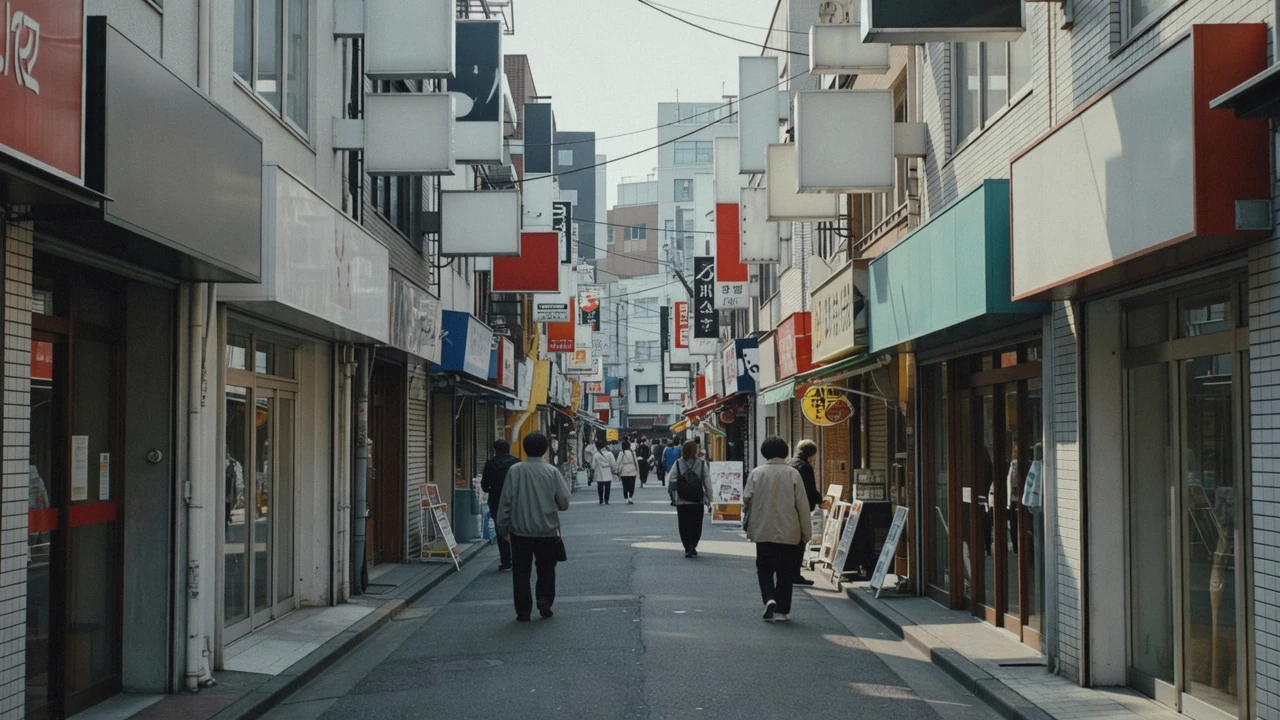
Shibuya, Tokyo
Shibuya, Tokyo is a special ward of about 230,000 people, but the Shibuya visitors mean is a ten-minute circle around one station: the scramble crossing, the shopping towers stacked on top of the platforms, the pedestrian street running north from the intersection, a park with a lawn on its roof and a food alley underneath it, and a walk towards Harajuku that most people take without realising they have left. This page is about how that circle works: which exits still make sense while the station is being rebuilt, what each building is actually for, when the shops shut, where the record and second-hand trade lives, and what the district feels like at 10:00 against 22:00. Where this district sits among the others is set out across what to do in Tokyo. The intersection itself has its own page, and so does the rooftop above it.
Quick answer What the district is for, which exit, when things open, where to sleep
Shibuya is the youth-culture and shopping district built on top of one of the world's busiest station complexes, and almost everything a visitor wants sits within ten minutes of the Hachiko exit. Shops run to about 21:00, restaurants to 23:00, and the food alley under Miyashita Park to 05:00.
Key takeaways
- Come out at the Hachiko exit for the crossing, Center Gai and the statue; use the Miyamasuzaka side for the tower with the rooftop deck on it. The station is mid-rebuild until fiscal 2034 and the signs change
- The district divides by hour, not by area: department stores and record shops before 21:00, then the alleys. A ninety-minute guided walk at $12.99 is the cheapest way to learn which street is which
- Rooms here are the second most expensive of the districts we sampled, a middle band of $90 to $232 for a midweek night, which buys you a station with nine lines and a walk home after the last train
The buildings around the station, and what each is actually for
Opening hours below come from each operator's own site or from Rakuten Travel's Shibuya guide, read in Q3 2026; walking times are the operators' own figures from Shibuya Station.
| Building | Hours | What it is for | From the station |
|---|---|---|---|
| Shibuya Scramble Square | Shops 10:00 to 21:00; restaurants 11:00 to 23:00; the rooftop deck 10:00 to 22:30 | 213 shops under the city's most-booked observation deck | Directly connected, above the JR platforms |
| Shibuya Parco | Retail 11:00 to 21:00; food 11:30 to 23:00 | 193 stores, Nintendo and Pokemon flagship floors, a cinema and a theatre | About 5 minutes on foot |
| MIYASHITA PARK and RAYARD | Shops 11:00 to 21:00; restaurants 11:00 to 23:00; food hall from 10:30 at weekends | About 90 shops along 330 metres, with a public park and a lawn on the roof | About 3 minutes on foot |
| Shibuya Yokocho, under Miyashita Park | 11:00 to 05:00, every day | Nineteen regional food stalls, 1,500 seats, no reservations taken | About 3 minutes on foot |
| SHIBUYA109 | 10:00 to 21:00; cafes and the ticket counter to 22:00 | Over 100 fashion floors aimed at a young market; closed New Year's Day | About 3 minutes on foot |
| Shibuya Fukuras and Tokyu Plaza | Tokyu Plaza 10:00 to 20:00; 6F and 7F restaurants 11:00 to 23:00; street-level shops 07:00 to 02:00 | Tourist information in English, the airport bus terminal, a rooftop garden over the crossing | About 1 minute on foot |
| Shibuya Hikarie | 11:00 to 21:00 | Department floors, a musical theatre, and a left-luggage desk on the 11th floor | Directly connected |
Individual shops inside these buildings keep their own hours, and every operator says so on its own page. Two are worth remembering as practical infrastructure rather than shopping: the ground floor of Shibuya Fukuras holds the shibuya-san tourist information centre, with English-speaking staff, free wifi, power sockets and a luggage desk, and it halves the price of a drink if you show a rooftop deck ticket; Shibuya Hikarie's eleventh-floor left-luggage service has to be booked online in advance.
Guided ways into the district
Four cards, each linking to the operator's own calendar. Ratings, review counts and prices are the platform's own figures.
 from $12.99
Tokyo: Shibuya Highlights Walking Tour & Secret View Spot
Ninety-minute walking tour of Shibuya covering the Scramble Crossing, Miyashita Park and Center Gai with a local guide, no attraction tickets included. One of the cheapest guided ways to get oriented to the district.
Check Availability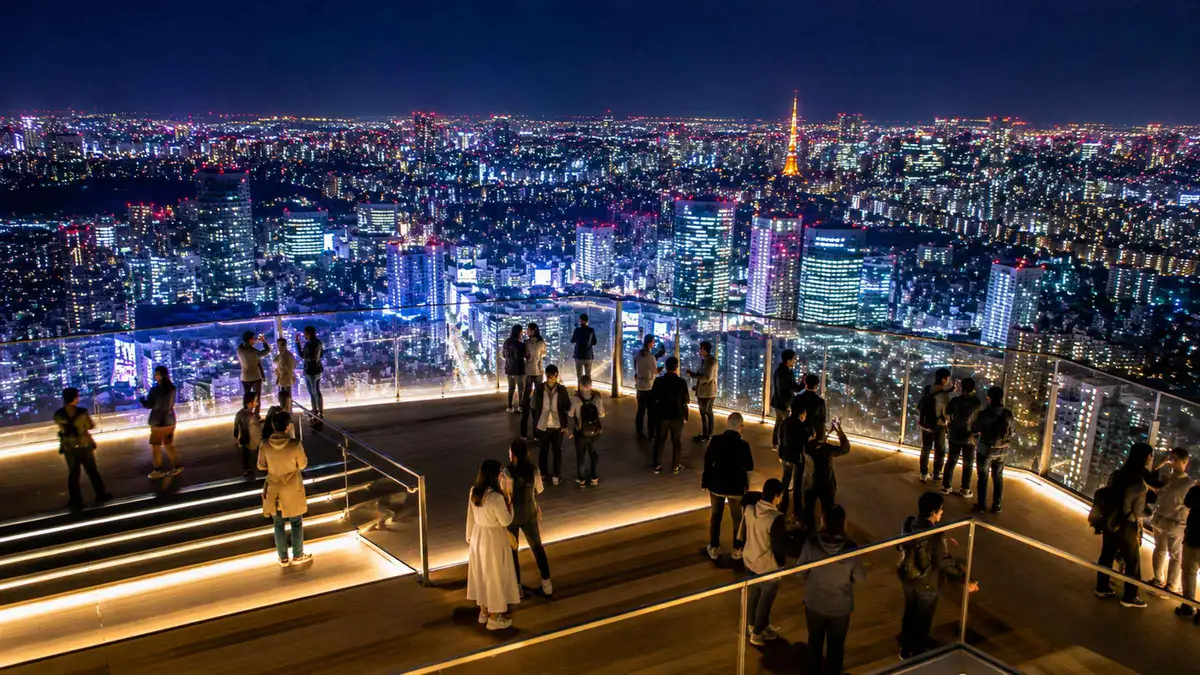 from $101.16
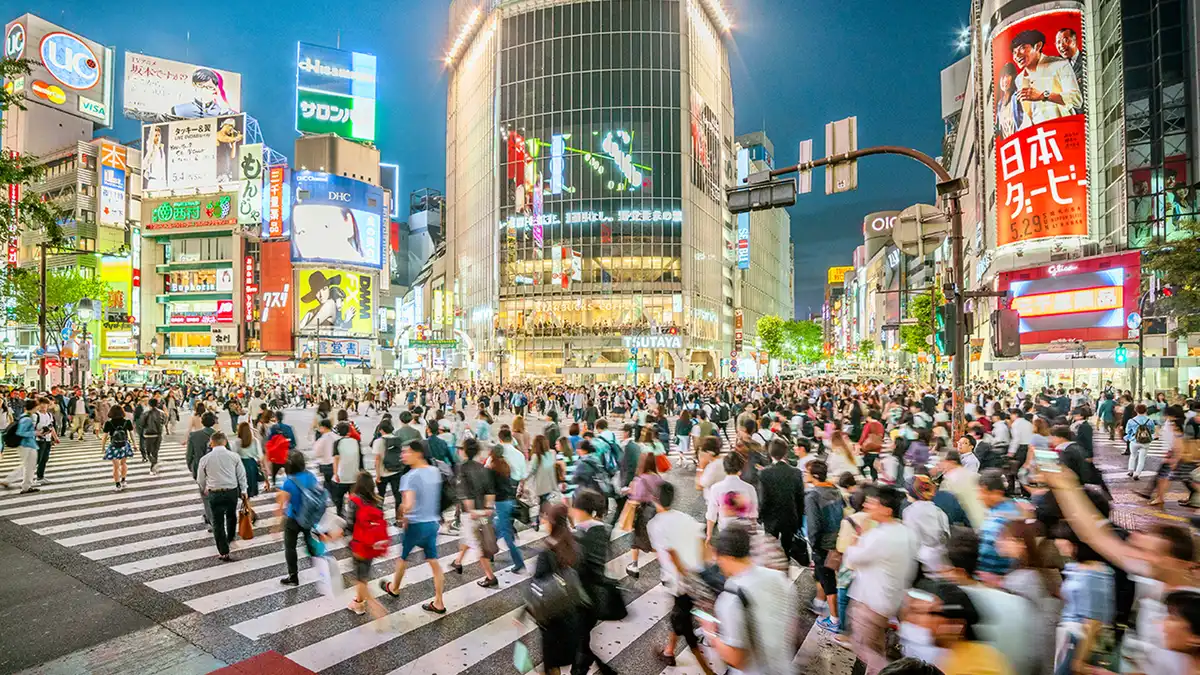
Tokyo: Shibuya Sky Night View, Crossing & Local Vibe Tour
Two-hour night tour combining a Shibuya Sky observation deck visit, ticket included, with a walk across Scramble Crossing and a stop in Miyashita Park's food alley. Suits a first night out in Shibuya.
Check Availability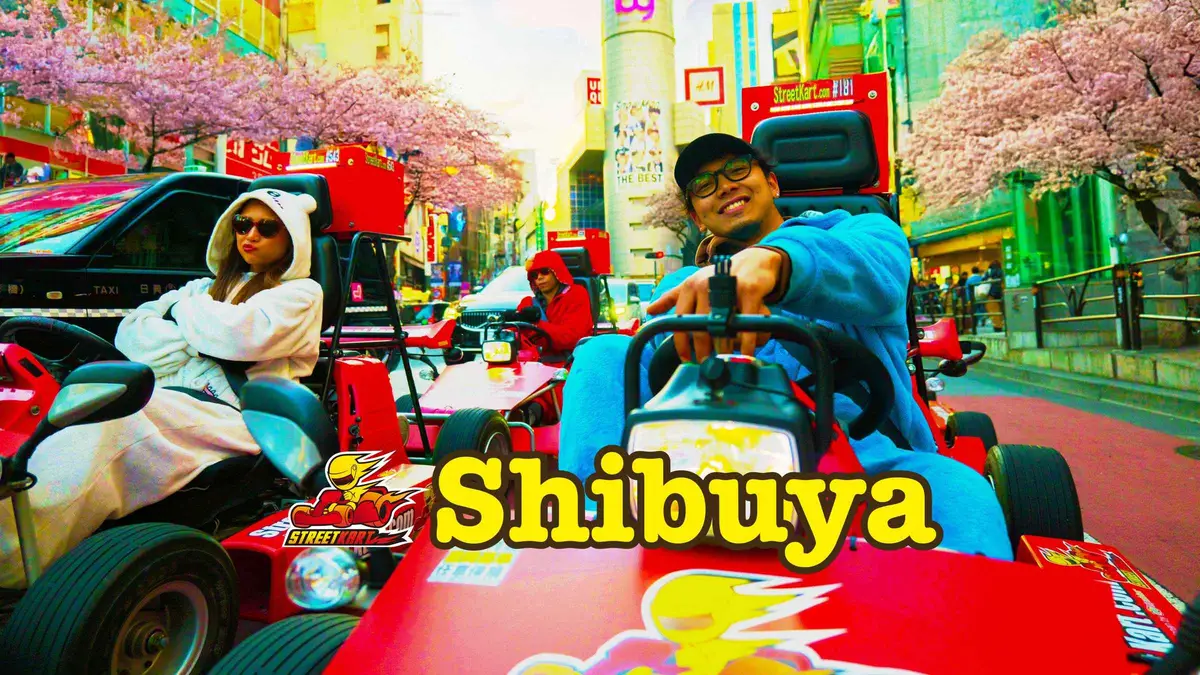 from $71.42
Tokyo: Street Kart Experience in Shibuya
Self-drive, one-hour go-kart route through Shibuya Crossing and the Harajuku and Omotesando fashion streets, costumes included. Requires an International Driving Permit; not suitable for under-18s or wheelchair users.
Check Availability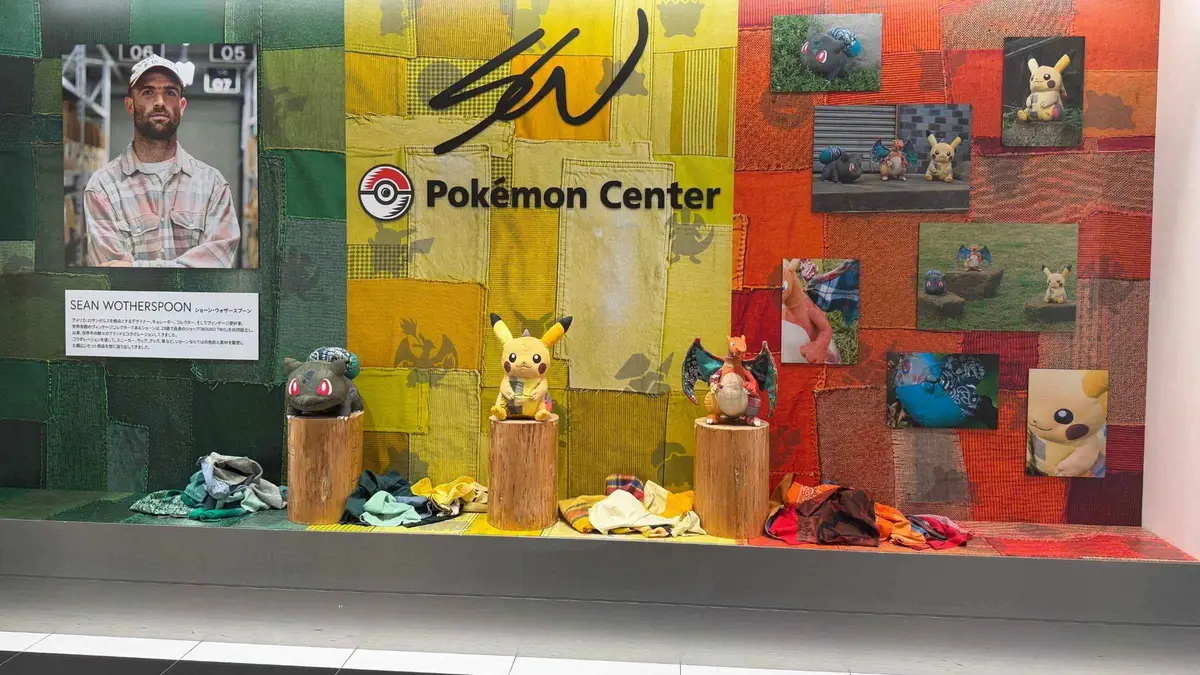 from $337.64
Tokyo: Private Pokémon Center & Pokémon Café Tour
Private, hotel-pickup tour to Pokémon Center TOKYO DX and Pokémon Cafe TOKYO with an English-speaking driver and a flexible itinerary. Cafe reservation fee included; food and merchandise cost extra.
Check AvailabilityPrices, ratings and details are the platform's own. Dollar figures are the listed prices. The platform bills in your account's currency.
The Station Rebuild, And Which Exits Still Work
Everything difficult about arriving here comes from one fact: you are walking through a building site that has been running since 2010 and is scheduled to finish in fiscal 2034.
Shibuya Station is served by the JR Yamanote, Saikyo and Shonan-Shinjuku lines, the Tokyo Metro Ginza, Hanzomon and Fukutoshin lines, the Tokyu Toyoko and Den-en-toshi lines and the Keio Inokashira line. During the rebuild the Toyoko Line platforms went underground, the Ginza Line platform was moved and the Saikyo Line platform was brought alongside the Yamanote, which is why old directions and new signage disagree. The ward, the metropolitan government, the ministry and the railway operators agreed the master plan in 2008; the whole thing was pushed back seven years because trains had to keep running and the pedestrian network was redrawn.
Two exits do almost all the work for visitors. The Hachiko exit is the one for the crossing, the statue, Center Gai and the shopping streets to the north and west; the railway rebuilt and moved it in January 2025, so the walk from the ticket gates now takes about a minute along a signposted passage rather than opening straight onto the pavement. The Miyamasuzaka side is the one for Shibuya Scramble Square and the lift to the observation floors.
Get those two right and the rest of the complex is a matter of following signs.
- Arriving for the crossing, Center Gai, SHIBUYA109 or the record shops: Hachiko exit
- Arriving for the rooftop deck or the Scramble Square shops: Miyamasuzaka side, then the 14th floor
- Arriving for Miyashita Park or Shibuya Yokocho: Hachiko exit and three minutes north
- Arriving with a suitcase: Fukuras on the west side for the tourist centre, or Hikarie for the booked luggage desk
- Arriving by airport bus: the terminal is in Shibuya Fukuras, one minute from the crossing
How long it takes to get here
Seven minutes from Shinjuku and 23 minutes from Tokyo Station on the Yamanote line, according to the city's own tourism site. From Haneda, about 45 minutes by train or 55 by limousine bus; from Narita, about an hour and 40 minutes by train or an hour and 55 by bus. The routes and the fares are on the Haneda and Narita pages, and the passes worth holding for a few days of this are compared on getting around.
Center Gai: The Street Everything Else Hangs Off
The pedestrian street running north from the crossing is the district's spine, and knowing how it is laid out saves you from wandering the same block three times.
Center Gai starts a minute from the station, in the arcade beyond the crossing, and spreads across Udagawa-dori between Bunka-dori and Dogenzaka. It is divided into six blocks, labelled A to F, and it is the noisiest, youngest and most commercial part of the district: fast fashion, chain restaurants, arcades, takeaway counters and music playing from speakers on the street. The Tokyo tourism site is blunt about what it is, calling it the heart of Shibuya's youth culture, and it is where the crowd from the crossing goes.
The useful trick is to treat it as a corridor rather than a destination. Walk it once to get the scale, then turn off it: west into Dogenzaka and Maruyamacho for live music venues and clubs, north-west into Udagawacho for records and second-hand clothes, north into the calmer streets locals call Oku-Shibuya, where the bars, restaurants and bookshops thin out and get better. Loft, Hands and Shibuya Parco all sit inside this same walk, and none of them is more than five minutes off the street.
The record shops, and why they are here
This district produced a music genre of its own in the mid-1990s, Shibuya-kei, built out of cut-and-paste record collecting, and the shops that made it possible are still in the Udagawacho and Maruyamacho blocks: second-hand vinyl, specialist dance and jazz counters, live houses and clubs stacked in the same buildings. One example with a published address, because it is the kind of place the district is actually made of: STUDIO MULE, a small room run by the label mule musiq at 16-4 Kamiyamacho, which serves natural wine and plays records through vintage equipment, and which the rooftop deck's own site names as the shop that curates its rooftop playlist. Expect to find these places up a staircase and behind an unmarked door, which is normal here rather than exclusive.
Miyashita Park: A Public Park Stacked On Ninety Shops
The single most useful block for a visitor after the crossing, because it solves the two problems the district creates: nowhere to sit and nowhere to eat late.
The old ground-level park closed in 2017 and reopened in July 2020 as something odd and rather good: a four-storey building about 330 metres long, with roughly 90 shops inside and a public park on the roof. The lawn runs to about 1,000 square metres, and beside it there is a skate park, a bouldering wall and a multipurpose sports area, all part of the ward's own park rather than the shopping centre. A hotel occupies one end.
It is three minutes from the station and about eight from the Harajuku end, which makes it the natural hinge between the two districts.
Underneath, on the south ground floor, is Shibuya Yokocho: nineteen stalls arranged as regional food counters from Hokkaido to Okinawa, along a hundred metres of alley, with 1,500 seats between the interiors and the terrace. It takes no reservations and it runs from 11:00 to 05:00 every day, closing one day a year for maintenance. That 05:00 close is the reason to put it at the end of an evening rather than the middle of an afternoon, and it is the answer to the most common question in this district after the last train has gone.
| Where | Opens | Closes | What it is |
|---|---|---|---|
| Shibuya Yokocho, ground floor | 11:00 | 05:00, daily | Nineteen regional food stalls, no bookings |
| RAYARD shops | 11:00 | 21:00 | About 90 units including a record shop and high-end brands |
| RAYARD restaurants | 11:00 | 23:00 | Sit-down dining above the alley |
| RAYARD food hall | 11:00 weekdays, 10:30 weekends and holidays | 22:30 | Counter food, the earliest opening in the block |
| The rooftop park | Hours not published by the operator | Not published | Lawn, skate park, bouldering wall, sports court |
That last row is a genuine gap rather than an omission on our part: neither the park's own site nor the ward's page states an opening and closing time for the rooftop, and the ward page we looked for has been taken down. Treat the lawn as a daytime and early-evening space, and if it matters to your plan, ask at the tourist centre in Fukuras, one minute from the crossing.
Walking North: Cat Street And The Twenty Minutes To Harajuku
The best free thing to do in this district is leave it slowly, on foot, up the back street that runs to the next one.
The city's tourism site puts the walk from Shibuya Station to Aoyama, Omotesando and Harajuku at about 20 minutes, and 15 minutes to Daikanyama in the other direction. The Harajuku walk is the one to take, and the route worth taking is not the main road but the narrow back street known as Cat Street, which follows the line of a covered-over river: independent boutiques, coffee, streetwear resale, and almost no chain frontage until you reach the Omotesando end.
What that walk buys you is a change of register. Shibuya sells volume and noise; Harajuku sells clothes and, five minutes further, the forest around the shrine. Do it in daylight, in that direction, and you arrive back at the crossing when the screens come on.
The Harajuku page covers the far end of it and the neighbourhoods hub sets out how the districts fit together.
Ten In The Morning Against Ten At Night
Very few districts in this city change character as completely across a day, and getting the hour wrong is the commonest way to be disappointed by Shibuya.
At 10:00 this is a commuter district with the shutters half up. The station is moving hundreds of thousands of people, SHIBUYA109 and the Scramble Square shops have just opened, most of the rest opens at 11:00, and the crossing looks like what it is, a road. It is a good hour for the crossing without a crowd, for a coffee upstairs on the north corner, and for walking to Harajuku while the boutiques are opening.
It is a poor hour for the district's own personality, which has not arrived yet.
At 22:00 the shops are shut, the restaurants are in their last hour, the screens over the crossing are at full brightness and the alleys are full. This is the version that appears in every film, and it is the reason to plan a Shibuya evening rather than a Shibuya afternoon. The rooftop deck is still admitting until 21:20, the food alley under Miyashita Park runs to 05:00, and the street-level shops in Fukuras stay open to 02:00.
One rule cuts across the whole evening. Shibuya City bans drinking in the street around this station between 18:00 and 05:00, every day of the year, as its own ordinance page sets out, having extended an ordinance that used to apply only at Halloween and New Year. Patrols work the area nightly. Drinking inside a bar, a restaurant or the food alley is untouched by it; standing on the pavement with a can is not.
The last train, and the thing nobody publishes
We could not find a single published last-train time for this station: with nine lines and several operators, each publishes its own timetable and none prints a headline figure, and the fare tables we hold do not carry one either. Plan it in a journey app on the day, and treat the district's 05:00 food alley as the fallback rather than the plan. If you are staying elsewhere and the trains have gone, taxis queue on the west side by Fukuras, and the cost of that decision is set out on the Tokyo costs page.
How Shibuya Became This: Clan, Terminus, Rivalry
The district's shape is not an accident of fashion. It is a railway terminus that two department-store companies fought over for thirty years.
The name comes from the Shibuya clan, which held the land from the early 1160s and was defeated by the Later Hojo in January 1524. Under the Tokugawa, the Maruyamacho area on Dogenzaka prospered as a stop on the Oyama road, and in the Meiji era as a licensed entertainment quarter. The villages of Kami-, Naka- and Shimo-Shibuya merged in 1889, became a town in 1909, and were absorbed into the city as a ward in 1932, the same year the Tokyu Toyoko Line arrived and made this a terminus between the capital and Yokohama.
The modern district dates from the 1970s, when Shibuya overtook Shinjuku as the centre of youth culture, driven by a commercial rivalry: Seibu building Parco on one side, Tokyu building Hands and SHIBUYA109 on the other, each chasing the same young shoppers. Yoyogi Park, on the ward's northern edge, spent the occupation years as American housing called Washington Heights and became Olympic venues in 1964. In 2015 the ward became the first municipality in the country to issue same-sex partnership certificates.
Since 2010 the whole station district has been under a rebuild described as a once-in-a-century project, which is the scaffolding you are walking past.
Eating Here Without Ending Up In A Chain
The default in this district is a chain, because chains can pay the rent by the station. Three ways round that, each with what it is sourced from.
The first is the food alley under Miyashita Park, which is not fine dining and is not pretending to be: nineteen counters of regional cooking, open to 05:00, seats for 1,500, no bookings. It is the most reliable late option within three minutes of the crossing.
The second is the restaurant floors in the towers, which is where the operators put their non-chain tenants: the twelfth and thirteenth floors of Scramble Square run to 23:00, Parco's food floors to 23:00, and the sixth and seventh floors of Tokyu Plaza in Fukuras to 23:00 with a view over the crossing.
The third is the guide. The Michelin Guide's 2026 Tokyo selection gave a Bib Gourmand to Night Market, a Southeast Asian street-food restaurant its own ceremony article places at the stylish end of Shibuya, and which the guide describes as the first Southeast Asian restaurant in Japan to receive one. Its address is not stated on the pages we could reach, so check the guide's own listing before you set out.
One more practical note on money in this district: cash still matters in the alleys and the small bars, even where the towers are card-only. What that means day to day is on the Tokyo costs page, and the wider eating strategy for the city is on the where to eat hub.
Shibuya map: the station, the streets and the blocks worth knowing
The crossing at the centre, the two exits that matter, and the four blocks this page argues you should walk between.
Pins are placed from the addresses and walking times published by each operator; the crossing coordinate is the one recorded on its Wikidata item.
Next stop from Shibuya
Walk and ride times are the operators' own figures where published, and ours where they are not. All three of these are a single stop or a single walk away.
Harajuku
North up Cat Street, and a complete change of register: boutiques, streetwear, Takeshita Street and the shrine woods beyond. The Tokyo tourism site gives the same 20 minutes for Aoyama and Omotesando, which sit on the same walk. Harajuku covers the far end.
20 minutes on foot, one stop on the Yamanote lineShinjuku
The other giant of the west side, seven minutes north by train: bigger, older at night, and built around the busiest station in the world. If you are choosing which of the two to sleep in, Shinjuku is the cheaper of the pair on the night we sampled.
7 minutes by train on the Yamanote lineDaikanyama
Fifteen minutes south-west, per the city's own tourism site, and the antidote to Center Gai: low buildings, bookshops, coffee and no crowd. It is the walk to take on the morning after a Shibuya night, and the rest of the district map is on the neighbourhoods hub.
15 minutes on footWhat a room in Shibuya costs, and what you are paying for
The band below is the middle half of the rates Google Hotels returned for a midweek night, Wednesday 21 October 2026 to Thursday 22 October, two adults, room only, across 55 priced listings. It is a reading of one date, not a fixed price.
Shibuya
- Walk to the crossing
- Everything on this page is within 10 minutes of the station
- Typical double
- $90 to $232 a night, median $142
- Suits
- A first trip that wants late nights, nine railway lines under the hotel and a walk home when the trains stop
The second most expensive of the districts we sampled, after the Ginza area, and about twice the middle band of Asakusa or Akihabara. The cheapest listing on that night came in at $45 and the dearest at $976, so the median matters more than the range. What you buy for the premium is the station and the hours: this is the district where you can eat at 03:00 and still be five minutes from your room.
See stays in ShibuyaRates are for one midweek October night and quoted as a band, not a price. Tokyo adds an accommodation tax on top: nothing below ¥10,000 per person per night, ¥100 from ¥10,000 to ¥14,999 and ¥200 at ¥15,000 or more, and the metropolitan government has approved a change to a flat 3% from 1 April 2027, with an exemption below ¥13,000, which will also extend the tax to hostels and private-home rentals. The other districts, on the same night and the same method, are compared on where to stay in Tokyo. We take a commission if you book through this link, at no extra cost to you.
Shibuya questions
What is Shibuya best known for?
For being the country's trend-setting district for young shoppers since the 1970s, and for the scramble intersection outside its station, which is the single most reproduced image of the city. In practice that means fashion floors, record shops, live music venues, arcades, a park with a lawn on its roof and an all-night food alley, all inside a ten-minute walk. The intersection has its own page, and a guided walk is the fastest way to learn which street holds what.
How many days or hours does Shibuya need?
An evening covers it properly: arrive around 17:00, walk the crossing and Center Gai, take a rooftop slot before sunset if you booked one two weeks ahead, and eat late under Miyashita Park. Half a day is enough to add the record shops in Udagawacho and the walk up to Harajuku. There is no attraction here that swallows a whole day, which is why the district works best as one evening of a longer plan, as the two-day itinerary places it.
Is Shibuya English friendly?
Yes. It is one of the more English friendly districts in the city, for a practical reason: it was rebuilt for visitors. The station complex is signed in English, the towers publish English floor guides, the tourist information centre on the ground floor of Shibuya Fukuras is staffed in English with free wifi and power sockets, and the chains take cards. The places where it gets harder are the small bars up staircases in Maruyamacho and Udagawacho, some of which are cash only and have no English menu; that is a feature of the district rather than a problem to solve, and a guided walk is the usual way round it.
Should I stay in Shibuya or somewhere cheaper?
Stay here if late nights and transport matter more than the room rate. On the night we sampled the middle band ran $90 to $232 with a median of $142, against a median of $72 in the Shinjuku area and $52 around Akihabara, so you are paying a real premium. What it buys is nine lines under the building, shops and food until the small hours, and no last-train problem. The full district-by-district comparison is on where to stay in Tokyo.
What is open late here, and what closes early?
Shops close early by the standards of the nightlife: most of the towers shut at 21:00 and Tokyu Plaza at 20:00. Restaurants run to 23:00, the food alley under Miyashita Park to 05:00, and the street-level shops in Fukuras to 02:00. The rooftop deck takes its last visitors at 21:20 and closes at 22:30. If you are shopping, come before 20:00; if you are eating and drinking, come after it.
Are there rules about drinking in the street here?
Yes, and they are stricter than most visitors expect. Shibuya City bans drinking in the street, in parks and in other public places around the station between 18:00 and 05:00, every day of the year, after extending an ordinance that used to cover only Halloween and the New Year countdown. The restricted zone was enlarged at the same time, patrols work the area nightly, and organisers of ward-backed events can apply for an exemption about a month ahead. Bars, restaurants and the food alley are unaffected. More ground rules are on the safety and scams page.
Which exit should I use at Shibuya Station?
The Hachiko exit for the crossing, the statue, Center Gai, SHIBUYA109 and Miyashita Park; the Miyamasuzaka side for Shibuya Scramble Square and the lift to the rooftop deck. The Hachiko exit was rebuilt and moved during the station works, so the walk from the ticket gates now runs about a minute along a signposted passage. Because the rebuild is scheduled to run to fiscal 2034, treat any set of directions, including these, as a description of a station that is still changing.
Shibuya On Film: The Streets Behind The Crossing
Three walk-throughs that cover the district rather than the intersection, which is the part a photograph never shows.
Shibuya, Tokyo Walking Tour - HDR 4K with Captions
A long, unhurried walk through the whole district with captions naming the streets as it goes.
Video: Prowalk ToursShibuya Walking Tour 2026
A recent walk, which matters here because the station and its exits are still being rebuilt.
Video: HP Walking ToursTOP 23 Things to Do in Shibuya, Tokyo
A local guide's list, useful for seeing what sits behind the shopping towers before you choose a route.
Video: Tokyo CheapoVideos load from YouTube only when you press play.
Prices, hours and terms are set by the venue or operator and confirmed at checkout.
We may earn a commission if you book through one of our links, at no extra cost to you. Full affiliate disclosure