 Visit Tokyo Guide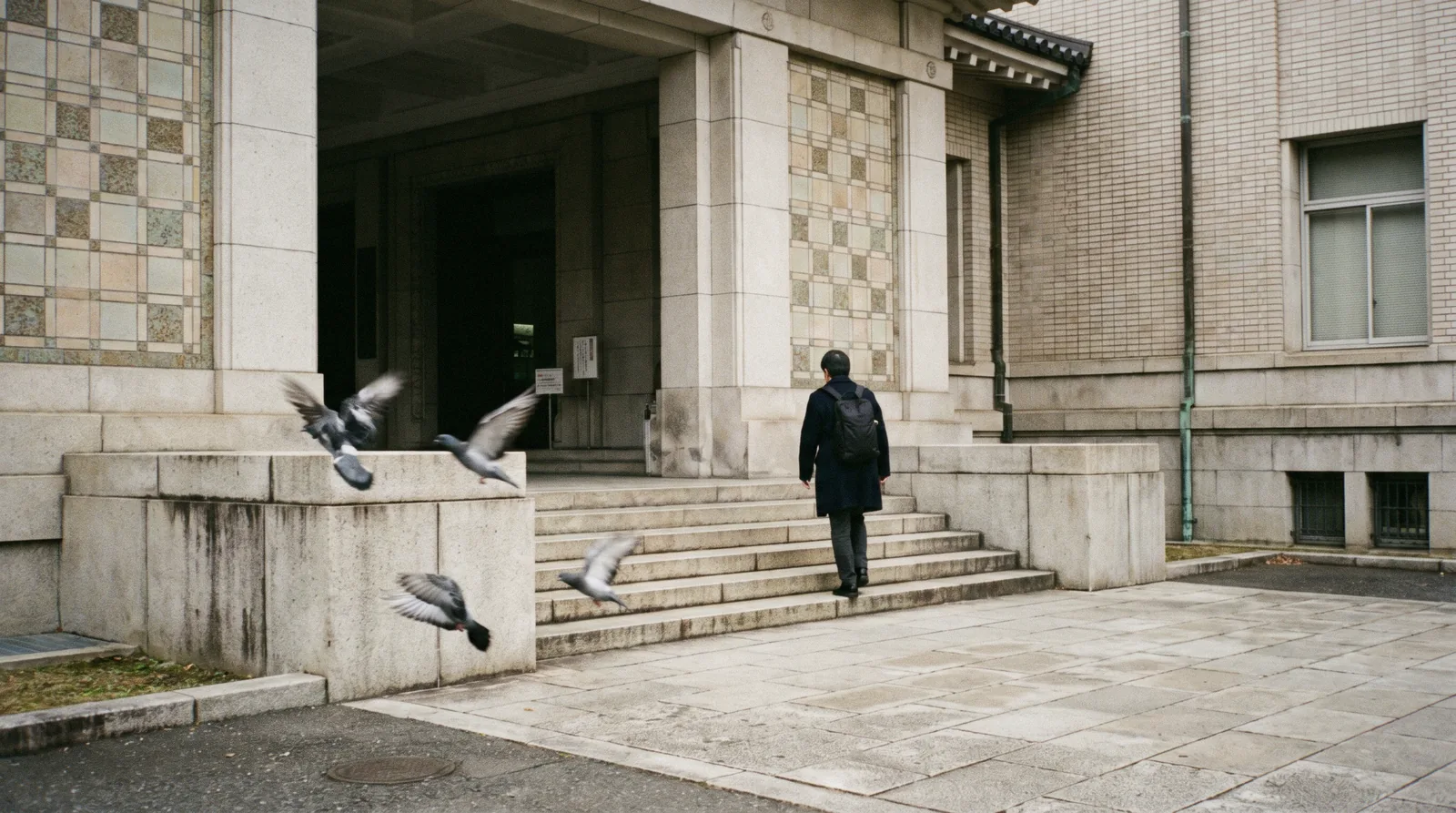
Tokyo National Museum
The Tokyo National Museum charges $6.48 (¥1,000) for an adult and that one ticket opens six buildings, which is the best value of any serious collection in the city. Founded in 1872, it is the country's oldest and largest museum of art, holding around 120,000 cultural properties including 89 designated National Treasures, on a walled compound at the north end of the park. This page, part of our guide to things to do in Tokyo, sets out what is in each building, what the regular ticket covers and what the special exhibitions charge on top, when the Monday closure does not apply, and how long the highlights actually take. The other collections are compared on the museums hub, and what stays open when this one shuts is on the Monday openings page.
Quick answer One ticket, six buildings, the Monday rule, how long
One ticket at $6.48 (¥1,000) opens every permanent gallery in the compound, and a special exhibition is a separate charge that also covers the permanent galleries the same day. The museum runs 09:30 to 17:00, stays open until 20:00 on Fridays and Saturdays, and closes on Mondays unless the Monday is a public holiday, when it opens and shuts the following day instead.
Key takeaways
- Start in the Honkan, second floor, and walk it in date order; if you only have 90 minutes that floor alone is the visit, and the private guide who shapes the route is the way to do it without reading every label
- The Kuroda Memorial Hall by the main gate is free to anyone, ticket or not, and it keeps the museum's opening days without its late nights
- Anyone under 18 or over 70 pays nothing on proof of age, which makes this the cheapest serious museum morning in the city; the rest of the day's costs are on the Tokyo costs page
Key facts
Opening hours
| Tuesday to Sunday | 09:30–17:00 |
|---|---|
| Fri, Sat | 09:30–20:00 |
| Kuroda Memorial Hall, daily when open | 09:30–17:00 |
Closed Mondays, except when the Monday is a public holiday, in which case the museum opens and closes the following day instead. Year-end closure 26 to 31 December 2026, with the 1 January 2027 hours not yet announced. Individual maintenance closures are published on the calendar; the Hyokeikan is shut unless a special exhibition or event is running inside it
Admission
- Adult
- $6.48 (¥1,000) for the collection exhibitions across all buildings
- Reduced
- $3.24 (¥500) university students. Special exhibitions are priced per exhibition and their ticket also admits you to the collections the same day
- Free
- High school, junior high and elementary students, anyone under 18 and anyone over 70, on proof of age; visitors with a disability certificate and one carer; and the Kuroda Memorial Hall and Research and Information Center for everyone. Collection entry is also free on 19 May, 21 September and 3 November 2026
Planning it
- Time needed
- Not stated by the museum. Our routing: 90 minutes for the Honkan highlights, three hours to add a second building
- Book ahead
- Optional — walk-up usually fine
- Address
- 13-9 Ueno Park, Taito-ku, Tokyo 110-8712. Visitor entrance is the Main Gate
Four ways in, priced from the museum's own admissions page and from GetYourGuide in Q3 2026. The museum sells no guided tour of itself, so the two platform rows are private guides who build a morning around it rather than a product the museum issues.
Are you here for the permanent collection, or for the special exhibition that is advertised on every station poster?
| Option | Price | Includes | Booking | Book |
|---|---|---|---|---|
| Collection exhibitions ticket, counter or onlineThe default, and the right answer for a first visit | $6.48 (¥1,000) adult, $3.24 (¥500) university student | Every permanent gallery: Honkan, Toyokan, Heiseikan archaeology and the Gallery of Horyuji Treasures | None needed; the online ticket is valid for two months | Official site |
| Special exhibition ticket, priced per exhibitionAnyone who came for the exhibition on the poster and does not want to pay twice | Not stated; set per exhibition | The special exhibition in the Heiseikan plus the collection exhibitions on the same day | Sold per exhibition, usually with dated entry | Official site |
| Private custom walking tour, 2 hoursVisitors who want the collection explained and the route cut down to what matters to them | From $58.12 | A local guide and a route you set; museum admission is not included | Free cancellation up to 24 hours before | Check Availability |
| Private walking tour with a local guide, 2 hoursAnyone wanting a guide to collect them from the hotel and shape the whole half day | From $58.44 | A private guide, hotel pickup, and entrance fees on the agreed route | Free cancellation up to 24 hours before | Check Availability |
The museum does not publish special-exhibition prices in one place, because each show sets its own, and it states only that a special-exhibition ticket also admits you to the collection exhibitions the same day. The saving that is published is at the other end: high school, junior high and elementary students, anyone under 18, anyone over 70 and a disability certificate holder with one carer all enter the collection galleries free, and the Kuroda Memorial Hall and the Research and Information Center are free to everyone. Counters take Visa, Mastercard, JCB, American Express, Diners, Discover, UnionPay and the Suica, iD and WAON e-money cards, so this is not one of the cash-only sights.
Guides who will build a morning around the museum
No operator on the platforms we compare sells a guided visit to this museum, so these are private guides who set a route with you. Museum admission is separate, at the counter or online. Ratings are the platform's own figures and prices are the ones listed.
 from $58.12
Tokyo: Private Custom Walking Tour with Local Guide
A private, fully customizable walking tour with a local guide who tailors the route to your interests, from landmarks to hidden neighborhoods, suited to families, couples or solo travelers wanting flexibility.
Check Availability from $58.44
Tokyo: Private Walking Tour with a Local Guide
A private walking tour shaped around your own picks, from famous landmarks to quiet temples and local neighborhoods, with temple entrance fees on the agreed route and hotel pickup included.
Check Availability from $38.96
Tokyo: Traditional Tea Ceremony with a Tea Master
A one-hour seated tea ceremony near Tokyo University where a tea master guides you through wakocha, Gyokuro sencha with seasonal wagashi, and whisking your own bowl of matcha.
Check AvailabilityPrices, ratings and details are the platform's own. Dollar figures are the listed prices. The platform bills in your account's currency.
What The Tokyo National Museum Actually Holds
The scale is the part visitors misjudge in both directions: it is far bigger than a morning, and far less on show than the catalogue suggests.
It is the oldest national museum in Japan and its largest art museum. In April 2023 it held about 120,000 cultural properties, among them 89 National Treasures, 319 Horyuji Treasures and 649 Important Cultural Properties. Since the government had by then designated 902 works of art and craft as National Treasures and 10,820 as Important Cultural Properties, this one museum holds roughly a tenth of the country's National Treasures in that category and about six per cent of the Important Cultural Properties.
A further 2,651 objects are deposited here by private owners and institutions, 54 of them National Treasures.
About 3,000 objects are on display at any one time, and each rotates out after four to eight weeks. That is the single most useful fact about visiting: there is no permanent hang. The scroll you came for may be in storage for conservation reasons, and the room you walked past last year holds something else now.
The museum publishes a weekly change-of-exhibits list, and checking it is the difference between seeing a particular National Treasure and hearing that it went back into the vault a fortnight ago.
Why it exists at all
The museum dates its origin to an exhibition of imperial and temple treasures held from 10 March to 30 April 1872 at the Yushima Seido, the old Confucian temple in Shoheizaka, mounted to prepare Japan's contribution to the 1873 Vienna World's Fair. It was open 9 am to 4 pm and admitted about 150,000 people. Two specimens of each significant regional product were gathered, one to go to Vienna and one to stay behind and start a collection.
The first director, Machida Hisanari, had visited the British Museum in 1865 and came home convinced Japan needed the same thing; the early plan was modelled on the South Kensington Museum in London. He is why the museum is here rather than in the centre of the city, having argued from 1873 for the use of the newly created park.
The Five Buildings, And What Is In Each
One ticket covers all of them and they are laid out around a single forecourt, so the only decision is the order. Contents below are from the museum's own building guides.
The compound is entered through the Main Gate, with the Honkan straight ahead across the fountain court, the Toyokan on the right, the Heiseikan behind on the left, the Hyokeikan on the left of the court and the Gallery of Horyuji Treasures at the far left corner. The Kuroda Memorial Hall stands outside the walls at the corner west of the gate.
| Building | What it holds | Opened | Worth knowing |
|---|---|---|---|
| Honkan, Japanese Gallery | Japanese art from prehistory to the 19th century: sculpture, swords, ceramics, lacquer, Ainu and Ryukyu material | 1938 | Start on the second floor; it runs in chronological order and holds the National Treasure Gallery |
| Toyokan, Asian Gallery | China, Korea, India, Southeast and Central Asia, plus Egypt and Gandharan Greco-Buddhist sculpture | 1968, reopened 2013 | Three storeys arranged as six levels of spiralling mezzanines |
| Heiseikan | The big special exhibitions upstairs; the Japanese Archaeology Gallery downstairs | 1999 | The archaeology gallery is included in the standard ticket and most visitors miss it |
| Gallery of Horyuji Treasures | 319 relics given to the imperial household by Horyuji temple in Nara in 1878 | 1999 | Yoshio Taniguchi's building; a digital archive on the mezzanine covers the whole collection |
| Hyokeikan | Nothing permanent; used for special exhibitions and events | 1909 | Built for the crown prince's 1900 wedding, an Important Cultural Property since 1978, and shut when nothing is on |
The Honkan is the visit, if you only make one
The present building replaced a brick predecessor damaged in the 1923 earthquake. Jin Watanabe's reinforced-concrete design in the Imperial Crown Style, a neoclassical base under a tiled Japanese roof, was built between 1932 and 1938 at a cost of seven million yen and opened on 10 November 1938 with the emperor present. It became an Important Cultural Property in 2001, and its centenary in 2038 is the date the museum's own long-term plan is built around.
Its second floor is called Highlights of Japanese Art and runs in order: ancient art from about 11,000 BC, the arrival of Buddhism in the sixth to eighth centuries, the National Treasure Gallery in room 12, Buddhist and court arts, Zen ink painting, the tea ceremony, and samurai arms and armour from the twelfth to nineteenth centuries in rooms 15 and 16. The first floor is arranged by genre instead, with separate rooms for sculpture, lacquerware, metalwork, swords, ceramics, historical records, Ainu and Ryukyu culture, and conservation. For anyone whose visit to these galleries sparks a wider curiosity about the city, a look at guided tours in Tokyo is a natural next step, and this Tokyo tour comparison is a good place to start.
The Toyokan is where the Silk Road turns up
Yoshiro Taniguchi's 1968 building, refurbished and reopened in January 2013, uses its basement and a spiral of mezzanines to spread three storeys over six levels. Chinese Buddhist sculpture is on the ground floor; Egypt, Western Asia, India and Gandhara on the second; the Chinese bronzes, ceramics and textiles on the third; Chinese stone reliefs and painting on the fourth. The Gandharan material is the surprise for most visitors: Greco-Buddhist carving from what is now Pakistan, including drinking scenes in Greek dress and one of the earliest images of the Buddha in human form.
The Heiseikan hides an archaeology gallery behind the blockbuster
Built to commemorate the wedding of the then crown prince on 9 June 1993 and opened in 1999, it carries the four big special exhibition galleries on its upper floor and the Japanese Archaeology Gallery on the ground floor, along with an auditorium, a lounge and the donors' gallery. The archaeology rooms are covered by the ordinary ticket and hold Jomon pottery among the oldest in the world, Palaeolithic polished stone tools, Kofun-period haniwa figures and iron armour. If the special exhibition has a queue and you do not have its ticket, this is the room to walk into instead.
The Horyuji gallery is the quiet one
In 1878 the Horyuji temple in Nara gave 319 objects to the imperial household, which placed them here for safekeeping. They are shown in a two-storey Taniguchi building that opened in 1999: a great kanjo ceremonial banner and ranks of small gilt-bronze Buddhist figures on the ground floor, gigaku masks, and wooden, lacquer and metal work with painting, calligraphy and textiles upstairs. Lighting is kept low and the crowds do not come here.
The restaurant on its ground floor and the one in the Toyokan have both been closed for renovation, reopening in stages through summer and autumn 2026.
The Museum In Nine Dates
The compound reads as a set of unrelated buildings until the dates are laid beside them. Every one of these is argued somewhere on this page.
-
10 March to 30 April 1872
The exhibition the museum counts as its birth
Imperial and temple treasures are shown at the Yushima Seido to prepare Japan's entry to the Vienna World's Fair. About 150,000 people come.
-
1873
The park is created
Ueno Park is founded on land left after most of Kaneiji temple was destroyed in the Boshin War. The museum's first director argues at once for putting a museum on it.
-
1881
The first Honkan opens
Josiah Conder's brick gallery is finished in time for the Second National Industrial Exhibition, absorbing the smaller 1877 building as a wing.
-
1888 to 1900
It becomes the Imperial Museum
Ownership passes to the imperial household in 1888, and the name changes again in 1900 to the Tokyo Imperial Household Museum.
-
1909
The Hyokeikan is opened
Built to mark the 1900 wedding of the future Emperor Taisho, and designated an Important Cultural Property in 1978 as an example of late Meiji Western architecture.
-
10 November 1938
The present Honkan opens
Jin Watanabe's Imperial Crown Style building, built from 1932 at a cost of seven million yen, opens with the emperor attending. It becomes an Important Cultural Property in 2001.
-
1947 to 2001
The name settles
Renamed the National Museum in 1947 after the postwar reforms, and the Tokyo National Museum in 2001.
-
1968 and 1999
The Toyokan, then two galleries at once
Yoshiro Taniguchi's Asian gallery opens in 1968; the Heiseikan and Yoshio Taniguchi's Gallery of Horyuji Treasures both open in 1999. The Toyokan reopens after refurbishment in January 2013.
-
18 October to 11 December 2022
All 89 National Treasures at once
For its 150th anniversary the museum shows every one of its National Treasures in a single exhibition, the first time in its history.
Dates from the museum's own building pages and director's message and from the English Wikipedia article on the Tokyo National Museum, read for this guide.
Hours, The Monday Closure And The Days It Does Not Apply
The weekly rule is simple and the exceptions are not, so the museum publishes both on its admissions page. These are its own figures.
Standard hours are 09:30 to 17:00, with last admission 30 minutes before closing. Fridays and Saturdays run to 20:00, and so do Sundays when the following Monday is a public holiday, along with 4 and 5 May. Those late evenings do not apply to the Kuroda Memorial Hall, which always closes at 17:00.
The museum shuts on Mondays, except when the Monday is a public holiday: then it opens on the Monday and closes on the Tuesday instead, which is the trap for anyone who has learned the rule but not the exception.
| Day or date | What happens | Why it matters |
|---|---|---|
| Tuesday to Thursday, Sunday | 09:30 to 17:00, last entry 16:30 | The default |
| Friday and Saturday | 09:30 to 20:00 | Three extra hours, and the emptiest ones |
| Monday | Closed | Unless it is a public holiday |
| A public-holiday Monday | Open; the Tuesday closes instead | A Tuesday plan can fail in a holiday week |
| 26 to 31 December 2026 | Closed | The museum stays open to 25 December, but from 22 to 25 December only the Horyuji gallery and the Kuroda Memorial Hall are open |
The dated exceptions for the rest of 2026
The museum was closed on 7 April for maintenance of the exhibition environment, and it closes again on 15 December for a facility inspection. It opens on the Mondays of 27 April, 10 August and 21 September, and again on 29 March 2027. Hours for 1 January 2027 have not been announced.
Several rooms come and go: Honkan room 4 is closed from 26 October 2026 until 26 April 2027, rooms 2 and 3 from 14 December on the same schedule, and rooms 17 to 20 together with the Toyokan from 30 November to 31 December 2026. The Hyokeikan is closed unless something is on inside it.
Free days, and what they cover
Admission to the collection exhibitions is free on 19 May, 21 September and 3 November 2026. Those are International Museum Day, Respect for the Aged Day and Culture Day; the free entry covers the permanent galleries and not the special exhibition. If you are travelling on one of them the calculation is easy, and if you are not, the ticket is $6.48 (¥1,000) anyway.
Security, and what you cannot bring
Since the start of September the museum has screened visitors with metal detectors and inspected bags at the Main Gate, and since 1 August suitcases have not been allowed into the museum at all. Neither rule is unusual in the city now, but a traveller heading here between hotels needs the station lockers first. The museum's own advice on the queue is worth repeating: waits at the main gate ticket counters can pass 30 minutes when it is busy, and buying online avoids that line.
The Kuroda Memorial Hall: Free, And Outside The Gate
This is the part of the museum most visitors never learn about, because it does not stand inside the walls and needs no ticket.
Kuroda Seiki, who lived from 1866 to 1924, was the painter who brought French academic oil painting into Japanese art teaching. He left a bequest for the promotion of art, and this hall was built with it in 1928; two years later the Institute of Art Research for the Imperial Academy of Fine Arts was set up in the same building. The collection is now 126 oil paintings and 170 drawings, plus sketchbooks and letters, shown on the second floor in the Kuroda Memorial Room and the Collection Highlights Gallery, with a reading room and an audiovisual room alongside.
How to use it
Entry is free to everyone, with or without a museum ticket, and the museum states plainly that visitors who want only the Kuroda Memorial Hall or the Research and Information Center are admitted at no charge. It stands at the corner westward from the Main Gate, so you pass it on the way in. Hours are 09:30 to 17:00 with last admission at 16:30, on the same opening days as the museum but without the Friday and Saturday extension.
Fifteen minutes is enough, and there is a cafe on the ground floor. In late December, when the main buildings shut, this hall and the Horyuji gallery are the last two things open.
The Garden And The Five Teahouses
There is a large garden behind the Honkan, and it is the one part of the compound whose availability you cannot plan around in advance.
The garden lies on the north side of the Honkan and holds five historic teahouses, each moved here from somewhere else. Shunsoro began as a rest hut built by the Edo-period engineer Kawamura Zuigen, went to Osaka, then to the Sankeien garden in Yokohama, then to a villa in Saitama, and arrived here in 1959. Tengoan was built in Fushimi by the tea master Kobori Enshu, who died in 1647, and was donated in 1963.
Rokusoan came from a Nara temple in 1875 and sank with the ship carrying it near the Izu peninsula; the timber was recovered and it was rebuilt in 1877, evacuated during the war and reassembled here in September 1947. Okyokan was built in 1742 as a study at a temple in what is now Aichi, and carries ink paintings by Maruyama Okyo, reproduced digitally in the present installation. Kujokan came from the Kujo family's residence inside the Kyoto imperial palace compound and was donated in 1934.
What the museum publishes, and what it does not
The museum's own garden and teahouses page states that the garden may be closed for bad weather or maintenance, and that the teahouses can be booked for tea ceremonies and haiku gatherings. It does not print an opening season for the garden anywhere on its English site, and its schedule marks garden days only as limited openings. So treat the garden as a bonus you ask about at the information desk on the day rather than a reason to choose a date, and treat the teahouses as bookable rooms rather than exhibits: you look at them from the path unless you have an event.
What stands in it besides the teahouses
A bronze five-storied pagoda 570 centimetres tall, dedicated to Horyuji temple by the fifth shogun Tokugawa Tsunayoshi in 1688. A memorial to the Second National Industrial Exhibition, which drew 820,000 visitors over 122 days in 1882 against the first exhibition's 450,000 over 102 days in 1877. A stele for Machida Hisanari, the founding director.
A porcelain lantern by the Kyoto potter Kiyomizu Rokubei IV, donated in 1938. The gravestones of the Arima clan, left in place when the old Kaneiji graveyard was cleared between 1882 and 1886. And a stone base whose iron lantern snapped off in the typhoon of January 1982 and was never put back.
How Much Time To Give The Tokyo National Museum
The museum publishes no suggested visit length, and the honest answer depends on whether you intend to read the labels. The three routings below are ours, timed from the Main Gate.
There is no route that sees everything, because about 3,000 objects are out at once across six buildings. Choose the depth first and the buildings follow.
| Routing | Door to door | What it covers | What it skips |
|---|---|---|---|
| The highlights, honestly | 90 minutes | Honkan second floor in date order, then the National Treasure Gallery and the samurai armour rooms | Everything else; you will not have seen Asia or the archaeology |
| The comfortable half day | 3 hours | The whole Honkan plus one of the Toyokan or the Horyuji gallery, with a sit-down in between | The special exhibition, which needs an hour of its own |
| The full compound | 5 hours or two visits | All five buildings plus the Kuroda hall and the garden if it is open | Nothing, but concentration fails long before the collection does |
The version we would book
Arrive for the 09:30 opening on a Friday, walk the Honkan second floor, break for lunch outside the walls, come back for the Toyokan in the afternoon and leave when it stops going in. Friday and Saturday are the only days that give you the option of returning after 17:00, and the late hours are markedly quieter than the middle of the day.
Five Things Most Visitors Do Not Know
Each line ends in the source it came from, because all five contradict something commonly said about this museum.
- There is no permanent hang. About 3,000 objects are shown at a time and each rotates after four to eight weeks, so the National Treasure you travelled for may be in storage; the museum publishes a weekly change-of-exhibits list (English Wikipedia, Tokyo National Museum, citing the museum's own figures)
- A special-exhibition ticket also admits you to the permanent collections on the same day, so buying both is paying twice (Tokyo National Museum, Getting Here, Admission and Hours)
- Anyone over 70 or under 18 enters the collection galleries free on proof of age, as does a disability certificate holder with one carer (Tokyo National Museum, Admissions and Tickets)
- The Hyokeikan, the most photographed building in the courtyard, is closed unless a special exhibition or event is running inside it, which is most of the year (Tokyo National Museum, Hyokeikan building page)
- In the last week before the year-end closure only two parts of the compound stay open, the Gallery of Horyuji Treasures and the Kuroda Memorial Hall, from 22 to 25 December 2026 (Tokyo National Museum, closure notices)
How To Get There, And Which Gate
Walking times below are the museum's own, printed on its access page, and there is only one visitor entrance.
The museum sits at the north end of the park, ten minutes on foot from JR Ueno station and the same from Uguisudani, fifteen from Ueno on the Ginza and Hibiya subway lines, fifteen from Nezu on the Chiyoda line and fifteen from Keisei Ueno if you have come in from Narita. Every visitor enters through the Main Gate; the other gates in the wall are service entrances. There is no parking at the museum itself and the nearby car parks are listed on its access page, but nobody sensible drives here.
| From | Line | On foot | Note |
|---|---|---|---|
| JR Ueno, Park Exit | JR lines | About 10 minutes | Straight up through the park past the fountain |
| JR Uguisudani | JR Yamanote, Keihin-Tohoku | About 10 minutes | Quieter approach from the north |
| Ueno | Tokyo Metro Ginza and Hibiya | About 15 minutes | Longer than it looks on the map |
| Nezu | Tokyo Metro Chiyoda | About 15 minutes | Pairs with a walk through Yanaka |
| Keisei Ueno | Keisei line | About 15 minutes | The arrival from Narita, covered on the airport page |
Do the transfer maths before you commit
Coming from the west of the city this is a long ride: about 25 minutes on the Ginza line from Shibuya, and a change from most other lines. It is worth pairing with something else at this end of town rather than crossing back and forth, and the getting around page sets out whether a day pass earns its price on a plan built like that.
At The Tokyo National Museum: What To Do, And What Not To
Every line here is a decision argued above, compressed into what you can act on that morning.
Do
- Buy the collection ticket online if you are arriving between 10:00 and 13:00, when the museum says the counter queue can pass 30 minutes
- Check the weekly change-of-exhibits list before you travel for one particular object
- Walk the Honkan second floor first and in order, since it is the only floor arranged as a story
- Look in at the free Kuroda Memorial Hall on your way through the gate rather than saving it for the end
- Book a private guide if you want the collection narrowed to what you actually care about
Don't
- Don't buy both a special-exhibition ticket and a collection ticket; the first covers the second on the same day
- Don't arrive with a suitcase. They have not been allowed in since August, and bags are screened at the Main Gate
- Don't assume Tuesday is open in a holiday week: an open holiday Monday moves the closure to the Tuesday
- Don't plan around the Hyokeikan or the garden, since both open only when the museum says so
- Don't leave the Japanese Archaeology Gallery out because it sits under the special exhibition; your ordinary ticket covers it
Tokyo National Museum map: the gate, the buildings and the stations
The Main Gate, the free hall outside it, the two nearest station exits and the two neighbouring collections a ticket here does not cover.
Museum coordinates are its own published position; the station pins are placed from the walking times on the museum's access page.
Next stop from the Tokyo National Museum
Walk minutes are ours, measured from the Main Gate. All three are separate tickets: nothing here is a combined pass.
National Museum of Nature and Science
The next building south, and the obvious second stop with children. It is a different institution with its own admission, and the museums hub sets out which of these neighbours is worth the second ticket.
3 min walkNational Museum of Western Art
Le Corbusier's only building in Japan, a UNESCO World Heritage listing in its own right, holding the Matsukata collection of French painting and sculpture. Also Monday-closed, also its own ticket.
5 min walkAsakusa and Senso-ji
Two stops on the Ginza line and you are at the city's oldest temple, which keeps no closing day at all. It is the standard afternoon after a museum morning, and Senso-ji has the timings.
About 10 minutes by train from UenoTokyo National Museum questions
Is the Tokyo National Museum worth going to?
If you want one building that explains Japanese art from Jomon pottery to nineteenth-century armour in date order, this is it, and $6.48 (¥1,000) is a low price for the best of that in the country. It is worth less if you are expecting a fixed set of famous objects, because about 3,000 items are shown at a time and they rotate every four to eight weeks. Give it the Honkan and 90 minutes on a first visit. A private guide is the way to make a short visit count.
How much time do you need at the Tokyo National Museum?
Ninety minutes covers the Honkan's second floor, which is the highlights route and the only floor arranged chronologically. Three hours gets the whole Honkan plus one more building. Five is the full compound, and by then most people have stopped reading labels. The museum publishes no suggested length itself. If you are fitting it into a wider day, the three-day itinerary shows where a museum morning sits without wrecking the afternoon.
Do I need to reserve Tokyo National Museum tickets?
No. There is no timed entry for the collection exhibitions and no reservation is required. Buying online is still worth it for one practical reason: the museum warns that waits at the main gate counters can exceed 30 minutes at busy times, and an online ticket is valid at any hour for two months from purchase. Special exhibitions are the exception and usually sell dated tickets of their own.
What are the Tokyo National Museum opening hours?
09:30 to 17:00, with last admission at 16:30, and until 20:00 on Fridays and Saturdays and on Sundays when the following Monday is a public holiday. The Kuroda Memorial Hall keeps 09:30 to 17:00 every day it opens, with no late evening. The museum closes on Mondays unless that Monday is a public holiday, and the year-end closure runs from 26 to 31 December 2026. What else is open on the closed days is on the Monday openings page.
What is the difference between the regular ticket and a special exhibition ticket?
The regular ticket, $6.48 (¥1,000) for an adult and $3.24 (¥500) for a university student, covers the collection exhibitions in every building. A special exhibition is priced on its own terms per show and is held in the Heiseikan, and its ticket also admits you to the collection exhibitions the same day. So the special-exhibition ticket is a superset, and buying both is paying twice for the permanent galleries.
Which building should I see first?
The Honkan, and specifically its second floor, which runs from about 11,000 BC through the arrival of Buddhism, the National Treasure Gallery in room 12, court and Zen painting, the tea ceremony and the samurai rooms. The first floor covers the same material by genre instead, which is the better second lap. The Toyokan is the one to add if Asia beyond Japan interests you, and the Heiseikan's ground-floor archaeology gallery is the one most visitors walk past.
Is the Tokyo National Museum free for children?
Yes. High school, junior high and elementary school students and anyone under 18 enter the collection exhibitions free on proof of age, as does anyone over 70, and a disability certificate admits its holder and one carer at no charge. The Kuroda Memorial Hall is free to everyone. Special exhibitions set their own rules. More on how a family day here adds up is on the Tokyo with kids page.
Where The Museum Fits In A Tokyo Day
It is a morning, and it belongs on a day that stays in the north-east of the city rather than crossing back to the west.
Open at 09:30, last entry 16:30, and no reason to hurry: the natural shape is museum first, lunch outside the walls, and the temple district after. Two stops on the Ginza line puts you at Asakusa, which has no closing day and works late; the other direction is the food streets under the tracks between the station and the park. On a Friday or Saturday the museum runs to 20:00, which inverts the day, so you can spend the morning elsewhere and be here in the empty hours.
What to do when it is closed
Mondays are the problem, because the national and metropolitan museums here close together and the whole park loses most of its indoor options at once. The temples and shrines do not close, the Imperial Palace plaza needs nothing to be open, and the Monday openings page lists the collections that keep a different rhythm. The museums hub marks the closed day next to every entry for the same reason.
The Tokyo National Museum On Film: The Galleries, The Swords And The Route
Three walk-throughs that show the scale of the compound and what the galleries actually look like, which is hard to judge from a catalogue.
Discovering the Tokyo National Museum
The museum's own introduction to its buildings and collections, useful for deciding which of the five to give your time to.
Video: TokyoNationalMuseumTokyo National Museum Tour: Full Virtual Walking Tour in 4K
A full walk through the galleries at ordinary pace, which shows how much ground the standard ticket covers.
Video: Holiday From Home - 4K Walking ToursTokyo National Museum: Japanese Swords
A close look at the sword room on the Honkan's first floor, the gallery visitors most often say they wish they had found sooner.
Video: Rashawn EdwardsVideos load from YouTube only when you press play.
Prices, hours and terms are set by the venue or operator and confirmed at checkout.
We may earn a commission if you book through one of our links, at no extra cost to you. Full affiliate disclosure