 Visit Tokyo Guide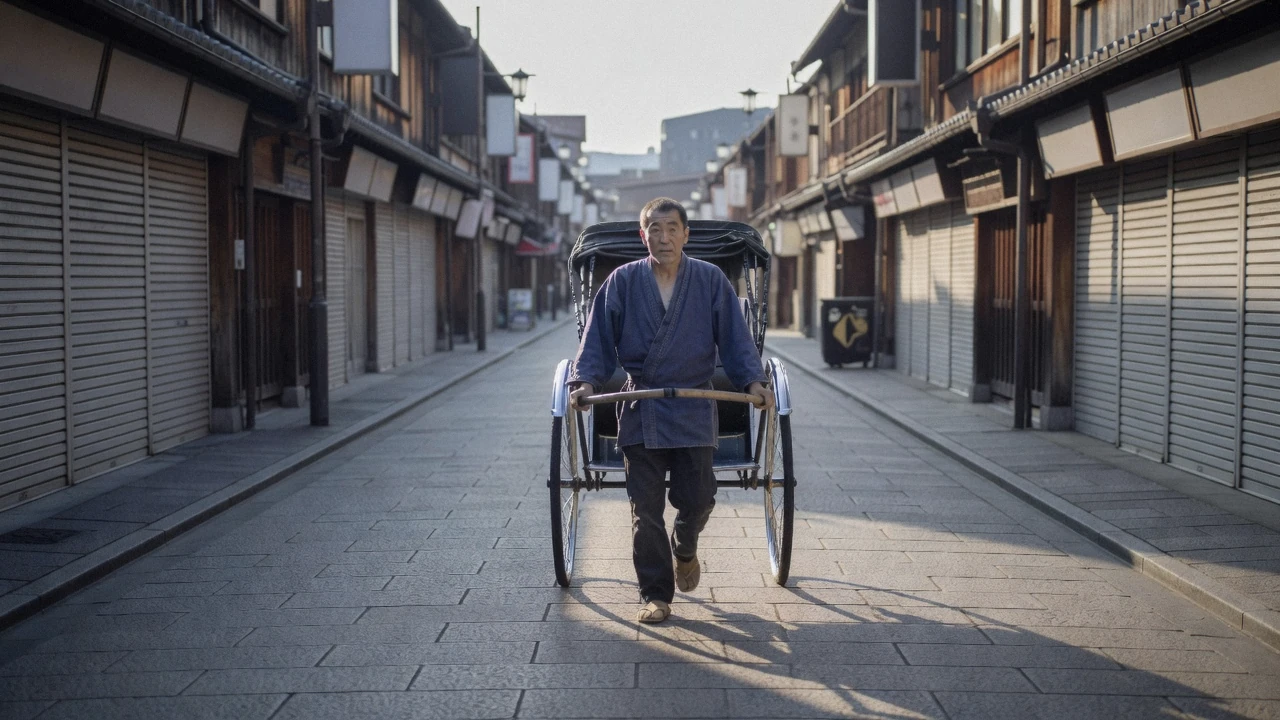
Asakusa, Tokyo
Asakusa is the low-lying old quarter on the west bank of the Sumida River, in Taito ward, and it is the one part of central Tokyo where the street pattern, the trades and a good number of the buildings survived into the present recognisably shaped by the Edo period. Most people arrive for the temple and leave within ninety minutes, having seen one street. This page covers the rest of it: the kitchen-tool street six hundred metres west, the drinking alley behind the amusement park, the riverbank and the bridge with the tower view, where to eat, which of the four rail lines puts you closest to what, and what the district turns into after the last coach pulls out. The temple itself, its gates and its approach have their own page at Senso-ji, and the etiquette that applies inside it is on the temples and shrines hub.
Quick answer What is here, what it costs, which exit, how long
Asakusa is a district, not a single sight, and it is free to walk. The temple takes forty-five minutes; the district takes half a day, and the three things that make it worth the extra hours are Kappabashi's kitchen-tool street, the drinking alleys behind the old theatre block, and the riverbank at Azumabashi.
Key takeaways
- Four rail lines reach it and they are not one station: the Ginza, Toei Asakusa and Tobu lines share Asakusa Station, while the Tsukuba Express has its own Asakusa Station a few minutes' walk north with no underground connection. Which exit to use is set out in the arrival section, and the passes that cover them are on getting around Tokyo.
- Kappabashi Dougu Street runs 800 metres with over 170 shops, and it is the best souvenir street in the city if you cook. What is actually sold there, and what customs will and will not let you carry.
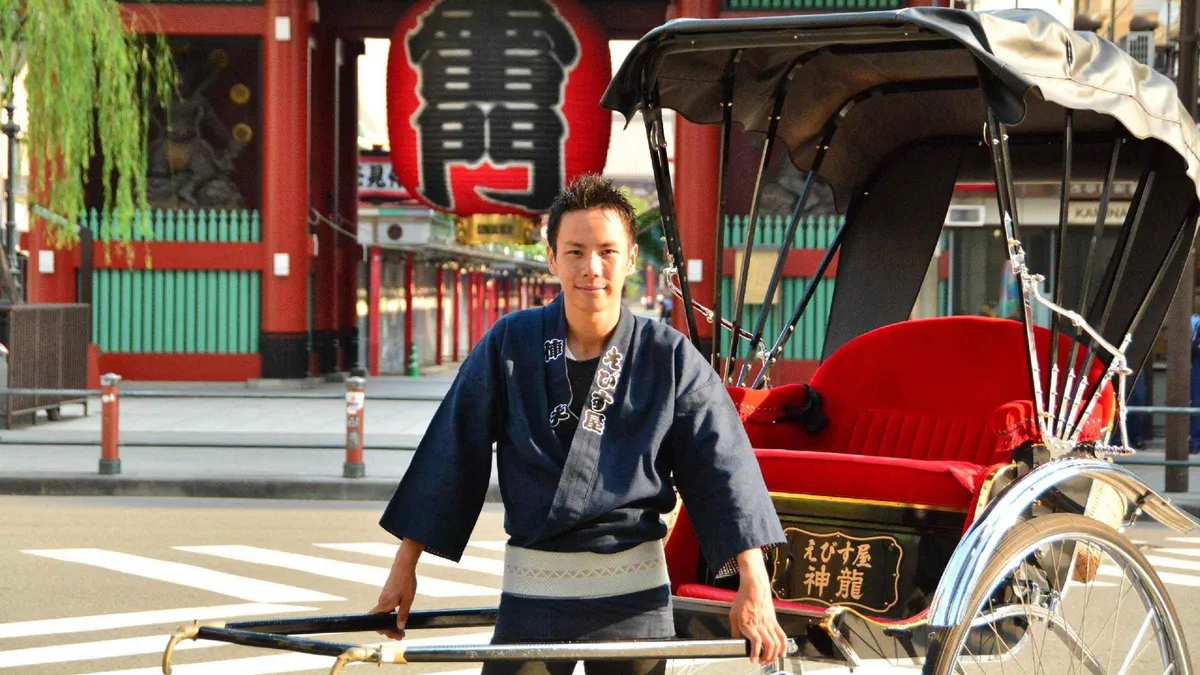
- The one thing worth paying for in the district is time in a seat: a 30-minute rickshaw ride at $35.71 covers the back lanes and the riverside park that a first-time walker never finds, and a kimono tea ceremony at $54.54 is the indoor alternative on a wet afternoon.
- Staying here is cheaper than staying in the centre and further from it. The trade-off, with a rate band, is under where a room here costs; the temple itself is free and never closes its gates.
Everything in Asakusa worth stopping for: hours, price, closed day
The nine places in the district that keep published hours, read in Q3 2026 from each operator's own site and from the Tokyo Convention and Visitors Bureau. Dollar figures convert at ¥1,000 = $6.48.
| Place | Hours | Price | Closed | Why stop |
|---|---|---|---|---|
| Senso-ji Main Hall | 06:00 to 17:00 April to September; 06:30 to 17:00 October to March | Free | No closed day published | The reason the district exists, and the only thing in it that is genuinely crowded |
| Asakusa-jinja (Sanja-sama) | Shrine office 09:00 to 16:00 weekdays, 09:00 to 16:30 weekends and holidays | Free; a calligraphed goshuin seal is ¥500, about $3.24 | None published | Fifty metres east of the Main Hall, survived the 1945 raids, and an Important Cultural Property since 1951 |
| Kappabashi Dougu Street | Not stated; the association publishes no street-wide hours and each shop sets its own | Free to walk | Varies by shop | 800 metres, over 170 shops, Japan's largest kitchenware street |
| Hanayashiki | 10:00 to 18:00, changing by season and weather; last admission 30 minutes before closing | Not stated on the park's own English pages; a web ticket is sold on its site | Not stated; check the park's own calendar | Japan's oldest amusement park, by its own claim, wedged into a block behind the temple |
| Sumida Park and the Azumabashi riverbank | Open ground, any hour | Free | Never | The tower view, the cherry trees and the boat pier, all within five minutes of the gate |
| Rokku Broadway | Street; individual theatres and restaurants keep their own hours | Free to walk | Varies | 300 metres long and 12 metres wide, running between Asakusa Sushiya Street and Asakusa Hisago Street |
| Tokyo Cruise waterbus, Asakusa Pier | Not stated on the pages the operator rendered to us | Not stated; fares are published per route at the pier | Runs are suspended in bad weather | Boats to Hinode Pier, Odaiba Seaside Park and Toyosu; Hamarikyu is disembark-only |
| Asakusa Chikagai underground arcade | Individual shops only; no arcade-wide hours published | Free to walk | Varies | One of Japan's oldest underground shopping streets, about twenty shops, essentially unrenovated |
| Denboin garden | Closed to the public except during occasional special openings | Not applicable | Effectively always | The temple abbot's garden; visiting by appointment is no longer possible |
Sources read: senso-ji.jp, asakusajinja.jp, kappabashi.or.jp, hanayashiki.net, suijobus.co.jp and gotokyo.org. Four of the nine rows carry a 'not stated' cell, and every one of them is a case where the operator's own site publishes no figure. We would rather print the gap than a number we cannot stand behind.
What is worth booking in Asakusa, and what is not
Almost everything in this district is free and walk-up, so the cards below are the exceptions: a seat, a workshop, a costume and a boat. Prices and ratings as listed by the operators. The guided walks of the temple approach itself sit on the Senso-ji page, where they belong.
 from $35.71
Tokyo: Asakusa Sightseeing Tour by Rickshaw
A guided rickshaw ride through Asakusa's shrines, Sumida Park and old shopping streets, with a puller narrating the district's history, suited to travelers who prefer sitting to walking.
Check Availability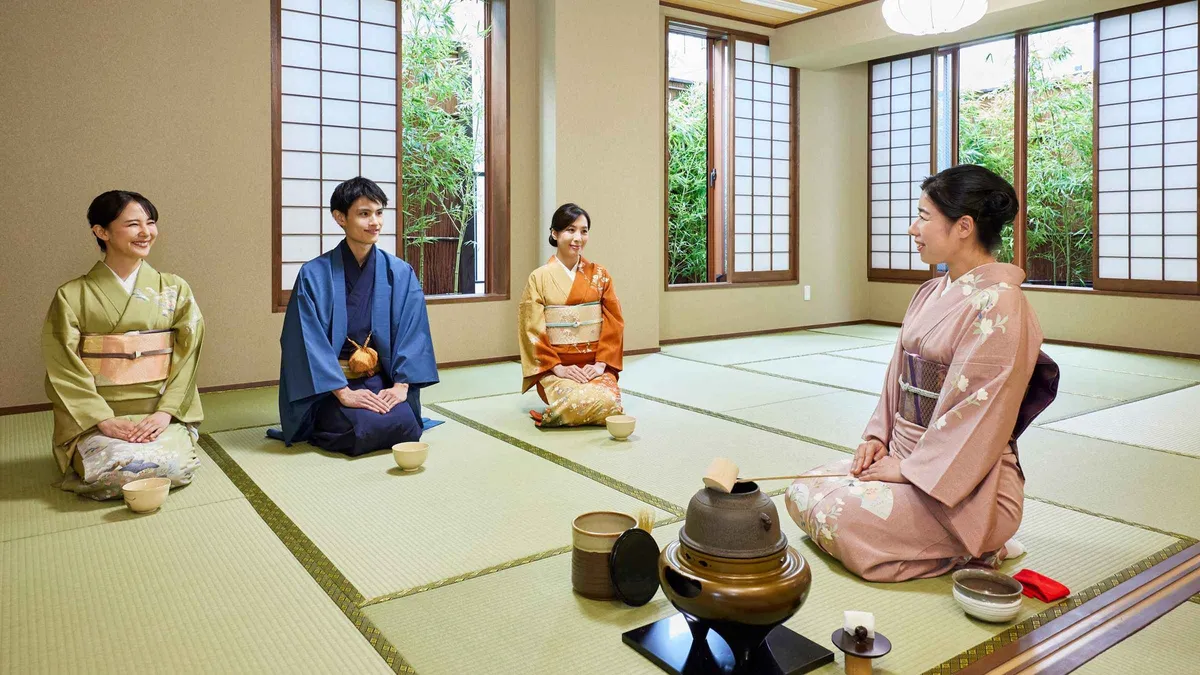 from $54.54
Asakusa: Kimono Tea Ceremony with Matcha and Sweet
A 90-minute Asakusa experience: choose and wear a seasonal kimono with hair styling, then a tea master walks you through ceremony etiquette before you whisk your own matcha with seasonal wagashi.
Check Availability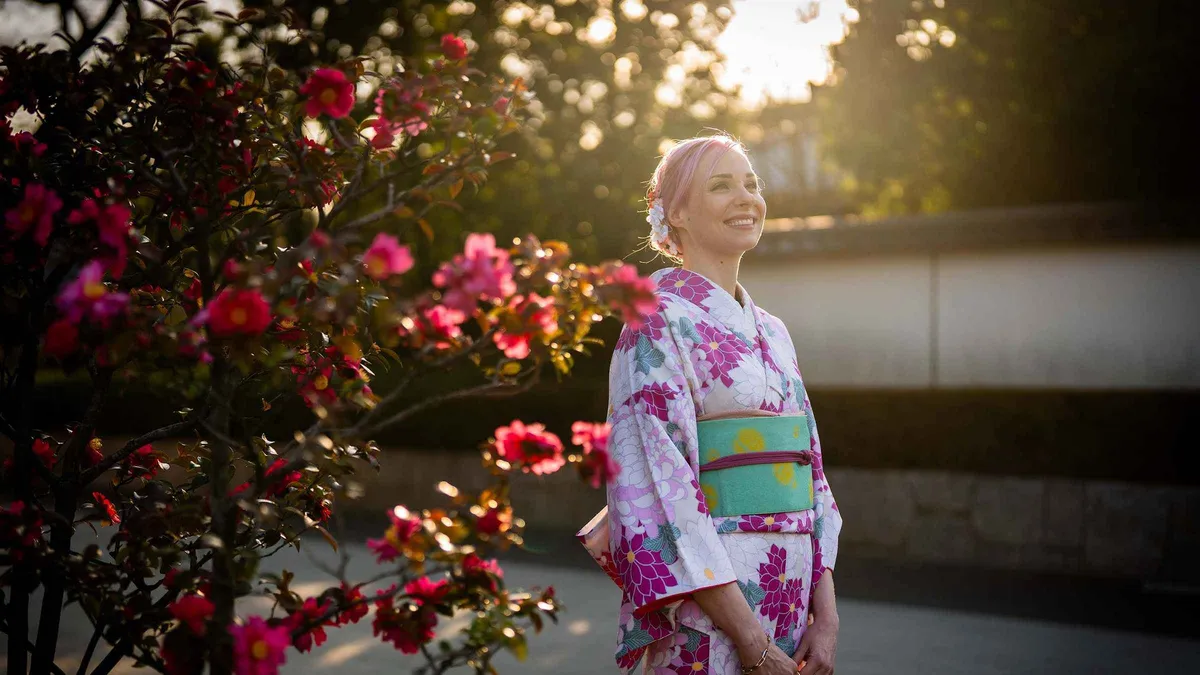 from $31.17
Tokyo Asakusa: Miu Kimono Rental and Optional Photoshoot
A full-day kimono or yukata rental in Asakusa with dressing, accessories and optional hair styling, so you can explore Senso-ji and the surrounding streets in traditional dress until the 16:50 return.
Check Availability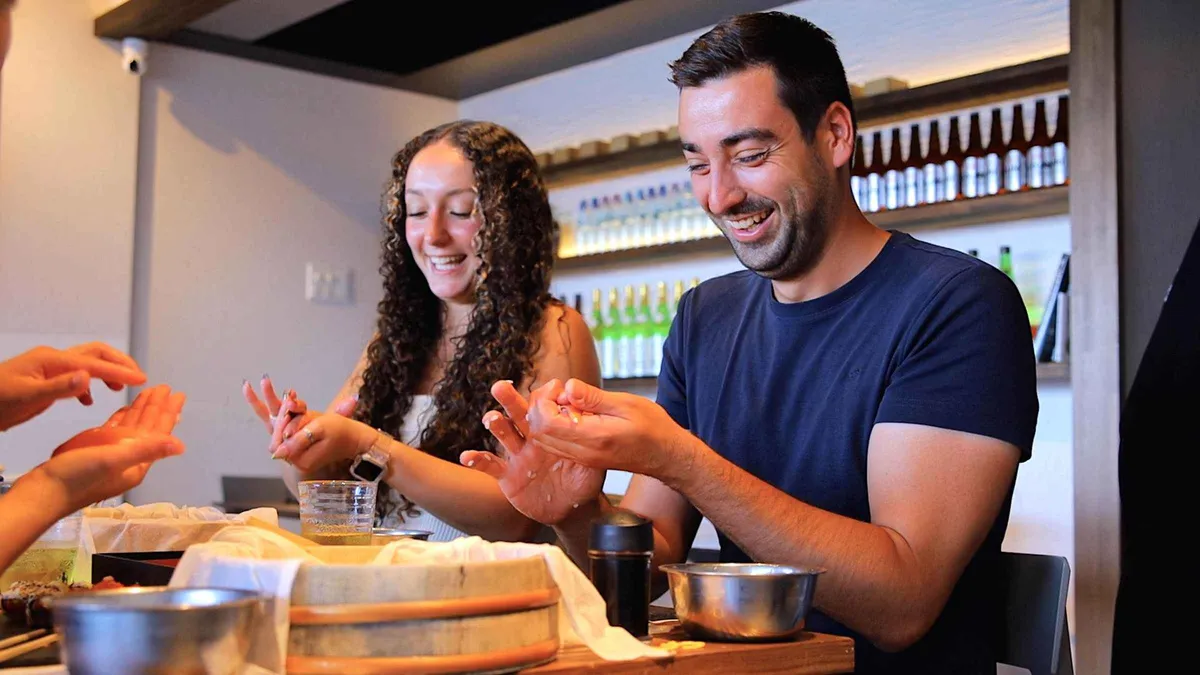 from $59.09
Tokyo: Roll and Authentic Sushi Making Class in Asakusa
A 100-minute hands-on class in Asakusa near Tokyo Skytree, learning sushi history before making both maki rolls and nigiri with an English-speaking instructor, then eating what you make.
Check Availability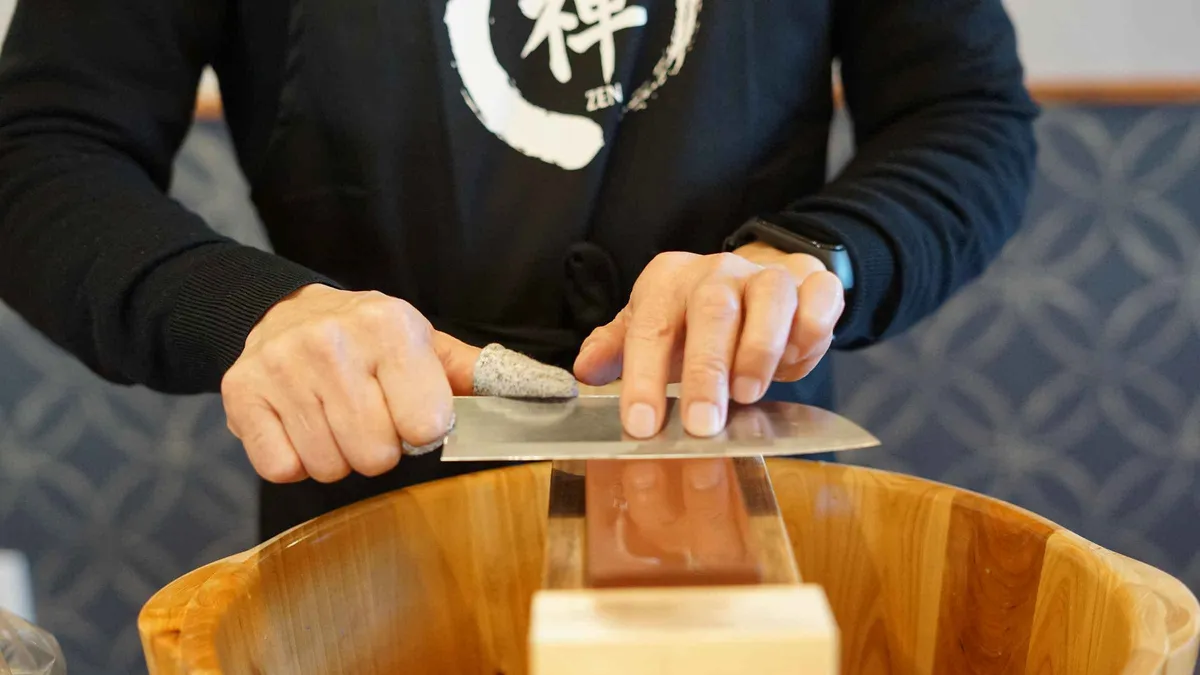 from $93.50
Japanese Knife Craft & Sharpening Workshop in Asakusa
A 40-minute hands-on workshop in Asakusa where an instructor teaches traditional whetstone sharpening and you shape your own knife to take home. Best for craft-curious travellers, not a quick photo stop.
Check Availability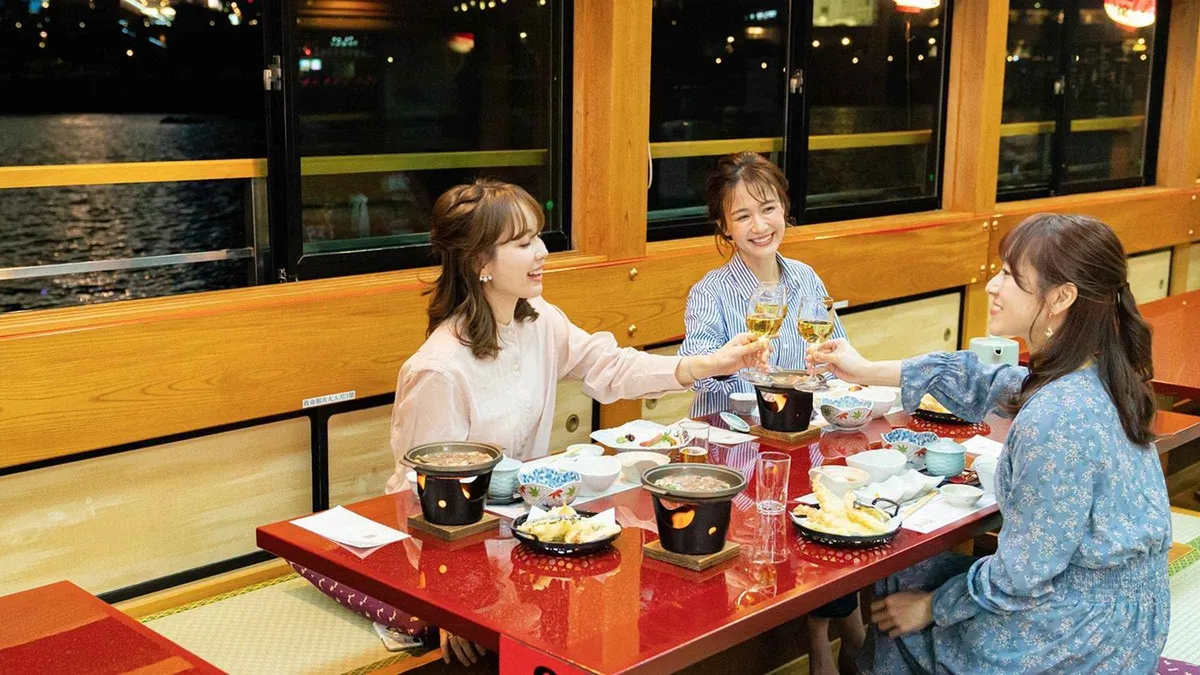 from $103.89
Sumida River: Japanese Traditional Yakatabune Dinner Cruise
A traditional Yakatabune dinner cruise on the Sumida River, with a full dinner served on board while you take in views of Tokyo Skytree and Tokyo Bay from the water.
Check AvailabilityPrices, ratings and details are the platform's own. Dollar figures are the listed prices. The platform bills in your account's currency.
What Asakusa Is, And Why It Looks Different From The Rest Of Tokyo
The district is a survivor twice over: of the shogunate's zoning, which put the pleasure trades here, and of the firebombing, which took almost everything else of the same age elsewhere in the city.
Asakusa sits on the north-eastern fringe of central Tokyo, at the eastern end of the Ginza subway line, roughly a mile east of the Ueno interchange. It is the heart of what Tokyo calls shitamachi, the low city, a term that is half geography and half class: the ground here is low, on the banks of the Sumida, and it was where the merchants and artisans lived while the samurai held the heights inland. The word still does work.
A visitor who has spent two days in Shinjuku and Shibuya notices immediately that the buildings here are shorter, the streets narrower, and the shopfronts older. Where the district sits among the top attractions in Tokyo is set out in the rest of our guide.
The reason there is anything old to look at is an accident of trade. The neighbouring district of Kuramae held the shogunate's rice storehouses, and the keepers of those storehouses, the fudasashi, began by charging a small fee to store rice and ended by trading it for money at a margin. That money went somewhere, and where it went was the theatres and teahouses of Asakusa.
By the middle of the Edo period the ground behind the temple was a permanent entertainment quarter; in the 1840s the city's three licensed kabuki theatres were moved into it; and for most of the twentieth century the Rokku or Sixth District was the theatre capital of Japan, home to the Denkikan, one of the country's first cinemas.
What 10 March 1945 did, and what it did not
The firebombing raid of 10 March 1945 destroyed most of the district, including the temple's Main Hall and its pagoda. What was rebuilt afterwards was rebuilt fast and cheap, in the 1950s and 1960s, and that is the second accident: in a city where almost nothing standing is more than fifty years old, Asakusa has an unusually dense stock of post-war low-rise, along with the small ryokan and apartment blocks that go with it. The atmosphere people come here for is not Edo. It is Showa, one era later, and it is genuine.
The district never got its pre-war entertainment crown back. Shinjuku took it, and Rokku today runs to rakugo storytelling halls, small cinemas and pachinko rather than the theatre district it was. This is worth knowing before you arrive, because a good deal of writing about Asakusa quietly implies otherwise.
The Streets, In The Order A Half-Day Walk Reaches Them
Six named streets do almost all of the work in this district, and only one of them is on the standard route. Walk them in this order and the crowd thins with every turning.
Start at the Thunder Gate, walk the approach once for the noise of it, and then get off it. The 250 metres between the two gates is the most photographed stretch of pavement in eastern Tokyo and it is covered in full on the temple page; everything below is what happens when you leave it.
Shin-Nakamise: the covered arcade
Shin-Nakamise, the New Nakamise, runs perpendicular to the temple approach and is roofed, which matters more than it sounds in a city that gets 1,500 millimetres of rain a year. It is a working shopping arcade rather than a souvenir run: pharmacies, a supermarket, cheap restaurants, a hundred-yen shop. On a wet afternoon it is the spine of the district, and it connects through to the Tobu station building.
Denboin-dori: the film-set street
One block south of the temple, Denboin-dori was rebuilt in an Edo-period idiom, with shopfront signage in wood and black-and-white plasterwork, and it works far better than that description suggests. It is where the kimono-rental shops cluster, which is why it fills with photographs from late morning; walk it before 09:30 and it is empty.
Rokku Broadway and the drinking alley behind it
The Sixth District's main street is 300 metres long and 12 metres wide, running between Asakusa Sushiya Street and Asakusa Hisago Street, and it carries theatres, restaurants and the two department-store blocks. Running off it is the row of open-fronted stalls that everybody calls Hoppy Street, after the low-alcohol beer-flavoured drink that the stalls sell by the bottle to mix with shochu. The stalls are outdoor, the seating is stools and crates, and the standard order is beef tendon stew with a Hoppy set.
Prices are chalked on boards rather than published anywhere, so we print none; expect a working-class alley that starts serving in the early afternoon and is loud by six.
Tanuki-dori and the Asakusa Chikagai
Tanuki-dori is a short lane whose street lamps each carry a different tanuki, the folkloric raccoon dog, and it is quiet at any hour. The Asakusa Chikagai, reached from the Tobu station end, is a low underground passage of about twenty shops and restaurants that is one of the oldest of its kind in Japan and has been renovated approximately never. It is not charming in the tidy sense.
It is the single most Showa-era thing in the district and it takes four minutes to walk.
Kappabashi: The Kitchen-Tool Street, And What You Can Actually Take Home
Six hundred metres west of the temple, and the reason a good number of chefs come to Tokyo at all. Figures from the Kappabashi Dougugai Promotion Association's own English pages.
Kappabashi Dougu Street runs 800 metres, carries over 170 shops, and is the largest shopping street in Japan devoted to kitchen implements, on the shopkeepers' association's own figures. Merchants started gathering here around 1912, selling second-hand tools and hardware; the trade specialised, and today the street supplies the restaurant industry with tableware, lacquerware, baking equipment, packaging, refrigerated display cases, chefs' whites, noren curtains, shop signage and the plastic food models that sit in restaurant windows across the country. It sits between Ueno and Asakusa, on the western edge of the entertainment district, and the walk from the temple gate takes about ten minutes.
| What you came for | Roughly where | The catch |
|---|---|---|
| Japanese knives | Several specialist houses along the central stretch | Carry it in checked baggage, never in a cabin bag; shops will box and wrap for airline transport if you ask |
| Plastic food samples | Clustered near the Kappabashi crossing | The good ones are hand-made and priced accordingly; the keyring-sized versions are the affordable souvenir |
| Ceramics and lacquerware | Spread the length of the street | Weight, and the fact that a great deal of it is restaurant-grade and sold in tens |
| Cast-iron and copper pans | Towards the Ueno end | A copper pot is a kilogram of luggage per litre of capacity |
| Coffee equipment and baking tools | Scattered, with two large general stores | The general stores are the efficient stop if you have under an hour |
Hours: the honest answer
The association publishes no street-wide opening time, no street-wide closing time and no common closing day on its English pages, and we are not going to invent one. What it does publish is a store search in which each shop carries its own entry. The practical shape of the street is that it serves trade customers rather than tourists, which means mornings are busier than evenings and a number of shops keep to a six-day week. Treat it as a morning errand, not an after-dinner stroll, and check the specific shop you want before travelling for it.
One more thing the street is not: a duty-free mall. Tax-free handling is per shop and depends on the shop being registered for it, so ask before you queue rather than after.
The River: Sumida Park, Azumabashi And The View Everybody Photographs
Asakusa is a waterfront district and most visitors never reach the water, which is five minutes from the temple gate.
Walk east from the Thunder Gate and you hit the Sumida in three blocks. The red bridge is Azumabashi, and the view from the middle of it is the one that ends up on postcards: the golden Asahi Group headquarters, the Super Dry Hall with the Philippe Starck sculpture on its roof, and behind them the tower. The tower is 1.3 kilometres away on foot and it is timed and ticketed, unlike everything on this side of the river; the options are compared on the Skytree ticket page.
Sumida Park runs along both banks for several hundred metres. It is one of the older cherry-viewing grounds in the city, and on the last Saturday of July it becomes the viewing ground for the Sumida River Fireworks, which is one of the two or three largest events in Tokyo's calendar and turns the whole district into a standing crowd. If your dates fall near it, read the events calendar before booking a room here, not after.
The boats, and what the operator will and will not tell you
Tokyo Cruise runs the waterbus from Asakusa Pier, about three minutes' walk from Asakusa Station behind the Asahi buildings. Routes go to Hinode Pier, Odaiba Seaside Park and Toyosu; Hamarikyu Gardens is currently a disembarking stop only, with no boarding, which the Tokyo Convention and Visitors Bureau states explicitly. The operator's own timetable and fare pages did not render a figure to us on any attempt, so we print no fare: buy at the pier, or reserve online, where the operator says reserved passengers board first.
The evening alternative is a yakatabune, a covered wooden dinner boat, which is a two-hour meal on the water rather than a crossing; the Sumida River yakatabune cruise is listed at $103.89 and departs from this stretch of the river.
Where To Eat In Asakusa, By What You Feel Like
Four kitchens with published histories and their own websites, plus the two trades the district has been known for since the Edo period. We name a venue only where it publishes its own details; the chalkboard alleys stay unnamed and unpriced.
The district's two historic trades are tempura and unagi, and both are accidents of geography: Tokyo Bay seafood arrived here first, and the deep-frying and eel-grilling houses grew up around the temple crowds. Unagi is the expensive one, and it stays expensive. Tempura houses of a century or more still trade on the streets south and west of the temple.
Neither trade is a bargain and neither publishes prices you can rely on in advance, so treat both as a planned lunch rather than an impulse.
Four addresses that publish their own details
- Umezono, a sweet shop opened in 1854 in a corner of one of Senso-ji's sub-temples, still trading after more than 170 years on the strength of awa-zenzai, a millet-and-sweet-bean dish it claims to have originated. Anmitsu and wagashi are sold alongside, and the sit-down room and the shop counter are separate (asakusa-umezono.co.jp).
- Asakusa Kagetsudo, whose jumbo melon-pan is the single most photographed food in the district; the shop says it sells 3,000 a day and that the loaves proof for about three hours rather than the usual forty to sixty minutes. The main shop at 2-7-13 Asakusa opens at 11:00 on weekdays and 10:00 at weekends, keeps no closing day, and shuts when the melon-pan runs out. There is a second branch near the Thunder Gate (asakusa-kagetudo.com).
- Suzukien Asakusa, a green-tea specialist whose gelato counter grades matcha by intensity; the strongest grade is the reason for the queue.
- Kamiya Bar, trading since 1880 and the origin of denki bran, a brandy-based house drink still served on the ground floor. Its own website did not present a valid certificate when we tried it, so treat the details as unverified beyond the address on the corner of Kaminarimon-dori.
The three rules that catch people out
- Do not eat while walking on the temple approach, and return the wrapper to the stall you bought it from; public bins are rare and the shops expect their own rubbish back.
- Hoppy Street is cash-friendly and small-note friendly; a card is not a safe assumption at an open-fronted stall.
- Lunch service at the old tempura and eel houses ends early, often by 14:00, and several close between services. Aim for 11:30 or accept dinner.
Arriving: Four Lines, Two Stations With The Same Name, And Which Exit
The single most common mistake in Asakusa is assuming the Tsukuba Express reaches the same platform as the Ginza Line. It does not, and the two Asakusa stations are a separate walk apart.
Three operators share one Asakusa Station: the Tokyo Metro Ginza Line (G-19), the Toei Asakusa Line (A-18) and the Tobu Skytree Line (TS-01), which is also the departure station for trains north towards Nikko. The Tsukuba Express has its own Asakusa Station (TX-03), a few minutes' walk to the north-west, with no underground link to the others. If your route planner offers the Tsukuba Express and you are heading for the temple, expect the longer walk.
| Coming from | Route | Time | Exit to use |
|---|---|---|---|
| Tokyo Station | JR Yamanote Line to Kanda, change to the Ginza Line | About 20 minutes | Ginza Line Exit 1, straight up to the Thunder Gate |
| Shinjuku Station | JR Chuo Line to Kanda, change to the Ginza Line | About 35 minutes | Ginza Line Exit 1 |
| Haneda Airport | Keikyu through to the Toei Asakusa Line, no change of train on most services | About 50 minutes | Toei Exit A4, five minutes on foot |
| Narita Airport | Keisei to the Toei Asakusa Line | About 1 hour 25 minutes | Toei Exit A4 |
| The river | Tokyo Cruise waterbus to Asakusa Pier | Varies by route | The pier is three minutes' walk from the station, behind the Asahi buildings |
What a ride costs
A short subway hop inside the district's range is a single fare band: ¥180 on a paper ticket, ¥178 on an IC card, about $1.17 or $1.15, for one to six kilometres on Tokyo Metro. The Ginza Line to Ueno or Kanda falls inside that band. Whether a day pass beats singles depends entirely on how many rides you make, and the arithmetic is set out on getting around Tokyo; for a day spent inside Asakusa on foot, it does not.
Come from the airport and the Toei Asakusa Line is the quiet advantage of staying here: it runs through to both Keikyu for Haneda and Keisei for Narita, so a bag-heavy arrival can be done without changing trains. The two airport routes are compared in full on Haneda to Tokyo and Narita to Tokyo.
Asakusa After The Day-Trippers Leave
The district empties at a predictable hour, and what is left is the part that residents recognise. This is our reading of the rhythm rather than an official count, and we say so.
Coach parties and organised groups run to a temple timetable, and by half past four in winter and six in summer the approach has shuttered its stalls and the crowd on it has gone. The temple grounds stay open ground and the buildings are floodlit, which is the point: the same gates that were unphotographable at noon are empty at eight. Nothing about the temple is ticketed, so there is no closing time to miss.
What opens as the crowd leaves is the eating and drinking layer. Hoppy Street fills, the small izakaya on the Sushiya and Hisago streets fill, and the Rokku block's cinemas and rakugo halls run their evening programmes. This is a neighbourhood evening, not a nightlife district: it is loud in places and finished early by Tokyo standards, and anyone looking for the other kind of night is looking at Shinjuku or Shibuya.
Is it safe to walk here at night?
No authority publishes a district-level crime figure for Asakusa, so we quote none. What can be said accurately is structural: the streets that are busy are busy until late and well lit, and the streets that are quiet are quiet because nobody is on them, which is a different kind of caution than the one people usually mean. The specific things to watch are the ordinary ones, drunk crowds on the alley stools at closing time and a bicycle coming the other way on a pavement with no kerb.
The city-wide picture, including the touting patterns that do exist elsewhere in Tokyo and largely do not exist here, is on safety and scams.
The festival that changes everything
For three days in mid-May the district holds the Sanja Matsuri, in honour of the three men enshrined at Asakusa-jinja, and around a million and a half people come. Portable shrines are carried through streets that are closed to traffic, the temple's great lantern is folded up so they can pass under the gate, and every rule above about crowds thinning in the evening is suspended. It is one of the finest things to see in Tokyo and one of the worst weekends to arrive with a suitcase and no reservation.
The other dates that reshape the district, the July fireworks and the December paddle market, are on the events calendar.
How Much Time To Give Asakusa
Three honest routings, with what each one skips. Walking minutes are our estimates from the distances rather than a stopwatch.
The variable is not the temple, which takes forty-five minutes on any plan. It is whether you cross the district westwards to Kappabashi and eastwards to the river, which are in opposite directions from the gate and add roughly two kilometres between them.
| Plan | What it covers | What it skips | Door to door |
|---|---|---|---|
| The stop-off | Thunder Gate, the approach, the Main Hall, one snack | Everything in this page | About 1 hour 30 |
| The half day | The above plus Denboin-dori, Rokku, the riverbank at Azumabashi and lunch | Kappabashi, the underground arcade, the boats | About 4 hours |
| The full day | All of it, with Kappabashi in the morning and the alleys in the evening | Nothing; add the boat and it becomes a day and a half | 7 to 9 hours |
Our routing, if you have one day in this half of the city: Kappabashi at opening, the temple by ten, the back streets and lunch until two, the riverbank and the bridge in the afternoon, then either the boat south or the walk east across Azumabashi to the tower. Asakusa is the anchor of the eastern half of every itinerary on this site, and how it fits into one, two or three days is set out on Tokyo in 2 days.
Asakusa map: the streets, the stations and the river
The district's fixed points, numbered as they appear above. The temple sits in the middle, Kappabashi is the western edge at about ten minutes on foot, and the river is three blocks east.
Coordinates from the venues' own address pages and from Wikidata; walking times are our estimates from those distances.
Next stop from Asakusa
Three places within twenty-five minutes, each of which does something this district does not.
Senso-ji
The temple, its gates, the approach and the hours, in full: the Senso-ji guide. It is free, it keeps no closed day, and it is the one thing here that rewards an early start.
You are standing in itTokyo Skytree
Cross Azumabashi and keep going for 1.3 kilometres. The tower prices by date and sells out on the best evenings, so read the ticket options before you cross the bridge rather than after.
About 20 min walk eastUeno Park
Two stops west for the museums, the pond and the shrine in the trees. It is the natural pairing with a morning here, and the national collections are compared on the museums hub.
5 min by Ginza Line, ¥180What A Room In Asakusa Costs, And What You Trade For It
Asakusa is the budget-friendly base among the districts a first-time visitor considers, and has been for decades: the district has an unusual concentration of small ryokan and family-run apartment buildings, a legacy of the post-war rebuild. The trade is distance from the centre, which the Toei Asakusa Line partly cancels because it runs through to both airports.
Asakusa and the temple streets
- Walk to the Thunder Gate
- 5 to 10 minutes from the Thunder Gate
- Typical double
- Rates vary by season and are not quoted here as a band; check live prices for your dates
- Suits
- A first visit on a budget, an early flight from either airport, travellers who want the old-city streets rather than the towers
You are 20 minutes from Ginza and 35 from Shinjuku on the subway, and the last trains here are the same as everywhere else in the city. A room facing the approach is quiet at night and busy from mid-morning; a street back is quiet at both ends.
See stays in Asakusa and the temple streetsWe have not read a rate band for these dates, so we print none rather than a stale one; the link goes to live availability. The six areas compared side by side, with the case for each, are on where to stay in Tokyo. We take a commission if you book through this link, at no extra cost to you.
Asakusa: questions
What is Asakusa known for?
Three things, in this order: the temple that gives it its name, the shitamachi street pattern that survived where the rest of central Tokyo's did not, and the specialist trades that grew up around both. That last one is the underrated part. Kappabashi Dougu Street is 800 metres of restaurant supply with over 170 shops, the tempura and eel houses go back a century or more, and the district still holds one of Tokyo's three great festivals in May. The street-by-street walk puts them in order.
Is Asakusa worth visiting?
For half a day, yes, and the case does not rest on atmosphere. The temple is free and open every day of the year, the riverbank gives you the best free view of the tower in the city, and Kappabashi is a genuinely useful shopping street rather than a souvenir strip. What is not true is that a ninety-minute stop covers it: that plan sees one street. The three routings set out what each length of visit actually reaches.
Is Asakusa a good area to stay in?
It is the value option among the districts first-time visitors consider, and the Toei Asakusa Line running through to both Haneda and Narita without a change of train is a real advantage on arrival and departure days. The cost is distance: 20 minutes to Ginza, 35 to Shinjuku. What a room here costs, and how the six areas compare, is on where to stay in Tokyo.
Is it safe to walk around Asakusa at night?
No authority publishes a district-level crime figure, so we quote none. Structurally it is a residential and small-business quarter that empties early rather than a nightlife district, the busy streets stay lit and populated until the alleys close, and the quiet streets are quiet because nobody is on them. The evening section sets out what the district actually turns into, and safety and scams covers the city-wide picture.
What is Kappabashi and can I buy a knife there?
Kappabashi Dougu Street is Japan's largest shopping street devoted to kitchen implements: 800 metres, over 170 shops, trading here since around 1912, according to the shopkeepers' own association. Several specialist houses sell Japanese knives to the public and will box them for air travel. The rule that catches people is the obvious one, which is that the knife travels in checked baggage and never in a cabin bag. The full list of what the street sells includes the tax-free caveat.
Which station and exit should I use for Asakusa?
Three lines share Asakusa Station: the Ginza Line, the Toei Asakusa Line and the Tobu Skytree Line. Ginza Line Exit 1 comes up almost at the Thunder Gate; Toei Exit A4 is about five minutes on foot. The Tsukuba Express has a separate Asakusa Station to the north-west with no underground connection, which is the district's standard navigation trap. The arrival table has the route and time from Tokyo Station, Shinjuku and both airports.
How long does Asakusa take?
Ninety minutes for the temple and the approach, four hours for the district on foot, and a full day if you take Kappabashi in the morning and the drinking alleys in the evening. The reason the range is wide is geography: Kappabashi is west of the gate and the river is east, and doing both adds about two kilometres. Our own routing is in how much time to give it.
Is there anything to do in Asakusa in the rain?
More than most Tokyo districts, because two of its main streets are roofed. The Shin-Nakamise arcade is covered end to end and connects through to the Tobu station building, the Asakusa Chikagai runs underground, and the indoor bookings are the workshops: a kimono tea ceremony at $54.54, a sushi-making class at $59.09 or a knife-craft session at $93.50. The rickshaw pullers also run in light rain, with a cover.
Asakusa On Film: The Back Streets, The Local Read And The Evening
Three walks that show the district rather than the gate: one filmed by a resident, one that counts off what is actually here, and one shot after the day crowd has gone.
Tokyo “Asakusa” guide by a local
A resident's route through the district, which is the version that includes the side streets rather than the approach.
Video: George JapanTOP 14 Things to Do in Asakusa, Tokyo
A checklist of the district's fixed points, useful for deciding what your half day skips.
Video: Tokyo CheapoTokyo Evening walk around Asakusa | Japan【4K】
The same streets after the coaches leave, which is the case this page makes for staying past five.
Video: JAPAN WALKINGVideos load from YouTube only when you press play.
Prices, hours and terms are set by the venue or operator and confirmed at checkout.
We may earn a commission if you book through one of our links, at no extra cost to you. Full affiliate disclosure